
John Blofeld (1913–1987)
Author of I Ching: Book of Changes
About the Author
John Blofeld (1913-1987) was a scholar and writer who devoted his life to the study of Eastern traditions, especially Buddhism and Taoism. He is also the author of City of Lingering Splendor and Wheel of Life: The Autobiography of a Western Buddhist.
Image credit: from web site: http://levekunst.com
Works by John Blofeld
The Tantric Mysticism of Tibet: A Practical Guide to the Theory, Purpose, and Techniques ofTantric Meditation (1970) 236 copies, 3 reviews
Gateway to Wisdom: Taoist and Buddhist Contemplative and Healing Yogas Adapted for Western Students of the Way (1980) 63 copies
The Huang Po doctrine of universal mind — Translator — 3 copies
Aux confins du nirvana. Pérégrination d'un bouddhiste Anglais (Spiritualites Vivantes) (1962) 2 copies
The Zen Teaching Of Hui Hai 2 copies
The Artistic Heritage of Thailand : A Collection of Essays — Contributor — 1 copy
LES GRANDE CITES ''BANGKOK'' 1 copy
Deusa Da Compaixao E Do Amor 1 copy
La via del potere 1 copy
My Journey in Mystic China 1 copy
Associated Works
The Zen Teaching of Huang Po: On the Transmission of Mind (1958) — Translator, some editions — 388 copies, 5 reviews
Zen Teaching of Instantaneous Awakening: being the teaching of the Zen Master Hui Hai, known as the Great Pearl (1962) — Translator, some editions — 112 copies, 4 reviews
Tagged
Common Knowledge
- Legal name
- Blofeld, John Eaton Calthorpe
- Other names
- Chu Ch'an
- Birthdate
- 1913-04-02
- Date of death
- 1987-06-07
- Gender
- male
- Education
- University of Cambridge (Downing College)
- Occupations
- writer
author - Organizations
- Munsang College
Hebei Academy of Industry
Economic and Social Commission for Asia and the Pacific - Cause of death
- cancer
- Nationality
- England
- Birthplace
- London, England, UK
- Places of residence
- Hong Kong
Beijing, China - Place of death
- Bangkok, Thailand
Members
Reviews
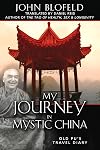
Blofeld wrote this book in Chinese, using a traditional Chinese style. That comes across in the translation, which make the book quite charming.
This is Blofeld recollecting his years in China, 1932 to 1948. It's a very personal book. But he got around a lot, on professional and personal trips, while he was teaching English at various schools and working as a cultural attache at the British Consulate. We hear about trips to sacred mountains... well, maybe that's what most of the stories are show more about! Good fun all around. show less
This is Blofeld recollecting his years in China, 1932 to 1948. It's a very personal book. But he got around a lot, on professional and personal trips, while he was teaching English at various schools and working as a cultural attache at the British Consulate. We hear about trips to sacred mountains... well, maybe that's what most of the stories are show more about! Good fun all around. show less
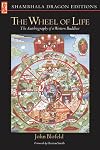
I first read this book when a student of Chinese religion several decades ago, but spotted it again last week while searching for another book on the Buddhist concept of hell. I don't know why I took it down and began to leaf through it, then sat down to read it again over the past few days, but am so glad I did.
First of all, despite its title The Wheel of Life and cover photo, the work has little to do with the Buddhist concept of hell, but rather with life itself--in this case, the life show more of its author and his on-again/off-again search for the eternal Truth, a path that winds through many different schools and practices of Buddhism, and lingers for a while in Zen, before staying its course in Vajrayana Buddhism.
This wonderfully honest and charming autobiography takes us back to the days before many of the famous temples in China were destroyed (first by the Japanese, then the Communists, then the Red Guards), back when John could wear a long grey Chinese gown in the streets of Beijing without seeming eccentric, or hire a mule cart to carry him up to the heights of Mt. Tai Shan. It's a lovely tale of a young man who had Chuangzi's butterfly dream when he was 5 years old, and convinced a maiden aunt to buy a small Buddha for him when 9, and who left for China to live his dream while still at University. He converted to Buddhism as an adolescent and spent the rest of his life--sometimes more ardently and earnestly than others--trying to follow its path, but he is honest throughout of his successes and failures in this area. It's also a tale of shamans and travel experiences, meetings with great teachers and Lamas and even the Dalai Lama himself. As one shares with the author his disappointments and insights, one can only hope that in the last decade of his life he was more content with his progress than he confesses in the book's final chapter.
Reading it, one feels as though one is sitting in John's study, sharing a glass of sherry and listening to his life story. I never wanted the visit to end. Yes it's outdated, but that gave me the opportunity to step back into time and engage with the past that was China and as a Metropolitan curator [Marla Prather] once said, "Anytime you can step out of time [with an art work] is a gift from that artist". Readers who enjoy this book will also enjoy reading The Years that were Fat by George Kates and will certainly want to read others works by Blofeld himself. show less
First of all, despite its title The Wheel of Life and cover photo, the work has little to do with the Buddhist concept of hell, but rather with life itself--in this case, the life show more of its author and his on-again/off-again search for the eternal Truth, a path that winds through many different schools and practices of Buddhism, and lingers for a while in Zen, before staying its course in Vajrayana Buddhism.
This wonderfully honest and charming autobiography takes us back to the days before many of the famous temples in China were destroyed (first by the Japanese, then the Communists, then the Red Guards), back when John could wear a long grey Chinese gown in the streets of Beijing without seeming eccentric, or hire a mule cart to carry him up to the heights of Mt. Tai Shan. It's a lovely tale of a young man who had Chuangzi's butterfly dream when he was 5 years old, and convinced a maiden aunt to buy a small Buddha for him when 9, and who left for China to live his dream while still at University. He converted to Buddhism as an adolescent and spent the rest of his life--sometimes more ardently and earnestly than others--trying to follow its path, but he is honest throughout of his successes and failures in this area. It's also a tale of shamans and travel experiences, meetings with great teachers and Lamas and even the Dalai Lama himself. As one shares with the author his disappointments and insights, one can only hope that in the last decade of his life he was more content with his progress than he confesses in the book's final chapter.
Reading it, one feels as though one is sitting in John's study, sharing a glass of sherry and listening to his life story. I never wanted the visit to end. Yes it's outdated, but that gave me the opportunity to step back into time and engage with the past that was China and as a Metropolitan curator [Marla Prather] once said, "Anytime you can step out of time [with an art work] is a gift from that artist". Readers who enjoy this book will also enjoy reading The Years that were Fat by George Kates and will certainly want to read others works by Blofeld himself. show less
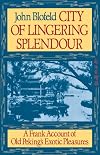
Many foreigners have written books about their stays in China. In fact, many appear to feel themselves obligated to do so, and produce some of the worst, self-important drivel ever put between two covers. Blofeld does not fall into that category. If you have ever had the chance to wander through any of the surviving back alleys of Beijing, you will be entranced by this highly literate, deeply felt work.

Another very informative and colorful presentation in the Time-Life Great Cities series. The region and civilization covered here is in itself a fascinating one, and the relative success of Thailand in economic and developmental terms, makes it an interesting case study in regional contrasts and comparisons (although it is quite dated). As in some other volumes in this series, one facet which is becoming more and more evident to me is the limitation imposed by the writer coming from a show more completely different part of the world, here the West, with its own baggage of religious and cultural backgrounds. To the average westerner, the relatively laid-back temperament of the people, the tolerance of other cultures and life forms, the 'fantastic' (in the colonial sense) carvings and sculptures on the ornate temples with their exaggerated curved roofs and gargoyle-infested gables, the general lack of structure, all combine to produce a sort of mystification, if not stupefaction. It occurred to me how much easier it is for me, as an Indian and a Hindu, to relate to much of this seeming medley, and I am somewhat surprised as to why India (and Indians in general) have not maintained a closer relationship with these countries of Southeast Asia that have developed so many ideas and art forms in their own way and added to the richness of this civilization. show less
Lists
You May Also Like


Associated Authors
Statistics
- Works
- 61
- Also by
- 5
- Members
- 2,063
- Popularity
- #12,459
- Rating
- 4.0
- Reviews
- 34
- ISBNs
- 124
- Languages
- 9
- Favorited
- 7
