
George Lakey
Author of Viking Economics: How the Scandinavians Got It Right and How We Can, Too
About the Author
George Lakey is formerly a Lang Professor in Peace and Conflict Studies at Swarthmore College. He has led over 1,500 workshops on five continents and authored ten books, including, most recently, How We Win: A Guide to Nonviolent Direct Action Campaigning.
Works by George Lakey
Viking Economics: How the Scandinavians Got It Right and How We Can, Too (2016) 142 copies, 6 reviews
A Manual for Direct Action: Strategy and Tactics for Civil Rights and All Other Nonviolent Protest Movements (1965) 37 copies, 1 review
Toward a Living Revolution: A Five-Stage Framework for Creating Radical Social Change (2012) 13 copies, 1 review
Readiness for Revolution: A Case for Radical Social Change Through Non-Violent Action (1971) 13 copies
Conflicts as a Gift of Spirit 2 copies
Associated Works
Waging Peace: Global Adventures of a Lifelong Activist (2014) — Introduction, some editions — 65 copies, 3 reviews
Each of Us Inevitable: Some Keynote Addresses at Quaker Gatherings, 1977-1993 (2003) — Contributor — 31 copies
It's the Economy, Friends: Understanding the Growth Dilemma (2012) — Contributor — 24 copies, 1 review
Tagged
Common Knowledge
- Legal name
- Lakey, George Russell
- Birthdate
- 1937-11-03
- Gender
- male
- Relationships
- Lakey, Berit M. (spouse)
- Nationality
- USA
- Birthplace
- Bangor, Pennsylvania, USA
- Associated Place (for map)
- Pennsylvania, USA
Members
Reviews

"From his first arrest in the Civil Rights era to his most recent during a climate justice march at the age of 83, George Lakey has committed his life to a mission of building a better world through movements for justice. Lakey draws readers into the center of history-making events, telling often serious stories with playfulness and intimacy. In this memoir, he describes the personal, political, and theoretical-coming out as bisexual to his Quaker community while known as a church leader and show more family man, protesting against the war in Vietnam by delivering medical supplies through the naval blockade in the South China Sea, and applying his academic study of nonviolent resistance to creative tactics in direct action campaigns. From strategies he learned as a young man facing violence in the streets to risking his life as an unarmed bodyguard for Sri Lankan human rights lawyers, Lakey recounts his experience living out the tension between commitment to family and mission. Drawing strength from his community to fight cancer, survive painful parenting struggles, and create networks to help prevent activist burnout, this book shows readers how to find hope in even the darkest times through strategic, joyful activism"-- Provided by publisher. show less
From his first arrest in the Civil Rights era to his most recent during a climate justice march at the age of 83, George Lakey has committed his life to a mission of building a better world through movements for justice. Lakey draws readers into the center of history-making events, telling often serious stories with playfulness and intimacy. In this memoir, he describes the personal, political, and theoretical-coming out as bisexual to his Quaker community while known as a church leader and show more family man, protesting against the war in Vietnam by delivering medical supplies through the naval blockade in the South China Sea, and applying his academic study of nonviolent resistance to creative tactics in direct action campaigns. From strategies he learned as a young man facing violence in the streets to risking his life as an unarmed bodyguard for Sri Lankan human rights lawyers, Lakey recounts his experience living out the tension between commitment to family and mission. Drawing strength from his community to fight cancer, survive painful parenting struggles, and create networks to help prevent activist burnout, this book shows readers how to find hope in even the darkest times through strategic, joyful activism. show less
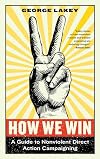
The author's experience as a civil rights legend informs this book for building and conducting nonviolent direct action campaigns. Protest must be supplemented with sustained direct action campaigns crucial to winning major reforms. He looks to successful campaigns worldwide to see what has worked, what hasn’t, and why to achieve real progressive victories.

Evidently, nonviolent action has some kind of power, even when the action is not very spectacular. The question then arises, what is this power? Some people say, “It is the power of God,” others say, “It is the power of love.” Either answer leads to further questions, for just as the astronomer does not feel his task is done when he hears the stars defined as “the wonders of nature,” so we are not content with a philosophical description of nonviolent action. The task of this show more pamphlet, therefore, is to discover the how of nonviolent action. show less
You May Also Like


Associated Authors
Statistics
- Works
- 23
- Also by
- 5
- Members
- 810
- Popularity
- #31,509
- Rating
- 3.9
- Reviews
- 21
- ISBNs
- 32
- Languages
- 1