
Sally Magnusson
Author of The Flying Scotsman
About the Author
Image credit: Sally Magnusson
Series
Works by Sally Magnusson
A Shout in the Street 1 copy
Associated Works
Tagged
Common Knowledge
- Birthdate
- 1955-10-11
- Gender
- female
- Education
- Laurel Bank School for Girls
University of Edinburgh - Occupations
- journalist
broadcaster
writer - Organizations
- BBC Scotland
The Scotsman - Awards and honors
- Scottish Bafta (1996)
Royal Television Society Award (1998) - Relationships
- Magnusson, Magnus (father)
Magnusson, Anna (sister) - Nationality
- UK
- Birthplace
- Glasgow, Scotland, UK
- Places of residence
- Torrance, East Dunbartonshire, Scotland, UK
Glasgow, Scotland, UK - Map Location
- Scotland, UK
Members
Reviews

In 1627, Corsairs from Morocco and Algiers sailed to Iceland and staged several raids, destroying property, murdering resistors, and capturing slaves to sell in Algiers. Asta and her husband Olafur were among over 200 captured in one of the largest raids. They were separated from each other and from their children. Olafur was fortunate to be released and sent on a mission to Denmark, to meet the King and request ransom for the captives. This much is known to be true, documented in historical show more records.
But what happened to Asta and the children? And to Olafur after his journey to Denmark? Sally Magnussen has drawn on research to fill the blank space with a plausible and ultimately moving tale. In Algiers, Asta becomes a slave in a wealthy man’s harem. Two children remain with her but her eldest son is sold to another master. Asta remains hopeful despite the odds and attempts to blend into the harem, where the master’s two wives and an aunt spin Algerian tales to pass the time. Asta, too, is a storyteller, in her case of Icelandic sagas. The harem isn’t interested in her traditions, but her master is, and this skill elevates Asta’s place in the household. Years pass, and she becomes more accepting of Algerian culture and religion. Still, Asta is and will always be a slave and has no control over her fate or that of her family.
I’ll leave it there so as not to spoil the rest of the novel. There is so much here about women’s power (or lack thereof), the dissonance of being part of two cultures, and the importance of love and family. I also found Magnussen’s afterword quite interesting, showing how much of the narrative was based in fact. I enjoyed learning about a history I was completely unfamiliar with. show less
But what happened to Asta and the children? And to Olafur after his journey to Denmark? Sally Magnussen has drawn on research to fill the blank space with a plausible and ultimately moving tale. In Algiers, Asta becomes a slave in a wealthy man’s harem. Two children remain with her but her eldest son is sold to another master. Asta remains hopeful despite the odds and attempts to blend into the harem, where the master’s two wives and an aunt spin Algerian tales to pass the time. Asta, too, is a storyteller, in her case of Icelandic sagas. The harem isn’t interested in her traditions, but her master is, and this skill elevates Asta’s place in the household. Years pass, and she becomes more accepting of Algerian culture and religion. Still, Asta is and will always be a slave and has no control over her fate or that of her family.
I’ll leave it there so as not to spoil the rest of the novel. There is so much here about women’s power (or lack thereof), the dissonance of being part of two cultures, and the importance of love and family. I also found Magnussen’s afterword quite interesting, showing how much of the narrative was based in fact. I enjoyed learning about a history I was completely unfamiliar with. show less
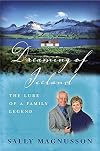
Scottish journalist and broadcaster Sally Magnusson explores her Icelandic roots with her father, the famous Magnus Magnusson, as she convinces her father to accompany her on an odyssey back to Reykjavík and the old homeplace at Laxamýri.
Magnus is well known as the 25-year veteran of BBC's Mastermind quiz show, and is highly respected as the translator of works of Halldor Laxness, and many Icelandic sagas. He is portrayed as a brilliant, irascible individual. It is a pleasure discovering show more Magnus through the eyes of his daughter.
The journey takes only 4 days but encompasses several lifetimes, literally! Sally interweaves her history and that of her parents, and as the pilgrimage takes place she interposes family stories ... some of which turn out to be true, some which fade in the light of scrutiny, and some which turn out to be more interesting than the family sagas which emanated from them.
Early in the journey Sally discovers something essential about her father, when she unwittingly disparages Icelandic moss as being "sickly green."
"The moss matters to Icelanders," Sally’s father tells her, and she realizes that he is "pre-emptively offended on his countrymen’s behalf ..."
Sally, meanwhile, proceeds to refer to Icelandic moss in increasingly glowing and laudatory terms throughout the book, at regular intervals. On the way to the Blue Lagoon, the road "takes us across miles of grotesquely formed lava where heroism beyond the call of duty has long been demanded of the moss."
Other highlights: Magnus relates his father meeting his future wife at a perfume counter in Reykjavík, where she sold him a bottle of 4711 (one of my favorite perfumes, which also happens to be a cologne when used by men). The Magnussons are related to the builder/founder of the Hótel Borg, who also happens to be the Strongest Man in Iceland and a glíma wrestler: Jóhannes Jósefsson (Jóhannes á Borg). They are related as well to Jóhann Sigurjónsson, a famous Icelandic playwright and poet, and the grandson of Laxamyri's founder.
Sally provides what could be the ideal epitaph for this book when she quotes Pastor Jon from Laxness' Christianity at Glacier as follows, "The closer you try to approach the facts through history, the deeper you sink into fiction." --Also a suitable motto for my husband's genealogy research! show less
Magnus is well known as the 25-year veteran of BBC's Mastermind quiz show, and is highly respected as the translator of works of Halldor Laxness, and many Icelandic sagas. He is portrayed as a brilliant, irascible individual. It is a pleasure discovering show more Magnus through the eyes of his daughter.
The journey takes only 4 days but encompasses several lifetimes, literally! Sally interweaves her history and that of her parents, and as the pilgrimage takes place she interposes family stories ... some of which turn out to be true, some which fade in the light of scrutiny, and some which turn out to be more interesting than the family sagas which emanated from them.
Early in the journey Sally discovers something essential about her father, when she unwittingly disparages Icelandic moss as being "sickly green."
"The moss matters to Icelanders," Sally’s father tells her, and she realizes that he is "pre-emptively offended on his countrymen’s behalf ..."
Sally, meanwhile, proceeds to refer to Icelandic moss in increasingly glowing and laudatory terms throughout the book, at regular intervals. On the way to the Blue Lagoon, the road "takes us across miles of grotesquely formed lava where heroism beyond the call of duty has long been demanded of the moss."
Other highlights: Magnus relates his father meeting his future wife at a perfume counter in Reykjavík, where she sold him a bottle of 4711 (one of my favorite perfumes, which also happens to be a cologne when used by men). The Magnussons are related to the builder/founder of the Hótel Borg, who also happens to be the Strongest Man in Iceland and a glíma wrestler: Jóhannes Jósefsson (Jóhannes á Borg). They are related as well to Jóhann Sigurjónsson, a famous Icelandic playwright and poet, and the grandson of Laxamyri's founder.
Sally provides what could be the ideal epitaph for this book when she quotes Pastor Jon from Laxness' Christianity at Glacier as follows, "The closer you try to approach the facts through history, the deeper you sink into fiction." --Also a suitable motto for my husband's genealogy research! show less
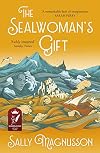
In 1627, pirates from North Africa raided coastal settlements in Iceland, carrying away with them a substantial proportion of the island's population to be sold in the slave markets of Algiers. One of the prisoners, a priest called Ólafur, was sent back to arrange—unsuccessfully—for the ransom of his parishioners. He wrote an account of his experiences which Sally Magnusson drew upon to create this, her debut novel.
Magnusson has picked a fascinating event to write about, particularly show more since she chose to write mostly from the perspective of Ólafur's wife, Ásta, about whom we know almost nothing but who spent the best part of a decade in captivity. She clearly did her due diligence in research, and you can see Magnusson striving to describe the contrasts between the chilly poverty of life in a small Icelandic village with the warm opulence of a wealthy merchant's townhouse in north Africa. However, it all felt a bit laboured. The pacing is rough, the occasional hints at mythical/magical realism elements are out of place, there's lots of telling-not-showing, and frankly I found Magnusson's representation of slavery and the experiences of enslaved people to make for increasingly uncomfortable reading as the novel progressed.
Is it possible for there to be a complicated, fraught, emotional relationship between an enslaved woman and the man who owns her, who threatens her with sexual violence and who sells her children away from her forever? Yes. Is it possible for a read to be uncomfortable without being distasteful—to ask a reader to face up to difficult issues without being vulgar or maudlin? Yes. But Magnusson's writing doesn't have the depth needed to sell the relationship she posits between Ásta and Cilleby as believable, and so she falls back on stale, shallow tropes: the blonde, feisty woman from Iceland who is seduced into pleasure on a silk mattress by a blue-eyed, half-Dutch Moor. As the book progressed, I felt ever more like I was reading a slightly more high-minded version of one of those awful orientalising Mills and Boons novels—which is a shame, because undoubtedly those hundreds of people stolen away from their homes and families deserved much more than a historical installment in a Desert Sheikh bodice-ripper. show less
Magnusson has picked a fascinating event to write about, particularly show more since she chose to write mostly from the perspective of Ólafur's wife, Ásta, about whom we know almost nothing but who spent the best part of a decade in captivity. She clearly did her due diligence in research, and you can see Magnusson striving to describe the contrasts between the chilly poverty of life in a small Icelandic village with the warm opulence of a wealthy merchant's townhouse in north Africa. However, it all felt a bit laboured. The pacing is rough, the occasional hints at mythical/magical realism elements are out of place, there's lots of telling-not-showing, and frankly I found Magnusson's representation of slavery and the experiences of enslaved people to make for increasingly uncomfortable reading as the novel progressed.
Is it possible for there to be a complicated, fraught, emotional relationship between an enslaved woman and the man who owns her, who threatens her with sexual violence and who sells her children away from her forever? Yes. Is it possible for a read to be uncomfortable without being distasteful—to ask a reader to face up to difficult issues without being vulgar or maudlin? Yes. But Magnusson's writing doesn't have the depth needed to sell the relationship she posits between Ásta and Cilleby as believable, and so she falls back on stale, shallow tropes: the blonde, feisty woman from Iceland who is seduced into pleasure on a silk mattress by a blue-eyed, half-Dutch Moor. As the book progressed, I felt ever more like I was reading a slightly more high-minded version of one of those awful orientalising Mills and Boons novels—which is a shame, because undoubtedly those hundreds of people stolen away from their homes and families deserved much more than a historical installment in a Desert Sheikh bodice-ripper. show less
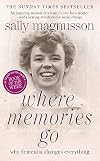
Sally Magnusson's WHERE MEMORIES GO: WHY DEMENTIA CHANGES EVERYTHING is, more than anything, a heartbreakingly beautiful love letter to her late mother, who succumbed, following a years-long struggle, to that cruellest of diseases.
Mamie Magnusson was a journalist and columnist, locally famous and beloved in her native Scotland, where, with her more famous husband, TV personality Magnus Magnusson, she raised five children of whom Sally is the oldest. The author's memories of her parents and show more the ways in which she and her siblings rallied together to provide care as her mother's mind slowly slipped away form the beating heart of this touching tribute. As an investigative journalist, Magnusson also inserts alternate chapters incorporating the research she undertook about the insidious nature of Alzheimer's and other causes of dementia; and she also documents the grossly inadequate and often casually cruel way in which dementia patients are treated and 'warehoused' by the health care system. And while all of this is helpful and informative, the thing that makes this book so damn good, so heart-wrenchingly effective, is the personal stuff: the stories of her parents' childhoods and courtship, her memories of her own childhood, the description of losing her father to pancreatic cancer, and, most of all, the final years, months and days of her mother's life.
There is humor here too, as Mamie was a person who loved to laugh and sing and make others laugh - a quality she kept right up to the bitter end, fighting through the fog of dementia, groping for words. And losing the 'words' was perhaps the cruelest cut of all, because Mamie loved words, made her living with words. But when the words began to go, it simply became too very sad. And what made it even worse was that Mamie seemed to know what was happening to her, as evidenced by her "heroic ability to summon words to express what [she] was going through." This is heartbreakingly clear in some of her last coherent sentences, phrases like -
"I've reached a stage where everything is nothing ... I'm just daft ... I just felt the whole world was going."
And I must readily admit here, that I could not remain objective about a book like this. Having lost my own aged mother in the past year, Magnusson's descriptions of her mother's rapid decline and the indignities endemic to old age made me remember my mother's last months and weeks. As I read Magnusson's account, I often found myself grimacing, on the verge of tears. I knew, of course, that a book like this could not end happily, and at the end, which I knew must come, I wept.
This is a book about love. If you have lost a beloved parent, you will relate. And yes, you will probably weep. HIGHLY recommended. show less
Mamie Magnusson was a journalist and columnist, locally famous and beloved in her native Scotland, where, with her more famous husband, TV personality Magnus Magnusson, she raised five children of whom Sally is the oldest. The author's memories of her parents and show more the ways in which she and her siblings rallied together to provide care as her mother's mind slowly slipped away form the beating heart of this touching tribute. As an investigative journalist, Magnusson also inserts alternate chapters incorporating the research she undertook about the insidious nature of Alzheimer's and other causes of dementia; and she also documents the grossly inadequate and often casually cruel way in which dementia patients are treated and 'warehoused' by the health care system. And while all of this is helpful and informative, the thing that makes this book so damn good, so heart-wrenchingly effective, is the personal stuff: the stories of her parents' childhoods and courtship, her memories of her own childhood, the description of losing her father to pancreatic cancer, and, most of all, the final years, months and days of her mother's life.
There is humor here too, as Mamie was a person who loved to laugh and sing and make others laugh - a quality she kept right up to the bitter end, fighting through the fog of dementia, groping for words. And losing the 'words' was perhaps the cruelest cut of all, because Mamie loved words, made her living with words. But when the words began to go, it simply became too very sad. And what made it even worse was that Mamie seemed to know what was happening to her, as evidenced by her "heroic ability to summon words to express what [she] was going through." This is heartbreakingly clear in some of her last coherent sentences, phrases like -
"I've reached a stage where everything is nothing ... I'm just daft ... I just felt the whole world was going."
And I must readily admit here, that I could not remain objective about a book like this. Having lost my own aged mother in the past year, Magnusson's descriptions of her mother's rapid decline and the indignities endemic to old age made me remember my mother's last months and weeks. As I read Magnusson's account, I often found myself grimacing, on the verge of tears. I knew, of course, that a book like this could not end happily, and at the end, which I knew must come, I wept.
This is a book about love. If you have lost a beloved parent, you will relate. And yes, you will probably weep. HIGHLY recommended. show less
Lists
Awards


You May Also Like


Associated Authors
Statistics
- Works
- 18
- Also by
- 1
- Members
- 748
- Popularity
- #33,982
- Rating
- 3.8
- Reviews
- 30
- ISBNs
- 52