
Vladimir Radunsky (1954–2018)
Author of What Does Peace Feel Like?
About the Author
Vladimir Radunsky was born in the Ural Mountains, Russia in 1954. He was educated at the Moscow School of Architecture and studied art and design. He emigrated to the United States in 1982. He eventually found work as a book designer before pursuing an illustration career in children's books. He show more illustrated numerous books including The Pup Grew Up! by Samuel Marshak, The Maestro Plays by Bill Martin Jr., Table Manners by Chris Raschka, and The Mighty Asparagus. He died from leukemia on September 11, 2018 at the age of 64. (Bowker Author Biography) show less
Image credit: GoodReads
Works by Vladimir Radunsky
Un amour de chien 1 copy
I Love You Dude 1 copy
Associated Works
Tagged
Common Knowledge
- Canonical name
- Radunsky, Vladimir
- Legal name
- Radunsky, Vladimir Victorovich
- Birthdate
- 1954-03-01
- Date of death
- 2018-09-11
- Gender
- male
- Occupations
- children's book illustrator
- Nationality
- Russia (birth)
- Birthplace
- Perm, Russia
- Places of residence
- Moscow, Russia
Vienna, Austria
New York, New York, USA - Place of death
- Rome, Italy
- Associated Place (for map)
- Russia
Members
Reviews
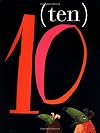
Ah, only from the mind of illustrator-now-author Vladimir Radunsky could come such a wonderfully offbeat, exceedingly silly story. Interestingly, Radunsky inserts himself into the story with asides to the reader that make it sound as if he is making up the story on the spot. He also fills in all sorts of little-known 'facts' about armadillos: did you know, for instance, that they wear ear socks and tail stockings when they make social calls? Or that they paint their noses blue? ("No one show more knows why," Radunsky tells us.)
Truly it is only loosely a counting book in that he numbers the baby armadillos and their ones of everything, but it is visually dazzling and free-spirirted, and for that reason would appeal to younger readers. Myself, I’d probably include the book within my writing workshop as an example of a casual, conversational type of storytelling and invite my students to try the technique of addressing the reader in some way in their future writing. show less
Truly it is only loosely a counting book in that he numbers the baby armadillos and their ones of everything, but it is visually dazzling and free-spirirted, and for that reason would appeal to younger readers. Myself, I’d probably include the book within my writing workshop as an example of a casual, conversational type of storytelling and invite my students to try the technique of addressing the reader in some way in their future writing. show less
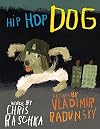
Rhymes and rhythm and dogs take over in the energetic Hip Hop Dog by Chris Raschka. A young dog can't seem to catch a break- he's short and admittedly not the cutest pup in the bunch- but the Hip Hop Dog falls in love with music and decides that his talent and excitement can bring meaning to his hard-knock life. Vladimir Radunsky's illustrations employ a dark color palette that gradually brightens along with our protagonist's mood, and the slightly blurry chalk drawings bring an edge to what show more could have just been an adorable dog book. show less
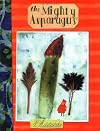
It’s beautiful! It’s amazing! It’s…smelly? The tale begins with the miraculous growth of a huge asparagus stalk in the yard of a king. Awe quickly turns to annoyance, as he determines the giant stalk must be removed. In an exaggerated, comical play of events, a barrage of characters attempts the feat, but to no avail. Finally, with the help of the king’s mother and a “tiny little bird” the asparagus meets its end. Told from a first person perspective, the author engages readers show more in a silly dialog that fuses wit, irony, and the essence of folklore. Vivid language, fluctuating sentence structure, and variable font qualities project the story’s tone and provide clear cues for the adult reader. The text is accompanied by detailed illustrations that superbly blend a suite of artistic qualities from impressionist painting to strokes of realism to dramatic exaggeration of forms. Rich, saturated images fill the pages from corner to corner with warmly colored figures, shapes, and scenery. Owing to somewhat lengthy passages and complex imagery, this picture book is best suited for ages “5 to 9 and on and on.” show less
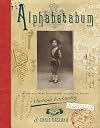
This may be more of a children's book for adults than for children. I haven't tested it on a child yet. I found the photos and book design fantastic, and the verses a nice place to start for thinking up my own (possibly better?) corresponding verses. Particularly like thinking about the idea "Are these children our great-great-great-grandparents?"
Lists
Awards


You May Also Like


Associated Authors
Statistics
- Works
- 20
- Also by
- 14
- Members
- 1,211
- Popularity
- #21,206
- Rating
- 4.1
- Reviews
- 77
- ISBNs
- 53
- Languages
- 4
- Favorited
- 1