
David McKee (1) (1935–2022)
Author of Elmer
For other authors named David McKee, see the disambiguation page.
Series
Works by David McKee
Special me preschool story time kit 39 copies
Elmer and the Patchwork Story: A new Elmer picture book exclusive for World Book Day (2024) 14 copies
Elmer 10 book Collection Set - Children Picture Flats illustrated Elephant Pack by David McKee (2018) 9 copies
Koenig Rollo und der Weihnac 2 copies
Tatmiel en die troeteldiere 1 copy
Elmer en het cadeautje 1 copy
Elmers Nieuwe Vriendje 1 copy
Koning Rollo en de winter 1 copy
Nie nou nie, Bernard 1 copy
Mr Benn [1970] DVD 1 copy
Elmer CD Storybook 1 copy
O Elmer e o Presente 1 copy
艾玛:真快乐 1 copy
Zang zang 1 copy
Book Of Elephant, A 1 copy
Parabéns, Elmer! 1 copy
Woodfield Lecture XV 1 copy
O Elmer e as Emoções 1 copy
Associated Works
Cricket Magazine, Vol. 8, No. 2, October 1980 — Contributor — 2 copies
Tagged
Common Knowledge
- Legal name
- McKee, David John
- Other names
- Easton, Violet (ffugenw)
- Birthdate
- 1935-01-02
- Date of death
- 2022-04-06
- Gender
- male
- Education
- Plymouth College of Art
Hornsey College of Art - Occupations
- children's book author
illustrator - Awards and honors
- BookTrust (lifetime achievement award|2020)
- Relationships
- McKee, Violet (mother)
McKee, Chuck (son) - Nationality
- UK
- Birthplace
- Tavistock, Devon, England, UK
- Places of residence
- London, Middlesex, England, UK
Provence, France - Map Location
- England, UK
Members
Discussions
Childrens book - Elephant who wanted to look different in Name that Book (August 2012)
Reviews
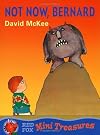
I've read and enjoyed this many times, albeit not recently. The story and illustrations are good, funny, and, at first, relatable, with echoes of The Boy who Cried 'Wolf'. The parents are always too busy to pay much attention to their son. It was written in 1980, long before smartphones and social media.
I was reminded of it by Rafael Behr's opinion piece in today's Guardian, 31 August 2022, six days before Johnson actually resigned as Prime Minister and Liz Truss took over, "Brexit is the show more monster under the bed Liz Truss is desperately trying to ignore" - see below.
In addition to all the problems Behr lists, on 4 September, twelve Tory MPs said they plan to submit letters of No Confidence to the internal 1922 Committee in Truss' first week as PM (they'd need 54 in total). See HERE.
Image: “'But I'm a monster,' said the monster.” (Source)
The article is HERE. show less
I was reminded of it by Rafael Behr's opinion piece in today's Guardian, 31 August 2022, six days before Johnson actually resigned as Prime Minister and Liz Truss took over, "Brexit is the show more monster under the bed Liz Truss is desperately trying to ignore" - see below.
In addition to all the problems Behr lists, on 4 September, twelve Tory MPs said they plan to submit letters of No Confidence to the internal 1922 Committee in Truss' first week as PM (they'd need 54 in total). See HERE.
Image: “'But I'm a monster,' said the monster.” (Source)
Brexit is the monster under the bed Liz Truss is desperately trying to ignore, by Rafael Behr.
There is a book that foresaw with precision this summer’s Conservative leadership contest, although it was first published in 1980. It is a thin volume about denial and negligence, making its point with few words and colourful illustrations. It is called Not now, Bernard by David McKee.
The titular hero is a boy who tries to alert his parents to the presence of a child-eating monster in the garden. They are busy with other things. “Not now, Bernard,” says the father, striking his own hand with a hammer. “Not now, Bernard,” says the mother, watering a plant.
The monster eats the boy.
The next resident of 10 Downing Street will find the garden crawling with monstrous economic and political menaces. A chorus of Bernards is raising the alarm. Economists, MPs, former Tory ministers, charities, trade unions, businesses, local councils – all can hear rustling in the bushes where a beastly crisis lurks, ready to savage the new prime minister.
Anyone who pays an energy bill and does a weekly shop can feel the claws of a budget squeeze closing around the nation’s windpipe. There’s an ogre in the health service. “Not now, Bernard,” says Rishi Sunak. There’s a fiend in the financial outlook. “Not now, Bernard,” says Liz Truss. There are devils in your policy details. “Not now, Bernard!”
Then there is that other monster, the one that has become such a fixture in the garden that even the opposition seems not to notice it any more. Can we talk about Brexit? Not now, Bernard!
Britain’s self-exclusion from continental markets is not the biggest cause of present economic pain but it will be hard to imagine remedies in the absence of any rational audit of that decision or any reexamination of the ideological fixations that provoked it. But for Brexit believers, it is always too soon and too late to pass judgment.
Too soon, because the benefits of freedom lie unclaimed under the pyre of “retained” EU regulations that both Truss and Sunak promise to incinerate. And too late, because Brexit is the settled will of the people and any hint of a downside is sedition.
The Tory party recognises only two possible positions on Britain’s relationship with the EU – heroic insistence on further severance and cowardly plotting to rejoin. Labour, unwilling to adopt the former stance and afraid of being cast in the latter one, says nothing meaningful on the subject.
Meanwhile, the erection of pointless customs barriers between Britain and its nearest markets has obstructed trade, imposed costs on business, snarled up supply chains and stoked inflation. The end of free movement has caused labour shortages for food producers, care homes and a gamut of services in between.
Free trade deals with non-European states that were meant to compensate for the loss of continental custom have had negligible impact. (Most are copy-and-paste jobs from arrangements Britain had as an EU member.)
Sterling has depreciated, but without the compensating boost to export competitiveness that might be expected from a currency devaluation. Business investment has been flat since the referendum, in large part because the political climate has been so unpredictable. That volatility – two general elections and three changes of prime minister in six years – is a function of the struggle to turn an ideal Brexit, nurtured in the parochial Eurosceptic imagination, into a reality-based Brexit involving other countries and real people’s jobs.
It can’t be done. Opinion polls suggest a majority of voters think the whole thing was a mistake. Liz Truss, the likely winner of the leadership contest, insists otherwise with the vehemence of a zealous convert.
Truss was a remainer in 2016 because she was an acolyte of George Osborne. The then chancellor convinced his disciple that Britain would not be foolish enough to jettison EU membership. The campaign would be fought on the economy and the smart thing for an ambitious young minister to do was back the winning side. She promptly did just that once the results were in.
Truss now claims that backing the wrong horse in the referendum taught her to discard orthodox economic thinking. That created a mental vacancy, which she filled with hardline Brexit dogmas. By 2019, she was arguing in private that Britain could safely walk away from the EU without a comprehensive deal. Brussels, she said, would immediately be cowed into “side deals” to mitigate any possible harm, the threat of which was, in any case, vastly exaggerated by lily-livered remoaners.
Having learned to despise received Treasury wisdom, Truss has graduated on to scorn for diplomacy as traditionally practised at the Foreign Office. Reports of her encounters with overseas counterparts suggest she stumbles at the subtle boundary between direct and brusque; candid and crass.
That tendency was on display at the hustings event last week, where Truss was asked whether the French president, Emmanuel Macron, is friend or foe. “The jury’s out,” she said. It was meant in a mischievous spirit, with an eye only for the Tory activists in the room. Foreign secretaries and wannabe prime ministers used to avoid imbecilities of that kind before Boris Johnson contaminated both offices with his marauding insouciance. And even he doesn’t hesitate to call France an ally.
Tories now speak increasingly fondly of the outgoing prime minister, not because they remember him as a skilled leader, but because his unique skill is mesmerising them into forgetting what good government is meant to look like. Truss doesn’t have that magic touch. The Brexit booster wand sits awkwardly in her hand.
Conservative readiness to indulge Johnson is no measure of his reputation in the country, but the leadership contest is not a national election. For at least one more week, British politics is contained in that sealed chamber where there is a Boris legacy to celebrate, where the solution to poverty is corporate tax cuts, where the solution to everything is tax cuts, where tax cuts have no impact on public service budgets, where life outside the EU is all upside and can only get better.
But there’s a monster in the garden.
McKee’s story doesn’t end when Bernard is eaten. In a brilliant twist, the monster then enters the house and moves into the boy’s room, breaking his toys and eating his dinner. Still the parents don’t notice. “But I’m a monster,” the monster is finally moved to inform them. “Not now, Bernard,” they say.
This is the next chapter for Britain. The monster is here, announcing itself with roars and snarls. The crisis is upon us, demanding capable, serious government. When will that cry be heard? Not now, Britain. Not now.
The article is HERE. show less
This is another children's book that has been my 2 year old's favourite for several nights.
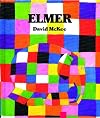
Elmer is a multicoloured patchwork elephant in a herd of ordinary elephants. One day, Elmer wonders if life would be different if he looked like an ordinary elephant, so he sets off to find out.
This is a joyful book, with lots of word and colour repetition, and the illustrations are nice, too.
Somehow, though, in a book full of elephants, we seem to favour the page with the lion show more ...
(★★★★★) show less
Elmer is a multicoloured patchwork elephant in a herd of ordinary elephants. One day, Elmer wonders if life would be different if he looked like an ordinary elephant, so he sets off to find out.
This is a joyful book, with lots of word and colour repetition, and the illustrations are nice, too.
Somehow, though, in a book full of elephants, we seem to favour the page with the lion show more ...
(★★★★★) show less
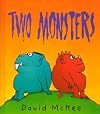
"Two Monsters", written by David McKee, is about two monsters that live on the opposite side of each other, separated by a mountain. They talk to each other, but often have disagreements. They argue about whether the night is leaving or if the day is arriving. The argument starts to get worse and worse by calling each other horrible names such as "smelly" or a "empty-headed mess." The feeling of being separated increases their awareness of their difference in opinion. They start to throw show more huge rocks at one another and eventually break down the mountain that was separating them. They see each other for the first time and realize that the other person's view was actually right, so they come to a compromise and become friends. What I also find as striking is that the monsters are opposite colors; one is blue and one red, showing another crucial difference between them. This would be a wonderful book to read to children as an opportunity to teach them about anger and perception. show less

I've never read Elmer the Elephant before, he came out after I was of an age for them. This is a pair of stories, the first of which involves the elephants avoiding some elephant hunters, the second where a small elephant's teddy gets lost. The second story was easier, in that Elmer visits several animals and has basically the same conversation with each animal. Which made reading in a foreign language for the first time easier.
Google Translate gave a lot of support here, I read the page, show more translated what I could, interpolated the gaps and then checked what I thought was written through Translate. This was hard work, but it turns out that you can teach an old dog new tricks. I'm feeling very pleased with myself. show less
Google Translate gave a lot of support here, I read the page, show more translated what I could, interpolated the gaps and then checked what I thought was written through Translate. This was hard work, but it turns out that you can teach an old dog new tricks. I'm feeling very pleased with myself. show less
Lists
Awards


You May Also Like


Associated Authors
Statistics
- Works
- 219
- Also by
- 20
- Members
- 10,063
- Popularity
- #2,359
- Rating
- 3.9
- Reviews
- 162
- ISBNs
- 1,271
- Languages
- 32
- Favorited
- 2