
Laura Hamilton Waxman
Author of Franklin D. Roosevelt
About the Author
Image credit: Laura Hamilton Waxman
Series
Works by Laura Hamilton Waxman
Uncommon Revolutionary: A Story about Thomas Paine (Creative Minds Biographies) (2003) — Author — 26 copies
Let's Look at Monarch Butterflies (Lightning Bolt Books: Animal Close-Ups (Paperback)) (2010) 21 copies
Who were the accused witches of Salem? : and other questions about the witchcraft trials (2012) 15 copies, 1 review
How Did Slaves Find a Route to Freedom?: And Other Questions about the Underground Railroad (Six Questions of American History) (2011) 10 copies, 1 review
Why Did the Pilgrims Come to the New World?: And Other Questions About the Plymouth Colony (Six Questions of American History) (2010) 10 copies
Exploring the International Space Station (Searchlight Books: What's Amazing About Space?) (2011) 10 copies
What Are the Articles of Confederation?: And Other Questions about the Birth of the United States (Six Questions of American History) (2012) 7 copies, 1 review
Walking Sticks and Other Amazing Camouflage (Searchlight Books TM _ Animal Superpowers) (2017) 3 copies
Doctor Tools 1 copy
Sequoyah 1 copy
Tagged
Common Knowledge
- Other names
- Levine, Michelle
- Gender
- female
- Occupations
- children's book author
- Nationality
- USA
- Places of residence
- Minnesota, USA
- Associated Place (for map)
- Minnesota, USA
Members
Reviews
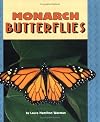
This book provides an overview of the life cycle of monarch butterflies along with other key details about these beautiful insects.
Clear, direct language that still hits with all the scientific accuracy makes this book a perfect title for beginning readers who love nature and learning all about it. I was impressed by how it kept things simple while including correct scientific terminology.
Accompanying photographs fit perfectly with the text to illustrate key points.
Clear, direct language that still hits with all the scientific accuracy makes this book a perfect title for beginning readers who love nature and learning all about it. I was impressed by how it kept things simple while including correct scientific terminology.
Accompanying photographs fit perfectly with the text to illustrate key points.
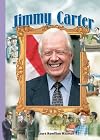
In my opinion, this is a good book. I liked this book for multiple reasons. First, I liked how the book used cartoon drawings along with actual photographs. The cartoons made the book more approachable for children, and the photographs were useful in showing actual pictures like family photos. The beginning of each chapter had a cartoon drawing that made it seem more interesting to read. For example, one chapter was called “Becoming President”, and there was a drawing of colorful people show more shaking hands with funny looking faces. There were also photographs throughout the chapter in black and white. One photograph was a picture of Jimmy Carter talking to people in their cars with the caption, “Carter campaigns to be governor of Georgia”. Second, I liked how the book had extra textual features. One chapter in the book talk about Jimmy Carter’s life growing up which includes how he grew up during the time of segregation. Along with this, there is an extra paragraph in a different color than the text that talks about what segregation is. This gives the reader more information about the topic so they can fully grasp and understand the text. There are also other textual features that I mentioned before such as captions. I think the main idea of this book is to show its audience who Jimmy Carter was, how he became president, and what he did during his presidency. show less
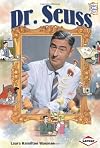
Dr. Seuss by Laura Hamilton Waxman
Summary
The biography of Dr. Seuss is one that is interesting to read. From this book we learn of what Dr. Seuss was like as a child. We also get details of his family during his childhood. We then get a glimpse into his teen and college years. We then see him trying to become a teacher before quitting school. We see that Dr. Seuss was fist an illustrator of comics before becoming the children’s writer in which he is famously known. After that we get to show more see his search to find a job in order to provide for the love of his life. Next we see him during World War 2 and his role. Next we go on to see his writing children’s books that many of us have read. We also get to see how hard it was for him to get published initially. We see how he never gave up and his persistence finally paid off. We see how successful he was at writing books for beginning readers. His first wife dies and then he remarries. Throughout the book it is brought out how Dr. Seuss did not like notoriety but rather enjoyed keeping a private life. It then talks of his awards, the later years of his life, and his legacy.
Reaction
In this book there were many interesting facts that one may not know about the man behind so many beloved children’s books. It is nice to know that he was encouraged to use his imagination throughout his life. It is neat how there are photographs that support what is being written in the story. The author brings this book to a young reader’s level. Readers will have a greater appreciation and understanding of the man behind some of their favorite stories. It also shows how influential and important Dr. Seuss was and is to the world of children’s books. From this biography, children will get an in depth look into an author. This book was written in an easy and relatable manner. Biographies such as this one will keep children’s interest and not bog them down with facts. In conclusion, children need to learn about their favorite authors and historical figures but it does not mean they need to be bored while they read.
Extension
1. Have children pick out their favorite Dr. Seuss book and tell classmates why it is their favorite.
2. Have children write five facts they learned from reading Dr. Seuss’s biography.
3. Ask children to make an illustration using their imagination and then make a rhyme to accompany picture such as the fat bat or pan that ran.
4. I would have children read a Dr. Seuss book an identify figures of speech and other literary elements including setting, theme, main idea, conflicts, and characters.
5. I would have children act out a Dr. Seuss book in groups of 4-5 students.
6. I would have students research their favorite author and give a presentation about him or her. show less
Summary
The biography of Dr. Seuss is one that is interesting to read. From this book we learn of what Dr. Seuss was like as a child. We also get details of his family during his childhood. We then get a glimpse into his teen and college years. We then see him trying to become a teacher before quitting school. We see that Dr. Seuss was fist an illustrator of comics before becoming the children’s writer in which he is famously known. After that we get to show more see his search to find a job in order to provide for the love of his life. Next we see him during World War 2 and his role. Next we go on to see his writing children’s books that many of us have read. We also get to see how hard it was for him to get published initially. We see how he never gave up and his persistence finally paid off. We see how successful he was at writing books for beginning readers. His first wife dies and then he remarries. Throughout the book it is brought out how Dr. Seuss did not like notoriety but rather enjoyed keeping a private life. It then talks of his awards, the later years of his life, and his legacy.
Reaction
In this book there were many interesting facts that one may not know about the man behind so many beloved children’s books. It is nice to know that he was encouraged to use his imagination throughout his life. It is neat how there are photographs that support what is being written in the story. The author brings this book to a young reader’s level. Readers will have a greater appreciation and understanding of the man behind some of their favorite stories. It also shows how influential and important Dr. Seuss was and is to the world of children’s books. From this biography, children will get an in depth look into an author. This book was written in an easy and relatable manner. Biographies such as this one will keep children’s interest and not bog them down with facts. In conclusion, children need to learn about their favorite authors and historical figures but it does not mean they need to be bored while they read.
Extension
1. Have children pick out their favorite Dr. Seuss book and tell classmates why it is their favorite.
2. Have children write five facts they learned from reading Dr. Seuss’s biography.
3. Ask children to make an illustration using their imagination and then make a rhyme to accompany picture such as the fat bat or pan that ran.
4. I would have children read a Dr. Seuss book an identify figures of speech and other literary elements including setting, theme, main idea, conflicts, and characters.
5. I would have children act out a Dr. Seuss book in groups of 4-5 students.
6. I would have students research their favorite author and give a presentation about him or her. show less
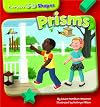
This book provides a great visual for students in primary schools that are introduced to various types of shapes. It promotes an engaging and inquiry based environment that encourages the reader to explore the world around them. The book introduces two children through everyday activities, discover shapes in all areas, whether it be in a snack, or just walking home from school. It encourages students to do the same. Multiple math game and activities have been included at the end of the book, show more where students can participate in a fun and exciting activities. show less
Awards


You May Also Like


Associated Authors
Statistics
- Works
- 99
- Members
- 1,280
- Popularity
- #20,031
- Rating
- 4.0
- Reviews
- 19
- ISBNs
- 388
- Languages
- 1