
Jane Sutcliffe
Author of Will's Words: How William Shakespeare Changed the Way You Talk
Works by Jane Sutcliffe
Amelia Earheart (History Maker Bios) by Jane Sutcliffe (2002) Paperback (2002) 139 copies, 4 reviews
Tagged
Common Knowledge
- Gender
- female
Members
Reviews

I still don't quite understand the causes of the War of 1812, but I know a lot more about it than I did a few days ago. It's difficult to imagine 1814 Washington, DC---the image of 21st-century DC keeps getting in the way---but the story is an interesting one. Sutcliffe does well combining her narrative with original sources. Dolley Madison's personality comes through well, and I really feel for the men who made the decision to burn the Navy Yard.
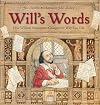
Will’s Words is a cute picture book that delves into the history of theater in England, especially looking at how plays were put on when William Shakespeare was writing. On the side, the author takes out some of the phrases and words used in the historical narrative to give more detail about how Shakespeare used them, and in what plays. The particular words and phrases she highlights are ones that either Shakespeare invented or made popular.
I absolutely loved this book. The illustrations show more are bright and friendly, and it gives an incredibly accurate and interesting narrative about theater and England while still being approachable for new and young readers. I even think that this could be used in a lesson about theater in England, or as a book for students to peruse once they start learning about Shakespeare and his works. I especially love the add-ons in the back that include a timeline of Shakespeare’s life and a bibliography.
Definitely get this for the language-loving kid in your life — it’s a wonderful non-fiction picture book that I will certainly be gifting to baby cousins and nieces and nephews this Christmas.
Also posted on Purple People Readers. show less
I absolutely loved this book. The illustrations show more are bright and friendly, and it gives an incredibly accurate and interesting narrative about theater and England while still being approachable for new and young readers. I even think that this could be used in a lesson about theater in England, or as a book for students to peruse once they start learning about Shakespeare and his works. I especially love the add-ons in the back that include a timeline of Shakespeare’s life and a bibliography.
Definitely get this for the language-loving kid in your life — it’s a wonderful non-fiction picture book that I will certainly be gifting to baby cousins and nieces and nephews this Christmas.
Also posted on Purple People Readers. show less
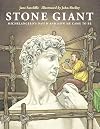
Jane Sutcliffe’s Stone Giant: Michelangelo’s David and How He Came to Be, is an interesting look at the story behind one of the world’s most famous works of art. The illustrations are beautiful and remind me, anyway, of Tomie De Paola’s Strega Nona, with similar colors. I imagine they are representative of Renaissance Italy, with muted colors and the light of the sun. Stone Giant takes us back to the days before Michelangelo saved Florence and carved his famous statue. The block of show more marble that he used had been sitting in Florence, partially carved, for almost forty years. Even Leonardo da Vinci had turned down the city officials when they asked him to create something from “The Giant”, as it became known. The rest of the story details Michelangelo’s painstaking work and the end result. Sutcliffe has written other non-fiction works as well as two dozen biographies for young readers. She became interested in the David after visiting Florence. Her bibliography includes a handful of works I was already familiar with, and several about art history that I would like to explore. Overall I believe the book to be well researched; Sutcliffe does not claim to be an expert and even writes, in the Author’s Note, “some experts say…” when talking about the crown of gold leaves he may or may not have worn. She mentions the experts to let the reader know that she is not one, rather a writer who had an interest in this topic. Sutcliffe tells an enchanting story, and makes it come alive. The story is told in chronological order and takes us from the beginning, when the stone was just sitting in Florence, through the years of work put in by Michelangelo, to the final product. The Author’s Note also includes what happened later, when the statue fell into disrepair and neglect. One item did catch my attention, however, and I am not sure what to do with it. Sutcliffe starts the book by identifying the stone as “a giant in the city of Florence”. She goes on to write, still on page one, “It stood three times as tall as any man in the city. It was the color of cream. And it was a troublemaker”. How can a stone be a troublemaker? It certainly caught my attention, which I am sure she meant it to do, but I am not sure I like having the giant stone, waiting to be carved, cast in human terms. She ends the book with the same line, “There was a giant in the city of Florence”, and the illustration is the statue itself, facing the city of Florence. Because of the writing style of the book, I almost said, the statue itself, looking out onto the city of Florence…Overall, a good read, highly entertaining and also a personable look at Michelangelo himself. show less
The fascinating story of the "stone giant": a block of marble that sat in Florence for 40 years before Michelangelo successfully carved his David. He build a shed around it and worked on it for three years, after which it was pulled into a city square and displayed. Left to the elements, it eventually needed to be repaired and restored, and was moved inside, where visitors can still see it.
Interior illustrations remind me of a more intricate Tomie de Paola.
Interior illustrations remind me of a more intricate Tomie de Paola.
Lists
Awards


You May Also Like


Associated Authors
Statistics
- Works
- 29
- Members
- 1,475
- Popularity
- #17,414
- Rating
- 4.1
- Reviews
- 34
- ISBNs
- 87
- Languages
- 1