George O'Connor
Author of Zeus: King of the Gods
About the Author
Image credit: Photo Credit: Nicole Swift
Series
Works by George O'Connor
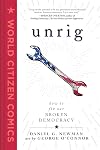
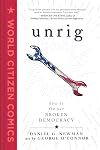
Unrig: How to Fix Our Broken Democracy (World Citizen Comics) (2020) — Illustrator — 74 copies, 3 reviews
Olympians Boxed Set Books 1-6: Zeus, Athena, Hera, Hades, Poseidon, and Aphrodite (2014) 52 copies, 2 reviews
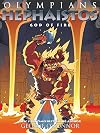
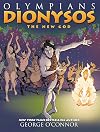
Olympians Boxed Set Books 7-12: Ares, Apollo, Artemis, Hermes, Hephaistos, and Dionysos (2022) 12 copies
Baby 1 copy
Silent Knight 1 copy
Associated Works
Nursery Rhyme Comics: 50 Timeless Rhymes from 50 Celebrated Cartoonists (2011) — Illustrator — 227 copies, 27 reviews
Fable Comics: Amazing Cartoonists Take on Classic Fables from Aesop and Beyond (2015) — Contributor — 113 copies, 5 reviews
Marvel Super Stories: All-New Comics from All-Star Cartoonists (2023) — Contributor — 17 copies, 1 review
Tagged
Common Knowledge
- Birthdate
- 1973-11-05
- Gender
- male
- Nationality
- USA
- Birthplace
- New York, USA
- Places of residence
- Brooklyn, New York, USA
- Associated Place (for map)
- New York, USA
Members
Reviews
I don't know if I've ever read a non-fiction comic like this before, and I have to say: it was a really good way to keep me interested in the topic. There was one section in the middle especially that I don't think I would have kept reading if this book was written in traditional prose format. It was just too dark (appropriate, since it was largely about dark money in campaign finance) and depressing—but the comic format kept me reading where prose would not.
It does get a bit heavy-handed show more in places, and I haven't yet done any additional research to determine if I feel this was appropriate to the reality, or extreme. If it's all true and unembellished, then the state of our government is even more depressing than I had realized.
Luckily, there is a section at the end that focus on what we can do next. I think ending this book without some action items and steps to fix it would have left me feeling sad and upset, but ending with a chapter that summarizes the next steps touched on in previous chapters—and expanding them, as well as adding new things—ends the book on a positive note with at least a touch of hope. I also really appreciate the list of sources cited, and the index. I wasn't expecting that, given the comic format, but it's going to be really helpful when I revisit some of the ideas and action items listed here. show less
It does get a bit heavy-handed show more in places, and I haven't yet done any additional research to determine if I feel this was appropriate to the reality, or extreme. If it's all true and unembellished, then the state of our government is even more depressing than I had realized.
Luckily, there is a section at the end that focus on what we can do next. I think ending this book without some action items and steps to fix it would have left me feeling sad and upset, but ending with a chapter that summarizes the next steps touched on in previous chapters—and expanding them, as well as adding new things—ends the book on a positive note with at least a touch of hope. I also really appreciate the list of sources cited, and the index. I wasn't expecting that, given the comic format, but it's going to be really helpful when I revisit some of the ideas and action items listed here. show less
One of those books you read to make yourself mad and sad as you try to convince yourself to finally get off your fat ass and act. The author is open about his biases and makes reasonable cases for his diagnoses and solutions. He might even be able to sway some folks who aren't too deeply embedded in Trumpism, though probably not.
At times the Koch Brothers stuff, based on the book Dark Money, sounds as wild as the George Soros/Bill Gates conspiracy theories always being tossed around by show more conservatives on social media and Fox News reader comments. I should probably read that book.
This book works best when it offers concrete solutions to election reform, though it seemed contradictory to move away from "winner takes all" elections at the local and state level with ranked choice and proportional representation while pushing the National Popular Vote Interstate Compact for presidential elections.
Anyway, interesting ideas are offered in an introductory way, but will require additional research to fully get behind.
Regardless, I'm behind voting Trump out of office in November and reforming the mess we've gotten into. show less
At times the Koch Brothers stuff, based on the book Dark Money, sounds as wild as the George Soros/Bill Gates conspiracy theories always being tossed around by show more conservatives on social media and Fox News reader comments. I should probably read that book.
This book works best when it offers concrete solutions to election reform, though it seemed contradictory to move away from "winner takes all" elections at the local and state level with ranked choice and proportional representation while pushing the National Popular Vote Interstate Compact for presidential elections.
Anyway, interesting ideas are offered in an introductory way, but will require additional research to fully get behind.
Regardless, I'm behind voting Trump out of office in November and reforming the mess we've gotten into. show less
George O'Connor wraps up his wonderful series about the gods of Greek mythology with a solid entry about the origin of the god of wine and disorder. Dionysos has an LGBTQIA+ spin, raised as a girl and as a boy and later having male and female lovers. He's also a populist demigod, gathering followers with wine and trying to wave of success to a full seat on Mount Olympus.
It's interesting to pick out elements common to the Gilgamesh epic and Christianity and find the through-line or continuity show more to some of humanity's beliefs. show less
A pretty cool concept for a graphic novel: take a real historical text and bring it to life. In this case, O'Connor chose a 17th-century Dutchman's journal of his trade visit with some tribes in upstate New York. It seems an odd choice at first, because the journal is, well, pretty boring if you aren't a historian. Many days are much like the others: walking, cold, bedding down at night; or stuck at one village because of snow. On the other hand, this gave O'Connor plenty of room to play show more with and interpret the events as he wished--the lack of details was a blank canvas...er, page.
This is an excellent opening for both an artist and a historian to play. Details that would require an entire museum exhibit or text-only book can be compressed between two covers when there are images and actions to support a story. Adding literal as well as metaphorical color to dry documents can draw in readers who might not otherwise give old pamphlets like these a chance, and reviving them so creatively ensures that the text will have far more readers that it ever would if it had either been sitting in an archive or just digitized and printed for a narrow audience of researchers. As a publisher, archivist, librarian, and English major by training, practice, and passion...that's pretty freakin' awesome!
However, that "blank page" was also part of the problem for me, in a way. There's really not much grounds to call this anything but historical fiction, because when we get emotions or feelings or any kind of visual information, it's entirely from O'Connor, who didn't abridge the text in any way. I have no problem with historical fiction, but juxtaposing a primary source with something so far removed that I have no idea how many of the visual details are accurate makes me a little uncomfortable. For three examples:
1) Early on, the travelers come across a tent (?) with women in it. For some reason, these women are naked. No other women in the book are naked when they're inside. I have no idea at all whether this is based on historical fact or completely made up to support an ensuing visual gag.
2) The climax of the trading mission takes place entirely off screen while we watch another member of Van den Bogaert's party having fun with an entirely made-up companion. It would have been boring to show the final agreement scene--by this point a rehash of previous discussions--but the scenes in the village are entirely invented, with no tie at all to the original. They're interesting, but they also feel out of place and irrelevant to the point of the story/journal.
3) This is the least comfortable to me. O'Connor has Van den Bogaert spotting a mysterious American Indian around him in the woods, usually in creepy settings. Is this man supposed to be a real person? Signs point to no, but it he a vision? There's no apparent reason why Van den Bogaert would be seeing things. Is this mystery man just there to try to give the reader a little suspense, since we're reading through a boring return journey at this point? Is he supposed to be a metaphor for European settlers' fear of American Indians?
Maybe a little commentary on these items, or at least a more robust author/artist's note about his research and historicity vs. invention would have mitigated my feelings.
I usually gush about the art in graphic novels, but for me, this art wasn't much to write home about. It served the purpose: to illustrate. It felt more like the kind of simplified art you used to see in the comics pages of newspapers (*sob*) than a work of art in its own right. For a historical work, I might have liked a few finer details and less comic-y characters. I did notice at least one other reviewer loved the art, so take this as a matter of taste, not critical commentary.
I do think that the idea behind this work--to shed light on archival materials that can potentially tell us so much about the past--is valuable and wonderful. I very much hope that O'Connor and others like him continue to do this work, remixing and making history accessible. Just...maybe with more robust historical notes.
I'm not really satisfied labeling this 2 stars, but Goodreads says 3 means "liked it." I found it fascinating, but can't say I was more than "okay" about it. So if a 3 meant "average", like you'd think it would, then this would be a 3. I'd recommend it to historians with relevant interests, but probably not to others.
... Finally, to comment on the journal/journey...why the heck did anyone think it was a good idea to do this trip in the dead of winter? It was freezing cold, the snow was thick, and everyone at home thought they'd died. Waiting for spring seems like it would have been logical. show less
This is an excellent opening for both an artist and a historian to play. Details that would require an entire museum exhibit or text-only book can be compressed between two covers when there are images and actions to support a story. Adding literal as well as metaphorical color to dry documents can draw in readers who might not otherwise give old pamphlets like these a chance, and reviving them so creatively ensures that the text will have far more readers that it ever would if it had either been sitting in an archive or just digitized and printed for a narrow audience of researchers. As a publisher, archivist, librarian, and English major by training, practice, and passion...that's pretty freakin' awesome!
However, that "blank page" was also part of the problem for me, in a way. There's really not much grounds to call this anything but historical fiction, because when we get emotions or feelings or any kind of visual information, it's entirely from O'Connor, who didn't abridge the text in any way. I have no problem with historical fiction, but juxtaposing a primary source with something so far removed that I have no idea how many of the visual details are accurate makes me a little uncomfortable. For three examples:
1) Early on, the travelers come across a tent (?) with women in it. For some reason, these women are naked. No other women in the book are naked when they're inside. I have no idea at all whether this is based on historical fact or completely made up to support an ensuing visual gag.
2) The climax of the trading mission takes place entirely off screen while we watch another member of Van den Bogaert's party having fun with an entirely made-up companion. It would have been boring to show the final agreement scene--by this point a rehash of previous discussions--but the scenes in the village are entirely invented, with no tie at all to the original. They're interesting, but they also feel out of place and irrelevant to the point of the story/journal.
3) This is the least comfortable to me. O'Connor has Van den Bogaert spotting a mysterious American Indian around him in the woods, usually in creepy settings. Is this man supposed to be a real person? Signs point to no, but it he a vision? There's no apparent reason why Van den Bogaert would be seeing things. Is this mystery man just there to try to give the reader a little suspense, since we're reading through a boring return journey at this point? Is he supposed to be a metaphor for European settlers' fear of American Indians?
Maybe a little commentary on these items, or at least a more robust author/artist's note about his research and historicity vs. invention would have mitigated my feelings.
I usually gush about the art in graphic novels, but for me, this art wasn't much to write home about. It served the purpose: to illustrate. It felt more like the kind of simplified art you used to see in the comics pages of newspapers (*sob*) than a work of art in its own right. For a historical work, I might have liked a few finer details and less comic-y characters. I did notice at least one other reviewer loved the art, so take this as a matter of taste, not critical commentary.
I do think that the idea behind this work--to shed light on archival materials that can potentially tell us so much about the past--is valuable and wonderful. I very much hope that O'Connor and others like him continue to do this work, remixing and making history accessible. Just...maybe with more robust historical notes.
I'm not really satisfied labeling this 2 stars, but Goodreads says 3 means "liked it." I found it fascinating, but can't say I was more than "okay" about it. So if a 3 meant "average", like you'd think it would, then this would be a 3. I'd recommend it to historians with relevant interests, but probably not to others.
... Finally, to comment on the journal/journey...why the heck did anyone think it was a good idea to do this trip in the dead of winter? It was freezing cold, the snow was thick, and everyone at home thought they'd died. Waiting for spring seems like it would have been logical. show less
Lists
Awards
You May Also Like
Associated Authors
Statistics
- Works
- 30
- Also by
- 7
- Members
- 4,544
- Popularity
- #5,528
- Rating
- 3.8
- Reviews
- 153
- ISBNs
- 139
- Languages
- 3