
Gareth Hinds
Author of The Odyssey: A Graphic Novel
About the Author
Image credit: garethhinds.com
Works by Gareth Hinds
Associated Works
Samurai Rising: The Epic Life of Minamoto Yoshitsune (2016) — Illustrator, some editions — 370 copies, 22 reviews
The Graphic Canon, Vol. 1: From the Epic of Gilgamesh to Shakespeare to Dangerous Liaisons (2012) — Illustrator — 301 copies, 7 reviews
Gifts from the Gods: Ancient Words and Wisdom from Greek and Roman Mythology (2011) — Illustrator — 143 copies, 11 reviews
Tagged
Common Knowledge
- Birthdate
- 1971
- Gender
- male
- Education
- Parsons School of Design (BFA)
Rochester Institute of Technology (BFA) - Occupations
- writer
illustrator
college teacher - Organizations
- Massachusetts College of Art
- Nationality
- USA
- Birthplace
- Vermont, USA
- Places of residence
- New York, USA
Massachusetts, USA
Washington D.C., USA - Associated Place (for map)
- USA
Members
Reviews
The Odyssey: A Graphic Novel: (A Modern Visual Adaptation of Homer's Epic Tale of Greek Mythology for Young Adults) by Gareth Hinds

This is a long review, so here is the most important point about this adaptation. The original Odyssey by Homer, available to most of us in translation, is an awesome story. The graphic version by Gareth Hinds makes that awesome story much more accessible to a modern audience by substituting more contemporary dialogue for the archaic (even when translated) text of the original, as well as by replacing much of the narrative with appealing and action-packed illustrations.
The Iliad and its show more companion poem, the Odyssey, both attributed to Homer, were composed around the 8th or 7th centuries BCE. They were written down sometime around the mid-6th century BC, and are so grand and so timeless, they have been read and taught in schools ever since. Gareth Hinds has adapted each of them into a graphic format.
Both books tell stories related to the Trojan War, a legendary conflict in Greek mythology. In The Iliad, we learn how the Greeks attacked the city of Troy after Paris of Troy abducted the beautiful Helen, then married to the King of Sparta, to be his own wife. [Because of her beauty, Helen’s father had made all of her suitors vow to defend her marriage to whatever man he chose for her. When Paris took Helen away from her husband Menelaus, he invoked the oath (analogous to implementing Nato’s Article 5).]
The story of the 10-year war makes up the core of The Iliad. The Odyssey describes the 10-year journey of Odysseus, King of Ithaca and one of the heroes of the war, as he made his way back home. (Odysseus is also known by the Latin variant on his name, Ulysses.) Odysseus’s adventures are alternated with an account of events back in Ithaca, where Odysseus was presumed dead. His wife Penelope and son Telemachus were contending with a group of unruly suitors competing for Penelope's hand in marriage.
Readers may be surprised to find that the The Odyssey, in spite of having been written so long ago, still resonates today. It is a very relatable story of a man trying to figure out who he is and what is important in life. Odysseus had always thought nothing bad would ever happen to him. He had become cocky and arrogant, thinking he was invulnerable and ignoring the consequences of his actions. Odysseus had to learn to embrace humility, as well as to recognize that the perspectives and experiences of others were equally important to his own. It was only in this way that - when faced with the universality of human vulnerability and suffering, he could feel empathy, and understand the benefits of compassion and mutual aid.
Odysseus’s long ordeal to get back home to Ithaca thus allowed Homer to embark upon a profound exploration of the human condition. Homer bequeathed to some of his characters the most valued human characteristics like love, loyalty, courage, generosity, and sacrifice. But he didn't hesitate to create others who exhibited the cruelty, violence, marginalization, fear, and injustice that are also too often part of human nature. The interplay of these core human features created both external and internal struggles for Odysseus as he traveled from Troy to Ithaca, simultaneously making an equally momentous pilgrimage of self-transformation.
As one might expect of a saga of such grandeur, The Odyssey has appeared in numerous different translations, adaptations, and rewritings over the years.
Gareth Hinds wrote about his work on The Odyssey:
“This is probably the greatest story ever told, and the challenge of retelling it in graphic form irresistible. It was incredibly exciting to work with this material—gods, monsters, flawed heroes, battles and all the best and worst of human nature, set against an ancient Mediterranean backdrop. It’s really a dream project.”
He added about his art work that he decided to take advantage of the graphic format to “break from realism in most of my designs, while preserving just enough historical touches to give Odysseus’s world a ring of authenticity.”
The result, now in a new deluxe edition, is glorious, with images doing a great deal of the work of storytelling. A graphic approach also avoids many of the problems of translating poetry into another language. Pictures are like poems themselves in that they convey a lot of meaning without a lot of narrative exposition.
Hinds begins as the original does, with an invocation to the Muse (most closely echoing the one from Robert Fitzgerald’s 1961 translation) to help tell the story:
“Sing to me, O Muse, of that man of many troubles, Odysseus, skilled in all ways of contending, who wandered far after he helped sack the great city of Troy. Sing through me, and tell the story of his suffering, his trials and adventures, and his bloody homecoming.”
Hinds could have added enticing details to this poetic blurb previewing Odysseus’s trip home, such as multiple encounters with monsters of all kinds, including a six-headed man-eating monster and a man-eating one-eyed giant; storms and a giant ship-sucking whirlpool on the seas; trials of loyalty, bravery, and physical prowess; help from strangers and struggles with shipmates; temptations and seductions; and the constant challenge of negotiating the caprices of the Greek gods.
The gods play a large role in Homer’s tales; they seem to allow free will only up to point, and interfere with humans - mainly, it seems - for their own entertainment or to wreak vengeance for some perceived slight. Some humans, however, had patrons among the gods, and Odysseus was favored by Athena.
Nevertheless, Odysseus believed man for the most part was powerless over the control the gods exercised over humanity. (In the first speech balloon in the book’s opening scene. Zeus, king of the gods, groused his disagreement: “These mortals do love to blame their sorrows on us, don’t they? But they cause most of their own troubles!”)
Readers can judge for themselves as they follow Odysseus on his arduous journey - which, needless to say, was the result of punishment by the gods.
The Odyssey is not only a story about free will and fate, and the whims of the gods who intervened in the lives of their subjects in sometimes very disturbing ways. Other themes run through the saga as well, receiving interesting emphases by Hines's artwork.
One is the fidelity and lasting love between Odysseus and his wife Penelope. (Okay, he fathered some more kids along his journey, but per Homer (and history generally) straying was okay for men and didn’t really mean anything. The same didn't hold true for women - not in mythology, and not in real life.) The longing Odysseus and Penelope had for each other is featured throughout the book in side-by-side panels that show how each of them is feeling.
A subplot puts their loyalty to one another in stark relief. While attempting to get back home, Odysseus was saved from drowning by the beautiful nymph Calypso. She detained him for seven years against his will, promising him immortality if he would stay with her. But the (mentally) faithful Odysseus preferred to return home. Eventually, after the intervention of the gods, Calypso was forced to let Odysseus go. I loved how Hinds had Odysseus skillfully placate Calypso:
“Now don’t be angry, Calypso. Of course no mortal woman can rival a goddess for beauty of face and form. My Penelope must age and die, while you have unfading youth. Nevertheless, it is my one wish, the never-fading ache in my heart, to return to her and to my own house.”
Admittedly, then they went off and "delighted together in their lovemaking" (per the A.S. Kline 2004 translation). Still, this is amazing when you consider that Homer included a version of this rather woke passage some 2700 years ago. Greek society then (and, alas, societies ever since) would have understood perfectly if Odysseus opted to stay with a beautiful, non-aging nubile babe in preference to his aging and less attractive wife.
There is another kind of love we discover after Odysseus, disguised as a beggar, finally arrived home. The effectiveness of visual storytelling clearly stands out as Hinds shows - without a word of dialogue - the moment when Odysseus and his former pup Argos, now old and unable to move much, first see one another. In spite of Odysseus's camouflage, Argos knows him, and feebly tries to wag his tail. The expressions of both man and dog contain worlds of meaning.
Argos was alone, neglected, lying on a pile of dung, and infested with fleas. Odysseus’s evident sadness and remorse could have been just for the fate of Argos, but more likely it was also for how the condition of Argos echoed the deterioration of his home, family, and kingdom since he had abandoned them. He saw that the new servants at his house were cruel, and the would-be suitors of Penelope who swarmed all over were abusive, prone to violence, and acted like they owned the place: drinking all the wine, eating all the food, and trashing his estate.
The Odyssey is also a story about fathers and sons. In fact, the first four books [i.e., chapters] of the Odyssey feature Telemachus, the son of Odysseus and Penelope, trying to find his father. Later on, when Odysseus and Telemachus were reunited, they vowed to work together to remove Penelope's band of suitors. The two of them, with the help of the swineherd, the cowherd, and of course Athena, killed 108 suitors - all but two.
The last book has Odysseus and Telemachus traveling to see Odysseus’s father, Laertes. They in turn faced off with the angry relatives of Penelope’s slain suitors. Athena appeared, called a halt to the fighting, and everyone was free to return to their homes in peace.
Having this father-son-grandfather reunion as the culmination of the story no doubt reflects the fact that male bonds at that time were considered to be of even greater importance than those between a husband and wife. Notably, in James Joyce’s retelling of the Odyssey - Ulysses, published in 1922 - the story climaxes, so to speak, with the wife affirming her relationship with her husband.
Hinds's pencil-and-watercolor artwork is stellar. The facial expressions exhibit a wide range of emotions, set off in palettes of different dominant colors to establish mood. Moreover, the graphic format is perfect for a complex story dominated by moral ambiguity, allowing for chiaroscuro in both text and representation.
Evaluation: This graphic novel, recommended for age 12 and up, first came out in 2010 and won numerous awards, as well as inspired a new generation to return to works of Homer. It has appeal that matches that of a superhero adventure. It is a page-turning thriller, a story about navigating a world of monsters (both human and otherwise), a study of character under pressure, and a love story.
In short, The Odyssey has it all, and Hinds’ version is outstanding - the recently released deluxe edition even more so. New readers will gain an understanding of the many historical and philosophical issues raised by Homer, and become familiar with wonderful characters still well-known - from the faithful dog Argos to the fearsome Cyclops to the siren Circe. Hinds’ research is hard to fault, and he is well deserving of the acclaim he has received. In an interview he said: "Each time I transform a classic into a graphic novel my primary goal is to capture the emotional range, power, and epic scale of the original work and to retain as much of the story, feel, and author’s voice as possible." And he has done so: bravo!
Highly recommended! [Also recommended: check out his website to see his other graphic novels and other books based on classic literature, history, and mythology. Hinds is ’m currently working on The Aeneid for publication in Spring 2027 – can’t wait!] show less
The Iliad and its show more companion poem, the Odyssey, both attributed to Homer, were composed around the 8th or 7th centuries BCE. They were written down sometime around the mid-6th century BC, and are so grand and so timeless, they have been read and taught in schools ever since. Gareth Hinds has adapted each of them into a graphic format.
Both books tell stories related to the Trojan War, a legendary conflict in Greek mythology. In The Iliad, we learn how the Greeks attacked the city of Troy after Paris of Troy abducted the beautiful Helen, then married to the King of Sparta, to be his own wife. [Because of her beauty, Helen’s father had made all of her suitors vow to defend her marriage to whatever man he chose for her. When Paris took Helen away from her husband Menelaus, he invoked the oath (analogous to implementing Nato’s Article 5).]
The story of the 10-year war makes up the core of The Iliad. The Odyssey describes the 10-year journey of Odysseus, King of Ithaca and one of the heroes of the war, as he made his way back home. (Odysseus is also known by the Latin variant on his name, Ulysses.) Odysseus’s adventures are alternated with an account of events back in Ithaca, where Odysseus was presumed dead. His wife Penelope and son Telemachus were contending with a group of unruly suitors competing for Penelope's hand in marriage.
Readers may be surprised to find that the The Odyssey, in spite of having been written so long ago, still resonates today. It is a very relatable story of a man trying to figure out who he is and what is important in life. Odysseus had always thought nothing bad would ever happen to him. He had become cocky and arrogant, thinking he was invulnerable and ignoring the consequences of his actions. Odysseus had to learn to embrace humility, as well as to recognize that the perspectives and experiences of others were equally important to his own. It was only in this way that - when faced with the universality of human vulnerability and suffering, he could feel empathy, and understand the benefits of compassion and mutual aid.
Odysseus’s long ordeal to get back home to Ithaca thus allowed Homer to embark upon a profound exploration of the human condition. Homer bequeathed to some of his characters the most valued human characteristics like love, loyalty, courage, generosity, and sacrifice. But he didn't hesitate to create others who exhibited the cruelty, violence, marginalization, fear, and injustice that are also too often part of human nature. The interplay of these core human features created both external and internal struggles for Odysseus as he traveled from Troy to Ithaca, simultaneously making an equally momentous pilgrimage of self-transformation.
As one might expect of a saga of such grandeur, The Odyssey has appeared in numerous different translations, adaptations, and rewritings over the years.
Gareth Hinds wrote about his work on The Odyssey:
“This is probably the greatest story ever told, and the challenge of retelling it in graphic form irresistible. It was incredibly exciting to work with this material—gods, monsters, flawed heroes, battles and all the best and worst of human nature, set against an ancient Mediterranean backdrop. It’s really a dream project.”
He added about his art work that he decided to take advantage of the graphic format to “break from realism in most of my designs, while preserving just enough historical touches to give Odysseus’s world a ring of authenticity.”
The result, now in a new deluxe edition, is glorious, with images doing a great deal of the work of storytelling. A graphic approach also avoids many of the problems of translating poetry into another language. Pictures are like poems themselves in that they convey a lot of meaning without a lot of narrative exposition.
Hinds begins as the original does, with an invocation to the Muse (most closely echoing the one from Robert Fitzgerald’s 1961 translation) to help tell the story:
“Sing to me, O Muse, of that man of many troubles, Odysseus, skilled in all ways of contending, who wandered far after he helped sack the great city of Troy. Sing through me, and tell the story of his suffering, his trials and adventures, and his bloody homecoming.”
Hinds could have added enticing details to this poetic blurb previewing Odysseus’s trip home, such as multiple encounters with monsters of all kinds, including a six-headed man-eating monster and a man-eating one-eyed giant; storms and a giant ship-sucking whirlpool on the seas; trials of loyalty, bravery, and physical prowess; help from strangers and struggles with shipmates; temptations and seductions; and the constant challenge of negotiating the caprices of the Greek gods.
The gods play a large role in Homer’s tales; they seem to allow free will only up to point, and interfere with humans - mainly, it seems - for their own entertainment or to wreak vengeance for some perceived slight. Some humans, however, had patrons among the gods, and Odysseus was favored by Athena.
Nevertheless, Odysseus believed man for the most part was powerless over the control the gods exercised over humanity. (In the first speech balloon in the book’s opening scene. Zeus, king of the gods, groused his disagreement: “These mortals do love to blame their sorrows on us, don’t they? But they cause most of their own troubles!”)
Readers can judge for themselves as they follow Odysseus on his arduous journey - which, needless to say, was the result of punishment by the gods.
The Odyssey is not only a story about free will and fate, and the whims of the gods who intervened in the lives of their subjects in sometimes very disturbing ways. Other themes run through the saga as well, receiving interesting emphases by Hines's artwork.
One is the fidelity and lasting love between Odysseus and his wife Penelope. (Okay, he fathered some more kids along his journey, but per Homer (and history generally) straying was okay for men and didn’t really mean anything. The same didn't hold true for women - not in mythology, and not in real life.) The longing Odysseus and Penelope had for each other is featured throughout the book in side-by-side panels that show how each of them is feeling.
A subplot puts their loyalty to one another in stark relief. While attempting to get back home, Odysseus was saved from drowning by the beautiful nymph Calypso. She detained him for seven years against his will, promising him immortality if he would stay with her. But the (mentally) faithful Odysseus preferred to return home. Eventually, after the intervention of the gods, Calypso was forced to let Odysseus go. I loved how Hinds had Odysseus skillfully placate Calypso:
“Now don’t be angry, Calypso. Of course no mortal woman can rival a goddess for beauty of face and form. My Penelope must age and die, while you have unfading youth. Nevertheless, it is my one wish, the never-fading ache in my heart, to return to her and to my own house.”
Admittedly, then they went off and "delighted together in their lovemaking" (per the A.S. Kline 2004 translation). Still, this is amazing when you consider that Homer included a version of this rather woke passage some 2700 years ago. Greek society then (and, alas, societies ever since) would have understood perfectly if Odysseus opted to stay with a beautiful, non-aging nubile babe in preference to his aging and less attractive wife.
There is another kind of love we discover after Odysseus, disguised as a beggar, finally arrived home. The effectiveness of visual storytelling clearly stands out as Hinds shows - without a word of dialogue - the moment when Odysseus and his former pup Argos, now old and unable to move much, first see one another. In spite of Odysseus's camouflage, Argos knows him, and feebly tries to wag his tail. The expressions of both man and dog contain worlds of meaning.
Argos was alone, neglected, lying on a pile of dung, and infested with fleas. Odysseus’s evident sadness and remorse could have been just for the fate of Argos, but more likely it was also for how the condition of Argos echoed the deterioration of his home, family, and kingdom since he had abandoned them. He saw that the new servants at his house were cruel, and the would-be suitors of Penelope who swarmed all over were abusive, prone to violence, and acted like they owned the place: drinking all the wine, eating all the food, and trashing his estate.
The Odyssey is also a story about fathers and sons. In fact, the first four books [i.e., chapters] of the Odyssey feature Telemachus, the son of Odysseus and Penelope, trying to find his father. Later on, when Odysseus and Telemachus were reunited, they vowed to work together to remove Penelope's band of suitors. The two of them, with the help of the swineherd, the cowherd, and of course Athena, killed 108 suitors - all but two.
The last book has Odysseus and Telemachus traveling to see Odysseus’s father, Laertes. They in turn faced off with the angry relatives of Penelope’s slain suitors. Athena appeared, called a halt to the fighting, and everyone was free to return to their homes in peace.
Having this father-son-grandfather reunion as the culmination of the story no doubt reflects the fact that male bonds at that time were considered to be of even greater importance than those between a husband and wife. Notably, in James Joyce’s retelling of the Odyssey - Ulysses, published in 1922 - the story climaxes, so to speak, with the wife affirming her relationship with her husband.
Hinds's pencil-and-watercolor artwork is stellar. The facial expressions exhibit a wide range of emotions, set off in palettes of different dominant colors to establish mood. Moreover, the graphic format is perfect for a complex story dominated by moral ambiguity, allowing for chiaroscuro in both text and representation.
Evaluation: This graphic novel, recommended for age 12 and up, first came out in 2010 and won numerous awards, as well as inspired a new generation to return to works of Homer. It has appeal that matches that of a superhero adventure. It is a page-turning thriller, a story about navigating a world of monsters (both human and otherwise), a study of character under pressure, and a love story.
In short, The Odyssey has it all, and Hinds’ version is outstanding - the recently released deluxe edition even more so. New readers will gain an understanding of the many historical and philosophical issues raised by Homer, and become familiar with wonderful characters still well-known - from the faithful dog Argos to the fearsome Cyclops to the siren Circe. Hinds’ research is hard to fault, and he is well deserving of the acclaim he has received. In an interview he said: "Each time I transform a classic into a graphic novel my primary goal is to capture the emotional range, power, and epic scale of the original work and to retain as much of the story, feel, and author’s voice as possible." And he has done so: bravo!
Highly recommended! [Also recommended: check out his website to see his other graphic novels and other books based on classic literature, history, and mythology. Hinds is ’m currently working on The Aeneid for publication in Spring 2027 – can’t wait!] show less
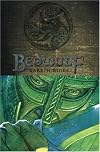
Beowulf has been one of my favourite legends since I was a little girl, so when I saw this after reading another of Gareth Hinds' illustrated/graphic novel adaptations, I had to check it out.
I liked it better than most adaptations of Beowulf I've read. I particularly liked how real the clothes, armour, ships, and surroundings in general looked. I've never before seen someone depict the sea monsters in Beowulf's boast-tale as actual sea creatures, either, which was interesting.
It also lent show more more contrast to the incredibly unreal depictions of Grendel and Grendel's mother. (I admit, when I was first reading, Grendel reminded me of a cross between a cave troll from Middle Earth and Venom from Spiderman.)
Perhaps my favourite of the artwork were those pages depicting the dragon at rest, or first waking, watchful over his hoard. The final pages of sea and sky were beautiful, however, and the fade through the story to a close was smoothly and subtly presented through shifting colours and lines.
The adaptation presented balanced nicely between the poetry and rhythm, archaic words and patterns, that hark to the original tale, and an easy to understand format that didn't require a reader to slow beyond what was needed to appreciate and follow the artwork telling the story. Or at least it began that way - it was honestly a little strange how quickly the text faded out to only pictures (which is acceptable enough for high-action scenes, although many of those pages were slightly hard to follow).
After it returned post the first battle scene particularly, the text began to switch between a drier 'report on a tale' feeling (as though I was hearing someone tell me about the tale of Beowulf, rather than telling me the tale) and the occasional resurgence of the nicely-balanced poetic/simplified tone. show less
I liked it better than most adaptations of Beowulf I've read. I particularly liked how real the clothes, armour, ships, and surroundings in general looked. I've never before seen someone depict the sea monsters in Beowulf's boast-tale as actual sea creatures, either, which was interesting.
It also lent show more more contrast to the incredibly unreal depictions of Grendel and Grendel's mother. (I admit, when I was first reading, Grendel reminded me of a cross between a cave troll from Middle Earth and Venom from Spiderman.)
Perhaps my favourite of the artwork were those pages depicting the dragon at rest, or first waking, watchful over his hoard. The final pages of sea and sky were beautiful, however, and the fade through the story to a close was smoothly and subtly presented through shifting colours and lines.
The adaptation presented balanced nicely between the poetry and rhythm, archaic words and patterns, that hark to the original tale, and an easy to understand format that didn't require a reader to slow beyond what was needed to appreciate and follow the artwork telling the story. Or at least it began that way - it was honestly a little strange how quickly the text faded out to only pictures (which is acceptable enough for high-action scenes, although many of those pages were slightly hard to follow).
After it returned post the first battle scene particularly, the text began to switch between a drier 'report on a tale' feeling (as though I was hearing someone tell me about the tale of Beowulf, rather than telling me the tale) and the occasional resurgence of the nicely-balanced poetic/simplified tone. show less
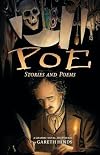
I love this graphic novel adaptation! I have always been a huge E. A. Poe fan and I enjoy reading retellings of classics, but this book was one of the best ones I've read in this medium. The illustrations reflect the stories/poems and themes well. The contrast of colors and the use of light/dark as well as the vivid emotions and expressions on character faces were moving. My favorite is a toss-up between "The Masque of the Red Death" and "Annabel Lee," although all the artwork was good. The show more dialogue was easy to follow and concise. A great choice for adaptation fans, those who enjoy Poe, or readers of graphic novels.
Net Galley Feedback show less
Net Galley Feedback show less
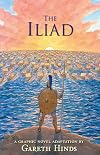
I was expecting this to be a light read, but was surprised by the richness of this graphic novel. The author does not dumb down the story for the readers, and does his best qto retain beautiful images and articulate speeches. i can see it being a gateway for a young person to be introduced to beautiful writing.
For readers new to the story of the Iliad, Hinds provides a lot of help. In the back of the book there is a map and page-by-page notes, as well as an author's note explaining why we show more still read the Iliad today. There is no getting past the fact that keeping track of the characters can be difficult, but Hinds has a handy list at the front of the book of the important Aechaeans, Trojans and Greek gods.
I would say this would be a challenging read for younger readers. The battle scenes are graphic, and there are some pictures that make me a little woozy as an adult. The print is small and words are plentiful, so it may surprise readers looking for a light graphic novel. Mature tweens and teens would be a better target audience.
The copy I received was in black and white, but the final book promises to be in colour. show less
For readers new to the story of the Iliad, Hinds provides a lot of help. In the back of the book there is a map and page-by-page notes, as well as an author's note explaining why we show more still read the Iliad today. There is no getting past the fact that keeping track of the characters can be difficult, but Hinds has a handy list at the front of the book of the important Aechaeans, Trojans and Greek gods.
I would say this would be a challenging read for younger readers. The battle scenes are graphic, and there are some pictures that make me a little woozy as an adult. The print is small and words are plentiful, so it may surprise readers looking for a light graphic novel. Mature tweens and teens would be a better target audience.
The copy I received was in black and white, but the final book promises to be in colour. show less
 This review was written for LibraryThing Early Reviewers.
Lists
Awards


You May Also Like


Associated Authors
Statistics
- Works
- 14
- Also by
- 5
- Members
- 3,472
- Popularity
- #7,325
- Rating
- 3.9
- Reviews
- 114
- ISBNs
- 67
- Languages
- 2

