
Jeanne M. Lee
Author of I Once Was a Monkey: Stories Buddha Told
About the Author
Image credit: Jeanne M. Lee's author profile image at MacMillan
Works by Jeanne M. Lee
Associated Works
The Ch'i-lin Purse: A Collection of Ancient Chinese Stories (1995) — Illustrator, some editions — 296 copies, 1 review
Tagged
Common Knowledge
- Gender
- female
- Birthplace
- Vietnam
- Places of residence
- Massachusetts, USA
- Associated Place (for map)
- Massachusetts, USA
Members
Reviews

The traditional Chinese folk legend of Mu Lan, first set down as a poem in the Tang Dynasty (618-907 CE), is retold in this beautiful bilingual picture-book by Jeanne M. Lee, Chinese-American artist and children's author. A gender-bending tale of filial devotion, it sets out the story of Mu Lan, a young woman who takes her elderly father's place in the emperor's army, determined to spare him the suffering and privation of military life. Spending ten years in the field, Mu Lan advances to the show more rank of general, but declines the rewards offered by the emperor, deciding instead to return home, where her status as a woman is revealed.
In "Writing Chinese America Into Words and Images: Storytelling and Retelling of The Song of Mu Lan," a fascinating article that appeared in the April 2006 issue of The Lion and the Unicorn, scholar Lan Dong (whom I see has now published a full-length study on the subject, Mulan's Legend and Legacy in China and the United States), compared this picture-book to Disney's animated retelling of the (arguably) same tale, concluding that while the Disney production was really an American story, in exoticized Chinese garb, Lee's work (like that of Maxine Hong Kingston, in her classic The Woman Warrior: Memoirs of a Girlhood Among Ghosts) was a genuine melding of Chinese and American traditions.
Although I found Dong's analysis insightful, as it concerned the cultural import of the various retellings of Mu Lan that she considered, and agree that this bilingual retelling is infinitely to be preferred to the Disney film, and its many print adaptations, I wasn't entirely satisfied with Lee's version, judged on its own merits. The watercolor illustrations, done by Lee herself, are gorgeous, as is the traditional calligraphy done by her father, Chan Bo Wan. But while I appreciated that the English translation here was faithful to the poetic form of the original, the text just wasn't that pleasing, as English. Song Nan Zhang, who chose to present his English translation in prose, in the similarly bilingual The Ballad of Mulan, made a wiser decision, I think, and if I could combine his text with Lee's illustrations, I would have my ideal "Mu Lan." As it is, I recommend this telling, together with Song Nan Zhang's, for all young readers interested in a more authentic retelling of this tale, particularly those who may only have encountered the Disney version up until now. show less
In "Writing Chinese America Into Words and Images: Storytelling and Retelling of The Song of Mu Lan," a fascinating article that appeared in the April 2006 issue of The Lion and the Unicorn, scholar Lan Dong (whom I see has now published a full-length study on the subject, Mulan's Legend and Legacy in China and the United States), compared this picture-book to Disney's animated retelling of the (arguably) same tale, concluding that while the Disney production was really an American story, in exoticized Chinese garb, Lee's work (like that of Maxine Hong Kingston, in her classic The Woman Warrior: Memoirs of a Girlhood Among Ghosts) was a genuine melding of Chinese and American traditions.
Although I found Dong's analysis insightful, as it concerned the cultural import of the various retellings of Mu Lan that she considered, and agree that this bilingual retelling is infinitely to be preferred to the Disney film, and its many print adaptations, I wasn't entirely satisfied with Lee's version, judged on its own merits. The watercolor illustrations, done by Lee herself, are gorgeous, as is the traditional calligraphy done by her father, Chan Bo Wan. But while I appreciated that the English translation here was faithful to the poetic form of the original, the text just wasn't that pleasing, as English. Song Nan Zhang, who chose to present his English translation in prose, in the similarly bilingual The Ballad of Mulan, made a wiser decision, I think, and if I could combine his text with Lee's illustrations, I would have my ideal "Mu Lan." As it is, I recommend this telling, together with Song Nan Zhang's, for all young readers interested in a more authentic retelling of this tale, particularly those who may only have encountered the Disney version up until now. show less

The glorious day when a young child is old enough to join her family in bringing gifts to their ancestors in the graveyard has finally arrived. Thanh-Minh goes with great anticipation and is greeted by an old, frightening looking lady name Ba-Nam. With her black teeth, Ba-Nam smiles and frightens Thanh-Minh. Thanh-Minh and her cousin wonder off to pick fruit from the trees in the graveyard as their family is offering the gifts when a sudden rainstorm comes upon them. Frightened by the show more darkened sky, rain and thunder, the children find comfort in Ba-Nam who shelters them through the night. As morning comes, the family is grateful for the children's safe return and thanks Ba-Nam for her help and Ba-Nam jokes that now that the storm has thrown all of the fruit off of the trees, the children do not have to wonder off to climb trees for the fruit. This book's message is not to judge people by their appearances. As Thanh-Minh thought Ba-Nam was terrifying, Ba-Nam ends up saving Thanh-Minh and her cousin. show less
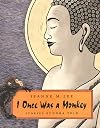
I appreciated how short each story in this collection of stories was (for children's readability). And most impressively, each story relates to the next but can also be read individually.
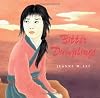
This was a delightful story of a woman named Mei Mei who has been left with nothing after the death of her father and the betrayal of her brothers. Left with almost nothing to sustain living, Mei Mei befriends a hunchback named Po Po. All she knows about the hunchback is that she is shunned by most people, and her house is said to be haunted. They spend time together and Mei Mei learns from the hunchback how to survive off the land. Eventually, a runaway slave escapes and finds the two show more women. They agree to hide him and keep him safe. Po Po plays off of the naiveté of the soldiers and scares them away with her appearance after they show up at her 'haunted house.' The story as a whole was really good, although the structure felt a little discombobulated and lengthy. Things seemed to be introduced at the last minute for the sake of conveniently bringing the story to it's conclusion. Even though one of the main characters of this story is a person with a disability, I still felt as if the only reason for that was to consider Po Po as a person with high value instead of the oppositely, conventional perspective of her. Although I completely agree with this sentiment towards Po Po, I still feel like her character could have been fleshed out a bit more in order to add a deeper sense of representation through her character. Altogether, I still very much enjoyed the story with the illustrations. show less
Lists
Awards


You May Also Like


Statistics
- Works
- 10
- Also by
- 3
- Members
- 662
- Popularity
- #38,093
- Rating
- 3.9
- Reviews
- 39
- ISBNs
- 25
- Languages
- 2