
Steven R. Weisman
Author of The Great Tax Wars: Lincoln to Wilson--The Fierce Battles over Money and Power That Transformed the Nation
About the Author
Steven R. Weisman, vice president for publications and communications at the Peterson Institute for International Economics (PIIE), previously served as a correspondent, editor, and editorial board member at The New York Times. His books The Great Tax Wars: How the Income Tax Transformed America show more received the Hillman Prize in 2003. show less
Works by Steven R. Weisman
The Great Tax Wars: Lincoln to Wilson--The Fierce Battles over Money and Power That Transformed the Nation (2002) 108 copies, 1 review
Associated Works
Daniel Patrick Moynihan: A Portrait in Letters of an American Visionary (2010) — Editor — 99 copies, 3 reviews
Tagged
Common Knowledge
- Gender
- male
- Occupations
- journalist
- Organizations
- The New York Times
- Relationships
- Bumiller, Elisabeth (wife)
- Nationality
- USA
- Associated Place (for map)
- USA
Members
Reviews
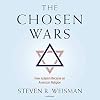
***.5
This is not a comprehensive history of Jews in America, so readers who are expecting that will be disappointed. But since that is such an unruly topic, the author wisely chose a narrow focus, specifically the rise of the Reform movement in the 19th Century. Although it had previously existed in Germany, the unique environment caused all sorts of internecine strife, culture shock, political and economic struggles, and various other upheavals and challenges (e.g. the Civil War, with Jews show more on both sides).
The story is told by focusing on a few of the main players, mostly rabbis and community leaders, who grappled with the familiar issues of assimilation (both cultural and religious), antisemitism, adaptation to modernity, etc. some of the debates from the 19th century seem shockingly relevant, and the fact that 200 years later the Jewish community still hasn't resolved them is sobering.
Some of it is amusing, some inspiring, and a great deal quite tragic. Just like the story of the Jews throughout history. show less
This is not a comprehensive history of Jews in America, so readers who are expecting that will be disappointed. But since that is such an unruly topic, the author wisely chose a narrow focus, specifically the rise of the Reform movement in the 19th Century. Although it had previously existed in Germany, the unique environment caused all sorts of internecine strife, culture shock, political and economic struggles, and various other upheavals and challenges (e.g. the Civil War, with Jews show more on both sides).
The story is told by focusing on a few of the main players, mostly rabbis and community leaders, who grappled with the familiar issues of assimilation (both cultural and religious), antisemitism, adaptation to modernity, etc. some of the debates from the 19th century seem shockingly relevant, and the fact that 200 years later the Jewish community still hasn't resolved them is sobering.
Some of it is amusing, some inspiring, and a great deal quite tragic. Just like the story of the Jews throughout history. show less
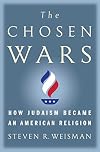
Weisman writes that by the 1880’s Reform rabbis had redefined “what it is to be a Jew “, and “what the purpose of a Jew in America should be”. They stated that their role would be to promote a social gospel. 133 years later, this statement still expresses how a vast majority of American Jews think. “To be a Jew is to join the A.C.L.U., to travel to the border and act as a pro bon lawyer for immigrants, to join the in Women’s March. Weisman elucidates how the American Jews show more embrace a “high-priestly mission” to act as models of ethical behavior. show less
The Great Tax Wars: Lincoln to Wilson--The Fierce Battles over Money and Power That Transformed the Nation by Steven R. Weisman
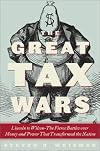
I suppose the most important question is, did I find this book as interesting as I might expect a book about our Federal Tax history to be? The answer, yes. This is a “good read” if – as April 15th rolls around yet again – you find yourself in the typical tax malaise and question just what the Hell went wrong. This doesn’t necessarily answer that question but Weisman does a terrific job of covering the trials and travails that encompass the early history (Lincoln through Wilson show more administrations) of how the income tax was introduced, repealed, and reintroduced – the latter time for sure. As I finished the last chapter I did feel that I may have to check out yet another book covering the subsequent, so-called Welfare State years as this would explain how the original, very controversial, graduated rate starting at 1% and exempting the vast majority of the nation developed into the tragedy we now face paycheck-to-paycheck (that is, the tragedy that our governmental system can’t find solvency off of half our incomes). Yet the author manages to compress the subsequent 80 years (up until 2002) into his 18 page epilogue – Wikipedia style. This was great as I really…really didn’t want to read another tax tome.
More to the point, the author relays the story in about the most engaging way possible without resorting to scurrilous anecdotes about the cast of characters involved (which I secretly desired, of course). Certainly I now have a better understanding about why the income tax was deemed necessary and, indeed, more fair than the previous high tariff system. At this stage of mass consumerism, however, I do wonder if more emphasis on a higher sales tax – at least on non-essentials – might be desirable to reduce what I still view as an absurd income tax burden (“welfare state” or not, I don’t see that many damn safety nets for anyone except AIG and the Big Three). Ideally this would enable pimps, strippers, heroin dealers, and all other such entrepreneurs to also contribute to our shared societal/economical burdens. show less
More to the point, the author relays the story in about the most engaging way possible without resorting to scurrilous anecdotes about the cast of characters involved (which I secretly desired, of course). Certainly I now have a better understanding about why the income tax was deemed necessary and, indeed, more fair than the previous high tariff system. At this stage of mass consumerism, however, I do wonder if more emphasis on a higher sales tax – at least on non-essentials – might be desirable to reduce what I still view as an absurd income tax burden (“welfare state” or not, I don’t see that many damn safety nets for anyone except AIG and the Big Three). Ideally this would enable pimps, strippers, heroin dealers, and all other such entrepreneurs to also contribute to our shared societal/economical burdens. show less
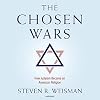
This was an interesting book about the history of Judaism in America. I think I would have liked it better if I had had different expectations going into it. It was mostly about influential Jewish leaders during the mid and late 1800s who set the stage for the three main modern Jewish denominations (Reformed, Conservative, and Orthodox). What I wanted was a history of the Jewish people in America from the early days to the present, but that wasn't the stated goal of the book, so fair's fair.
Awards

You May Also Like


Associated Authors
Statistics
- Works
- 5
- Also by
- 1
- Members
- 189
- Popularity
- #115,305
- Rating
- 3.8
- Reviews
- 4
- ISBNs
- 14