
Lucius Annaeus Seneca, the Younger
Author of Letters from a Stoic
About the Author
Seneca was born in Spain of a wealthy Italian family. His father, Lucius Annaeus Seneca (see Vol. 4), wrote the well-known Controversaie (Controversies) and Suasoriae (Persuasions), which are collections of arguments used in rhetorical training, and his nephew Lucan was the epic poet of the civil show more war. Educated in rhetoric and philosophy in Rome, he found the Stoic doctrine especially compatible. The younger Seneca became famous as an orator but was exiled by the Emperor Claudius. He was recalled by the Empress Agrippina to become the tutor of her son, the young Nero. After the first five years of Nero's reign, Agrippina was murdered and three years later Octavia, Nero's wife, was exiled. Seneca retired as much as possible from public life and devoted himself to philosophy, writing many treatises at this time. But in 65 he was accused of conspiracy and, by imperial order, committed suicide by opening his veins. He was a Stoic philosopher and met his death with Stoic calm. Seneca's grisly tragedies fascinated the Renaissance and have been successfully performed in recent years. All ten tragedies are believed genuine, with the exception of Octavia, which is now considered to be by a later writer. Translations of the tragedies influenced English dramatists such as Jonson (see Vol. 1), Marlowe (see Vol. 1), and Shakespeare (see Vol. 1), who all imitated Seneca's scenes of horror and his characters---the ghost, nurse, and villain. (Bowker Author Biography) show less
Image credit: Statue of Seneca in Cordoba, Spain.
Works by Lucius Annaeus Seneca, the Younger
Letters on Ethics: To Lucilius (The Complete Works of Lucius Annaeus Seneca) (2015) 146 copies, 2 reviews
Seneca: Tragedies, Volume I: Hercules. Trojan Women. Phoenician Women. Medea. Phaedra (2002) 128 copies
Seneca: Tragedies, Volume II: Oedipus. Agamemnon. Thyestes. Hercules on Oeta. Octavia (2004) 99 copies
Seneca: Naturales Quaestiones, Books 1-3 (Loeb Classical Library No. 450) (1971) 55 copies, 1 review
Seneca: Tragedies, Volume II: Agamemnon. Thyestes. Hercules Oetaeus. Phoenissae. Octavia (1929) 50 copies, 1 review
The Cena Trimalchionis of Petronius Together with Seneca's Apocolocyntosis and a Selection of Pompeian Inscriptions (1967) 45 copies, 4 reviews
Seneca: Tragedies, Volume I. Hercules Furens. Troades. Medea. Hippolytus. Oedipus (1917) 45 copies, 1 review
Delphi Complete Works of Seneca the Younger (Illustrated) (Delphi Ancient Classics Book 27) (2014) 36 copies
On the Shortness of Life 34 copies
The Complete Tragedies, Volume 2: Oedipus, Hercules Mad, Hercules on Oeta, Thyestes, Agamemnon (The Complete Works of Lucius Annaeus Seneca) (2017) 21 copies
The Complete Tragedies, Volume 1: Medea, The Phoenician Women, Phaedra, The Trojan Women, Octavia (The Complete Works of Lucius Annaeus Seneca) (2017) 21 copies
Seneca ad Lucilium: Epistulae Morales, Volume I [Latin and English] (The Loeb Classical Library, 75) (1961) 20 copies
Von der Seelenruhe / Vom glücklichen Leben: Von der Muße, Von der Kürze des Lebens (Geschenkbuch Weisheit, Band 4) (2010) 18 copies
A Student’s Seneca: Ten Letters and Selections from De Providentia and De Vita Beata (2006) 17 copies
Sobre la firmeza del sabio ; Sobre el ocio ; Sobre la tranquilidad del alma ; Sobre la brevedad de la vida (2010) 14 copies
Tutkielmia ja kirjeitä 13 copies
De la providence - De la constance du sage - De la tranquillité de l'âme - Du loisir (2003) 10 copies
L. Annaei Senecae philosophi Opera omnia 10 copies
Seneca: His Tenne Tragedies Translated into English. Edited by Thomas Newton, introduction by T. S. Eliot. (1966) 9 copies
Sénèque : La Vie heureuse - La Brièveté de la vie - Lettres à Lucilius (1 à 29) - Manuel (Épitecte) - Pensées pour… (2008) 8 copies
El arte de mantener la calma : un manual de sabiduría clásica sobre la gestión de la ira (2020) 8 copies
Seneca: Selected Moral Epistles. Edited with introduction, notes, and vocabulary (American Philological Association Textbook Series) (1985) 7 copies
La vita felice 6 copies
Gresskarifiseringen av den guddommelige Claudius, eller Gjøn med (keiser) Claudius' død (2018) 6 copies
Obras completas 6 copies
Coleção Grandes Obras do Pensamento Universal (sêneca - A Tranquilidade da Alma / A Vida Retirada) (Em Portuguese do Brasil) (2000) 6 copies
Lletres a Lucili, vol. II: llibres VI-IX (Bernat Metge (rústica)) de Séneca (1 ene 1929) Tapa blanda (1929) 5 copies
L. Annaei Senecae opera quae supersunt: Supplementum (Bibliotheca scriptorum Graecorum et Romanorum Teubneriana) (Latin Edition) (1902) 5 copies
as relações humanas 5 copies
Briefe an Lucilius über Ethik. 15. Buch / Epistulae morales ad Lucilium. Liber 15. (Lernmaterialien) (1996) 5 copies
Seneca's Moral Essays: On Providence, On Tranquility of Mind, On Shortness of Life, On Happy Life (2010) 5 copies, 1 review
Epistulae morales ad Lucilium Liber VII. - Briefe an Lucilius über Ethik. 7. Buch. Lateinisch/Deutsch. (1990) 4 copies
Tutta la vita per imparare a vivere: La tranquillità dell'animo, La brevità della vita, La vita felice (2022) 4 copies
L. Annaei Senecae Thyestes-Phaedra 4 copies
El Arte de dar y recibir : un manual de sabiduría clásica sobre los beneficios de la generosidad y la gratitud (2021) 4 copies
Sobre el ocio / Sobre la tranquilidad del alma / Sobre la brevedad de la vida (Spanish Edition) (2011) 4 copies
Sobre a tranquilidade da alma 4 copies
Apie sielos ramybę 4 copies
Lettere a Lucilio 4 copies
Ad Lucilium epistulae morales 4 copies
L. Annaei Senecae opera quae supersunt: Volumen II (Bibliotheca scriptorum Graecorum et Romanorum Teubneriana) (Latin Edition) (1884) 4 copies
L. Annaei Senecae opera quae supersunt: Volumen III (Bibliotheca scriptorum Graecorum et Romanorum Teubneriana) (Latin Edition) (1886) 4 copies
L. & M. Annaei Senecae Tragoediae 4 copies
L. Annaei Senecae opera quae supersunt: Volumen I (Bibliotheca scriptorum Graecorum et Romanorum Teubneriana) (Latin Edition) (1902) 4 copies
Lletres a Lucili, vol. IV i últim: llibres XVI-XX (Bernat Metge (rústica)) de Séneca (1 ene 1931) Tapa blanda (1930) 4 copies
DIALOGJE 4 copies
Uitspraken 3 copies
De Providentia (Latin) 3 copies
Théâtre complet : Phèdre, Thyeste, Les Troyennes, Agamemnon, Médée, Hercule furieux, Hercule sur l'Oeta, Oedipe, Les Phéniciennes (2012) 3 copies
Medea, Oedipus, Agamemnon, Hercules 3 copies
Briefe an Lucilius über Ethik. 11.-13. Buch / Epistulae morales ad Lucilium. Liber 11-13. (1996) 3 copies
Нравственные письма к Луцилию. Избранные афоризмы: Собрание сочинений. Том 1 (Russian Edition) (2021) 3 copies
La condizione umana: antologia dai dialoghi, dalle lettere a Lucilio e dalle tragedie (1976) 3 copies
Da Felicidade 3 copies
Sobre la felicidad y la brevedad de la vida: Cómo alcanzar la felicidad atreviéndote a ser tu mismo (2022) 3 copies
Briefe an Lucilius über Ethik. 16. Buch. / Epistulae morales ad Lucilium. Liber XVI. (1997) 3 copies
Of Consolation (Polybius) 3 copies
Lletres a Lucili. I 3 copies
The Complete Tragedies, Volume I: Medea, The Phoenician Women, Phaedra, The Trojan Women, Octavia (The Complete Works of Lucius Annaeus Seneca) (2017) 3 copies
El arte de morir: Un manual de sabiduría clásica para el final de la vida (Spanish Edition) (2023) 3 copies, 1 review
Seneca's Letters from a Stoic 3 copies
Hercules furens, Troades, Phoenissae 3 copies
On Providence 3 copies
人生の短さについて 他2篇 (古典新訳文庫) 3 copies
Dialogues, tome 4. De la providence - De la constance du sage - De la tranquilité de l'âme - De l'oisiveté. Testo latino a fronte (2002) 3 copies
Nu mai plânge!: Consolaţie pentru Marcia, Consolaţie pentru Polybius, Consolaţie pentru Helvia (2015) 3 copies
Sénèque pour managers 3 copies
Dialoghi 2 copies
Sobre la firmeza del sabio / Sobre el ocio / Sobre la tranquilidad del alma / Sobre la brevedad de la vida (2024) 2 copies
Tragedias II 2 copies
la zucca divinizzata 2 copies
Dels beneficis, vol. II 2 copies
Dels Beneficis, Vol. I 2 copies
On Providence (Annotated) 2 copies
Medeia 2 copies
L'arte di non adirarsi 2 copies
The Phoenician Women 2 copies
Moralske brev til Lucilius 2 copies
Of a Happy Life 2 copies
I Dialoghi, Vol. 2 / Consolazione a Marcia; Della vita felice; Della vita appartata; Della tranquillità dell'animo; Della brevità della vita; Consolazione a Polibio;… (1990) — Author — 2 copies
Colecção grandes filósofos - Séneca (os estóicos) - A vida feliz / Manual (Epicteto) / Pensamentos (Marco Aurélio) (2009) 2 copies
Phoenissae (Latin) 2 copies
Opere morali: Lettere a Lucilio - Dialoghi - Consolazioni (Radici BUR) (Italian Edition) (2013) 2 copies
Lettere a Lucilio e trattati morali — Author — 2 copies
Lettere a Lucilio: antologia 2 copies
Cicerón y Séneca: Tratados morales 2 copies
Philosophische Schriften 2 copies
Thyestes, Phaedra 2 copies
Lettres a Lucilius 2 copies
De consolatione ad Polybium 2 copies
Medea - Oedipus, Agamemnon, Hercules (Oetaeus). Iteratis curis edidit Humbertus Moricca. (1947) 2 copies
Cartas a Lucilio: Epístolas escogidas / Letters to Lucilius: Selected Epistles (Spanish Edition) (2024) 2 copies
Hercules On Oeta 2 copies
Briefe an Lucilius / Epistulae Morales ad Lucilium [Epistulae I-LXXV] (Sammlung Tusculum) (2007) 2 copies
Dialogorum libri 9-10 2 copies
Cartas Consolatórias 2 copies
About tranquility of soul 2 copies
Loeb IV: epistulae morales 2 copies
Dialogues, tome III. Consolations 2 copies
Divi Claudii Ἀποκολοκύνθωσις 2 copies
Seneca im literarischen Urteil der Antike; Darstellung und Sammlung der Zeugnisse, Volume 2 (1971) 2 copies
Kaitselmuksesta 2 copies
Octavia Praetexta 1 copy
Tragedias I 1 copy
De la Providence Divine 1 copy
Operette Morali, vol. 1 1 copy
Stoicism for Beginners: 100 Stoic Quotes on Bravery, Overcoming Obstacles and How To Live (2016) 1 copy
Onkwetsbaarheid 1 copy
L. Annaei Senecae Operum Alter Tomus. In quos, quæ catalogus paginæ sequentis continet, habentur 1 copy
Of Consolation (Marcia) 1 copy
Seneca Tragoediae 1 copy
Naturales Quaestiones: Bks.IV-VII v. 2 (Loeb Classical Library) by Seneca (1989-07-01) (1881) 1 copy
Phaedram 1 copy
Otium et negotium 1 copy
Dialogues. De ira 1 copy
Glück und Schicksal: Philosophische Betrachtungen. Jubiläumsausgabe (Jubiläumsausgabe UB) (2017) 1 copy
Útěchy 1 copy
Letters and Essays 1 copy
Medea / Fedra 1 copy
I Benefici 1 copy
Tratado sobre la ira. Tratado sobre la clemencia. Dos tratados morales de Séneca. (Spanish Edition) (2012) 1 copy
Výbor z listů Luciliovi 1 copy
LA IRA 1 copy
Tratados filosóficos. Cartas 1 copy
Séneca De la cólera 1 copy
Aprender a pensar: Séneca 1 copy
Sobre la felicidad, De la brevedad de la vida, Sobre la clemencia, Ideario, Ciencias naturales 1 copy
Epigramas 1 copy
Sêneca - Tragédias 1 copy
Tratados morales 1 copy
La mort… sereinement : Maximes de sagesse et extraits des lettres à Lucilius (1998) 1 copy, 1 review
Dialogues, tome 2 1 copy
Médée 1 copy
Troianas 1 copy
Sobre la felicidad - De la brevedad de la vida - Sobre la clemencia - Ideario - Ciencias naturales 1 copy
Séneca 1 copy
Ideario 1 copy
Ciencias naturales 1 copy
Los aforismos de oro 1 copy
QÜESTIONS NATURAL. III 1 copy
Diálogos - Volume I 1 copy
Des bienfaits tome I e II 1 copy
La brevita' della vita 1 copy
Phaedra 1 copy
Medea 1 copy
Hercules Furens 1 copy
Selected Letters 1 copy
On Peace of Mind 1 copy
Troades 1 copy
Thyestes 1 copy
Epistolas morales a lucilo 1 copy
Dels Beneficis II 1 copy
Dels Benefucis I 1 copy
Lletres a Lucili IV 1 copy
Lletres a Lucili III 1 copy
As troianas 1 copy
On Mercy 1 copy
Of Leisure [De Otio] 1 copy
L'arte di essere felici 1 copy
El arte de mantener la calma: Un manual de sabiduría clásica sobre la gestión de la ira 1 copy, 1 review
Tragédies. Tome II : Oedipe- Agamemnon- Thyeste - Hercule sur l'Oeta- Pseudo-Seneque - Octave 1 copy
El arte de vivir: Un manual de sabiduría clásica sobre la gestión del tiempo (Spanish Edition) (2023) 1 copy
Výbor z listů Luciliovi 1 copy
Scrisori către Lucilliu 1 copy
De constantia sapientis 1 copy
De consolatione ad Helviam 1 copy
Opere Vol. IV 1 copy
Scrisori către Luciliu 1 copy
De Ira (Sull'Ira), Dialoghi 1 copy
Eloge de l'oisiveté 1 copy
Médée - Présentation, chronologie et notes de Charles Guittard - Dossier (Médée dans la littérature grecque, Médée dans la… (1997) 1 copy
Tragédies 1 copy
Traités philosophiques 1 copy
Oeuvres complètes de Sénèque le Philosophe - Tome II (Chefs-d'oeuvre des littératures anciennes) 1 copy
Le tragedie di Seneca trasportate in verso sciolto dal sig. Hettore Nini Seneca Lucius Annaeus 1 copy
Manuel (Epictète) 1 copy
Philosophi scripta 1 copy
De la vie heureuse (Sulla vita beata); De la brièveté de la vie (sulla brevità della vita), Dialoghi 1 copy
The Stoics 1 copy
SENECA: BRIEVEN AAN LUCILIUS Een Bloemlezing, Van Inleiding En Aanteekeningen Voorzien (1930) 1 copy
LettersfromaStoic 1 copy
Sobre a Ira [On Anger] 1 copy
La felicità del saggio : vol. 25 della Collana Classici Copact Filosofia Antica prt Spiriti Moderni 1 copy
Seneca: Von der Seelenruhe | Vom glücklichen Leben | Von der Muße | Von der Kürze des Lebens (2016) 1 copy
Dei benefizi 1 copy
Seneca’s Tragedies, Volume I: Hercules Furens, Troades, Medea, Hippolytus, and Oedipus: Latin Text 1 copy
Seneca’s Tragedies, Volume I: Hercules Furens, Troades, Medea, Hippolytus, and Oedipus: English Text 1 copy
The Madness of Hercules 1 copy
On Leisure (De Otio) 1 copy
Θυέστης 1 copy
Wie viel Luxus braucht der Mensch?: [Was bedeutet das alles?] (Reclams Universal-Bibliothek) (2020) 1 copy
Dialoghi. 1: Consolazione a Marcia: Consolazione a Polibio: Consolazione alla madre Elvia: La provvidenza: La fermezza del saggio — Author — 1 copy
Scrisori catre Luciliu 1 copy
On The Shortness Of Life (illustrated): & other life lessons for the 21st century (Life 101) (2015) 1 copy
Letters From a Stoic 1 copy
Lo stile e l'uomo: quattro epistole letterarie di Seneca (Sen. Epist. 114; 40; 100; 84) (2018) 1 copy
Epistolē 90 : Senekas enantion Poseidōniou : mia archaia diamachē gia tēn symvolē tēs philosophias stēn exelixē tou politismou (2002) 1 copy, 1 review
Pagine di morale 1 copy
Tragedies of Seneca 1 copy
Letters From A Stoic 1 copy
(4 vol.) L. Annaei Senecae Philosophi Opera Omnia. Ad Optimorum Librorum Fidem Accurate Edita 1 copy
Seneca's Oedipus 1 copy
La vita felice: La vita contemplativa: La tranquillità dell'animo: La brevità della vita: L'ira 1 copy
Morals of Seneca 1 copy
Tragédies complètes: Œdipe, Les Phéniciennes, Hercule furieux, Hercule sur l'Œta, Médée, Phèdre, Thyeste, Les Troyennes,… (2022) 1 copy
De ira ad Novatum libri tres 1 copy
Della brevita della vita 1 copy
Troades Englished. By S.P 1 copy
מכתבי מוסר 1 copy
Physical Science in the Time of Nero. Being a Translation of the Quaestiones Naturales of Seneca (1910) 1 copy
Œuvres diverses de Sénécé 1 copy
L. Annaeus Seneca: On Providence, On Tranquility of Mind, On Shortness of Life, On Happy Life (1884) 1 copy
Epistles [3-volume set] 1 copy
Lettres a Lucilius vol 1.-5 1 copy
Sénèque: Tragédies vol. I 1 copy
L. Annaeus Seneca rhetor; [a cura di F. Serra] ; indicem nominum et rerum instruxit Christina Zani 1 copy
L. Annæi Senecæ Philosophi Opera Quæ Exstant Omnia: A Ivsto Lipsio Emendata Et Scholiis Illvstrata 1 copy
Sentences, divisions et couleurs des orateurs et des rhéteurs: Controverses et suasoires (Bibliothèque philosophique) (1992) 1 copy
Epistole morali a Lucilio 1 copy
Le lettere a Lucilio 1 copy
Apokolokyntosis. Satyricon 1 copy
Seneca VIII: Tragedies I 1 copy
Thyestes : a tragedy 1 copy
Operette morali; volume 1 1 copy
zz letteratura, Seneca: una morale per vivere. 3 volumi: La vita ritirata, La brevità della vita, la tranquillità dell'animo, (1992) 1 copy, 1 review
L. Anneo Seneca Delle sette arti liberali Delle pistole e Del trattato della provvidenza di Dio 1 copy
La lettera 65 di Seneca 1 copy
Four tragedies 1 copy
Les Phéniciennes 1 copy
Tragedies, vol. 2 1 copy
Seneca's tragedies 1 copy
İyilikler Üzerine 1 copy
Qüestions naturals, vol. 1 1 copy
Qüestions naturals, vol. 2 1 copy
Qüestions naturals, vol. 3 1 copy
Opera: Naturalium Quaestionum Libri (Bibliotheca scriptorum Graecorum et Romanorum Teubneriana) (1998) 1 copy
Consolaciones 1 copy
Dels beneficis, vol. 1 1 copy
Dels beneficis 1 copy
Dels beneficis, vol. 2 1 copy
Lletres a Lucili, vol. 4 1 copy
Letters from a Stoic 1 copy
Lletres a Lucili, vol. 3 1 copy
Ad Lucilium, Epistulae Morales. With an English Translation by Richard Gummere. Volume 2 only. 1 copy
Tragèdies: traducció catalana medieval amb comentaris del segle XIV de Nicolau Treve, volum II (1995) 1 copy
Epístoles a Lucili: traducció catalana medieval: Epístoles XCI-CXXIV (versió I), Flors o autoritats: Volum III (1900) 1 copy
Lletres a Lucili, vol. 2 1 copy
Pensamientos de Séneca 1 copy
Antologia senecana 1 copy
Mad Hercules 1 copy
Opere morali 1 copy
Des remedes de fortune 1 copy
Des quatres vertus cardinals 1 copy
Philosophi Opera Omnia 1 copy
Varia opera philosophica 1 copy
Teatro volume secondo 1 copy
Seneca's Tradgedies 1 copy
Tragédies. 1 1 copy
De consolatione ad Marciam 1 copy
Von der Muße 1 copy
Teatro volume primo 1 copy
El arte de mantener la calma: Un manual de sabiduría clásica sobre la gestión de la ira (Spanish Edition) (2020) 1 copy
Sämtliche Tragödien : lateinisch und deutsch = Tragoedias 1 Hercules Furens. Trojanerinnen [u.a.] 1 copy
Medea 1 copy
Epistolae 1 copy
Трагедии: [Сб.: Пер.] 1 copy
Letters and other extracts 1 copy
Epistolae Morales Vol. I 1 copy
Om vrede 1 copy
"On Gathering Ideas" 1 copy
Stoicism 1 copy
Briefe an Lucilius über Ethik. 17. und 18. Buch / Epistulae morales ad Lucilium. Liber XVII et XVIII. (1998) 1 copy
Antologia filosofica 1 copy
El arte de mantener la calma: Un manual de sabiduría clásica sobre la gestión de la ira. (2020) 1 copy
Obras completas de Sêneca 1 copy
Brieven aan Lucilius 1 copy
Ausgewählte Schriften 1 copy
Tanrısal Öngörü 1 copy
El libro de la sabiduría 1 copy
La Felicità 1 copy
Vita felice 1 copy
La felicità 1 copy
La felicità 1 copy
Le Tragedie vol.2 1 copy
Obras escogidas de Séneca 1 copy
Obras morales : (selección) 1 copy
Opere in prosa 1 copy
De Otio 1 copy
Le tragedie 1 copy
Seneca [Opere di] 1 copy
Associated Works
World Poetry: An Anthology of Verse from Antiquity to Our Time (1998) — Contributor — 496 copies, 2 reviews
Stoic Six Pack - Meditations of Marcus Aurelius and More: The Complete Stoic Collection (2014) — Contributor — 71 copies
The Dedalus Book of Roman Decadence: Emperors of Debauchery (Decadence from Dedalus) (1994) — Contributor — 53 copies
Readings and Exercises in Latin Prose Composition: From Antiquity to the Renaissance (2005) — Contributor — 47 copies
Masters of Roman prose from Cato to Apuleius : interpretative studies (1983) — Contributor — 26 copies
Oogst Der Tijden. keur uit de werken van schrijvers en dichters aller volken en eeuwen (1940) — Contributor — 12 copies
Latijnse varia : bloemlezing uit de werken van een tiental Latijnse dichters en prozaschrijvers (1954) — Contributor — 4 copies
L. Annaeus Seneca Troades: Introduction, Text and Commentary (Mnemosyne, Bibliotheca Classica Batava Supplementum) (2000) — Author — 3 copies
Römische Satiren : Ennius, Lucilius, Varro, Horaz, Persius, Juvenal, Seneca, Petronius (1962) — Contributor — 2 copies
Tagged
Common Knowledge
- Canonical name
- Seneca, Lucius Annaeus, the Younger
- Other names
- Seneca the Younger
- Birthdate
- 004 BCE
- Date of death
- 065 CE
- Gender
- male
- Occupations
- philosopher
dramatist
statesman
satirist - Relationships
- Seneca the Elder (father)
Lucan (nephew) - Cause of death
- suicide (ordered by Nero)
- Nationality
- Roman Empire
- Birthplace
- Cordoba, Spain
- Place of death
- Rome, Italy
- Map Location
- Italy
Spain
Members
Discussions
Second Round: On the Shortness of Life by Seneca; profound philosophical meditations in Consensus Press (October 2022)
Starting Seneca in Philosophy and Theory (February 2009)
Reviews
Letters from a Stoic: Epistulae Morales Ad Lucilium (Penguin Classics) by Lucius Annaeus Seneca, the Younger
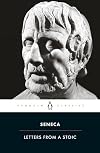
I've deeply disliked modern philosophy. To me, it feels like the field comes up with theories about human life, happiness, behavior, ideals, but then brazenly refuses to put any of it to the test. It prefers the beauty of an idea to the reality of its implementation. It's kind of like fantasy-writing except the authors pretend it's an actual field of study instead of acknowledging what they're doing is just a fun mental exercise.
In the meantime, I've felt like there was something missing show more from human understanding. There's no one out there trying to create a philosophy and live it, see how it works in the real-world, modify it, and improve it. This field is absent from human life, even though, to me, it feels like this would be the most important thing humans could do.
This collection of letters is that missing field in action. These letters were only intended for 1 person (Lucilius), so there's a deep level of intimacy to them. We don't see Seneca as the public figure, but Seneca as the man, trying to live the good life, putting his ideals to the test every day as best he can, faltering along the way and being upfront about the faltering. Throughout, he tries to emphasize that philosophy-- all of this -- is only useful if it improves life.
He does go on random esoteric rants about abstract ideas (as all philosophers ultimately do) but that's not the core of these letters -- there is a small amount of intellectual debate between 2 people (where, unfortunately, we only get 1 side), but it's mostly "how are you, here's how I'm doing, here are some of the things I'm facing/have faced and here's how it interconnects to this philosophy I'm practicing".
What's also weird is how extremely apropos almost all of his advice is to our modern lives. Not just in a "timeless ideal" sense -- he complains about how noisy it is to have an apartment in the city, how sometimes we like to pretend to be too busy to respond to messages, he even complains about shops setting up for Christmas (Saturnalia) earlier and earlier every year! It really makes him feel relatable to me and my own world, which is why I think it also strikes such a strong chord with me.
It's also just so refreshing to see a person trying to merge their intellectual ideals with their real-life self, and exchanging tips and tricks to help do that, but also not getting lost in the abstract, and not beating themselves up too much when they slip up. I feel like I'm trying to do the same in my life, and reading these letters makes me feel like I'm not the only one doing that. I feel personally supported by this guy from 2000 years ago in a way I don't feel in the modern world.
I've never more desperately wanted to meet a person from history and sit and have a beer with them. show less
In the meantime, I've felt like there was something missing show more from human understanding. There's no one out there trying to create a philosophy and live it, see how it works in the real-world, modify it, and improve it. This field is absent from human life, even though, to me, it feels like this would be the most important thing humans could do.
This collection of letters is that missing field in action. These letters were only intended for 1 person (Lucilius), so there's a deep level of intimacy to them. We don't see Seneca as the public figure, but Seneca as the man, trying to live the good life, putting his ideals to the test every day as best he can, faltering along the way and being upfront about the faltering. Throughout, he tries to emphasize that philosophy-- all of this -- is only useful if it improves life.
He does go on random esoteric rants about abstract ideas (as all philosophers ultimately do) but that's not the core of these letters -- there is a small amount of intellectual debate between 2 people (where, unfortunately, we only get 1 side), but it's mostly "how are you, here's how I'm doing, here are some of the things I'm facing/have faced and here's how it interconnects to this philosophy I'm practicing".
What's also weird is how extremely apropos almost all of his advice is to our modern lives. Not just in a "timeless ideal" sense -- he complains about how noisy it is to have an apartment in the city, how sometimes we like to pretend to be too busy to respond to messages, he even complains about shops setting up for Christmas (Saturnalia) earlier and earlier every year! It really makes him feel relatable to me and my own world, which is why I think it also strikes such a strong chord with me.
It's also just so refreshing to see a person trying to merge their intellectual ideals with their real-life self, and exchanging tips and tricks to help do that, but also not getting lost in the abstract, and not beating themselves up too much when they slip up. I feel like I'm trying to do the same in my life, and reading these letters makes me feel like I'm not the only one doing that. I feel personally supported by this guy from 2000 years ago in a way I don't feel in the modern world.
I've never more desperately wanted to meet a person from history and sit and have a beer with them. show less
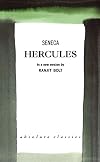
Seneca’s Hercules reads more like a series of monologues than a play, and the translator has chosen to convert it into rhyming couplets, which gives it a rather Shakespearean style. The text is firmly in Juno’s camp, which is interesting - she’s so often portrayed as simply petty and jealous, but here she is motivated by a need to protect heaven from a man who’s grown powerful enough to take control of it, and who, having proven his worth on earth, is now looking to heaven for his show more next challenge. show less

This is a great and thorough look at anger.
Many modern books take a neurological or biological perspective, and focus quite a bit on the part of anger where it initially occurs and disrupts you "in the moment". Very few talk about what we do in our own minds to keep anger going, and how unhealthy and ultimately foolish that is. This does, and thoroughly at that.
I "only" gave it 4 stars because it lacks some of the modern angle of "self-compassion". Sometimes, we know what's right but are show more unable to act on it in the moment. Some of us are overly harsh on ourselves when those moments happen, which can be a new problem in and of itself, which we're only really understanding now.
But, otherwise, for a 2000 year-old text, it holds up really really well. show less
Many modern books take a neurological or biological perspective, and focus quite a bit on the part of anger where it initially occurs and disrupts you "in the moment". Very few talk about what we do in our own minds to keep anger going, and how unhealthy and ultimately foolish that is. This does, and thoroughly at that.
I "only" gave it 4 stars because it lacks some of the modern angle of "self-compassion". Sometimes, we know what's right but are show more unable to act on it in the moment. Some of us are overly harsh on ourselves when those moments happen, which can be a new problem in and of itself, which we're only really understanding now.
But, otherwise, for a 2000 year-old text, it holds up really really well. show less
Letters from a Stoic: Epistulae Morales Ad Lucilium (Penguin Classics) by Lucius Annaeus Seneca, the Younger
CCXXIII: “[W]e are attracted by wealth, pleasures, good looks, political advancement and various other welcoming and enticing prospects: we are repelled by exertion, death, pain, disgrace, and limited means. It follows that we need to train ourselves not to crave the former and not to be afraid of the latter. Let us fight the battle the other way round — retreat from the things that attract us and rouse ourselves to meet the things that actually attack us” (230)
What a thing to be show more Lucilius, the addressee of these letters from a stoic. If this Lucilius was, as speculated, the procurator of Sicily, receiving correspondence from a man of standing such as Seneca may not have been out of the ordinary. But these are remarkable letters that are friendly and full of depth. I would love such correspondence, but I fear that letter writing like this is long a thing of the past. Today, we have neither the occasion nor, often, the skill or attention to write letters like these.
In the letters you read the voice of one who never lost the ethos of a teacher. The letters are full of observations, questions, provocations, admonitions, and corrections. Seneca covers a range of topics from friends, happiness, the liberal arts, diet, vices, virtues, death, old age, habits, and noise. These are letters of a person who is living out his old age, experiencing life, and framing it through the wisdom of a stoic philosophy that has been developed outside the pages of these letters but that comes through in tight, shareable adages about cultivating wisdom through philosophy, and developing and practicing temperance in our appetites and desires.
In later letters, Seneca touches on fears of death, infirmity, pain, and disgrace. He advocates the courage to face these fears because we are going to face our share of them in life regardless. There is no sense in fearing what we cannot control. The only thing we can control is our reactions, an ability that we cultivate through philosophy. And if there is one thing that about stoicism that people seem to remember and carry forward to our modern age, it’s this.
Where we seem to get stoicism wrong in popular adaption is in thinking about stoicism as detachment, a stony demeanor or a lone person (a man, usually!) who faces the world dispassionately. This person is a boulder in the middle of a river, unaffected by the rushing waters around them. He is an emotionless, distant, inscrutable, reasoning being. I can see how one arrives at that version of Bro-Stoicism (Bro-icism, maybe?) but this overlooks the fourth virtue of stoicism in addition to wisdom, temperance, and courage: justice. Justice is about doing good and right for others as is their due. And at the very least we can see the correspondence between Seneca and Lucilius as a manifestation of justice, sharing wisdom not as a set of dictums (well, not always) but as a set of habits of mind to practice, through which one may flourish.
Amusingly, Seneca is not always good at following his own advice. Although he generally seems to keep his appetites under control there is a bit of crabbiness when his dinner is not prepared, or his apartments are not made ready for his arrival after travel, or people make too much noise outside, etc. This is not the cheerful acceptance that he advocates but I suppose that it is a way of dealing with and making the best of things.
There are many meditative passages in these letters and some that I have flagged to come back to because they seem to offer perspective that I find personally valuable in addressing my own personal and professional fears. There are also passages in these letters that seem to offer perspective that is problematic.
Personally, I have a difficult time understanding Seneca’s critique of the liberal arts or of eclectic reading and learning because it is unfocused. Or maybe I’m just a little sensitive because I feel a little called out here. I get that there is a lack of depth with learning that is too diffuse, but the world and its people are full of diverse experience and there is little chance that we can engage with that diversity of experience if we choose a narrow path.
I also have difficulty accepting Seneca’s view of nature. There is something appealing about saying that our habits and approach to life should be in alignment with nature: rise when the sun comes up, eat when we are hungry, drink when we are thirsty, welcome good fortune when it comes to us, accept ill fortune when it comes as well. But what is nature? How can one be in harmony with nature in, say, one’s professional life where you can be taken advantage of? Where your job might be exploitative by design? Where good fortune comes not to everyone at some point but to those who compete best for it? Is nature in that sense not a State of Nature but rather the system one finds oneself in? If so, is the wisdom one needs the wisdom about how to live and work in that state of nature? I think that this is the way to read Seneca’s view of nature. However, in that kind of setting it seems that people vary greatly in terms of their agency or the ability to control things about their situation. Seneca can’t possibly mean that control of one’s situation means abdicating duties or even getting out of exploitative situations. Certainly not in a republic where one’s role IS one’s duty. Perhaps instead, the lesson is more modest that we can at least control our reactions to those situations. That is at least some kind of control, paltry as it seems. show less
What a thing to be show more Lucilius, the addressee of these letters from a stoic. If this Lucilius was, as speculated, the procurator of Sicily, receiving correspondence from a man of standing such as Seneca may not have been out of the ordinary. But these are remarkable letters that are friendly and full of depth. I would love such correspondence, but I fear that letter writing like this is long a thing of the past. Today, we have neither the occasion nor, often, the skill or attention to write letters like these.
In the letters you read the voice of one who never lost the ethos of a teacher. The letters are full of observations, questions, provocations, admonitions, and corrections. Seneca covers a range of topics from friends, happiness, the liberal arts, diet, vices, virtues, death, old age, habits, and noise. These are letters of a person who is living out his old age, experiencing life, and framing it through the wisdom of a stoic philosophy that has been developed outside the pages of these letters but that comes through in tight, shareable adages about cultivating wisdom through philosophy, and developing and practicing temperance in our appetites and desires.
In later letters, Seneca touches on fears of death, infirmity, pain, and disgrace. He advocates the courage to face these fears because we are going to face our share of them in life regardless. There is no sense in fearing what we cannot control. The only thing we can control is our reactions, an ability that we cultivate through philosophy. And if there is one thing that about stoicism that people seem to remember and carry forward to our modern age, it’s this.
Where we seem to get stoicism wrong in popular adaption is in thinking about stoicism as detachment, a stony demeanor or a lone person (a man, usually!) who faces the world dispassionately. This person is a boulder in the middle of a river, unaffected by the rushing waters around them. He is an emotionless, distant, inscrutable, reasoning being. I can see how one arrives at that version of Bro-Stoicism (Bro-icism, maybe?) but this overlooks the fourth virtue of stoicism in addition to wisdom, temperance, and courage: justice. Justice is about doing good and right for others as is their due. And at the very least we can see the correspondence between Seneca and Lucilius as a manifestation of justice, sharing wisdom not as a set of dictums (well, not always) but as a set of habits of mind to practice, through which one may flourish.
Amusingly, Seneca is not always good at following his own advice. Although he generally seems to keep his appetites under control there is a bit of crabbiness when his dinner is not prepared, or his apartments are not made ready for his arrival after travel, or people make too much noise outside, etc. This is not the cheerful acceptance that he advocates but I suppose that it is a way of dealing with and making the best of things.
There are many meditative passages in these letters and some that I have flagged to come back to because they seem to offer perspective that I find personally valuable in addressing my own personal and professional fears. There are also passages in these letters that seem to offer perspective that is problematic.
Personally, I have a difficult time understanding Seneca’s critique of the liberal arts or of eclectic reading and learning because it is unfocused. Or maybe I’m just a little sensitive because I feel a little called out here. I get that there is a lack of depth with learning that is too diffuse, but the world and its people are full of diverse experience and there is little chance that we can engage with that diversity of experience if we choose a narrow path.
I also have difficulty accepting Seneca’s view of nature. There is something appealing about saying that our habits and approach to life should be in alignment with nature: rise when the sun comes up, eat when we are hungry, drink when we are thirsty, welcome good fortune when it comes to us, accept ill fortune when it comes as well. But what is nature? How can one be in harmony with nature in, say, one’s professional life where you can be taken advantage of? Where your job might be exploitative by design? Where good fortune comes not to everyone at some point but to those who compete best for it? Is nature in that sense not a State of Nature but rather the system one finds oneself in? If so, is the wisdom one needs the wisdom about how to live and work in that state of nature? I think that this is the way to read Seneca’s view of nature. However, in that kind of setting it seems that people vary greatly in terms of their agency or the ability to control things about their situation. Seneca can’t possibly mean that control of one’s situation means abdicating duties or even getting out of exploitative situations. Certainly not in a republic where one’s role IS one’s duty. Perhaps instead, the lesson is more modest that we can at least control our reactions to those situations. That is at least some kind of control, paltry as it seems. show less
Lists
Read in 2016 (1)
Reading LIst (1)
Antigua Roma (1)
Ancient Crete (1)
The Trojan War (1)
el (2)
Western Canon (2)
Awards


You May Also Like


Associated Authors
Statistics
- Works
- 1,190
- Also by
- 26
- Members
- 17,587
- Popularity
- #1,256
- Rating
- 4.0
- Reviews
- 249
- ISBNs
- 1,320
- Languages
- 29
- Favorited
- 9
