
Julie Zickefoose
Author of The Bluebird Effect: Uncommon Bonds with Common Birds
About the Author
Julie Zickefoose, the author and illustrator of Baby Birds (2016), The Bluebird Effect (2012), and Letters from Eden (2006), is a contributing editor to Bird Watcher's Digest. She lives with her family at Indigo Hill, an eighty-acre wildlife sanctuary in Appalachian Ohio that has hosted 194 bird show more species and seventy-eight species of butterflies. show less
Image credit: Julie Zickefoose publicity photo
Works by Julie Zickefoose
Associated Works
Good Birders Don't Wear White: 50 Tips From North America's Top Birders (2007) — Contributor — 152 copies, 6 reviews
Silence of the Songbirds: How We Are Losing the World's Songbirds and What We Can Do to Save Them (2007) — Illustrator, some editions — 113 copies, 2 reviews
Tagged
Common Knowledge
- Birthdate
- 20th Century
- Gender
- female
- Relationships
- III, Bill Thompson (husband)
- Nationality
- USA
- Places of residence
- Ohio, USA
- Associated Place (for map)
- Ohio, USA
Members
Reviews
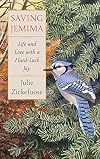
What a lovely book - in every sense. It is a compact, colorful, beautifully produced object: just a comfortable size to hold and read, on classy paper stock, and illuminated throughout with Zickefoose's elegant paintings and drawings, plus charming photos of Jemima the blue jay and members of her human foster family. I so often wish that art-type books I've read recently had some decent illustrations; this one was a joy.
Those of us who follow Zickefoose on Facebook or through her blog show more already know some of this story, but here she gets room to expand on the year she spent nursing, coaching, watching, cheering, photographing, drawing and loving the tough little blue jay she had rescued as a sickly 11-day-old fluff nugget. In warm-hearted prose, she tells us all about the intellectual and emotional ride you get when you do what she does: devote your life to saving and releasing wildlife in need... and having to say good-bye. The tale of Jemima - a delightful, charismatic, demanding little character - is woven through other strands of Zickefoose's life: her near-adult children who are themselves preparing to leave the "nest," her marriage, her aging dog, her own enmeshment in relationships with wild animals - some of which made my heart ache. This all adds up to more than just another human wild animal story. For birders, there is a wealth of information to be relished about feeding, behaviors, and personalities (Brown Thrashers are described as "catlike and comical" - perfect!). A recipe for "Zick Dough," her own particular brew for winter feeding, is provided. A particularly gorgeous plate is a circle of portraits of the individual jays she knew by sight, depicting the subtle markings and hues that made each one unique.
A wonderful mix of birds, humans, arts, words, and love. show less
Those of us who follow Zickefoose on Facebook or through her blog show more already know some of this story, but here she gets room to expand on the year she spent nursing, coaching, watching, cheering, photographing, drawing and loving the tough little blue jay she had rescued as a sickly 11-day-old fluff nugget. In warm-hearted prose, she tells us all about the intellectual and emotional ride you get when you do what she does: devote your life to saving and releasing wildlife in need... and having to say good-bye. The tale of Jemima - a delightful, charismatic, demanding little character - is woven through other strands of Zickefoose's life: her near-adult children who are themselves preparing to leave the "nest," her marriage, her aging dog, her own enmeshment in relationships with wild animals - some of which made my heart ache. This all adds up to more than just another human wild animal story. For birders, there is a wealth of information to be relished about feeding, behaviors, and personalities (Brown Thrashers are described as "catlike and comical" - perfect!). A recipe for "Zick Dough," her own particular brew for winter feeding, is provided. A particularly gorgeous plate is a circle of portraits of the individual jays she knew by sight, depicting the subtle markings and hues that made each one unique.
A wonderful mix of birds, humans, arts, words, and love. show less
I find the most enjoyable natural history books are those that contain, in whole or part, stories that illuminate or enliven the natural science content. Saving Jemima is just such a book. Zickefoose's telling of her fostering the young blue jay is both narrative and avian zoology, memoir and field guide.
[Audiobook note: Perhaps only Zickefoose herself could have done justice to reading the text. When she recreates the jay's various calls, you know you are hearing the closest human show more approximation of the sound the text attempts to convey. Good thing she also does justice to the rest of text. Delightful.] show less
[Audiobook note: Perhaps only Zickefoose herself could have done justice to reading the text. When she recreates the jay's various calls, you know you are hearing the closest human show more approximation of the sound the text attempts to convey. Good thing she also does justice to the rest of text. Delightful.] show less
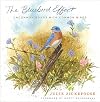
This book is organized by species, as the author describes her experiences with bird rehabilitation or conservation. It’s richly illustrated with her beautiful watercolors and pencil sketches of birds. I liked it that it’s focused on ordinary birds, many of which I know and often see myself.
Mostly, it’s a very pleasant book, although chapters on sandhill cranes and mourning doves do talk about the fact that these birds are considered game species in many U.S. states – something I show more found as shocking as the author, when she had first learned about it. She also riles against cat owners who let their pets go outside where they kill birds and small mammals, but I thought she was rather inconsistent on this issue, since she writes that she lets her dog hunt chipmunks on her 80-acres property and “hosts several large rat snakes in their garage all summer, where they help control the white-footed mouse population” – even though she admits that these snakes are not at all averse to diversifying their diet with bird eggs and nestlings. Also, while she’s understandably against crane and dove hunting, she writes that she accepts gifts of venison from her “hunter friends” and sounds glad that squirrels are rare where she lives, since her neighbors in Appalachian Ohio shoot and eat them. Interestingly, she expresses concern that feeding wild birds may cause their numbers to increase beyond reasonable, citing a time when she counted seventy cardinals in her backyard after a heavy snowstorm. However, since it was usually more like seven, it seems that on that particular day the cardinals from a very wide area flew in, as they were searching desperately for something to eat. So I don’t understand her equanimity about a hawk who, instead of migrating with the rest of his species, had settled in her backyard for the winter, specializing on eating male cardinals. I think allowing a raptor to move into one’s backyard out of season and make a living catching the birds one attracts with feeders is no different from allowing a cat – or a snake – to do the same.
Still, for the most part, it is a pleasant book. My favorite story was about chimney swift nestlings whom the author raised and later released in a nearby town, “full of old buildings and uncapped brick chimneys, and situated on the confluence of two rivers, with associated hordes of aquatic insects overhead.” As the human-grown birds took flight, “a squadron of wild swifts came down to meet and flank each flier…. The wild swifts made them welcome, swooping down as a body to fly alongside them.” As I read this, I thought how uncommon such behavior is in people.
The chapter tied with that one as my most favorite was about starlings. Julie Zickefoose recalls seeing a starling in town, who kept flying from a wire overhead to a spot in the middle of a traffic intersection, where lay the remains of another starling: “It can only be a starling’s mate. An hour later, I see the bird, still sitting on the wire, still watching what is now just a paste of feathers, unrecognizable to any but its mate.” She also writes about Mozart’s pet starling “that could whistle parts of his concertos, with its own improvisations and additions. When it died, three years later, he held a funeral, with invited guests in full mourning dress.” When the author had raised and released a starling, it tapped on her window the next day with a nickel in its beak, which it dropped into her palm full of mealworms. Another wild starling who settled in her backyard called her “Mommy” in the voice of her toddler son (and I was shocked that that’s what it took for her not to throw out its eggs from the nest box intended for another species).
Oh, and the story about barn swallows who’ve traded barns for home-improvement stores and learned to hover in front of the infrared beam of the electric eye that opens the automatic doors to let themselves in and out. And I loved it how the author stopped buying chicken nuggets for her son, when she saw that even a turkey vulture won’t eat them.
I’ve learned a great deal about different kinds of birds from this book. I also marveled at the author’s dedication in raising songbird nestlings. As she explains, there are far more facilities for the rehabilitation of baby raptors who only have to be fed once a day than baby songbirds who may have to be fed every twenty minutes, from dawn to dusk – and dawn happens early at the height of summer. Julie Zickefoose also said in an interview that eight years of writing and, perhaps, twenty of drawing went into this book – and it shows! I was not surprised to read that a number of Amazon reviewers were buying extra copies for Christmas gifts, even though it was published in March. show less
Mostly, it’s a very pleasant book, although chapters on sandhill cranes and mourning doves do talk about the fact that these birds are considered game species in many U.S. states – something I show more found as shocking as the author, when she had first learned about it. She also riles against cat owners who let their pets go outside where they kill birds and small mammals, but I thought she was rather inconsistent on this issue, since she writes that she lets her dog hunt chipmunks on her 80-acres property and “hosts several large rat snakes in their garage all summer, where they help control the white-footed mouse population” – even though she admits that these snakes are not at all averse to diversifying their diet with bird eggs and nestlings. Also, while she’s understandably against crane and dove hunting, she writes that she accepts gifts of venison from her “hunter friends” and sounds glad that squirrels are rare where she lives, since her neighbors in Appalachian Ohio shoot and eat them. Interestingly, she expresses concern that feeding wild birds may cause their numbers to increase beyond reasonable, citing a time when she counted seventy cardinals in her backyard after a heavy snowstorm. However, since it was usually more like seven, it seems that on that particular day the cardinals from a very wide area flew in, as they were searching desperately for something to eat. So I don’t understand her equanimity about a hawk who, instead of migrating with the rest of his species, had settled in her backyard for the winter, specializing on eating male cardinals. I think allowing a raptor to move into one’s backyard out of season and make a living catching the birds one attracts with feeders is no different from allowing a cat – or a snake – to do the same.
Still, for the most part, it is a pleasant book. My favorite story was about chimney swift nestlings whom the author raised and later released in a nearby town, “full of old buildings and uncapped brick chimneys, and situated on the confluence of two rivers, with associated hordes of aquatic insects overhead.” As the human-grown birds took flight, “a squadron of wild swifts came down to meet and flank each flier…. The wild swifts made them welcome, swooping down as a body to fly alongside them.” As I read this, I thought how uncommon such behavior is in people.
The chapter tied with that one as my most favorite was about starlings. Julie Zickefoose recalls seeing a starling in town, who kept flying from a wire overhead to a spot in the middle of a traffic intersection, where lay the remains of another starling: “It can only be a starling’s mate. An hour later, I see the bird, still sitting on the wire, still watching what is now just a paste of feathers, unrecognizable to any but its mate.” She also writes about Mozart’s pet starling “that could whistle parts of his concertos, with its own improvisations and additions. When it died, three years later, he held a funeral, with invited guests in full mourning dress.” When the author had raised and released a starling, it tapped on her window the next day with a nickel in its beak, which it dropped into her palm full of mealworms. Another wild starling who settled in her backyard called her “Mommy” in the voice of her toddler son (and I was shocked that that’s what it took for her not to throw out its eggs from the nest box intended for another species).
Oh, and the story about barn swallows who’ve traded barns for home-improvement stores and learned to hover in front of the infrared beam of the electric eye that opens the automatic doors to let themselves in and out. And I loved it how the author stopped buying chicken nuggets for her son, when she saw that even a turkey vulture won’t eat them.
I’ve learned a great deal about different kinds of birds from this book. I also marveled at the author’s dedication in raising songbird nestlings. As she explains, there are far more facilities for the rehabilitation of baby raptors who only have to be fed once a day than baby songbirds who may have to be fed every twenty minutes, from dawn to dusk – and dawn happens early at the height of summer. Julie Zickefoose also said in an interview that eight years of writing and, perhaps, twenty of drawing went into this book – and it shows! I was not surprised to read that a number of Amazon reviewers were buying extra copies for Christmas gifts, even though it was published in March. show less
The Bluebird Effect – Zickfoose
4 stars
Julie Zickfoose is a talented wildlife artist and rehabilitator. I was familiar with her work in the magazine Bird Watcher’s digest which is published by her husband Bill Thompson. This book is filled with gorgeous illustrations and interesting essays involving bird rescue, conservation, and our human relationships to the avian world. Zickfoose is clearly passionate about her chosen work. Her writing is articulate, frequently humorous and show more occasionally heart-rending.
This is a fairly long book and it took me some time the get through it. It is divided into four seasonal sections: Spring Songbirds: Peeking into the Nest; Summer Work: Drawing, Raising, and Saving Birds; Autumnal Reflections: Pondering the Imponderable; and Winter Musings: Birds We Feed, Birds That Feed Us. The spring and summer essays are mostly about the demanding effort involved in the rescue of individual birds. The autumn and winter sections still deal with specific bird species, but are more concerned with the ethical concerns of conservation, bird feeding and the captive pet birds. Each of the essays can be read independently of the others and are similar, although longer, to articles appearing in birding magazines. The beautiful illustrations include pencil sketches with observation notes as well as full page water color paintings. My favorite chapter ? That would be the one about the hand rearing of baby hummingbirds. Amazing. show less
4 stars
Julie Zickfoose is a talented wildlife artist and rehabilitator. I was familiar with her work in the magazine Bird Watcher’s digest which is published by her husband Bill Thompson. This book is filled with gorgeous illustrations and interesting essays involving bird rescue, conservation, and our human relationships to the avian world. Zickfoose is clearly passionate about her chosen work. Her writing is articulate, frequently humorous and show more occasionally heart-rending.
This is a fairly long book and it took me some time the get through it. It is divided into four seasonal sections: Spring Songbirds: Peeking into the Nest; Summer Work: Drawing, Raising, and Saving Birds; Autumnal Reflections: Pondering the Imponderable; and Winter Musings: Birds We Feed, Birds That Feed Us. The spring and summer essays are mostly about the demanding effort involved in the rescue of individual birds. The autumn and winter sections still deal with specific bird species, but are more concerned with the ethical concerns of conservation, bird feeding and the captive pet birds. Each of the essays can be read independently of the others and are similar, although longer, to articles appearing in birding magazines. The beautiful illustrations include pencil sketches with observation notes as well as full page water color paintings. My favorite chapter ? That would be the one about the hand rearing of baby hummingbirds. Amazing. show less
Lists
Awards


You May Also Like


Associated Authors
Statistics
- Works
- 11
- Also by
- 3
- Members
- 589
- Popularity
- #42,597
- Rating
- 4.0
- Reviews
- 17
- ISBNs
- 21