
Ralph Nader
Author of Crashing the party
About the Author
Ralph Nader an American activist was born on February 27, 1934. In 1951 he was accepted at Princeton University; the university offered him a scholarship, but his father turned it away, saying it should go to a student who couldn't afford tuition. Nader graduated magna cum laude with a Bachelor of show more Arts from the Woodrow Wilson School of Public and International Affairs in 1955. He then went on to Harvard Law School, where he obtained a Bachelor of Laws in 1958. For the past forty-five years, Nader has challenged corporations, government agencies, and institutions to be more accountable to the public. In 1965, "Unsafe at Any Speed" changed the face of the automobile industry and made Ralph Nader a household name. As a result of his efforts, cars have more safety features. His lobbying and writing on the food industry insured that the food we buy is required to pass strict guidelines before reaching the consumer. One of his greatest achievements was the 1974 amendment to the Freedom of Information Act that gave increased public access to government documents. This brought freedom of press to a new level, resulting in increased access for journalists. Nader is a five-time candidate for President of the United States. He has co-founded numerous public interest groups including Public Citizen, Critical Mass, Commercial Alert, and the Center for Study of Responsive Law. He continues to be a relentless force for grassroots activism and democratic change in the United States. (Bowker Author Biography) Ralph Nader, an American activist, was born on February 27, 1934. Nader has challenged corporations, government agencies, and institutions to be more accountable to the public. In 1965, his book "Unsafe at Any Speed" changed the face of the automobile industry and made Ralph Nader a household name. As a result of his efforts, cars have more safety features. His lobbying and writing on the food industry insured that the food we buy is required to pass strict guidelines before reaching the consumer. One of his greatest achievements was the 1974 amendment to the Freedom of Information Act that gave increased public access to government documents. This brought freedom of press to a new level, resulting in increased access for journalists. Nader is a five-time candidate for President of the United States. He has co-founded numerous public interest groups including Public Citizen, Critical Mass, Commercial Alert, and the Center for Study of Responsive Law. He continues to be a relentless force for grassroots activism and democratic change in the United States. (Publisher Provided) show less
Image credit: Ralph Nader. Photo by Sage Ross.
Works by Ralph Nader
Unstoppable: The Emerging Left-Right Alliance to Dismantle the Corporate State (2014) 66 copies, 2 reviews
Breaking Through Power: It's Easier Than We Think (City Lights Open Media) (2016) 64 copies, 2 reviews
The Case Against Free Trade: GATT, NAFTA, and the Globalization of Corporate Power (1993) — Contributor — 59 copies, 1 review
Who's Poisoning America: Corporate polluters and their victims in the chemical age (1982) — Editor — 14 copies
The Ralph Nader and Family Cookbook: Classic Recipes from Lebanon and Beyond (2020) 12 copies, 1 review
To the Ramparts: How Bush and Obama Paved the Way for the Trump Presidency, and Why It Isn't Too Late to Reverse Course (2018) 11 copies
Let's start the revolution : tools for displacing the corporate state and building a country that works for the people (2024) 11 copies
Amy Goodman Interviews Ralph Nader About His Book: "Told You So: The Big Book of Weekly Columns” (2016) 1 copy
Ralph Nader up close 1 copy
Beware 1 copy
Associated Works
Our Media, Not Theirs: The Democratic Struggle Against Corporate Media (2002) — Foreword — 97 copies
Whose Trade Organization?: A Comprehensive Guide to the World Trade Organization, Second Edition (1999) — Preface — 77 copies
America, Inc. Who Owns and Operates the United States (1972) — Introduction, some editions — 69 copies, 1 review
The WTO: Five Years of Reasons to Resist Corporate Globalization (1999) — Introduction — 69 copies, 1 review
The Safe Shopper's Bible: A Consumer's Guide to Nontoxic Household Products, Cosmetics, and Food (1995) — Foreword — 47 copies
Shaking the Foundations: 200 Years of Investigative Journalism in America (Nation Books) (2003) — Contributor — 45 copies
The Chemical Feast: The Ralph Nader Study Group Report on Food Protection and the Food and Drug Administration (1970) — Introduction — 34 copies
The SRI Advantage: Why Socially Responsible Investing Has Outperformed Financially (2002) — Foreword — 15 copies
Democracy in Print: The best of the Progressive Magazine, 1909-2009 (2009) — Contributor — 14 copies
Politics of land; Ralph Nader's study group report on land use in California (1973) — Introduction — 14 copies
Tagged
Common Knowledge
- Birthdate
- 1934-02-27
- Gender
- male
- Education
- Princeton University (1955)
Harvard University (JD, 1958) - Occupations
- attorney
activist
consumer advocate
author
Presidential candidate
newspaper columnist - Organizations
- Green Party of the United States
Public Citizen (founder)
Nader's Raiders
American Museum of Tort Law
Ralph Nader Radio Hour - Awards and honors
- 100 Most Influential Americans
Gandhi Peace Award - Relationships
- Zwick, David (colleague)
- Nationality
- USA
- Birthplace
- Winsted, Connecticut, USA
- Places of residence
- Winsted, Connecticut, USA (birth)
Washington, D.C., USA - Associated Place (for map)
- USA
Members
Reviews
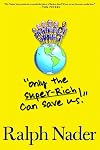
I am a small business owner from the rural South. As you might imagine, Ralph Nader and I don’t see eye to eye on anything. As a result, I expected to be irritated and discomfited by just about anything he put onto paper. Nevertheless, the concept of this novel was intriguing and I was willing to give it a shot. I hoped for a well reasoned (even if mistaken), entertaining read. I was disappointed but not surprised.
Seventeen elderly, wealthy progressives get together to save the world. They show more are billed as “billionaires”, but I’d guess that less than half satisfy that definition. Led by Warren Buffett, the Oracle from Omaha, the group includes such luminaries as George Soros, Barry Diller, Ross Perot and Ted Turner. It includes 6-8 fellows I’ve never heard of (campaign supporters of Nader with money, I assume). It also includes Phil Donohue, Paul Neuman, Bill Cosby and Yoko Ono. I’m pretty sure they’re not billionaires, but you have to have some star power, and it wouldn’t look good not to have any minorities or women, would it?
Putting aside the political positions advanced by the Billionaire Boys Club, even more irritating was the complete lack of economic reality advanced by Nader through his “actors”. One key strategy of the Meliorists (their chosen moniker) was to unlock all of the ‘dead’ money contained in mutual funds and bond markets. “Dead money”; also known as the capital used by publicly traded companies to finance the jobs that the Meliorists want to improve through doubling the minimum wage.
The biggest evil in the world, in the eyes of Meliorists, is the multi-national corporation. Yet in a typical lack of consistency, perhaps their single biggest “hot button” issue is the estate tax, one of the biggest contributors to the rise and consolidation of assets in the big, faceless corporations that they despise.
A minimum wage of $10/hour? Great. I wonder how folks on a fixed income are going to handle the erosion in their purchasing power when inflation spikes? Like the entire novel, the proposals are simplistic, naïve and poorly reasoned.
In Nader’s world, Warren Beatty becomes Governor of California and solves the budget crisis by eliminating tax breaks for the super rich. Well, that should cover about 5% of the shortfall. There are simply not enough super rich people in the United States to bridge the budget deficit, regardless of the tax rate. Confiscating all of the assets (not just the income) of the super rich might make a one time dent in the annual budget deficit, but then where would you be?
Of course, addressing the budget deficit is not a priority, as in addition to reinstituting confiscatory tax rates, they have a whole basketful of new entitlement plans in the works, including a “reverse income tax”, which I can only assume guarantees you a certain level of income (the earned income tax credit, without the requirement that it be “earned”), guaranteed housing, free legal representation and health care. They completely eliminate federal income tax on those earning less than $100,000 a year. I knew Nader’s philosophy, but I thought that he’d have to at least cloak it in a semblance of reality. Not much reality here. The Meliorists form a political party, draft candidates and qualify for ballots in a couple of months. Really?
Now, it would be unfair to assign a low rating based solely upon my disagreement with his politics. The sad fact is that Nader is not a very good writer of fiction. The bulk of the novel involves the Meliorists sitting around a large conference room, at a beautiful resort in Maui, in monthly meetings where they preach to each other, mouthing tired old hackneyed liberal platitudes on which they all agree unanimously. It’s almost heartwarming. This coupled with the absurd, unrealistic events which transpire, make it a difficult read.
That is not to say that there are not periods of entertainment or even thoughtful discourse (the process of unionizing WalMart, for example), but they are hopelessly few and far between. Thus, I am faced with assigning a rating. It is amusing to see people actually assign four and five star rating to this work. Can anyone actually make the argument that this is the equal of Lonesome Dove, or War and Peace? I recently read Ken Follett’s epic novel, Fall of Giants and awarded it three stars. It was a far better novel than this piece of work; far better. In truth, this is a one or two star work. Naderites will like it because it parrots their agenda, but that doesn’t make it a good novel.
I would be remiss, however, if I didn’t recognize the single biggest benefit that Ralph Nader ever bestowed upon his fellow Americans. No, I’m not talking about the Pinto, I’m referring to his third party Presidential candidacy in 2000, in which he was able to siphon enough votes in the state of Florida away from that pompous, hypocritical, bag of wind Al Gore to prevent him from becoming President. And for that, I will always be grateful. Therefore, I will give him a two star rating for this work, one star more than it deserves. show less
Seventeen elderly, wealthy progressives get together to save the world. They show more are billed as “billionaires”, but I’d guess that less than half satisfy that definition. Led by Warren Buffett, the Oracle from Omaha, the group includes such luminaries as George Soros, Barry Diller, Ross Perot and Ted Turner. It includes 6-8 fellows I’ve never heard of (campaign supporters of Nader with money, I assume). It also includes Phil Donohue, Paul Neuman, Bill Cosby and Yoko Ono. I’m pretty sure they’re not billionaires, but you have to have some star power, and it wouldn’t look good not to have any minorities or women, would it?
Putting aside the political positions advanced by the Billionaire Boys Club, even more irritating was the complete lack of economic reality advanced by Nader through his “actors”. One key strategy of the Meliorists (their chosen moniker) was to unlock all of the ‘dead’ money contained in mutual funds and bond markets. “Dead money”; also known as the capital used by publicly traded companies to finance the jobs that the Meliorists want to improve through doubling the minimum wage.
The biggest evil in the world, in the eyes of Meliorists, is the multi-national corporation. Yet in a typical lack of consistency, perhaps their single biggest “hot button” issue is the estate tax, one of the biggest contributors to the rise and consolidation of assets in the big, faceless corporations that they despise.
A minimum wage of $10/hour? Great. I wonder how folks on a fixed income are going to handle the erosion in their purchasing power when inflation spikes? Like the entire novel, the proposals are simplistic, naïve and poorly reasoned.
In Nader’s world, Warren Beatty becomes Governor of California and solves the budget crisis by eliminating tax breaks for the super rich. Well, that should cover about 5% of the shortfall. There are simply not enough super rich people in the United States to bridge the budget deficit, regardless of the tax rate. Confiscating all of the assets (not just the income) of the super rich might make a one time dent in the annual budget deficit, but then where would you be?
Of course, addressing the budget deficit is not a priority, as in addition to reinstituting confiscatory tax rates, they have a whole basketful of new entitlement plans in the works, including a “reverse income tax”, which I can only assume guarantees you a certain level of income (the earned income tax credit, without the requirement that it be “earned”), guaranteed housing, free legal representation and health care. They completely eliminate federal income tax on those earning less than $100,000 a year. I knew Nader’s philosophy, but I thought that he’d have to at least cloak it in a semblance of reality. Not much reality here. The Meliorists form a political party, draft candidates and qualify for ballots in a couple of months. Really?
Now, it would be unfair to assign a low rating based solely upon my disagreement with his politics. The sad fact is that Nader is not a very good writer of fiction. The bulk of the novel involves the Meliorists sitting around a large conference room, at a beautiful resort in Maui, in monthly meetings where they preach to each other, mouthing tired old hackneyed liberal platitudes on which they all agree unanimously. It’s almost heartwarming. This coupled with the absurd, unrealistic events which transpire, make it a difficult read.
That is not to say that there are not periods of entertainment or even thoughtful discourse (the process of unionizing WalMart, for example), but they are hopelessly few and far between. Thus, I am faced with assigning a rating. It is amusing to see people actually assign four and five star rating to this work. Can anyone actually make the argument that this is the equal of Lonesome Dove, or War and Peace? I recently read Ken Follett’s epic novel, Fall of Giants and awarded it three stars. It was a far better novel than this piece of work; far better. In truth, this is a one or two star work. Naderites will like it because it parrots their agenda, but that doesn’t make it a good novel.
I would be remiss, however, if I didn’t recognize the single biggest benefit that Ralph Nader ever bestowed upon his fellow Americans. No, I’m not talking about the Pinto, I’m referring to his third party Presidential candidacy in 2000, in which he was able to siphon enough votes in the state of Florida away from that pompous, hypocritical, bag of wind Al Gore to prevent him from becoming President. And for that, I will always be grateful. Therefore, I will give him a two star rating for this work, one star more than it deserves. show less
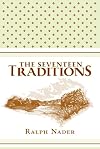
My review from 2008:
Reading Ralph Nader’s book about the family traditions that helped shape who he is, I am reminded of Neil Postman’s powerful introduction to his final treatise on American schools, The End of Education.
“To the young, schooling seems relentless, but we know it is not. What is relentless is our education... poverty is a great educator... it mostly teaches hopelessness. But not always. Politics is also a great educator. Mostly, it teaches, I am afraid, cynicism. But show more not always. Television is a great educator as well. Mostly it teaches consumerism. But not always.”
That’s what Nader’s book is about: the importance of family traditions in how we educate our children. Education is a never-ending process, and it’s our daily routines, habits and customs that primarily shape the way we see the world.
But Nader is worried that traditions such as the ones cherished within his family are being squeezed out, de-prioritized perhaps, by our increasingly corporate-controlled culture.
Pg. 69 – “One day... [my father] asked a simple question: ‘What did you learn today, Ralph? Did you learn how to believe or did you learn how to think?’
“For some reason, that question was like a bolt from the blue. It has stayed with me ever since as a yardstick and a guide. In my adult life, I have thought back on it countless times: Is this new movement or politician trying to make us believe, by using abstractions and slogans or advertising gimmicks, or inviting us to think through the issues, using facts, experience, and judgment?...
“This is not to discount the importance of belief, without which, after all, we couldn’t hold to the principles and ethics that shape our daily lives. Rather, my father’s point was that we should reach our beliefs by thinking them through. In public school we received instruction, which was largely a matter of belief; it was at home that we received our real education, which had more to do with thought. There was nothing wrong with this combination: Both instruction and education were the better for it.”
And that perhaps is the key. Our society believes so strongly in the importance of economic security, that we have come to value the manufactured beliefs of advertisements over the process of independent thinking. This is true both for politics and economics. Democrats and Republicans have monopolized politics to such an extent that the views of those parties are the only ones given serious analysis any more by media. And advertising shapes how most Americans spend tens of thousands of dollars a year, making us believe we absolutely can’t live without everything from Chap Stick to the newest car.
What do most Americans learn? Most certainly still learn to believe. Unfortunately, the corporate interests that so want to control our beliefs are silently eliminating the traditions that teach us how to think. show less
Reading Ralph Nader’s book about the family traditions that helped shape who he is, I am reminded of Neil Postman’s powerful introduction to his final treatise on American schools, The End of Education.
“To the young, schooling seems relentless, but we know it is not. What is relentless is our education... poverty is a great educator... it mostly teaches hopelessness. But not always. Politics is also a great educator. Mostly, it teaches, I am afraid, cynicism. But show more not always. Television is a great educator as well. Mostly it teaches consumerism. But not always.”
That’s what Nader’s book is about: the importance of family traditions in how we educate our children. Education is a never-ending process, and it’s our daily routines, habits and customs that primarily shape the way we see the world.
But Nader is worried that traditions such as the ones cherished within his family are being squeezed out, de-prioritized perhaps, by our increasingly corporate-controlled culture.
Pg. 69 – “One day... [my father] asked a simple question: ‘What did you learn today, Ralph? Did you learn how to believe or did you learn how to think?’
“For some reason, that question was like a bolt from the blue. It has stayed with me ever since as a yardstick and a guide. In my adult life, I have thought back on it countless times: Is this new movement or politician trying to make us believe, by using abstractions and slogans or advertising gimmicks, or inviting us to think through the issues, using facts, experience, and judgment?...
“This is not to discount the importance of belief, without which, after all, we couldn’t hold to the principles and ethics that shape our daily lives. Rather, my father’s point was that we should reach our beliefs by thinking them through. In public school we received instruction, which was largely a matter of belief; it was at home that we received our real education, which had more to do with thought. There was nothing wrong with this combination: Both instruction and education were the better for it.”
And that perhaps is the key. Our society believes so strongly in the importance of economic security, that we have come to value the manufactured beliefs of advertisements over the process of independent thinking. This is true both for politics and economics. Democrats and Republicans have monopolized politics to such an extent that the views of those parties are the only ones given serious analysis any more by media. And advertising shapes how most Americans spend tens of thousands of dollars a year, making us believe we absolutely can’t live without everything from Chap Stick to the newest car.
What do most Americans learn? Most certainly still learn to believe. Unfortunately, the corporate interests that so want to control our beliefs are silently eliminating the traditions that teach us how to think. show less
The Seventeen Traditions: Lessons from an American Childhood – The Humanitarian Reformer on Values, Ethics, and Confronting Corruption by Ralph Nader
I was attracted to this book by its nice cover and its title. I didn't really take in that it was by Ralph Nader whose name I am vaguely aware of as a many times US presidential candidate. It turns out that he is an American political activist of Lebanese origin who has written many books. This one is partly a trip down memory lane. He picks out lessons learned form his family and sums them up in 17 chapters of what he calls traditions. The book is devoid of any Christian content but at show more certain points the values do match things upheld in Scripture. The utopian description he gives of growing up in New England can cloy at certain points but it is a pleasant and thought provoking effort.
The 17 traditions are as follows 1.The Tradition of Listening 2.The Tradition of the Family Table 3.The Tradition of Health 4.The Tradition of History 5.The Tradition of Scarcity 6.The Tradition of Sibling Equality 7.The Tradition of Education and Argument 8.The Tradition of Discipline 9.The Tradition of Simple Enjoyments 10.The Tradition of Reciprocity 11.The Tradition of Independent Thinking 12.The Tradition of Charity 13.The Tradition of Work 14.The Tradition of Business 15.The Tradition of Patriotism 16.The Tradition of Solitude 17.The Tradition of Civics show less
The 17 traditions are as follows 1.The Tradition of Listening 2.The Tradition of the Family Table 3.The Tradition of Health 4.The Tradition of History 5.The Tradition of Scarcity 6.The Tradition of Sibling Equality 7.The Tradition of Education and Argument 8.The Tradition of Discipline 9.The Tradition of Simple Enjoyments 10.The Tradition of Reciprocity 11.The Tradition of Independent Thinking 12.The Tradition of Charity 13.The Tradition of Work 14.The Tradition of Business 15.The Tradition of Patriotism 16.The Tradition of Solitude 17.The Tradition of Civics show less
This work combines personal memoir with homespun advice, and as a result, comes off sounding preachy and self-righteous. Nader writes well, but it is difficult to believe that he is looking at his childhood as honestly as he would have us think; I can't imagine anyone being quite so perfect as his parents in this work, and the town he grew up in apparently had few if any individuals of questionable moral character. In the end, the book comes off sounding like one of those "when I was your show more age" tales by old Uncle Ralph who just can't understand that going back to the early 20th century might not be such a good idea. In several ways, I could have imagined this written by William Bennett - the virtues of the olden days vs. the decadence of the modern world. While I agree with the author on a number of points, his method of presentation leaves something to be desired, and his lack of ability to see the dark side of the time he is extolling is disturbing. show less
Lists
Awards


You May Also Like


Associated Authors
Statistics
- Works
- 54
- Also by
- 23
- Members
- 2,207
- Popularity
- #11,617
- Rating
- 3.7
- Reviews
- 27
- ISBNs
- 113
- Languages
- 3
- Favorited
- 6


