

John Naisbitt (1929–2021)
Author of Megatrends: Ten New Directions Transforming Our Lives
About the Author
John Naisbitt was an American writer and public speaker. He was born in Salt Lake City, Utah on January 15, 1929. He studied at Harvard University, Cornell University, and the University of Utah. His career included working for IBM and Eastman Kodak. He gained experience in politics working as an show more assistant to the Commissioner of Education during the Kennedy administration and as special assistant to HEW Secretary John Gardner during the Johnson administration. In 1968 he founded the Urban Research Corporation and later, the Naisbitt China Institute at Tianjin University. He is best known for his first book, Megatrends: Ten New Directions Transforming Our Lives, published in 1982. It was on the New York Times bestseller list for two years. In 1985, he published Reinventing the Corporation. His other books included Megatrends 2000 (1990), Global Paradox (1994), Megatrends Asia (1996), High Tech High Touch (1999), Mind Set! (2006), and China's Megatrends (2010). He received 15 honorary doctorates in humanities, technology, and science. His work in future studies influenced people around the world. John Naisbitt died at his home on April 8, 2021 in Velden am Wörthersee, Austria. He was 92. (Bowker Author Biography) show less
Works by John Naisbitt
Global Paradox: The Bigger the World Economy, the More Powerful Its Smallest Players (1994) 191 copies, 1 review
Re-Inventing the Corporation: Transforming Your Job and Your Company for the New Information Society (1985) 176 copies
When the Canary Stops Singing: Women's Perspectives on Transforming Business (1993) — Foreword, some editions — 16 copies
Il paradosso globale: più cresce l'economia mondiale, più i piccoli diventano protagonisti (1996) 2 copies
Making Democracy Work 1 copy
Megatrends 2000 1 copy
Det ¤globale paradoks 1 copy
L'anno 1987 1 copy
Megatendências Ásia 1 copy
Associated Works
Rethinking the Future: Rethinking Business, Principles, Competition, Control and Complexity, Leadership, Markets, and the World (1993) — Contributor — 123 copies
Tagged
Common Knowledge
- Canonical name
- Naisbitt, John
- Birthdate
- 1929-01-15
- Date of death
- 2021-04-08
- Gender
- male
- Education
- Harvard University
Cornell University
University of Utah - Occupations
- executive
- Organizations
- United States Marine Corps
Eastman Kodak
IBM
United States Department of Health, Education, and Welfare - Relationships
- Aburdene, Patricia (wife|divorced)
- Nationality
- USA
- Birthplace
- Salt Lake City, Utah, USA
- Associated Place (for map)
- Utah, USA
Members
Reviews
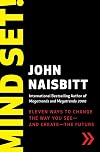
John Naisbitt begins this book with a reference to the story The Little Prince by Antoine De Saint Exupery. If you’ve not read that book then I strongly recommend that you do. It’s a ‘children’s’ story, (he talks of reading it to his six year old), and can be read in even the most hectic of schedules.
The reference Naisbitt makes to ‘The Little Price’ is to how we don’t see what is before us, only what we are able to see, and this idea echoes throughout the book.
In the first show more half of the book he describes eleven mindsets or ways through which we see and understand the world. The key point here is that the world doesn’t exist for us to observe, it exists because we observe it, and exists only in the ways that we are able to observe it.
In the eleven mindsets the description covers both what we see because of how we see, and what we may be able to see should we be able to change how we see.
I won’t list the eleven mindsets, but a few of them I found particularly useful,
4. Understanding how powerful it is not to have to be right
5. See the future a as picture puzzle.
9. You don’t get results by solving problems but by exploiting opportunities.
11. Don’t forget the ecology of technology
In the second half of the book he then takes some of these mindsets and applies them to what we are encouraged to call the ‘real world’ and extrapolates some futures.
Here there are some interesting thoughts on our movement towards a visually centered culture, an economic shift from nation states to economic domains and some scathing perspectives on Europe. Personally whilst this is the part of the book that attracts most attention, I find this less interesting. Having described the mechanism of mindsets as the vehicle to see in new ways, to then suggest what we will see in the future seems to offer answers and obscure the fact that the real jewel of the book is that he is inviting us to ask questions.
However this is a thought provoking book, and well worth reading. show less
The reference Naisbitt makes to ‘The Little Price’ is to how we don’t see what is before us, only what we are able to see, and this idea echoes throughout the book.
In the first show more half of the book he describes eleven mindsets or ways through which we see and understand the world. The key point here is that the world doesn’t exist for us to observe, it exists because we observe it, and exists only in the ways that we are able to observe it.
In the eleven mindsets the description covers both what we see because of how we see, and what we may be able to see should we be able to change how we see.
I won’t list the eleven mindsets, but a few of them I found particularly useful,
4. Understanding how powerful it is not to have to be right
5. See the future a as picture puzzle.
9. You don’t get results by solving problems but by exploiting opportunities.
11. Don’t forget the ecology of technology
In the second half of the book he then takes some of these mindsets and applies them to what we are encouraged to call the ‘real world’ and extrapolates some futures.
Here there are some interesting thoughts on our movement towards a visually centered culture, an economic shift from nation states to economic domains and some scathing perspectives on Europe. Personally whilst this is the part of the book that attracts most attention, I find this less interesting. Having described the mechanism of mindsets as the vehicle to see in new ways, to then suggest what we will see in the future seems to offer answers and obscure the fact that the real jewel of the book is that he is inviting us to ask questions.
However this is a thought provoking book, and well worth reading. show less
The book is built around eleven “mindsets” or heuristics for reflecting on our actions and thoughts. Some are kind of dull and obvious and others have some depth to consider. The book is rather fluffy in terms of argument and largely leans on personal anecdotes and candied morsels of history as the main evidence supporting these mindsets.
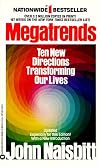
Yeah, I read it. Read Alvin Toffler too. Megatrends had its 15 minutes, which unfortunately, ran all the way into the 90's. There were a number of authors who did the same dance, sang the same song. One thinks of George Gilder, Esther Dyson, or Faith Popcorn. These books serve some purpose, if nothing else they get us to think about where we are going as a society. The sad thing is that we only think about it till we get bored, or distracted by some new fad. Then the future comes up on us show more quick and takes a bite out of us. We need to stop think in 10 second sound bits, powerpoint slides, and start thinking and solving for the long term. show less
Mind set: il segreto del futuro. Gli atteggiamenti mentali per prevedere il mondo che verrà by John Naisbitt
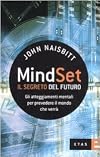
Questo fa coppia con il libro sui cigni neri, con la differenza che è stato sritto nel 2006 - fa coppia come esempi, come spavalderia, come saccenza. Le intuizioni di N. sono abbastanza pratiche: il mondo nel quale vive l'autore è tuttavia un mondo lussuoso, tra alberghi a cinque stelle, interessi artistici, grandi nomi del gotha economico e politico. Puo' darsi che quello sia un punto di vista privilegiato per capire dove andrà il mondo, ma istintivamente ne rifuggo. (anche se la show more previsione dell'Europa futura, destinata ad essere meta di turisti ricchi asiatici e americani - e non più luogo di produzione, innovazione e lavoro, nel lungo periodo - è tristemente condivisibile). show less
Awards


You May Also Like


Associated Authors
Statistics
- Works
- 35
- Also by
- 1
- Members
- 2,346
- Popularity
- #10,930
- Rating
- 3.3
- Reviews
- 16
- ISBNs
- 127
- Languages
- 13
