
Ellen Meeropol
Author of House Arrest
About the Author
Image credit: photo credit Miriam Berkley
Works by Ellen Meeropol
Tagged
Common Knowledge
- Birthdate
- April 29
- Gender
- female
- Education
- Earlham College
University of Michigan
University of Southern Maine, Stonecoast (MFA/Creative Writing) - Occupations
- nurse practitioner
- Nationality
- USA
- Birthplace
- Washington, D.C., USA
- Associated Place (for map)
- D.C., USA
Members
Reviews
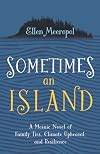
Beyond the jagged, beautiful coast of Penobscot Bay, scattered across the water, like stones thrown from a giant hand, lie hundreds of islands, some vacant, some settled by the sturdy folks of Down East Maine. One island is the home of the descendants of refugees, three cousins who fled the pogroms of Eastern Europe, to find safety in a new country. It is here that Ellen Meeropol sets her sixth book Sometimes an Island. Told in the voices of both present inhabitants and past ones interwoven, show more comes the love for the rock they call home, the relationships that both bind and separate, and a growing worry regarding the changes happening to the earth’s climate. Instead of being forced by violence to flee their homes to start anew like their ancestors had, the crisis of global warming impels some to leave the island in search of safety on the mainland, living off the grid, preparing for the worst. Some remain on the island, hoping for safety on their home for decades. Ms Meeropol has written a thoughtful, beautiful book, that crosses between generations as well as genres, to present different aspects of a coming disaster. Sometimes an Island delivers the unfolding preparation for a cataclysm, but also offers the deep, almost magical connections that can exist between people, even through time.
📚*Early reader review. Publication date March 6 2026; Sea Crow Press show less
📚*Early reader review. Publication date March 6 2026; Sea Crow Press show less

In a quiet cul-de-sac next to a closed mental hospital, an old woman just disappears one morning. Her husband and the neighbors in the other 5 houses on the street have their own opinions on what may have happened. So does the police inspector when she arrives to start investigating.
While this could have been the start of a crime novel, Ellen Meeropol uses it as a way to tell a story about a place and about a collection of people who somehow ended up in the same street - each with their own show more fears, nightmares and stories (including the troubled detective). The street was once used for the doctors and nurses of the nearby hospital and a lot of the people on the street had been connected to it. Others had brought their own trauma from elsewhere.
One thing that derails the tale a bit is that the author tried to make her characters as diverse as possible (including the reasons and details of their trauma). While this is often a plus, the chance of it happening in such a small neighborhood is not very big and it requires a bit of a suspension of disbelief not to get derailed by it. It feels a bit Hollywood-ish - get everyone you need together and don't look too closely at why and how they ended up at the same place. The author does make an attempt at explaining how everyone ended up there but as at least half of these backgrounds were not really needed or used, it felt a bit as diversity for the sake of diversity and some of the characters felt like checklist items (with as much depth as one can get on a checklist as well). Add to that the very weird set of chapters which sound like a chorus in a play and which really does not add anything to the story.
With that being said and ignoring that particular part, the novel actually somewhat works as an examination of mental health management - both in the past and today. It is a tale of old secrets and old crimes, some of them horrific and some of them almost acceptable which makes them even more horrific when you stop to think about them. It tries too hard in some places and there is just this much of a coincidence that I am ready to accept but I did not hate it at the end - mainly because the author did not leave dangling threads I suspect - this kind of novels tend to end abruptly and this one did not.
Northampton State Hospital existed and treated patients between 1858 and 1993. The characters in this novel may be invented but most of the experiences in the hospital were at least partially based on reality. Mental health had always been the red-headed step child of medicine - even today. While the author uses the setting to tell a story about secrets and lies, it also tells the very real story of mental health management in the past and the horrors most of the most vulnerable people in the country had to live through. And when we say the past, it does not really mean as far back as we all think it does (or hope it does). show less
While this could have been the start of a crime novel, Ellen Meeropol uses it as a way to tell a story about a place and about a collection of people who somehow ended up in the same street - each with their own show more fears, nightmares and stories (including the troubled detective). The street was once used for the doctors and nurses of the nearby hospital and a lot of the people on the street had been connected to it. Others had brought their own trauma from elsewhere.
One thing that derails the tale a bit is that the author tried to make her characters as diverse as possible (including the reasons and details of their trauma). While this is often a plus, the chance of it happening in such a small neighborhood is not very big and it requires a bit of a suspension of disbelief not to get derailed by it. It feels a bit Hollywood-ish - get everyone you need together and don't look too closely at why and how they ended up at the same place. The author does make an attempt at explaining how everyone ended up there but as at least half of these backgrounds were not really needed or used, it felt a bit as diversity for the sake of diversity and some of the characters felt like checklist items (with as much depth as one can get on a checklist as well). Add to that the very weird set of chapters which sound like a chorus in a play and which really does not add anything to the story.
With that being said and ignoring that particular part, the novel actually somewhat works as an examination of mental health management - both in the past and today. It is a tale of old secrets and old crimes, some of them horrific and some of them almost acceptable which makes them even more horrific when you stop to think about them. It tries too hard in some places and there is just this much of a coincidence that I am ready to accept but I did not hate it at the end - mainly because the author did not leave dangling threads I suspect - this kind of novels tend to end abruptly and this one did not.
Northampton State Hospital existed and treated patients between 1858 and 1993. The characters in this novel may be invented but most of the experiences in the hospital were at least partially based on reality. Mental health had always been the red-headed step child of medicine - even today. While the author uses the setting to tell a story about secrets and lies, it also tells the very real story of mental health management in the past and the horrors most of the most vulnerable people in the country had to live through. And when we say the past, it does not really mean as far back as we all think it does (or hope it does). show less
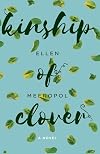
I'm a believer in global warming and climate change, but those of us who do believe don't often go beyond thinking of endangered species, deforestation, and pollution. Jeremy, the protagonist of Kinship of Clover, has a strong connection to plants due to family trauma suffered as a child. He feels a kinship with, and a need to save, plants that have become extinct, or are becoming extinct.
But this book is not just about environmental activism. It's a story about family. About the connections show more that make and break us. It's about how families choose to live can affect the children, and how secrets kept can cause a lot of heartache, and yet, lead to redemption in the end.
I loved every single character in this book. The author did a great job of illustrating a unique family dynamic and it really shines through. And, as a supporter of (peaceful) political activism, this book also spoke to me, especially considering the times and the events in which we are currently living. Some find books with a message off-putting. Not me. I like a story with a message. Even better if the message does not overwhelm the story. The balance is beautiful here.
Kinship of Clover is a book for those who like characters they can fall in love with, and for those who believe in fighting for what's right in the world. I highly recommend it.
I received this book free of charge from the author or publisher. show less
But this book is not just about environmental activism. It's a story about family. About the connections show more that make and break us. It's about how families choose to live can affect the children, and how secrets kept can cause a lot of heartache, and yet, lead to redemption in the end.
I loved every single character in this book. The author did a great job of illustrating a unique family dynamic and it really shines through. And, as a supporter of (peaceful) political activism, this book also spoke to me, especially considering the times and the events in which we are currently living. Some find books with a message off-putting. Not me. I like a story with a message. Even better if the message does not overwhelm the story. The balance is beautiful here.
Kinship of Clover is a book for those who like characters they can fall in love with, and for those who believe in fighting for what's right in the world. I highly recommend it.
I received this book free of charge from the author or publisher. show less

I'm a sucker for first novels. Most of my reading friends know that, and will often send me premiere works of an author to sample. House Arrest would have appealed to me for that reason alone, but it was the writing, and the shaping of characters and story that won me.
This debut novel explores aspects of friendship that often are ignored. The two main characters come from completely different backgrounds, and each are reluctant to trust another individual, to move out of the comfort zone show more each has carved out of their worlds. These two women, a home health nurse and a young woman, pregnant with her second child, on home arrest after the suspicious death of her first child in a cult related activity, are thrown together by circumstance. They forge a bond that forces them each to struggle, grow, trust and forgive, in order to move forward in their lives -- a friendship born from diversity. Each examines their inner scale that balances right and wrong, sorting the moral, legal, ethical, and humane issues that ultimately both bind them together and free them.
I have to 'fess up. Ellen Meeropol is one of my dearest friends. We haven't been in as close touch as we once were, since we both retired from nursing, but she still remains in the count when someone asks me to think of my closest friends. I've read poetry and prose of hers in the past. What impressed me beyond the story was how she has grown since I last read her work. She has shaped and tempered her craft. She is a writer.
Knowing Ellen personally, it was interesting to see how she entwined her own passions for truth, political activism and her career of nursing into the story. We met as nurses working with children who were born with Spina Bifida and their families. Even in that work, she was an advocate and activist for children with disabilities and for people with latex allergies. We collaborated on many projects to increase awareness of latex allergy, and she was the person who first recognized the symptoms of my own illness. (Good nurse that I am, I ignored her, and almost died for my efforts. Moral: Always listen to Elli.) Today, twenty years after we first began increasing awareness of this allergy, it is still not well known, and there are still people, even in the medical profession, who do not take it seriously. I think were they to read this story, it might just make the difference.
The ultimate appeal of this book, though is with the characters. It is easy to imagine meeting any one of these people, with their beliefs, self-doubts and search for answers: Emily wondering if she'd missed signs of an infection in a patient, Gina's curiosity at meeting a celebrity patient, Sam's love for his daughter, Pippa's examination of the world she had taken for granted. Decisions are not always easily defined, but the reader is carried along completely as these characters move through the maze of issues which confront them. Every one of us has a story to tell. House Arrest allows us to glimpse the tales of some ordinary people who transcend the every-day, and reach toward the extraordinary.
(This unusual and thought provoking story is due out in February 2011) show less
This debut novel explores aspects of friendship that often are ignored. The two main characters come from completely different backgrounds, and each are reluctant to trust another individual, to move out of the comfort zone show more each has carved out of their worlds. These two women, a home health nurse and a young woman, pregnant with her second child, on home arrest after the suspicious death of her first child in a cult related activity, are thrown together by circumstance. They forge a bond that forces them each to struggle, grow, trust and forgive, in order to move forward in their lives -- a friendship born from diversity. Each examines their inner scale that balances right and wrong, sorting the moral, legal, ethical, and humane issues that ultimately both bind them together and free them.
I have to 'fess up. Ellen Meeropol is one of my dearest friends. We haven't been in as close touch as we once were, since we both retired from nursing, but she still remains in the count when someone asks me to think of my closest friends. I've read poetry and prose of hers in the past. What impressed me beyond the story was how she has grown since I last read her work. She has shaped and tempered her craft. She is a writer.
Knowing Ellen personally, it was interesting to see how she entwined her own passions for truth, political activism and her career of nursing into the story. We met as nurses working with children who were born with Spina Bifida and their families. Even in that work, she was an advocate and activist for children with disabilities and for people with latex allergies. We collaborated on many projects to increase awareness of latex allergy, and she was the person who first recognized the symptoms of my own illness. (Good nurse that I am, I ignored her, and almost died for my efforts. Moral: Always listen to Elli.) Today, twenty years after we first began increasing awareness of this allergy, it is still not well known, and there are still people, even in the medical profession, who do not take it seriously. I think were they to read this story, it might just make the difference.
The ultimate appeal of this book, though is with the characters. It is easy to imagine meeting any one of these people, with their beliefs, self-doubts and search for answers: Emily wondering if she'd missed signs of an infection in a patient, Gina's curiosity at meeting a celebrity patient, Sam's love for his daughter, Pippa's examination of the world she had taken for granted. Decisions are not always easily defined, but the reader is carried along completely as these characters move through the maze of issues which confront them. Every one of us has a story to tell. House Arrest allows us to glimpse the tales of some ordinary people who transcend the every-day, and reach toward the extraordinary.
(This unusual and thought provoking story is due out in February 2011) show less
Awards


You May Also Like
Associated Authors
Statistics
- Works
- 7
- Members
- 108
- Popularity
- #179,296
- Rating
- 3.8
- Reviews
- 18
- ISBNs
- 15
