

Yoko Kawashima Watkins
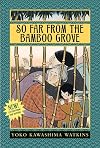
Author of So Far from the Bamboo Grove
About the Author
Image credit: Elizabeth King
Series
Works by Yoko Kawashima Watkins
Associated Works
On the Wings of Peace: Writers and Illustrators Speak Out for Peace, in Memory of Hiroshima and Nagasaki (1995) — Contributor — 105 copies, 1 review
Tagged
Common Knowledge
Members
Reviews
I never would have chosen this book to read by myself. But, I really liked how connected I felt with the book. The author's language was very descriptive and I personally felt as if I was there. Especially when her mother died. My mother has been sick, but with cancer, thankfully she didn't die. I depend on her for everything just as they did during the war. She protected them and always put them first, just as my mother does for me. The characters were very developed as well. They were show more believable, especially for their age. The older sister takes lead in taking care of the younger sister. But, not just in that way. They still had fights and arguments even in such horrid conditions. They were still like children even when they had to grow up so fast under the circumstances. The big message I found in this book is family comes first. show less
"So Far from the Bamboo Grove" tells two parallel stories of the Kawashima family, consisting of Yoko, the narrator, Ko, her sister, Hideyo, her brother, and her Mother. The Kawashimas are a Japanese military family stationed in Nanam, close to the northernmost border of the then unified Korea, at the end of World War II. Germany has surrendered, the Japanese are about to be nuked by America, and their power in Korea is being usurped by a Communist rebellion.
The story beings on the show more precipice of disaster for the Kawashima family. Life is still relatively normal, though they must constantly plan for an imminent escape from their home. Yoko, and her family, make friends with an injured military officer through a child's dance routine. But then the inevitable happens and the Japanese are done in Korea. The Kawashima family must escape in the dead of night to avoid possible torture, rape, and execution at the hands of the Korean usurpers and Russian backers. However, the escape party only includes Yoko, Ko, and their mother. Hideyo is miles away, working in a munitions facility, if I recall. And their father, a high ranking military officer, never makes an appearance and is presumed dead.
The trio leave instructions for Hideyo to meet them in Seoul, hundreds of miles south. By grace of the military officer they befriended, Colonel Matsumura, they are able to board a hospital train bound for Seoul. During the trip they deal with death - bodies of adults and children alike are thrown from the train for disposal, as there is no time for a proper burial - sickness, newborns, and Communists. The trip is abruptly stopped when air raids destroy the plain and the Kawashimas are forced to walk.
During their arduous trip to Seoul, and then further to Pusan, awaiting a ferry back to mainland Japan, the Kawashima family is struck with hardship that is almost incomprehensible to me. They must find a hidden safe place to sleep during the day, as they travel at night, hope desperately to find a source of water in which to bathe, wash clothers, and replenish supplies, and ration food. Then there is the scene in which the three happen upon Korean soldiers raping an innocent woman, and it would seem as though they were next to meet such a fate. But, an air raid, seemingly decreed by providence, kills the soldiers, dazes both Ko and her mother, but Yoko is injured by shrapnel.
Upon reaching Seoul, the family makes camp in the train station for days, awaiting Hideyo's arrival. They eat what they can, including garbage, and last as long as they can. Eventually, they are hurried off to Pusan, to escape to the safety of Japan. They then board a boat and arrive at a port in Fukuoka, Japan, and subsequently travel to Kyoto, once again setting camp at the train station. At each stop the family leave notes for Hideyo signalling their next destination.
The mother enters the girls in school Yoko in middle school and Ko in high education, and attempts to find her own parents. Finding the area decimated by war, and he parents dead the Mother returns to the Kyoto train station to her daughters and promptly dies, from what I can only gather is stress and illness from their journey. Yoko and Ko are luckily enough to find a family that allows them to live in a room above a warehouse. They make money by selling trinkets Ko creates, and living a meager life, still rooting through garbage bins on occasion. However, they are surprised to find that a quilt their mother carries a hidden pocket containing a substantial sum of money - to the destitute that is - that they vow to save.
Yoko continues with school and is treated poorly due to her poverty and refugee status. She makes friends with the stuttering janitor, who she helps learn to speak more fluidly, and he provides her with supplies he finds lying around. Eventually she learns of an essay competition with a large cash prize. Yoko writes about her treatment in school and actually wins the contest. This not only brings money, but hatred from fellow students and administrators, as it was essentially smack talk. But, this allows the aforementioned Colonel Matsumura to find the girls and reconecct, offering them some help.
Hideyo, one the other hand, barely escapes the factory - with 3 friends - as it is burning to the ground. He goes home and discovers the note left by his family. He and his friends begin their trek across more than entire present day country, and while they don't have to fear the same type of sexual violence seen by his family, he is still in mortal peril for almost the entire trip.
The group splits in Seoul, as Hideyo goes his own way. Alone, he coincidentally ventures towards Pusan, having missed the fact that his family carved a message in the station posts. Eventually, physically exhausted, Hideyo collapses on the outskirts of a farm house. The family takes him in and cares for him, and help him to resupply for the remainder of his journey. He makes it to Pusan, sees the signs left for him by his family. After sailing to Japan he finds more signs, that his sisters both ventured to place every weekend, that leads to a happy reunion between the three.
I very much enjoyed this book, and it stood out to me for a very particular reason. Often, we read stories about people escaping persecution, like this one. But this is a new twist. These people suffering atrocities, and fighting for their lives in a hostile land...while they are oppressed, were previously the oppressors. It's like reading a story about a family of Tories trying to get back to Britain at the end of the American Revolution. It begs the question, "When do the oppressors become the oppressed?" And also, "Can such a switch happen in the same generation?" as I'm sure many of those Koreans felt entirely justified in their actions.
These are probably the big questions I would concentrate upon if I were to design a lesson around this book. It's a bit of a long read for the target audience, though the language is a bit simplified. I would want my students to concentrate on what it means to be oppressed and where the line is drawn when it comes to justifiable retribution. Should it be peaceful, is violence ever necessary, if so, what is the line where violence is justifiable? Questions like these. I would also love to include articles detailing the two sides, like works about both Gandhi and the Bolsheviks. show less
The story beings on the show more precipice of disaster for the Kawashima family. Life is still relatively normal, though they must constantly plan for an imminent escape from their home. Yoko, and her family, make friends with an injured military officer through a child's dance routine. But then the inevitable happens and the Japanese are done in Korea. The Kawashima family must escape in the dead of night to avoid possible torture, rape, and execution at the hands of the Korean usurpers and Russian backers. However, the escape party only includes Yoko, Ko, and their mother. Hideyo is miles away, working in a munitions facility, if I recall. And their father, a high ranking military officer, never makes an appearance and is presumed dead.
The trio leave instructions for Hideyo to meet them in Seoul, hundreds of miles south. By grace of the military officer they befriended, Colonel Matsumura, they are able to board a hospital train bound for Seoul. During the trip they deal with death - bodies of adults and children alike are thrown from the train for disposal, as there is no time for a proper burial - sickness, newborns, and Communists. The trip is abruptly stopped when air raids destroy the plain and the Kawashimas are forced to walk.
During their arduous trip to Seoul, and then further to Pusan, awaiting a ferry back to mainland Japan, the Kawashima family is struck with hardship that is almost incomprehensible to me. They must find a hidden safe place to sleep during the day, as they travel at night, hope desperately to find a source of water in which to bathe, wash clothers, and replenish supplies, and ration food. Then there is the scene in which the three happen upon Korean soldiers raping an innocent woman, and it would seem as though they were next to meet such a fate. But, an air raid, seemingly decreed by providence, kills the soldiers, dazes both Ko and her mother, but Yoko is injured by shrapnel.
Upon reaching Seoul, the family makes camp in the train station for days, awaiting Hideyo's arrival. They eat what they can, including garbage, and last as long as they can. Eventually, they are hurried off to Pusan, to escape to the safety of Japan. They then board a boat and arrive at a port in Fukuoka, Japan, and subsequently travel to Kyoto, once again setting camp at the train station. At each stop the family leave notes for Hideyo signalling their next destination.
The mother enters the girls in school Yoko in middle school and Ko in high education, and attempts to find her own parents. Finding the area decimated by war, and he parents dead the Mother returns to the Kyoto train station to her daughters and promptly dies, from what I can only gather is stress and illness from their journey. Yoko and Ko are luckily enough to find a family that allows them to live in a room above a warehouse. They make money by selling trinkets Ko creates, and living a meager life, still rooting through garbage bins on occasion. However, they are surprised to find that a quilt their mother carries a hidden pocket containing a substantial sum of money - to the destitute that is - that they vow to save.
Yoko continues with school and is treated poorly due to her poverty and refugee status. She makes friends with the stuttering janitor, who she helps learn to speak more fluidly, and he provides her with supplies he finds lying around. Eventually she learns of an essay competition with a large cash prize. Yoko writes about her treatment in school and actually wins the contest. This not only brings money, but hatred from fellow students and administrators, as it was essentially smack talk. But, this allows the aforementioned Colonel Matsumura to find the girls and reconecct, offering them some help.
Hideyo, one the other hand, barely escapes the factory - with 3 friends - as it is burning to the ground. He goes home and discovers the note left by his family. He and his friends begin their trek across more than entire present day country, and while they don't have to fear the same type of sexual violence seen by his family, he is still in mortal peril for almost the entire trip.
The group splits in Seoul, as Hideyo goes his own way. Alone, he coincidentally ventures towards Pusan, having missed the fact that his family carved a message in the station posts. Eventually, physically exhausted, Hideyo collapses on the outskirts of a farm house. The family takes him in and cares for him, and help him to resupply for the remainder of his journey. He makes it to Pusan, sees the signs left for him by his family. After sailing to Japan he finds more signs, that his sisters both ventured to place every weekend, that leads to a happy reunion between the three.
I very much enjoyed this book, and it stood out to me for a very particular reason. Often, we read stories about people escaping persecution, like this one. But this is a new twist. These people suffering atrocities, and fighting for their lives in a hostile land...while they are oppressed, were previously the oppressors. It's like reading a story about a family of Tories trying to get back to Britain at the end of the American Revolution. It begs the question, "When do the oppressors become the oppressed?" And also, "Can such a switch happen in the same generation?" as I'm sure many of those Koreans felt entirely justified in their actions.
These are probably the big questions I would concentrate upon if I were to design a lesson around this book. It's a bit of a long read for the target audience, though the language is a bit simplified. I would want my students to concentrate on what it means to be oppressed and where the line is drawn when it comes to justifiable retribution. Should it be peaceful, is violence ever necessary, if so, what is the line where violence is justifiable? Questions like these. I would also love to include articles detailing the two sides, like works about both Gandhi and the Bolsheviks. show less
I have mixed feelings about this book after reading it. I liked the book because the language was very descriptive, which helped me to envision what Yoko and her family had to go through to survive the ending of World War II. For example, when Yoko and her family got off the Korean train to Seoul, the author described what the road looked like ahead of them and it helped me picture how far they really have to go to get to safety: "I looked at the long road we were about to take, rails show more stretching ahead, shining mysteriously in the light of a three-quarter moon" (p.42). The characters were also well-developed making their stories seem more believable. For example, Hideyo is portrayed as a brave, older brother whose personality is determined and selfless. One particular scene that makes his character believable is when he and his friends from the army went back to Hideyo's house to see if Yoko, Ko, and his Mother were still there, only to find that the home was ransacked with no trace of his family besides a note that his mother left him when they fled for Seoul. Right before he left to go to Seoul after them, he went back into his house to grab an old family photo album, which is something I feel someone would do in real life if they were in his shoes; family is the most valuable aspect of anyone's life. He showed that his family was valuable to him by chasing after them throughout the entire book until he finally found them at the very end.
Even though I think the writing in this book is marvelous, I feel like they described the gruesome scenes too much in detail. I understand that the author may have wanted us to see World War II from Japan's perspective, but I feel like the author did not have to include all of those horrible scenes to get their message across. For example, when Yoko and her family were on the train, the medics tried to protect Yoko and her family by making them look sick, since it was a train for the ill. They did this by throwing a placenta "dripping with urine" on Ko's chest, and threw Yoko to "a bloodstained floor." These details could have been spared, and the author still could've gotten her message across. I also feel like the author rushed writing through the events at the end of the story, such as when their mother died. I feel like more emphasis should have been put on her death since she was a huge part of their lives. I also wish they talked more of their Father since he was the head of their household, and they stopped talking about him until the very end of the story; they didn't end up finding out what happened to him either.
I think that the big message of this book is for readers to understand what went on during World War II, and how we can see it from Japan's and Korea's perspective rather than the perspective that we were taught in school. Overall I think that it is a great book with an underlying message that is important for readers to understand, but it could do without the unnecessary gruesome details. show less
Even though I think the writing in this book is marvelous, I feel like they described the gruesome scenes too much in detail. I understand that the author may have wanted us to see World War II from Japan's perspective, but I feel like the author did not have to include all of those horrible scenes to get their message across. For example, when Yoko and her family were on the train, the medics tried to protect Yoko and her family by making them look sick, since it was a train for the ill. They did this by throwing a placenta "dripping with urine" on Ko's chest, and threw Yoko to "a bloodstained floor." These details could have been spared, and the author still could've gotten her message across. I also feel like the author rushed writing through the events at the end of the story, such as when their mother died. I feel like more emphasis should have been put on her death since she was a huge part of their lives. I also wish they talked more of their Father since he was the head of their household, and they stopped talking about him until the very end of the story; they didn't end up finding out what happened to him either.
I think that the big message of this book is for readers to understand what went on during World War II, and how we can see it from Japan's and Korea's perspective rather than the perspective that we were taught in school. Overall I think that it is a great book with an underlying message that is important for readers to understand, but it could do without the unnecessary gruesome details. show less
This book was a hard read, and yet I could not put it down. I say it was a hard read due to how Yoko Kawashima held nothing back, and therefore made me as a reader feel panic, pain, and hope for her and her family. One of the things I loved the most about this book is the language that included so much detail and immersed me into the story, like “All those sick people looked pale as ghosts in the oily, smelly, dark freight car” (p.40). I could see the train, and I could imagine the show more smell, which brought me closer to the Kawashimas. I also loved the plot, because despite how horrible it is, it is a true story that needs to be told. I think the story was told without bashing any nationality, which I find very admirable considering what Yoko went through. In many ways, I think this is a the story's lesson. People are more than their race, nationality, gender, etc. Like the Korean Lees and the Kims that were kind to the Japanese Kawashimas, and the Japanese school girls that were mean to Yoko, their race did not define how they would treat others. In the heart of it all, I think this book is about kindness, strength, and hope, which is a valuable lesson for any child. show less
Lists
Awards


You May Also Like


Associated Authors
Statistics
- Works
- 6
- Also by
- 1
- Members
- 1,235
- Popularity
- #20,792
- Rating
- 3.9
- Reviews
- 181
- ISBNs
- 25
- Languages
- 1
- Favorited
- 1