
Robert M.L. Winston
Author of Human: The Definitive Visual Guide
About the Author
Image credit: By Materialscientist - https://commons.wikimedia.org/wiki/File:Robert_Winston_2011.jpg, CC BY-SA 2.0, https://commons.wikimedia.org/w/index.php?curid=67869511
Works by Robert M.L. Winston
Ask A Scientist: Professor Robert Winston Answers 100 Big Questions from Kids Around the World! (2019) 53 copies, 3 reviews
Associated Works
Tagged
Common Knowledge
- Gender
- male
Members
Reviews

The human mind, and how to make the most of it is a very useful and comprehensive introduction to the study of psychology. In nine chapters, nonetheless nearly 500 pages, Robert Winston covers nearly all aspects of the brain, from physiology to various mental disorders, and particularly the interaction and close relation between the physical and mental structures that make up the human mind.
The book should mostly be seen as a primer and introduction to the field, but can equally well be read show more to fresh up one's knowledge of psychology. It includes all standard examples of various brain disorders and historical experiments and accidents which have helped elucidate the workings of the brain. It is fully up to date, and, apart from necessary terminology, never overly technical or specialist. Robert Winston writes very well, making The human mind, and how to make the most of it a breeze to read. show less
The book should mostly be seen as a primer and introduction to the field, but can equally well be read show more to fresh up one's knowledge of psychology. It includes all standard examples of various brain disorders and historical experiments and accidents which have helped elucidate the workings of the brain. It is fully up to date, and, apart from necessary terminology, never overly technical or specialist. Robert Winston writes very well, making The human mind, and how to make the most of it a breeze to read. show less
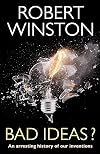
We all know the benefits we gained from some of the most important inventions and advances made by people throughout our history. Taken together, these advances mark our ‘progress’. But is this progress really such a great thing?
Bad Ideas is the story of mans’ technological progress since the Stone Age and covering some of our most influential and important advances. In his wide ranging book, Robert Winston highlights some of the dangers and drawbacks that came with some of the most show more important developments achieved by mankind. He believes that “contained within every act of creation and innovation there exists the potential, also, for our undoing”.
Farming feeds us but introduced new diseases. ICT has connected us but has a massive impact on the security of our personal details. Genetic studies may offer cures but has raised the prospect, yet again, of eugenics - the culling of those deemed unacceptable by society. Coal and oil, essential in so many aspects of modern life, pollute the earth and coal is hazardous to mine, so which replacement energy sources hold the most promise? The development of the stone cutting tools, which allowed our ancestors to control their environment for the first time also lead to the development of today’s weaponry. And so on across a number of diverse examples.
Because there are often uses found for our discoveries that were unintended, or not originally even thought of Bad Ideas acts as a voice of caution. Increasingly ethical issues have became an important aspect of science and research; Winston’s overarching argument is that there is a growing need for more informed communication between the public and the scientific community so that developments can be managed with an appreciation of the potential consequences, and hopefully with some wisdom and foresight.
While Bad Ideas is a call for a more transparent science and technology sector, and a more science literate public, it is also a celebration of human inventiveness and the scientists who have lead their fields or contributed valuable research to our understanding of the world around us.
There are flashes of Winston’s humour throughout, and he writes with a sense of humility. Plenty of anecdotes are effectively used as to illustrate Winston’s arguments and range from the fascinating Amazonian Piraha people to the politics of the Soviet science sector to the arrogance of one of Winston’s senior colleagues.
Winston has a skill for explaining science in a way that is easy for the lay person to understand, and his arguments are logical and compelling. Bad Ideas is an intriguing and thought provoking book. show less
Bad Ideas is the story of mans’ technological progress since the Stone Age and covering some of our most influential and important advances. In his wide ranging book, Robert Winston highlights some of the dangers and drawbacks that came with some of the most show more important developments achieved by mankind. He believes that “contained within every act of creation and innovation there exists the potential, also, for our undoing”.
Farming feeds us but introduced new diseases. ICT has connected us but has a massive impact on the security of our personal details. Genetic studies may offer cures but has raised the prospect, yet again, of eugenics - the culling of those deemed unacceptable by society. Coal and oil, essential in so many aspects of modern life, pollute the earth and coal is hazardous to mine, so which replacement energy sources hold the most promise? The development of the stone cutting tools, which allowed our ancestors to control their environment for the first time also lead to the development of today’s weaponry. And so on across a number of diverse examples.
Because there are often uses found for our discoveries that were unintended, or not originally even thought of Bad Ideas acts as a voice of caution. Increasingly ethical issues have became an important aspect of science and research; Winston’s overarching argument is that there is a growing need for more informed communication between the public and the scientific community so that developments can be managed with an appreciation of the potential consequences, and hopefully with some wisdom and foresight.
While Bad Ideas is a call for a more transparent science and technology sector, and a more science literate public, it is also a celebration of human inventiveness and the scientists who have lead their fields or contributed valuable research to our understanding of the world around us.
There are flashes of Winston’s humour throughout, and he writes with a sense of humility. Plenty of anecdotes are effectively used as to illustrate Winston’s arguments and range from the fascinating Amazonian Piraha people to the politics of the Soviet science sector to the arrogance of one of Winston’s senior colleagues.
Winston has a skill for explaining science in a way that is easy for the lay person to understand, and his arguments are logical and compelling. Bad Ideas is an intriguing and thought provoking book. show less
Ask A Scientist: Professor Robert Winston Answers 100 Big Questions from Kids Around the World! by Robert Winston
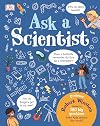
“Ask A Scientist” focuses squarely on kids- what they want to know and how best to give them the information. It seems the writers did their research in choosing the questions as most of them rang familiar. The questions range enough in topic that kids will find a lot to interest them.
The book’s format lends itself to continual engagement. Illustrations blend together while not overwhelming the reader. They do an excellent job of illuminating the text. The book ends with a useful show more glossary and the answers to two questions I’ve been asked over and over about time and boredom, and I still wonder about today.
The greatest aspect of this book is how the professor underscores the flexibility of science, and how not knowing strengthens its foundations. He emphasizes how scientists move toward an answer from questions. By creating the book from questions, he shows his young readers how science naturally progresses and by asking questions they are young scientists themselves. show less
The book’s format lends itself to continual engagement. Illustrations blend together while not overwhelming the reader. They do an excellent job of illuminating the text. The book ends with a useful show more glossary and the answers to two questions I’ve been asked over and over about time and boredom, and I still wonder about today.
The greatest aspect of this book is how the professor underscores the flexibility of science, and how not knowing strengthens its foundations. He emphasizes how scientists move toward an answer from questions. By creating the book from questions, he shows his young readers how science naturally progresses and by asking questions they are young scientists themselves. show less
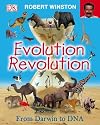
I will admit to being initially put off by the garish cover and the rather scatter gun style of large numbers of different text boxes and excerpts apparently thrown randomly over the pages.
But I must also admit to being wrong. This book works very well indeed. As far as a 42 year can tell for a book aimed at children anyway.
I really enjoyed the comprehensive coverage of a very wide subject. We get the background to science itself and the history of thought before Darwin came along. A robust show more explanation of Darwin's theory and also much knowledge that he didn't have but that we know see fits perfectly with his vague hints. There is far more detail here than I expected on Darwin's wider works, genetics, plants, eye mechanics etc. than I would have expected in book aimed at children. It is nevertheless covered well with summaries of difficult issues included. A great example of the art of education and entertainment without resorting to dumbing down and silly simplifications.
A breath of fresh air after some decidedly flat or uninspiring children's science books.
I would say this book would appeal to kids of ten or up with those doing GCSE biology benefiting from it. show less
But I must also admit to being wrong. This book works very well indeed. As far as a 42 year can tell for a book aimed at children anyway.
I really enjoyed the comprehensive coverage of a very wide subject. We get the background to science itself and the history of thought before Darwin came along. A robust show more explanation of Darwin's theory and also much knowledge that he didn't have but that we know see fits perfectly with his vague hints. There is far more detail here than I expected on Darwin's wider works, genetics, plants, eye mechanics etc. than I would have expected in book aimed at children. It is nevertheless covered well with summaries of difficult issues included. A great example of the art of education and entertainment without resorting to dumbing down and silly simplifications.
A breath of fresh air after some decidedly flat or uninspiring children's science books.
I would say this book would appeal to kids of ten or up with those doing GCSE biology benefiting from it. show less
Lists
Awards


You May Also Like


Associated Authors
Statistics
- Works
- 38
- Also by
- 1
- Members
- 1,988
- Popularity
- #12,937
- Rating
- 3.8
- Reviews
- 19
- ISBNs
- 135
- Languages
- 11