
Jane Kohuth
Author of Estie the Mensch
About the Author
Works by Jane Kohuth
Dark Is For 1 copy
Tagged
Common Knowledge
- Gender
- female
Members
Reviews
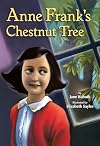
I'm generally skeptical about biographies for very young children - I don't think they have the context to really be interested in historical figures, which is why, in my opinion, picture book biographies really only work in schools, where teachers can introduce them in the context of classroom units. However, this easy reader biography of Anne Frank really, really works and I was surprised and pleased to see how good it was.
The story talks briefly about how Anne was an ordinary little girl, show more who liked to play with her friends, write, and collect pictures of movie stars. It explains the Nazi invasion in simple terms and shows their persecution of Jews without being too graphic or frightening. Most of the story focuses on Anne's life in hiding and how, despite the difficulty and sadness of her life, she still maintained hope, as symbolized by the chestnut tree. The story ends by explaining that although Anne did not survive the war, she lives on in her words and in the hope and kindness she believed in.
This is a level 3 Step Into Reading title, intended for 1st through 3rd grade. The language still has the brief, declarative sentences of an easy reader, but more complex vocabulary (collected, thoughts, opinions, memories, complained, etc.) is included as well as the more complex context of the story itself. The art is soft and pastel, conveying the fear and sadness of the story without making it nightmarish. The dark, earth-colored art doesn't do as well in the final illustrations, showing Anne's legacy and the hope she left behind though.
Verdict: I would definitely recommend this for a public library. It's a great introduction to Anne Frank for young children, as well as being a good story for them to read, even without complete context. Parents (and teachers) will want to be prepared to offer more explanations of the historical events, including Anne's death, since kids will probably be curious to find out more about her life.
ISBN: 9780449812556; Published 2013 by Random House; Review copy provided by the publisher; Added to the library show less
The story talks briefly about how Anne was an ordinary little girl, show more who liked to play with her friends, write, and collect pictures of movie stars. It explains the Nazi invasion in simple terms and shows their persecution of Jews without being too graphic or frightening. Most of the story focuses on Anne's life in hiding and how, despite the difficulty and sadness of her life, she still maintained hope, as symbolized by the chestnut tree. The story ends by explaining that although Anne did not survive the war, she lives on in her words and in the hope and kindness she believed in.
This is a level 3 Step Into Reading title, intended for 1st through 3rd grade. The language still has the brief, declarative sentences of an easy reader, but more complex vocabulary (collected, thoughts, opinions, memories, complained, etc.) is included as well as the more complex context of the story itself. The art is soft and pastel, conveying the fear and sadness of the story without making it nightmarish. The dark, earth-colored art doesn't do as well in the final illustrations, showing Anne's legacy and the hope she left behind though.
Verdict: I would definitely recommend this for a public library. It's a great introduction to Anne Frank for young children, as well as being a good story for them to read, even without complete context. Parents (and teachers) will want to be prepared to offer more explanations of the historical events, including Anne's death, since kids will probably be curious to find out more about her life.
ISBN: 9780449812556; Published 2013 by Random House; Review copy provided by the publisher; Added to the library show less
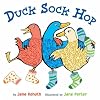
I appreciate the blend of rhyme, color, and patterns that the author uses-- she allows the story of ducks wearing socks to a 'sock hop' to become a site for teaching patterns, shapes, and colors, but she also refers to the lifespan of socks. (Worn socks, stretched socks, etc).
I actually think that's a really valuable component of the book-- some kids come to school with mismatched, soiled, stained, and stretched socks. Some come with no socks. I think the singsongy storyline can be fun in show more an inclusive way-- when kids inevitably look at their own and each other's socks, it'll be okay that some look very different than others. show less
I actually think that's a really valuable component of the book-- some kids come to school with mismatched, soiled, stained, and stretched socks. Some come with no socks. I think the singsongy storyline can be fun in show more an inclusive way-- when kids inevitably look at their own and each other's socks, it'll be okay that some look very different than others. show less
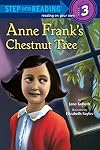
The main idea of this book is to tell reader's about the life of Anne Frank while she hid in her Secret Annex during Nazi occupation in World War II. The book continually refers back to Anne's chestnut tree as a constant throughout the book. It discusses how Anne finds hope and comfort in her tree.
I liked this book for many reasons. I thought that the author did an excellent job of discussing a tough and emotional issue in a way that young readers will be able to read about without being show more overwhelmed. She uses softer language to allow this tough issue to be understood by young people. For example, towards the end of the book, the text reads: "Anne did not survive the war. But her diary did...Millions of people have read Anne's words. Anne wrote, 'I want to go on living even after my death!' She has." Additionally, the book talks about how Anne's chestnut tree continued to live on and how people have cared for it and planted it's saplings over the years. In a way, this represents how Anne continues to live on. I found that the author's portrayal of this topic was very well done. She made sure to find hopeful and positive words for the readers to have as they read about this tough topic.
I also found the writing in this book quite meaningful and elegant. There were definitely some simple, beautiful moments throughout the book that I really appreciated. For example, one page reads: "In the world around her, Anne saw fighting and fear. But in the blue sky above, she saw beauty and peace. So she climbed up to the attic. The windows there were not covered. Anne looked out and saw the tall chestnut tree. She felt the sun on her face. Seeing the tree and sky calmed Anne. It helped her feel brave." I just find this writing simply beautiful. I also really enjoyed that the author incorporated some of Anne's writing into the text. One page reads: "She told [her diary] she felt like a bird trapped in a cage. 'Let me out, where there's fresh air and laughter!' she wrote." Another: "She wrote in her diary, 'I firmly believe that nature can bring comfort to all who suffer.'" This type of beautiful language makes the book that much more profound and meaningful for all readers. show less
I liked this book for many reasons. I thought that the author did an excellent job of discussing a tough and emotional issue in a way that young readers will be able to read about without being show more overwhelmed. She uses softer language to allow this tough issue to be understood by young people. For example, towards the end of the book, the text reads: "Anne did not survive the war. But her diary did...Millions of people have read Anne's words. Anne wrote, 'I want to go on living even after my death!' She has." Additionally, the book talks about how Anne's chestnut tree continued to live on and how people have cared for it and planted it's saplings over the years. In a way, this represents how Anne continues to live on. I found that the author's portrayal of this topic was very well done. She made sure to find hopeful and positive words for the readers to have as they read about this tough topic.
I also found the writing in this book quite meaningful and elegant. There were definitely some simple, beautiful moments throughout the book that I really appreciated. For example, one page reads: "In the world around her, Anne saw fighting and fear. But in the blue sky above, she saw beauty and peace. So she climbed up to the attic. The windows there were not covered. Anne looked out and saw the tall chestnut tree. She felt the sun on her face. Seeing the tree and sky calmed Anne. It helped her feel brave." I just find this writing simply beautiful. I also really enjoyed that the author incorporated some of Anne's writing into the text. One page reads: "She told [her diary] she felt like a bird trapped in a cage. 'Let me out, where there's fresh air and laughter!' she wrote." Another: "She wrote in her diary, 'I firmly believe that nature can bring comfort to all who suffer.'" This type of beautiful language makes the book that much more profound and meaningful for all readers. show less
Anne Frank, a young girl was in hiding during World War II from the Nazis. Her and her family found shelter in the attic of her father’s bookstore. They where had limited contact with the outside world during this time. Their only way of knowing what was going on around them was from a radio the often listened to at night. Anne loved to write in her journal that she received on her 13th birthday. While in the attic she was able to see a chestnut tree. Anne would often gaze at the watching show more the seasons past through an opening in the window curtain. Before the war was declared over Anne and her family were found and sent away to a concentration camp. Were Anne had died. When her journal entries were found they were hidden and preserved. Anne wrote of the Chestnut Tree so much that many fought hard to preserve it. Unable to save the tree as a whole, they planted and shipped saplings from the tree all over.
This book was a great read, and reminder of the story of Anne Frank. As I recall reading her story as a child, I have very little memory of a chestnut tree. Anne writings lived on past her existence like she had wanted, her story as been told all over the world. Remarkably the tree lives on as well through its saplings, and stands in Anne Frank’s memory all over as well. show less
This book was a great read, and reminder of the story of Anne Frank. As I recall reading her story as a child, I have very little memory of a chestnut tree. Anne writings lived on past her existence like she had wanted, her story as been told all over the world. Remarkably the tree lives on as well through its saplings, and stands in Anne Frank’s memory all over as well. show less
Lists
Awards


You May Also Like


Associated Authors
Statistics
- Works
- 8
- Members
- 491
- Popularity
- #50,319
- Rating
- 3.5
- Reviews
- 25
- ISBNs
- 36