

Brecht Evens
Author of The Wrong Place
About the Author
Works by Brecht Evens
Pinokkio 1 copy
Associated Works
Tagged
Common Knowledge
Members
Reviews
https://nwhyte.livejournal.com/3239615.html
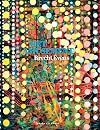
I was blown away by Evens' previous book, Ergens waar je niet wil zijn (The Wrong Place), and grabbed this as well; it won the Fauve d'Angoulême: Prix Spécial du Jury at the Angoulême International Comic Book Festival. Before I get into substance, I'm really intrigued by the three different titles in three languages of publication. The Dutch original can be translated as "The Entertainment" though the connotation is of a particular event rather show more than an ongoing activity. In French, the book's title is "Les Rigoles", which literally means "The Gutters" but more slangily could be "The Laughs" or perhaps "The Larfs", close to the sense of the Dutch (if plural rather than singular); but "Les Rigoles" is also the name of the author's favourite cafe in Paris. The English title, "The City of Belgium", weirdly contradicts the spirit of the story which is that the events (and the gutters) could be set in any western European large city that isn't Berlin, and the setting nods to Paris, Antwerp and Brussels (as well as being closer to the beach than any of those three cities actually is). So there's a strange ambiguity about what story is really being told here.
Anyway. As with Ergens waar je niet wil zijn, we have a story with three main characters, Jona, Victoria and Rodolphe, who meander across their unnamed city finding (or avoiding) deeper truths about their lives, with again the vortex of carnality and enjoyment that is Disco Harem providing a geographical anchor for the narrative strands. Robbie from Ergens waar je niet wil zijn puts in a guest appearance at one point. Evens' watercolour style is arresting and intriguing, and his gimmick of giving each of his protagonists a primary colour (Jona blue, Victoria yellow and Rodolphe red) works well to convey their very different perspectives. He gives his minor characters more of a voice here too, each of the three protagonists acquiring a strange sidekick, and also each getting rides with the same mysterious taxi driver, who tells each of them different stories. I enjoyed most of it; I felt that the three stories did not all end equally satisfactorily - in particular the last 40 pages (of 300) follow just one of the three protagonists on his personal path to enlightenment, which felt unbalanced. But in general it's pretty good. show less
I was blown away by Evens' previous book, Ergens waar je niet wil zijn (The Wrong Place), and grabbed this as well; it won the Fauve d'Angoulême: Prix Spécial du Jury at the Angoulême International Comic Book Festival. Before I get into substance, I'm really intrigued by the three different titles in three languages of publication. The Dutch original can be translated as "The Entertainment" though the connotation is of a particular event rather show more than an ongoing activity. In French, the book's title is "Les Rigoles", which literally means "The Gutters" but more slangily could be "The Laughs" or perhaps "The Larfs", close to the sense of the Dutch (if plural rather than singular); but "Les Rigoles" is also the name of the author's favourite cafe in Paris. The English title, "The City of Belgium", weirdly contradicts the spirit of the story which is that the events (and the gutters) could be set in any western European large city that isn't Berlin, and the setting nods to Paris, Antwerp and Brussels (as well as being closer to the beach than any of those three cities actually is). So there's a strange ambiguity about what story is really being told here.
Anyway. As with Ergens waar je niet wil zijn, we have a story with three main characters, Jona, Victoria and Rodolphe, who meander across their unnamed city finding (or avoiding) deeper truths about their lives, with again the vortex of carnality and enjoyment that is Disco Harem providing a geographical anchor for the narrative strands. Robbie from Ergens waar je niet wil zijn puts in a guest appearance at one point. Evens' watercolour style is arresting and intriguing, and his gimmick of giving each of his protagonists a primary colour (Jona blue, Victoria yellow and Rodolphe red) works well to convey their very different perspectives. He gives his minor characters more of a voice here too, each of the three protagonists acquiring a strange sidekick, and also each getting rides with the same mysterious taxi driver, who tells each of them different stories. I enjoyed most of it; I felt that the three stories did not all end equally satisfactorily - in particular the last 40 pages (of 300) follow just one of the three protagonists on his personal path to enlightenment, which felt unbalanced. But in general it's pretty good. show less
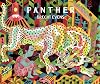
While this is an amazing graphic novel, I can't see myself wanting to read it again. I knew about the unsettling undertones before I started reading, which may have colored my experiences, but the interaction that Christine has with Panther and Bonzo and the others are... so palatably wrong and sad and not right that it was honestly hard to watch her go through that. Panther "sniffing her out" by using hide and seek as an excuse to stick his nose in her crotch, him attempting to lick the show more spots of her, the massage, the big bear hug where he's on his back and she's on her stomach, the disturbing and highly suggestive ending of the twister scene, telling Christine to ask for the key to her room back from her father, all of these made me physically want to tell her to pay attention and tell her dad.
And while I did have some unanswered questions (how did they get in? Were they wearing costumes so she was more confused and couldn't identify them? Why did Panther stay with her after his friends did what they did? If he wasn't into them doing that, why did he invite them over in the first place? Was Bonzo Christine's subconscious or something? How could it be that he was replaced?), the fact that everything was left in a dreamlike hazy state where there were no easy answers was real and heartbreaking.Sidenote: I did think Panther trying to integrate Bonzo into his weird seduction/imaginary world with Christine was pretty funny; Bonzo flatly trying to describe the wonders of Pantherland in mundane adjectives was classic deadpan humor.
Panther changing appearances every panel (just about) was a great touch, as was the visual difference between real Bonzo and Pantherland Bonzo. The hazy uncertainty of it all, except for the terribly uncomfortable black and white scenes, is perfectly depicted by the surreal art style, and the dialogue and constant misdirections add perfectly to the atmosphere. show less
And while I did have some unanswered questions (how did they get in? Were they wearing costumes so she was more confused and couldn't identify them? Why did Panther stay with her after his friends did what they did? If he wasn't into them doing that, why did he invite them over in the first place? Was Bonzo Christine's subconscious or something? How could it be that he was replaced?), the fact that everything was left in a dreamlike hazy state where there were no easy answers was real and heartbreaking.
Panther changing appearances every panel (just about) was a great touch, as was the visual difference between real Bonzo and Pantherland Bonzo. The hazy uncertainty of it all, except for the terribly uncomfortable black and white scenes, is perfectly depicted by the surreal art style, and the dialogue and constant misdirections add perfectly to the atmosphere. show less
https://fromtheheartofeurope.eu/panter-by-brecht-evens/
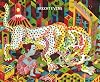
Kristientje lives with her father and her cat. But her cat gets sick and dies (on page 4, so this is not a spoiler) and Kristientje retreats to her room. The magical Panther appears and starts to cheer her up with tales of Pantherland, where he claims to be the crown prince, and where everything is fun and perfect. Panther alienates Kristientje from her other toys and her father; Kristientje’s stuffed dog Bonzo disappears (we assume, show more eaten by Panther) and then gets reincarnated in dubious form, along with a bunch of disreputable visitors from Pantherland, including the appalling Mr. Trashcan. It’s quite a dark journey, told as ever in Evens’ super expressive watercolours. I wasn’t quite sure about the last book of his that I read, but this one is impressive stuff. show less
Kristientje lives with her father and her cat. But her cat gets sick and dies (on page 4, so this is not a spoiler) and Kristientje retreats to her room. The magical Panther appears and starts to cheer her up with tales of Pantherland, where he claims to be the crown prince, and where everything is fun and perfect. Panther alienates Kristientje from her other toys and her father; Kristientje’s stuffed dog Bonzo disappears (we assume, show more eaten by Panther) and then gets reincarnated in dubious form, along with a bunch of disreputable visitors from Pantherland, including the appalling Mr. Trashcan. It’s quite a dark journey, told as ever in Evens’ super expressive watercolours. I wasn’t quite sure about the last book of his that I read, but this one is impressive stuff. show less

https://fromtheheartofeurope.eu/de-bondgenoten-deel-1-by-brecht-evens/
I have been hugely impressed by the previous graphic novels of Brecht Evens, but I was not quite sure about this one, which is the first part of a promised two-part series. Our protagonist, 10 year old Arthur, lives on the Breton coast with his father. (Yep, Arthur of Brittany, though it’s not clear what to read into that.) His father brings him up in the knowledge that they are fighting a peculiar battle at the front show more line of the war between Good and Evil, and then he disappears, leaving Arthur to navigate a world where the neighbours are presumptively all spies for the dark side.
Arthur’s father is clearly clinically paranoid, and it’s not yet clear how Evens is going to resolve the plot; it could go well or badly, to be honest. But as usual, what makes the book is Evens’ fantastic art, drawing perhaps on James Ensor but with very much his own twist on it, often conveying a great deal with just a few lines, capturing character traits and settings with complete conviction. It’s a gorgeous run of 288 pages, and I hope it all makes sense when the next volume comes out. show less
I have been hugely impressed by the previous graphic novels of Brecht Evens, but I was not quite sure about this one, which is the first part of a promised two-part series. Our protagonist, 10 year old Arthur, lives on the Breton coast with his father. (Yep, Arthur of Brittany, though it’s not clear what to read into that.) His father brings him up in the knowledge that they are fighting a peculiar battle at the front show more line of the war between Good and Evil, and then he disappears, leaving Arthur to navigate a world where the neighbours are presumptively all spies for the dark side.
Arthur’s father is clearly clinically paranoid, and it’s not yet clear how Evens is going to resolve the plot; it could go well or badly, to be honest. But as usual, what makes the book is Evens’ fantastic art, drawing perhaps on James Ensor but with very much his own twist on it, often conveying a great deal with just a few lines, capturing character traits and settings with complete conviction. It’s a gorgeous run of 288 pages, and I hope it all makes sense when the next volume comes out. show less
Lists
Awards


You May Also Like


Associated Authors
Statistics
- Works
- 16
- Also by
- 2
- Members
- 643
- Popularity
- #39,229
- Rating
- 3.9
- Reviews
- 28
- ISBNs
- 47
- Languages
- 5
- Favorited
- 3