
Tom McAllister
Author of How To Be Safe
About the Author
Image credit: pulled from author's website, tom.mcallister.ws
Works by Tom McAllister
Associated Works
Tagged
Common Knowledge
- Legal name
- McAllister, Walter Thomas
- Birthdate
- 1982
- Gender
- male
- Occupations
- co-host of the Book Fight podcast
nonfiction editor at the literary magazine and small press Barrelhouse
Associate Professor in the English Department at Temple University - Nationality
- USA
- Birthplace
- USA
- Places of residence
- New Jersey, USA
- Associated Place (for map)
- New Jersey, USA
Members
Reviews
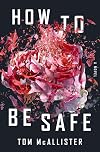
Every once in a while, a novel comes your way that catches you by surprise. Sometimes, the story is so powerful that it leaves you breathless. At other times, the characters are so real that you forget they are fictional. And then there are novels like How to be Safe. It is not necessarily a powerful story. While the topic is most definitely timely and sobering, there is not much to it. There is little plot, little action, and little movement in any direction. In addition, the characters are show more not that real. Anna is a symbol more than anything with little to no development of her character. Yet, this overly simple, somewhat boring story stopped me in my tracks page after page.
It did so by stint of the writing and the force of sentiments professed in what are seemingly simple sentences. For this is not a story in the traditional sense with a beginning that builds to a climax and finishes with the dénouement. It is a snapshot of a modern-day scenario with satiric aftereffects that speak volumes about the state of the nation. It is as much a political statement as it is a social commentary about gun violence and gun proponents. The actions taken by the town after the shooting border on absurd, and yet it is all too easy to understand that what was once absurd has a tendency these days to become an accepted reality. Therein lies the power of the novel.
For a short novel in which nothing much happens, the subject matter is quite robust. In addition to school shootings, How to be Safe also touches on the institution of education, news cycles, and gender bias. All of the topics face the same harsh but fair scrutiny as the main topic of school shootings. All of them provide the same, must-read-again sentences that have you nodding and highlighting and copying for future pondering.
How to be Safe is not going to be a popular novel; there is not enough there for most readers to be able to understand it let alone enjoy it. Indeed, it is not the type of novel designed for entertainment purposes. Instead, it is the type of novel meant to shock the status quo. It makes you sit up and notice the absurd before it becomes a reality. It forces you to question current events and the road down which we seem to be traveling. While this makes it more of a critical darling and less a best seller, it is still the type of novel more people should read than not. It is profound and disruptive and important, something we need now more than ever in this era of The Onion headlines turned real. show less
It did so by stint of the writing and the force of sentiments professed in what are seemingly simple sentences. For this is not a story in the traditional sense with a beginning that builds to a climax and finishes with the dénouement. It is a snapshot of a modern-day scenario with satiric aftereffects that speak volumes about the state of the nation. It is as much a political statement as it is a social commentary about gun violence and gun proponents. The actions taken by the town after the shooting border on absurd, and yet it is all too easy to understand that what was once absurd has a tendency these days to become an accepted reality. Therein lies the power of the novel.
For a short novel in which nothing much happens, the subject matter is quite robust. In addition to school shootings, How to be Safe also touches on the institution of education, news cycles, and gender bias. All of the topics face the same harsh but fair scrutiny as the main topic of school shootings. All of them provide the same, must-read-again sentences that have you nodding and highlighting and copying for future pondering.
How to be Safe is not going to be a popular novel; there is not enough there for most readers to be able to understand it let alone enjoy it. Indeed, it is not the type of novel designed for entertainment purposes. Instead, it is the type of novel meant to shock the status quo. It makes you sit up and notice the absurd before it becomes a reality. It forces you to question current events and the road down which we seem to be traveling. While this makes it more of a critical darling and less a best seller, it is still the type of novel more people should read than not. It is profound and disruptive and important, something we need now more than ever in this era of The Onion headlines turned real. show less
How To Be Safe starts with a school shooting, but it's not really about that. Well, it is and it isn't. It's about violence - school violence obvously, political violence and terrorism, domestic violence, violence against women, mob violence, gun violence, and the mental violence of societal insecurity and uncertainty.
McAllister's anti-hero is Anna, a not-quite-stable high school teacher with a lot of family and childhood baggage, who watches her town react to a shooting at a local school. show more We live inside Anna's head as she tries to make sense of what is going on around her, as she sometimes contributes to the chaos, and contemplates what it takes to be safe in the world.
I loved this novel and inhaled it in two days. It could easily be read in one. It's dark and acerbic and visceral, and I found myself shocked a few times to remember it was written by a man. I kept picturing the author angrily pounding away on her laptop, pouring out her rage and fear and frustration. That is was written by a man is startling to me, to be honest. But I think it's important that it was, as a reminder that there are men who may not be able to live the experience of being a woman at a dangerous time, but who can empathize and try to find that voice inside themselves.
I marked lots of passages - McAllister's writing is brutal and raw but also sometimes darkly funny.
After being accosted by a man on the street offering her money to take her photograph and getting angry when she refused: "Women do not own thier bodies. Men take pictures of us when we are not looking. They surreptitiously record videos of our legs on the bus and load them to the internet, where other men can stare at our legs and masturbate. We wore a dress that day because it was hot outside, because it made us feel good about ourselves, because we had a date, because we felt entitled to dress however we liked. They gather in groups on corners and follow us home with their eyes. They leave the residue of their vision on our bodies. They tell us they love women because they love their mother and their sister and their daughter." (p. 84)
On mass shootings: "Before the blood dries and clots, there's another one to report. Somewhere right now there is a boy acquiring a gun. There is a boy writing a manifesto. There is a man, angry at having been forgotten, at having been passed over, at finding out what life really is, loading his gun. There is a man fortifying his home and preparing for war. Listen and you can hear the hammers being cocked." (p. 121)
Referring to an exchange with members of a local apocalyptic sect building a bunker in the woods: "They said they had a master carpenter building out the walls now. I did not envy her job. To be a carpenter for a Christian church is a significant burden, considering the lineage." (p. 208)
5 stars show less
McAllister's anti-hero is Anna, a not-quite-stable high school teacher with a lot of family and childhood baggage, who watches her town react to a shooting at a local school. show more We live inside Anna's head as she tries to make sense of what is going on around her, as she sometimes contributes to the chaos, and contemplates what it takes to be safe in the world.
I loved this novel and inhaled it in two days. It could easily be read in one. It's dark and acerbic and visceral, and I found myself shocked a few times to remember it was written by a man. I kept picturing the author angrily pounding away on her laptop, pouring out her rage and fear and frustration. That is was written by a man is startling to me, to be honest. But I think it's important that it was, as a reminder that there are men who may not be able to live the experience of being a woman at a dangerous time, but who can empathize and try to find that voice inside themselves.
I marked lots of passages - McAllister's writing is brutal and raw but also sometimes darkly funny.
After being accosted by a man on the street offering her money to take her photograph and getting angry when she refused: "Women do not own thier bodies. Men take pictures of us when we are not looking. They surreptitiously record videos of our legs on the bus and load them to the internet, where other men can stare at our legs and masturbate. We wore a dress that day because it was hot outside, because it made us feel good about ourselves, because we had a date, because we felt entitled to dress however we liked. They gather in groups on corners and follow us home with their eyes. They leave the residue of their vision on our bodies. They tell us they love women because they love their mother and their sister and their daughter." (p. 84)
On mass shootings: "Before the blood dries and clots, there's another one to report. Somewhere right now there is a boy acquiring a gun. There is a boy writing a manifesto. There is a man, angry at having been forgotten, at having been passed over, at finding out what life really is, loading his gun. There is a man fortifying his home and preparing for war. Listen and you can hear the hammers being cocked." (p. 121)
Referring to an exchange with members of a local apocalyptic sect building a bunker in the woods: "They said they had a master carpenter building out the walls now. I did not envy her job. To be a carpenter for a Christian church is a significant burden, considering the lineage." (p. 208)
5 stars show less
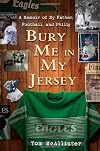
Disclosure: I know Tom, a bit, from when we were both living in beautiful Iowa City awhile back. In fact, when this book came out, I interviewed him for The Millions. You should go read that interview. I think it's a pretty good one, but of course, I'm biased. I really enjoyed this book. I know that the word "football" will scare off many of you, but don't let it. This isn't a book that will spend pages describing what the Sam linebacker does. McAllister does a great job giving enough info show more about the game to be engaging to the novice without getting too bogged down in the details. I thought his take on the condition of the modern fan was fascinating. He delves into his obsession with the EMB (Eagles Message Board) -- and internet fan message board he belongs to -- and shows how close we can all feel to the players on the field. One particularly great scene involves him chasing his favorite player on the freeway, potentially risking his life and that of his wife.In fact, scenes like that are where the book really shines. Because McAllister doesn't go easy on himself, ever, it makes the maturity he gains throughout the book much more gratifying. It takes balls to write an honest book like this, and apparently McAllister's got em. He's upfront about the fact that he didn't always handle his father's illness in the best way (though his immense love and respect for his dad is self-evident on every page). When he describes a night of debauchery outside Veterans stadium, he doesn't shy away from his unsavory deeds, nor does he make them out to be worse than they were. I came away from the book feeling that, above all else, it was him on the page. That's important for a work like this.This is a great book about fathers and sons, of course, but it's also a fascinating and thoughtful examination of what it means to say "This is me. This is what I'm about." show less

How To Be Safe by Tom McAllister is told from the point of view of a high school English teacher, a woman who was not at the school the day the shooting happened. With the murderer dead, there's a search for possible accomplices and Anna is briefly investigated by the FBI and hounded by the media.
As time moves on, Anna looks around at how the shooting has changed the town for good, and how easily these school shootings, and all the mass shootings, are quickly moved past, a few more guns are show more sold, a monument commissioned, a few more cameras installed to keep watch. But Anna is not moving on. She is consumed with how to be safe, when there are so many dangers out there.
On the highway, you can run into more dangers than you've ever imagined. Not just distracted drivers but stalkers, sex traffickers, teens throwing rocks through windshields from the overpass. If you pass enough cars, you will have passed at least one murderer; that's just statistics.
This novel is narrated by Anna, who spends a lot of her time thinking about what is dangerous. Now out of a job, she spends her day not interacting with her former friends, or spending time with her brother, although she finds that no matter how badly she wants to stay safe, people keep intruding into her life, and she can't stop herself from going outside and interacting with the other people living in the dangerous world.
"The world is not out to get you."
"I never said it was." Though I thought: What if it is?
"Your paranoia makes you not even human. It just makes you this jagged shard of fear that can't do anything."
I turned off the TV and stood. If he wanted to do things, then we would do things. I put on a jacket and some shoes and told him to follow me. If we got killed, it would be on him.
How To Be Safe is very much a commentary on how we have chosen to live in the US today, and how that affects our communities. But despite the subject matter, this book isn't bleak; Anna is too full of fight for that, and McAllister writes with a detached humor that suits this novel very well. show less
As time moves on, Anna looks around at how the shooting has changed the town for good, and how easily these school shootings, and all the mass shootings, are quickly moved past, a few more guns are show more sold, a monument commissioned, a few more cameras installed to keep watch. But Anna is not moving on. She is consumed with how to be safe, when there are so many dangers out there.
On the highway, you can run into more dangers than you've ever imagined. Not just distracted drivers but stalkers, sex traffickers, teens throwing rocks through windshields from the overpass. If you pass enough cars, you will have passed at least one murderer; that's just statistics.
This novel is narrated by Anna, who spends a lot of her time thinking about what is dangerous. Now out of a job, she spends her day not interacting with her former friends, or spending time with her brother, although she finds that no matter how badly she wants to stay safe, people keep intruding into her life, and she can't stop herself from going outside and interacting with the other people living in the dangerous world.
"The world is not out to get you."
"I never said it was." Though I thought: What if it is?
"Your paranoia makes you not even human. It just makes you this jagged shard of fear that can't do anything."
I turned off the TV and stood. If he wanted to do things, then we would do things. I put on a jacket and some shoes and told him to follow me. If we got killed, it would be on him.
How To Be Safe is very much a commentary on how we have chosen to live in the US today, and how that affects our communities. But despite the subject matter, this book isn't bleak; Anna is too full of fight for that, and McAllister writes with a detached humor that suits this novel very well. show less
Lists
Awards


You May Also Like


Associated Authors
Statistics
- Works
- 6
- Also by
- 1
- Members
- 261
- Popularity
- #88,098
- Rating
- 3.6
- Reviews
- 45
- ISBNs
- 17
- Languages
- 2
