
Hannah Pittard
Author of The Fates Will Find Their Way
About the Author
Image credit: The Underground
Works by Hannah Pittard
Associated Works
Oxford American: The Southern Magazine of Good Writing. No. 57 (2007): Best of the South (2007) — Contributor — 1 copy
Tagged
Common Knowledge
- Birthdate
- 1978
- Gender
- female
- Education
- University of Chicago (BA|2001)
University of Virginia (MFA|2007)
St. John's College, Annapolis - Occupations
- Associate Professor of English, University of Kentucky
- Organizations
- University of Kentucky
DePaul University
Narrative Magazine - Agent
- Maria Massie
Dana Spector - Relationships
- Ewell, Andrew (ex-husband)
- Nationality
- USA
- Birthplace
- Atlanta, Georgia, USA
- Places of residence
- Georgia, USA
Charlottesville, Virginia, USA
Chicago, Illinois, USA
Maryland, USA
Savannah, Georgia, USA - Associated Place (for map)
- USA
Members
Reviews
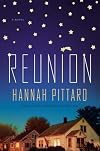
Sometimes in your reading life you just need first person narration. I needed all of Kate's "I's". Sometimes you also need a dysfunctional family...this book delivered that, too. And Pittard did a great job of pulling you in with the opening line:
"On June 16, at roughly eight thirty in the morning, I get the phone call that my father is dead."
Well, you have to keep reading after that, at least I did.
Kate's life is pretty well in shambles before she finds out about her father's suicide and show more before her siblings tell her she has to travel to Atlanta for the funeral -- which will also involve coming face-to-face with her four stepmothers and many half-siblings. As Kate haphazardly deals with her disastrous life, she also comes to terms with her relationship with her father.
This is a quick read and a good one for discussion. There's sibling relationships, adultery, childhood issues, and so much more. It's kind of the less-funny, more serious version of This is Where I Leave You. show less
"On June 16, at roughly eight thirty in the morning, I get the phone call that my father is dead."
Well, you have to keep reading after that, at least I did.
Kate's life is pretty well in shambles before she finds out about her father's suicide and show more before her siblings tell her she has to travel to Atlanta for the funeral -- which will also involve coming face-to-face with her four stepmothers and many half-siblings. As Kate haphazardly deals with her disastrous life, she also comes to terms with her relationship with her father.
This is a quick read and a good one for discussion. There's sibling relationships, adultery, childhood issues, and so much more. It's kind of the less-funny, more serious version of This is Where I Leave You. show less

A few things to know upon beginning this book; Pittard and her then husband, also a writer, had a couple they were very close to; Pittard considered the wife to be her best friend. Her husband and her best friend had an affair and both left their marriages to be together. Pittard then wrote a memoir about the whole sorry mess. At the beginning of this new work, this time called a novel, all these facts are still the story, and the protagonist, called Hana, has just found out that her now show more ex-husband has written his own book, a novel, that recounts a version of events although he changes names and in his novel, the character of his ex-wife is then murdered by a homeless man. This novel exists in real life and its description matches the one Hana gives in the novel. The character of Hana is very upset about her ex-husband's book and this novel is about her working through her feelings, although she is still quite angry at the end of the book.
"You don't like the book?"
"I don't like your portrayal."
"How am I?"
"Smug," she said. "Insecure."
"If I were an angry and unsatisfied man," I said, "that's exactly how I'd describe a woman with ambition, too."
There are other things going on. The character of Hana, like her namesake and author, teach creative writing at a college in North Carolina. She talks about her students and how they react to her writing and how they are curious about her private life. She talks about not being able to tell some students apart and her worry over an older student who takes all her classes. She talks about her family, from the sister and her family living on the same street, and about her father and his tendency to overshare. With the exception of a talking cat, added to appease her students, this novel hews closely to the known outlines of her own life.
I write, Obviously we're using the same source material. It was his marriage as much as it was mine! But he's calling it "fiction"--which offers him a kind of freedom to do and say what he wants--while also attaching that fiction to me.
She writes, There are some who wold say we've got two divorced people on our hands who can't quite get over themselves.
Is anything to be made of her previous book being a memoir and this one being called a novel, despite continuing the same story? Maybe autofiction should be a label used more often. I did try to read this book as though it were a novel, and it just doesn't work in that sense. There's too much backstory needed and it shows so clearly the messiness of actual life. It's also an angry book; not as angry as Sarah Manguso's Liars, but the emotions are raw. Pittard goes to some length to make her own flaws evident and seems to relish writing things that are designed to alienate the reader. This book did keep me turning pages and there's no doubt that Pittard is both keenly observant and a fine writer, and I do like her crankiness. I do wonder what this book would have looked like had she waited a few years to write it all down--a little distance and maturity might make this story into something more cohesive, but it might well also have diluted a bit of the energy. There is, of course, no way of knowing. show less
"You don't like the book?"
"I don't like your portrayal."
"How am I?"
"Smug," she said. "Insecure."
"If I were an angry and unsatisfied man," I said, "that's exactly how I'd describe a woman with ambition, too."
There are other things going on. The character of Hana, like her namesake and author, teach creative writing at a college in North Carolina. She talks about her students and how they react to her writing and how they are curious about her private life. She talks about not being able to tell some students apart and her worry over an older student who takes all her classes. She talks about her family, from the sister and her family living on the same street, and about her father and his tendency to overshare. With the exception of a talking cat, added to appease her students, this novel hews closely to the known outlines of her own life.
I write, Obviously we're using the same source material. It was his marriage as much as it was mine! But he's calling it "fiction"--which offers him a kind of freedom to do and say what he wants--while also attaching that fiction to me.
She writes, There are some who wold say we've got two divorced people on our hands who can't quite get over themselves.
Is anything to be made of her previous book being a memoir and this one being called a novel, despite continuing the same story? Maybe autofiction should be a label used more often. I did try to read this book as though it were a novel, and it just doesn't work in that sense. There's too much backstory needed and it shows so clearly the messiness of actual life. It's also an angry book; not as angry as Sarah Manguso's Liars, but the emotions are raw. Pittard goes to some length to make her own flaws evident and seems to relish writing things that are designed to alienate the reader. This book did keep me turning pages and there's no doubt that Pittard is both keenly observant and a fine writer, and I do like her crankiness. I do wonder what this book would have looked like had she waited a few years to write it all down--a little distance and maturity might make this story into something more cohesive, but it might well also have diluted a bit of the energy. There is, of course, no way of knowing. show less
What is it that makes a reader love the writing of a particular author? I've never given it much thought. Obviously there's something about the story or the characters that simply entertains the reader. Upon reading Hannah Pittard's newest novel, I can't help but wonder if it's sometimes more than that. Is there something in a novel akin to melody that attracts the reader the same way music attracts the listener? Sure there are those authors whose stories I enjoy because of their clever show more plots or well-developed characters, but there are also authors whose words envelop me in this sense of calm and wonder. Bernard Malamud is one such author. Hannah Pittard is another.
Pittard's debut, The Fates Will Find Their Way was beautiful. I loved being wrapped up in that book. Yet, the story wasn't there. To this day I can tell you some of the scenes and lines that captured me, but I can't really tell you what happened in the story. Feeling unsatisfied, I ached to read more of her work.
Reunion sacrifices some of the beauty in exchange for more plot. It's a good trade. The wonderfully drawn images are still sprinkled throughout, but this time there's a memorable story serving as the backbone of the novel. Kate Pulaski* is a 30-something-year-old woman who, in the three days this novel takes place, discovers herself. It's your basic coming-of-age story except it's so much more real and the cast of characters are so quirky and wonderful. Maybe it's only more real to me because I'm more of a Pulaski; maybe one day soon, I'll realize who I am and who I want to be. Maybe that explains why I was so emotionally wrapped up in the story. Or perhaps that should be chalked up to the author's talents at weaving a wonderful tale.
I don't know how else to say it but that I hang on the words of Hannah Pittard. I'm not sure how others read her work, if they get the same feeling or not. Maybe if they hear the same beat and melody that I do, they'll understand what it is I love about the writing. It's all aesthetics, I guess. I eagerly await to hear more. Play on, Hannah.
_____
*The name was a hang up at first. Kate Pulaski? As in Dr. Katherine Pulaski of the starship Enterprise-D who heinously took our beloved Dr. Crusher away for one season? In the whole of the Trek universe, she was a relatively minor character, but she was significant enough that her face comes immediately to mind upon hearing her name. I'm not sure it was the best choice for a name; fortunately, Pittard's Pulaski bore so little similarity to Picard's Pilaski that I was largely able to disassociate the two. And I certainly liked this Kate Pulaski much better. show less
Pittard's debut, The Fates Will Find Their Way was beautiful. I loved being wrapped up in that book. Yet, the story wasn't there. To this day I can tell you some of the scenes and lines that captured me, but I can't really tell you what happened in the story. Feeling unsatisfied, I ached to read more of her work.
Reunion sacrifices some of the beauty in exchange for more plot. It's a good trade. The wonderfully drawn images are still sprinkled throughout, but this time there's a memorable story serving as the backbone of the novel. Kate Pulaski* is a 30-something-year-old woman who, in the three days this novel takes place, discovers herself. It's your basic coming-of-age story except it's so much more real and the cast of characters are so quirky and wonderful. Maybe it's only more real to me because I'm more of a Pulaski; maybe one day soon, I'll realize who I am and who I want to be. Maybe that explains why I was so emotionally wrapped up in the story. Or perhaps that should be chalked up to the author's talents at weaving a wonderful tale.
I don't know how else to say it but that I hang on the words of Hannah Pittard. I'm not sure how others read her work, if they get the same feeling or not. Maybe if they hear the same beat and melody that I do, they'll understand what it is I love about the writing. It's all aesthetics, I guess. I eagerly await to hear more. Play on, Hannah.
_____
*The name was a hang up at first. Kate Pulaski? As in Dr. Katherine Pulaski of the starship Enterprise-D who heinously took our beloved Dr. Crusher away for one season? In the whole of the Trek universe, she was a relatively minor character, but she was significant enough that her face comes immediately to mind upon hearing her name. I'm not sure it was the best choice for a name; fortunately, Pittard's Pulaski bore so little similarity to Picard's Pilaski that I was largely able to disassociate the two. And I certainly liked this Kate Pulaski much better. show less
 This review was written for LibraryThing Early Reviewers.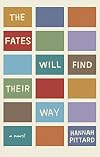
Let the readers find their way
How often, in this day and age, does an author find a completely original way to tell a story? Avid reader that I am, I’ll tell you: Not very often. And how often, after reading a novel in a single sitting, do write an immediate review? Not very often. And how often does a debut novel—any novel—affect me this powerfully? Not very often.
This is my immediate reaction to The Fates Will Find Their Way by Hannah Pittard. It is, and is not, the story of the show more disappearance of sixteen-year-old Nora Lindell. More accurately, it is the story of the vacuum left in Nora’s wake, and of how that vacuum is filled. The tale is told in reflection by the men who were the neighborhood boys that Nora left behind, and it is told entirely in the first person plural. If you’re wondering how that sounds, it sounds like this:
“It seemed we had all finally stopped looking for her, asking about her. It was a sickness, a leftover from a youth too long protracted. Of course we still thought about her. Late at night, lying awake, especially in early autumn, when we could fall asleep for a few weeks with the bedroom windows open, the curtains pulled halfway, a breeze coming in and the occasional stray dry leaf, we still allowed ourselves the vague and unfair comparisons between what our wives were and what she might have been. At least we were able to acknowledge the futility of the fantasies, even if we still couldn’t control them.”
This novel is a collection of those boys’ fantasies, the fleshed out conjectures based upon shreds of evidence presented by impeachable sources. And, in the sharing of these speculative outcomes for Nora Lindell, we learn the true outcomes of the close-knit group that she left behind—from the immediate aftermath of her disappearance, through the decades that follow. And we see how Nora’s absence shaped each of their lives.
Nora’s friends are a true community, kids who grew up together and stayed local. They have a shared history. And time has transmuted Nora Lindell’s fate from mystery to mythology. Their tale is told in a collective voice, and yet, individuals stand out. Paul Epstein, Jack Boyd, Winston Rutherford, Chuck Goodhue, Stu Zblowski, Drew Price, Marty Metcalfe, Trey Stephens, and Danny Hatchet all have their own stories that unfold along with their theories of what happened to Nora.
Even with the unusual voice, I found this book fully emotionally engaging. Reading it, I couldn’t help but reflect on my own past, my relationships, stories I’ve heard, and so forth. This novel is plot-driven, literary, experimental, spare, and absolutely beautiful. One week into the new year, I’m confident that I’ve just read one of the top books of 2011. show less
How often, in this day and age, does an author find a completely original way to tell a story? Avid reader that I am, I’ll tell you: Not very often. And how often, after reading a novel in a single sitting, do write an immediate review? Not very often. And how often does a debut novel—any novel—affect me this powerfully? Not very often.
This is my immediate reaction to The Fates Will Find Their Way by Hannah Pittard. It is, and is not, the story of the show more disappearance of sixteen-year-old Nora Lindell. More accurately, it is the story of the vacuum left in Nora’s wake, and of how that vacuum is filled. The tale is told in reflection by the men who were the neighborhood boys that Nora left behind, and it is told entirely in the first person plural. If you’re wondering how that sounds, it sounds like this:
“It seemed we had all finally stopped looking for her, asking about her. It was a sickness, a leftover from a youth too long protracted. Of course we still thought about her. Late at night, lying awake, especially in early autumn, when we could fall asleep for a few weeks with the bedroom windows open, the curtains pulled halfway, a breeze coming in and the occasional stray dry leaf, we still allowed ourselves the vague and unfair comparisons between what our wives were and what she might have been. At least we were able to acknowledge the futility of the fantasies, even if we still couldn’t control them.”
This novel is a collection of those boys’ fantasies, the fleshed out conjectures based upon shreds of evidence presented by impeachable sources. And, in the sharing of these speculative outcomes for Nora Lindell, we learn the true outcomes of the close-knit group that she left behind—from the immediate aftermath of her disappearance, through the decades that follow. And we see how Nora’s absence shaped each of their lives.
Nora’s friends are a true community, kids who grew up together and stayed local. They have a shared history. And time has transmuted Nora Lindell’s fate from mystery to mythology. Their tale is told in a collective voice, and yet, individuals stand out. Paul Epstein, Jack Boyd, Winston Rutherford, Chuck Goodhue, Stu Zblowski, Drew Price, Marty Metcalfe, Trey Stephens, and Danny Hatchet all have their own stories that unfold along with their theories of what happened to Nora.
Even with the unusual voice, I found this book fully emotionally engaging. Reading it, I couldn’t help but reflect on my own past, my relationships, stories I’ve heard, and so forth. This novel is plot-driven, literary, experimental, spare, and absolutely beautiful. One week into the new year, I’m confident that I’ve just read one of the top books of 2011. show less
Lists
Awards


You May Also Like


Associated Authors
Statistics
- Works
- 8
- Also by
- 2
- Members
- 1,196
- Popularity
- #21,486
- Rating
- 3.5
- Reviews
- 108
- ISBNs
- 44
- Languages
- 2
