
Eleanor Henderson
Author of Ten Thousand Saints
About the Author
Eleanor Henderson is an author who was born in Greece and raised in Florida. She later attended Middlebury College amd the University of Virginia, where she graduated with her MFA. She has written two novels: The Twelve-Mile Straight and Ten Thousand Saints. Her works have appeared in several show more publications including Ninth Letter, The New York Times, The Wall Street Journal, and The Best American Short Stories. She is also the co-editor of Labor Day: True Birth Stories by Today's Best Writers. (Bowker Author Biography) show less
Image credit: Eleanor Henderson/Photo by Nina Subin
Works by Eleanor Henderson
Associated Works
Tagged
Common Knowledge
- Birthdate
- 1979-07-16
- Gender
- female
- Education
- University of Virginia (MFA|Creative Writing|2005)
Middlebury College (BA|American Literature summa cum laude|2001) - Occupations
- professor
- Organizations
- Ithaca College
Ithaca Writers Institute (founding director)
New Voices Literary Festival (co-director)
James Madison University - Nationality
- USA
- Birthplace
- Greece
- Places of residence
- Florida, USA
Ithaca, New York, USA - Associated Place (for map)
- USA
Members
Reviews
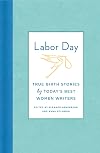
So I'm six months pregnant and getting tired of reading blah prose about pregnancy and birth. I was really excited to find a book of essays about childbirth by great writers. Finally! A pregnancy book the English major in me can sink her teeth into (really the English major in me should say, "into which she can sink her teeth").
Now, I liked this book for the quality of the writing, but I'm going to say that I sort of regret reading it. If you're a pregnant lady trying to prepare for an show more unmedicated home birth (as I am), this is not the book for you. Many of the stories are horrifying. My last midwife appointment was full of me relating stories from this book and Shari assuring me, "That's very rare." It's almost impossible to shelter yourself from negative birth stories nowadays, but you certainly don't have to read this book and freak yourself out. So many of the stories start with some version of, "I really wanted to have an unmedicated birth," and end with epidurals, c-sections, and various traumas. Even though Ina May Gaskin's books are hardly poetry, they are meant to get to you to a place where you believe you can have an awesome birth.
To be fair, I know that these stories are all true and they are not all scary. Still, if you were about to take your first trip on an airplane, would you want to read a bunch of stories describing traumatic airplane trips that didn't go as planned? Probably not. Better to read it after safely landing at your destination.
I may alter my three-star rating after giving birth. There are some really great essays in here. I particularly liked Cheryl Strayed's, Gina Zucker's and Susan Burton's, but they are all worthwhile. show less
Now, I liked this book for the quality of the writing, but I'm going to say that I sort of regret reading it. If you're a pregnant lady trying to prepare for an show more unmedicated home birth (as I am), this is not the book for you. Many of the stories are horrifying. My last midwife appointment was full of me relating stories from this book and Shari assuring me, "That's very rare." It's almost impossible to shelter yourself from negative birth stories nowadays, but you certainly don't have to read this book and freak yourself out. So many of the stories start with some version of, "I really wanted to have an unmedicated birth," and end with epidurals, c-sections, and various traumas. Even though Ina May Gaskin's books are hardly poetry, they are meant to get to you to a place where you believe you can have an awesome birth.
To be fair, I know that these stories are all true and they are not all scary. Still, if you were about to take your first trip on an airplane, would you want to read a bunch of stories describing traumatic airplane trips that didn't go as planned? Probably not. Better to read it after safely landing at your destination.
I may alter my three-star rating after giving birth. There are some really great essays in here. I particularly liked Cheryl Strayed's, Gina Zucker's and Susan Burton's, but they are all worthwhile. show less
The basics: Labor Day: True Birth Stories by Today's Best Women Writers, edited by Eleanor Henderson and Anna Solomon, brings together an impressive group of contemporary female writers from a variety of genres to share their experiences giving birth. The essays are as varied as the women who write them.
My thoughts: Admittedly, before I got pregnant (and even early on in my pregnancy), I shied away from birth stories. Rarely do I favor ignorance, but in this case, I was scared of labor and show more childbirth, yet I knew I would be going through it, and I wasn't ready to deal with it. At some point in my pregnancy, I became eager for birth stories. I'm still frightened, of course, but I find comfort in imagining myself in a variety of different scenarios, both the positive and negative.
I'll be honest: this collection of essays often veers to the negative and sad. There are some heart-breaking stories told in these pages. I shed many, many tears as I read, yet even the most heart-breaking essays, I found a sense of comfort and kinship with the writers. These strong, beautiful voices moved me with their tales of the times before, during and after birth. To combine such intimate details about life, birth, and new motherhood with beautiful language is a true gift.
Favorite passage: "I suppose we are always alone in our pain, but we are rarely positioned appropriately to view the isolation accurately. Most of the choices with which we are presented in childbirth are secondary to the one most important in practice we must be prepared to labor alone, even in the company of others, even with the brilliantly blinding help of loved ones. Perhaps the debates regarding child birth are so he did because in the end it’s one woman’s experience, not a shared cultural phenomenon. It’s you and your pain; it’s you and it’s your baby.” --Sarah A. Strickley
The verdict: This collection is superb. While some essays are objectively better than others, only one rang hollow for me. While I connected more deeply with some than others, I appreciated and gained something from each one. I'll be giving this book to many, many pregnant friends in the years to come. show less
My thoughts: Admittedly, before I got pregnant (and even early on in my pregnancy), I shied away from birth stories. Rarely do I favor ignorance, but in this case, I was scared of labor and show more childbirth, yet I knew I would be going through it, and I wasn't ready to deal with it. At some point in my pregnancy, I became eager for birth stories. I'm still frightened, of course, but I find comfort in imagining myself in a variety of different scenarios, both the positive and negative.
I'll be honest: this collection of essays often veers to the negative and sad. There are some heart-breaking stories told in these pages. I shed many, many tears as I read, yet even the most heart-breaking essays, I found a sense of comfort and kinship with the writers. These strong, beautiful voices moved me with their tales of the times before, during and after birth. To combine such intimate details about life, birth, and new motherhood with beautiful language is a true gift.
Favorite passage: "I suppose we are always alone in our pain, but we are rarely positioned appropriately to view the isolation accurately. Most of the choices with which we are presented in childbirth are secondary to the one most important in practice we must be prepared to labor alone, even in the company of others, even with the brilliantly blinding help of loved ones. Perhaps the debates regarding child birth are so he did because in the end it’s one woman’s experience, not a shared cultural phenomenon. It’s you and your pain; it’s you and it’s your baby.” --Sarah A. Strickley
The verdict: This collection is superb. While some essays are objectively better than others, only one rang hollow for me. While I connected more deeply with some than others, I appreciated and gained something from each one. I'll be giving this book to many, many pregnant friends in the years to come. show less
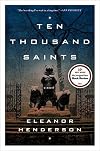
Eleanor Henderson's Ten Thousand Saints is a subtle novel that could simplistically be described with a key theme of growing up but actually delves into so much more should the reader opt to do so. Jude, Eliza and Johnny are three kids who are just playing at being grown-up and mature. They put on a good front, but underneath, their feelings of loneliness and loss bring them together. The overwhelming air of sadness that permeates the novel only adds to each character's melancholy and show more struggle to face reality. Ms. Henderson masterfully weaves the rebellion and loss that defines much of the novel in such a way that the end result is a story that ends on a note of hope - that even the most depressed, lost and lonely person can find love, acceptance, and happiness.
Ten Thousand Saints is reminscient of Less Than Zero with its huge focus on the drug and punk scene. Interestingly, socio-economic backgrounds provide no indication of whether one will be drawn into the drug scene. More importantly, while "straight edge" is the opposite of the drug scene, it is still a form of rebellion against society. All three characters are driven to action by the fear of the truth and anger at their respective parent(s). While their reasons differ, the end result is still a group of young adults who hide rather than face reality. Death - past, immediate, and future - along with birth - past and future - become the driving force behind each character's metamorphasis into adulthood. Hiding behind the "scene" rather than confronting the truth is one key coping mechanism.
The narrator, Steven Kaplan, provides an understated performance that works well with the highly dramatic lives of the three protagonists. The differences in his portrayal of each character are subtle and yet effective as the differences in each character, outside of the obvious gender differences, are just as nuanced. This is one novel where added tension and drama is not necessary, and Mr. Kaplan avoids adding extraneous emotion to each character, playing up the boredom and lack of concern each character is trying so desperately to portray to the world. Mr. Kaplan's simple approach to the narration of Ten Thousand Saints allows Ms. Henderson's characters to speak for themselves.
In its storytelling, Ten Thousand Saints is poetic in its simplicity while unflinching in its harsh portrayal of addicts of all kinds. Human redemption stands alongside human depravity to offer a brutally realistic and yet beautiful story of love and its power to save.
Thank you to Beth Harper from Harper Audio for my review copy! show less
Ten Thousand Saints is reminscient of Less Than Zero with its huge focus on the drug and punk scene. Interestingly, socio-economic backgrounds provide no indication of whether one will be drawn into the drug scene. More importantly, while "straight edge" is the opposite of the drug scene, it is still a form of rebellion against society. All three characters are driven to action by the fear of the truth and anger at their respective parent(s). While their reasons differ, the end result is still a group of young adults who hide rather than face reality. Death - past, immediate, and future - along with birth - past and future - become the driving force behind each character's metamorphasis into adulthood. Hiding behind the "scene" rather than confronting the truth is one key coping mechanism.
The narrator, Steven Kaplan, provides an understated performance that works well with the highly dramatic lives of the three protagonists. The differences in his portrayal of each character are subtle and yet effective as the differences in each character, outside of the obvious gender differences, are just as nuanced. This is one novel where added tension and drama is not necessary, and Mr. Kaplan avoids adding extraneous emotion to each character, playing up the boredom and lack of concern each character is trying so desperately to portray to the world. Mr. Kaplan's simple approach to the narration of Ten Thousand Saints allows Ms. Henderson's characters to speak for themselves.
In its storytelling, Ten Thousand Saints is poetic in its simplicity while unflinching in its harsh portrayal of addicts of all kinds. Human redemption stands alongside human depravity to offer a brutally realistic and yet beautiful story of love and its power to save.
Thank you to Beth Harper from Harper Audio for my review copy! show less
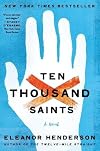
Eleanor Henderson breathes life into a time, place, and milieu. The time is 1987, the place is New York City and Lintonburg, Vermont, and the milieu is the niche hardcore punk "straight-edge" scene. The protagonists are children, teenagers all, but children seemingly torn from their own childhoods. Orphans, adoptees, runaways and waifs -- their relationships with the parental adult world is as fraught and complicated as the world itself. And yet, like an experiential juggernaut, these youths show more insist on becoming adults, through pain and misfortune and hope and the possibility of love.
Jude and Teddy and Johnny and Eliza are the generation following that of promiscuous drug use and sexual freedom. One way or another--either through tragedy or steely will--they turn their backs on the choices their parents made. Jude, especially, runs the gamut from pot smoking, gas huffing fifteen year old to straight-edge abstainer of alcohol, cigarettes, drugs, and meat. Sexually confused but not sexually ambitious, Jude moves tentatively toward increasingly adult relations both sexual and caring. Johnny is an equally impressive portrait from Henderson, though sexually more adventurous. Strangely, it is Eliza, the wilful, privileged, now pregnant teen who is the least believable character.
At times the writing seems forced, with awkward movements of characters to different locales. At times there are chapters that feel like information dumps, bringing the reader up to speed on the punk and straight-edge scene of the '80s. But these are minor problems in a first novel that undoubtedly provides ample evidence of Henderson's potential. Well worth a read. show less
Jude and Teddy and Johnny and Eliza are the generation following that of promiscuous drug use and sexual freedom. One way or another--either through tragedy or steely will--they turn their backs on the choices their parents made. Jude, especially, runs the gamut from pot smoking, gas huffing fifteen year old to straight-edge abstainer of alcohol, cigarettes, drugs, and meat. Sexually confused but not sexually ambitious, Jude moves tentatively toward increasingly adult relations both sexual and caring. Johnny is an equally impressive portrait from Henderson, though sexually more adventurous. Strangely, it is Eliza, the wilful, privileged, now pregnant teen who is the least believable character.
At times the writing seems forced, with awkward movements of characters to different locales. At times there are chapters that feel like information dumps, bringing the reader up to speed on the punk and straight-edge scene of the '80s. But these are minor problems in a first novel that undoubtedly provides ample evidence of Henderson's potential. Well worth a read. show less
Awards


You May Also Like


Associated Authors
Statistics
- Works
- 9
- Also by
- 2
- Members
- 1,050
- Popularity
- #24,543
- Rating
- 3.6
- Reviews
- 40
- ISBNs
- 45
- Languages
- 1
- Favorited
- 2