
Emi Lenox
Author of Plutona
Series
Works by Emi Lenox
Associated Works
Lumberjanes Vol. 1: Beware the Kitten Holy (2015) — Illustrator, some editions — 2,556 copies, 138 reviews
Tagged
Common Knowledge
- Canonical name
- Lenox, Emi
- Gender
- female
- Places of residence
- Portland, Oregon, USA
- Associated Place (for map)
- Oregon, USA
Members
Reviews
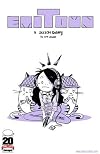
One of the things that I’ve really enjoyed about the webcomics world is that it’s given rise to a great number of young artists, many of whom write autobiographical comics. These comic artists tend to be primarily young writers and artists, and webcomics allow them a chance to share the highlight of their day or those split-second funny moments with the rest of the world. And even more interesting to me is that some of the big name publishers, such as Image, are starting to pay attention show more to these artists and publish their works. I’m excited to have a chance to review EmiTown 2 by Emi Lenox. Emi shares with readers a day by day account of her life--spending time with friends, new relationships, a break up, her own doubts and self reflections, and those quiet moments where she grows. It’s a work that is easy to relate too and at times heartbreaking.
While a number of the comics share the seemingly trivial aspects of the day, Emi allows us to take a close look at who she is, what drives her and makes her who she is, and at times giving us deeply personal glimpses into her life as a young woman making her way in the world. And to me that’s the best thing about this work. Unlike other artists Emi isn’t afraid to show those moments where most of us would be hiding under the covers, such as a breakup or the moments of self doubt and wondering. Emi instead lets us in and see her life and allows us to be a part of it. And its these types of moments that help the reader connect even more to her. And yes there are days where it feels like nothing has happened or that the moment she shared with us is less than interesting, but that’s what makes this such a great work. It feels like we’re friends being invited in to share Emi’s life.
Emi has a very distinctive style, not only in her artwork, but to how she lays out her panels. Unlike most autobiographical artists that take a large panel and divide it into multiple frames, Emi often divides the panel into three different sections sharing different moments and thoughts from the day. The layout of the panels change based upon what is being shared during that day which keeps things interesting to the reader (especially since this is a 400+ page volume.) Another thing that separates Emi is that she doesn’t hesitate to use words to describe the day, where pictures wouldn’t always work. In many ways Emi has created an illustrated diary and allows us to see her world.
Emi’s artwork itself is stylized, often leaning towards a more anime/cartoonish style, but keeping people and places instantly recognizable. For me this type of style makes it easy to read the work, because the people and places are instantly recognizable from month to month, even if their clothes and hairstyles change. I also really like Emi’s linework, in many ways it reminds me of Yuko Ota’s style--a nice controlled line that creates the world, yet remains expressive and emotive. It keeps the characters living and breathing on the page. My favorite part of Emi’s art though are the cats that she draws. They show up many times when Emi’s about to face a battle or struggling through a low point and they’re there to help provide support to her on the page. Overall I really enjoy her art.
Although you can read some of the entries on Emi’s site (it looks like it’s running a year and six months behind) I really recommend that you just go ahead and buy the book. Emi’s style and prose makes her an artist to keep an eye out for. show less
While a number of the comics share the seemingly trivial aspects of the day, Emi allows us to take a close look at who she is, what drives her and makes her who she is, and at times giving us deeply personal glimpses into her life as a young woman making her way in the world. And to me that’s the best thing about this work. Unlike other artists Emi isn’t afraid to show those moments where most of us would be hiding under the covers, such as a breakup or the moments of self doubt and wondering. Emi instead lets us in and see her life and allows us to be a part of it. And its these types of moments that help the reader connect even more to her. And yes there are days where it feels like nothing has happened or that the moment she shared with us is less than interesting, but that’s what makes this such a great work. It feels like we’re friends being invited in to share Emi’s life.
Emi has a very distinctive style, not only in her artwork, but to how she lays out her panels. Unlike most autobiographical artists that take a large panel and divide it into multiple frames, Emi often divides the panel into three different sections sharing different moments and thoughts from the day. The layout of the panels change based upon what is being shared during that day which keeps things interesting to the reader (especially since this is a 400+ page volume.) Another thing that separates Emi is that she doesn’t hesitate to use words to describe the day, where pictures wouldn’t always work. In many ways Emi has created an illustrated diary and allows us to see her world.
Emi’s artwork itself is stylized, often leaning towards a more anime/cartoonish style, but keeping people and places instantly recognizable. For me this type of style makes it easy to read the work, because the people and places are instantly recognizable from month to month, even if their clothes and hairstyles change. I also really like Emi’s linework, in many ways it reminds me of Yuko Ota’s style--a nice controlled line that creates the world, yet remains expressive and emotive. It keeps the characters living and breathing on the page. My favorite part of Emi’s art though are the cats that she draws. They show up many times when Emi’s about to face a battle or struggling through a low point and they’re there to help provide support to her on the page. Overall I really enjoy her art.
Although you can read some of the entries on Emi’s site (it looks like it’s running a year and six months behind) I really recommend that you just go ahead and buy the book. Emi’s style and prose makes her an artist to keep an eye out for. show less
First sentence: white cat
black cat
blue cat
brown cat
high cat
low cat
always upside down cat
fluffed cat
bare cat
round cat
square cat
long cat
short cat
rarely-ever-there cat
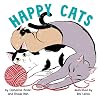
Premise/plot: Plenty of cats can be found in Catherine Amri and Anouk Han's Happy Cats. This one is essentially an illustrated poem. The stars of the show are the cats themselves, perhaps.
My thoughts: I love cats. I do. I really LOVE, LOVE, LOVE cats. Crazy about cat books as well. Most of the time. This one was so delightful. show more Not just because it stars cats. Not just because the illustrations are satisfying--they are though. No, I love this one so much because the rhythm and rhyme delight. Rhyme can prove challenging, but, it is so much easier to "get right" than rhythm. Rhyming can be accomplished with practice and effort. Rhythm, however, I think is more of a gift. Some rhyming books just lack all sense of rhythm. Other books just make it look absolutely effortless. Rhythm looks so effortless in this one. It is FUN. The rhythm of the text makes you WANT to read it aloud (even if you're alone). I also think the rhythm will help make this one appeal as an again-again. show less
black cat
blue cat
brown cat
high cat
low cat
always upside down cat
fluffed cat
bare cat
round cat
square cat
long cat
short cat
rarely-ever-there cat
Premise/plot: Plenty of cats can be found in Catherine Amri and Anouk Han's Happy Cats. This one is essentially an illustrated poem. The stars of the show are the cats themselves, perhaps.
My thoughts: I love cats. I do. I really LOVE, LOVE, LOVE cats. Crazy about cat books as well. Most of the time. This one was so delightful. show more Not just because it stars cats. Not just because the illustrations are satisfying--they are though. No, I love this one so much because the rhythm and rhyme delight. Rhyme can prove challenging, but, it is so much easier to "get right" than rhythm. Rhyming can be accomplished with practice and effort. Rhythm, however, I think is more of a gift. Some rhyming books just lack all sense of rhythm. Other books just make it look absolutely effortless. Rhythm looks so effortless in this one. It is FUN. The rhythm of the text makes you WANT to read it aloud (even if you're alone). I also think the rhythm will help make this one appeal as an again-again. show less
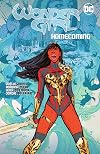
I like Yara Flor as a character, and the art is pretty darn good throughout, but the storytelling in this collection, while aspiring to be zany and energetic, just comes off as a sloppy, slapped-together train wreck. I still like the Future State: Wonder Woman chapters I had read in a previous collection, but the rest was a chore to read as characters jumped all over or disappeared or did things just 'cuz.
FOR REFERENCE
Contents:
• [Three-page selection], Infinite Frontier #0 / Joëlle show more Jones, writer and artist
• Homecoming Part One, Wonder Girl #1 / Joëlle Jones, writer and artist
• Homecoming Part Two, Wonder Girl #2 / Joëlle Jones, writer; Joëlle Jones and Adriana Melo, artists
• Homecoming Part Three, Wonder Girl #3 / Joëlle Jones, writer; Joëlle Jones and Adriana Melo, artists
• Homecoming Part Four, Wonder Girl #4 / Joëlle Jones, writer; Joëlle Jones and Adriana Melo, artists
• Homecoming Part Five, Wonder Girl #5 / Joëlle Jones, writer; Adriana Melo, artist
• Homecoming Part Six, Wonder Girl #6 / Joëlle Jones, writer; Leila del Duca, artist
• Homecoming Part Seven, Wonder Girl #7 / Joëlle Jones, writer; Leila del Duca, artist
• Yara Flor and the Esquecida in Legends and Aggressions, Wonder Girl 2022 Annual #1 / Joëlle Jones and Douglas Marques, writers; Emi Lenox, Adriana Melo, Sweeney Boo, Ben Dewey, artists
• Hell to Pay Part One, Future State: Wonder Woman #1 / Joëlle Jones, writer and artist
• Hell to Pay Part Two, Future State: Wonder Woman #2 / Joëlle Jones, writer and artist
• Covers, Variant Covers / Joëlle Jones, Bilquis Evely, J. Scott Campbell, Will Murai, Matteo Scalera, Jamal Campbell, Dan Mora, Jenny Frison, Stanley "Artgerm" Lau, Julian Totina Tedesco, Jen Bartel, Kendrick Lim, Carla Cohen, Rafael Grampa, Kevin Wada, Scott Forbes, Christian Wildgoose, illustrators
• Esquecida Designs / Joëlle Jones, writer and illustrator
• Yara Flor Designs / Joëlle Jones, illustrator show less
FOR REFERENCE
Contents:
• [Three-page selection], Infinite Frontier #0 / Joëlle show more Jones, writer and artist
• Homecoming Part One, Wonder Girl #1 / Joëlle Jones, writer and artist
• Homecoming Part Two, Wonder Girl #2 / Joëlle Jones, writer; Joëlle Jones and Adriana Melo, artists
• Homecoming Part Three, Wonder Girl #3 / Joëlle Jones, writer; Joëlle Jones and Adriana Melo, artists
• Homecoming Part Four, Wonder Girl #4 / Joëlle Jones, writer; Joëlle Jones and Adriana Melo, artists
• Homecoming Part Five, Wonder Girl #5 / Joëlle Jones, writer; Adriana Melo, artist
• Homecoming Part Six, Wonder Girl #6 / Joëlle Jones, writer; Leila del Duca, artist
• Homecoming Part Seven, Wonder Girl #7 / Joëlle Jones, writer; Leila del Duca, artist
• Yara Flor and the Esquecida in Legends and Aggressions, Wonder Girl 2022 Annual #1 / Joëlle Jones and Douglas Marques, writers; Emi Lenox, Adriana Melo, Sweeney Boo, Ben Dewey, artists
• Hell to Pay Part One, Future State: Wonder Woman #1 / Joëlle Jones, writer and artist
• Hell to Pay Part Two, Future State: Wonder Woman #2 / Joëlle Jones, writer and artist
• Covers, Variant Covers / Joëlle Jones, Bilquis Evely, J. Scott Campbell, Will Murai, Matteo Scalera, Jamal Campbell, Dan Mora, Jenny Frison, Stanley "Artgerm" Lau, Julian Totina Tedesco, Jen Bartel, Kendrick Lim, Carla Cohen, Rafael Grampa, Kevin Wada, Scott Forbes, Christian Wildgoose, illustrators
• Esquecida Designs / Joëlle Jones, writer and illustrator
• Yara Flor Designs / Joëlle Jones, illustrator show less
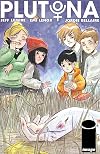
In a world where superheroes exist and have become the talk of gossipy tabloids, five children stumble upon the corpse of Plutona, a beloved and powerful superhero who has apparently been defeated by her nemesis, White Wasp. Teddy, the superhero obsessed outcast, is crestfallen at the death of his hero. The others are more confused on what to do with the body of a superhero who was the only person standing between them and the city's destruction by supervillains. When Teddy hatches a plan, show more it can lead to a tragic conclusion for the group.
Plutona is a character-driven story; it's no coincidence that many of the scenes take place while they're at home. Teddy is a lonely boy whose attention has turned to "cape-spotting", where he blogs about the sightings of superheroes throughout the city. His father tries to help his son as best he can, but the implication is that he is a single father who does not always have the time to dedicate to his son; in one scene, the picture of a woman holding a smiling baby Teddy contrasts with the bleak silence of father and son eating together. His desperation to be something more than a bullied, quiet boy who feels insignificant is palpable and relatable.
Ray is the stereotypical eighties tough guy: living with an alcoholic, and implied abusive, dad, who turns his anger on the others around him. He mercilessly taunts Teddy, calling him by his rude nickname "Tugger", and calls Diane "chubs". He has a soft spot for Mie, and occasionally his scenes show him genuinely upset by the dead body they discover.
Diane is also lonely, teased because of her weight, but desperate to be cool and friendly. Mie and she have a tense relationship, with Mie pulling away from Diane at the chance of becoming closer to Ray, and Mike is the silent shadow that follows them all.
As a coming-of-age story, Plutona works very well. Despite what the book's summary says, this group of five are not friends. They are thrown into an unbelievable situation together and, again in the spirit of eighties movies, come together because they share this secret. The depiction of give-and-take of friendship, of not-quite-friends, but not-quite-enemies either, and the shocked desperation of their actions is crystal perfect, in a way that so few adult writers can pull off.
And yet.
The story felt incomplete. The beginning and middle were pitch-perfect, evoking childhood nostalgia and a grim mystery at the same time, but the conclusion had all the marks of being resolved, with none of the satisfaction. In recent years, it seems to have become more popular to ignore the denouement of a story, instead focusing on the climax and perhaps having an artistic, cryptic scene before fading to black. And yet, the denouement is what gives the story the closure it needs, not the climax.
We certainly have a surprising, tragic climax, and we definitely have the artsy, cryptic scene, but I was left with questions: what happened next? Ending on an ambiguous note can work, but only if the reader doesn't feel cheated, which was unfortunately not the case with Plutona.
Adding to the rushed feeling were several inconsistencies that cast a sloppy pall over the work. In one scene, Teddy angrily tells Ray to stop calling him Tugger, a crude reference to an unfortunate indiscretion, and that he hasn't been called that since "sixth grade", but later, Ray says that the event which the nickname came from happened in "seventh grade". In earlier panes, the nemesis of Plutona is identified - twice - as Killer Wasp, but the ending has them using White Wasp exclusively.
The world-building is superb. I love the idea of superheroes becoming celebrities and being tabloid fodder. The casual way they throw in references, without overdoing the exposition, is brilliant. The artwork is also beautiful, the color palette moving slowly from bright yellows to harsh blues toward the end. Unfortunately, with a plot that had so much potential, the ending just felt flat. Worth a look, maybe, but not a keeper. show less
Plutona is a character-driven story; it's no coincidence that many of the scenes take place while they're at home. Teddy is a lonely boy whose attention has turned to "cape-spotting", where he blogs about the sightings of superheroes throughout the city. His father tries to help his son as best he can, but the implication is that he is a single father who does not always have the time to dedicate to his son; in one scene, the picture of a woman holding a smiling baby Teddy contrasts with the bleak silence of father and son eating together. His desperation to be something more than a bullied, quiet boy who feels insignificant is palpable and relatable.
Ray is the stereotypical eighties tough guy: living with an alcoholic, and implied abusive, dad, who turns his anger on the others around him. He mercilessly taunts Teddy, calling him by his rude nickname "Tugger", and calls Diane "chubs". He has a soft spot for Mie, and occasionally his scenes show him genuinely upset by the dead body they discover.
Diane is also lonely, teased because of her weight, but desperate to be cool and friendly. Mie and she have a tense relationship, with Mie pulling away from Diane at the chance of becoming closer to Ray, and Mike is the silent shadow that follows them all.
As a coming-of-age story, Plutona works very well. Despite what the book's summary says, this group of five are not friends. They are thrown into an unbelievable situation together and, again in the spirit of eighties movies, come together because they share this secret. The depiction of give-and-take of friendship, of not-quite-friends, but not-quite-enemies either, and the shocked desperation of their actions is crystal perfect, in a way that so few adult writers can pull off.
And yet.
The story felt incomplete. The beginning and middle were pitch-perfect, evoking childhood nostalgia and a grim mystery at the same time, but the conclusion had all the marks of being resolved, with none of the satisfaction. In recent years, it seems to have become more popular to ignore the denouement of a story, instead focusing on the climax and perhaps having an artistic, cryptic scene before fading to black. And yet, the denouement is what gives the story the closure it needs, not the climax.
We certainly have a surprising, tragic climax, and we definitely have the artsy, cryptic scene, but I was left with questions: what happened next? Ending on an ambiguous note can work, but only if the reader doesn't feel cheated, which was unfortunately not the case with Plutona.
Adding to the rushed feeling were several inconsistencies that cast a sloppy pall over the work. In one scene, Teddy angrily tells Ray to stop calling him Tugger, a crude reference to an unfortunate indiscretion, and that he hasn't been called that since "sixth grade", but later, Ray says that the event which the nickname came from happened in "seventh grade". In earlier panes, the nemesis of Plutona is identified - twice - as Killer Wasp, but the ending has them using White Wasp exclusively.
The world-building is superb. I love the idea of superheroes becoming celebrities and being tabloid fodder. The casual way they throw in references, without overdoing the exposition, is brilliant. The artwork is also beautiful, the color palette moving slowly from bright yellows to harsh blues toward the end. Unfortunately, with a plot that had so much potential, the ending just felt flat. Worth a look, maybe, but not a keeper. show less
Lists
Awards


You May Also Like


Associated Authors
Statistics
- Works
- 6
- Also by
- 7
- Members
- 342
- Popularity
- #69,720
- Rating
- 3.9
- Reviews
- 15
- ISBNs
- 17
- Languages
- 4