
Sara Cassidy
Author of A Boy Named Queen
Works by Sara Cassidy
Tagged
Common Knowledge
- Gender
- female
- Occupations
- young adult writer
children's book author - Relationships
- Shields, Carol (mother)
Giardini, Anne (sister)
Members
Reviews

When I finished reading Nevers and tried to describe it, I wasn't sure where to start. "It's a strange little duck of a tale" is about as far as I got. And it is! With time and trying to explain the story, I have grown very fond of it and its little quirks, and can describe it better as a series of non sequiturs strung together and embellished into a plot, much like a fairy tale turned into a dream.
Nothing quite makes logical sense in the book, but it also makes complete sense in the story. show more Magic is actually misunderstood science, except when it is magic, and men can turn into Latin-speaking donkeys and women can be accidental death-magnets for the men in their lives and piglets and chicks can be best friends.
The story is a little absurd but cozy and delightful. Despite everything, it manages to paint a neat little picture of everyday village life after the French revolution, rather than the big Parisian kind in history books. There are recurring themes of birth, death, and what makes someone a parent or child or family that took me too long to pick up on, but which I liked the frank discussion of. One of Odette's deceased stepfathers was a grave digger and death is a known thing in 1799, but also life and birth. She assists a midwife at one point, and is present when an old woman passes. Families are described matter of factly when the child is born to different parents, and some parents are better than others, but they all try their best.
I was pleasantly surprised by the casual inclusion of queer identities. One of the men in the story has a husband, which is simply as it is and no source of conflict (well, there is a problem that he's married at all, but the identity of the spouse isn't the issue). There's also a few lines from the midwife about how the new baby appears to be a girl, but you don't always know - sometimes the child announces they are a different gender when they're old enough to say so (the midwife herself is an example). The not-quite-magical nature of the story makes this last thing feel like a fantasy element instead of just something that happens, but honestly I think any mention at all in a middle grade book is pretty great.
In the end, I suppose the story doesn't really go very far. There is a plot trajectory in there, but it seems secondary to the dreamlike daily life for Odette in Nevers and her path to growing up.
The more I talk about this book, even if I struggle to articulate my thoughts, the more I like it! show less
Nothing quite makes logical sense in the book, but it also makes complete sense in the story. show more Magic is actually misunderstood science, except when it is magic, and men can turn into Latin-speaking donkeys and women can be accidental death-magnets for the men in their lives and piglets and chicks can be best friends.
The story is a little absurd but cozy and delightful. Despite everything, it manages to paint a neat little picture of everyday village life after the French revolution, rather than the big Parisian kind in history books. There are recurring themes of birth, death, and what makes someone a parent or child or family that took me too long to pick up on, but which I liked the frank discussion of. One of Odette's deceased stepfathers was a grave digger and death is a known thing in 1799, but also life and birth. She assists a midwife at one point, and is present when an old woman passes. Families are described matter of factly when the child is born to different parents, and some parents are better than others, but they all try their best.
I was pleasantly surprised by the casual inclusion of queer identities. One of the men in the story has a husband, which is simply as it is and no source of conflict (well, there is a problem that he's married at all, but the identity of the spouse isn't the issue). There's also a few lines from the midwife about how the new baby appears to be a girl, but you don't always know - sometimes the child announces they are a different gender when they're old enough to say so (the midwife herself is an example). The not-quite-magical nature of the story makes this last thing feel like a fantasy element instead of just something that happens, but honestly I think any mention at all in a middle grade book is pretty great.
In the end, I suppose the story doesn't really go very far. There is a plot trajectory in there, but it seems secondary to the dreamlike daily life for Odette in Nevers and her path to growing up.
The more I talk about this book, even if I struggle to articulate my thoughts, the more I like it! show less
 This review was written for LibraryThing Early Reviewers.
It's not easy to make a book this short so interesting, and while it's a quirky little story, there's a lot packed in. Loved that the focus of the trip is the long-haul trucking experience and what that's like -- totally fascinating to hear about how those cabs are laid out! And that in background it turns out that Jolene is a biracial kid who's family has recently divorced because her father has comes out as gay and gotten seriously involved with a new Indigenous partner -- and all of that show more and none of that matters, because the book is about Jolene, and her loving relationship with her dad, and the things they like to do together (pick a food and rate it, talk about what they see from the windows while driving, pack minimally, think about poems). It's pretty great, really, and enlivened by an emergency situation that includes some intolerant behavior and a really great step by step of how to speak to a 911 operator, should you ever be called on to do so. show less
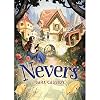
This was a much more enjoyable book than I expected. Kids books are usually okay and fun reads, but this not only had an engaging story, but great imagery and creative writing. The eccentricities of the characters lead an absurdist air to the story, but was totally believable and engaging and made the story come to life. After bouncing around for her entire life, a young girl and her mother arrive in an unusual village right after the French Revolution. As they start to build a life there, show more the girl learns that this place that feels oddly comfortable is more than just another random village - it's tied to the mystery she and her mother have been trying to solve. show less
This review was written for LibraryThing Early Reviewers.I received an advance copy via NetGalley.
This middle grade book brings to life the town of Nevers in the years soon after the French Revolution and follows the adventure of Odette, a serious girl who must act the adult as she looks after her flighty mother. Odette stumbles from a hidden place in a cheese cart and into Nevers with its closed pottery factory and a strange dancing donkey who bellows in a Latin after dark. The girl yearns for a stable home for herself and her mother, and in show more Nevers, she finds that and so much more.
There are elements of magical realism and some grittiness, too. It doesn’t shy away from the hardships of that time period. However, this balanced by a strong sense of hope and acceptance. There are characters who are intersex and gay, all part of a setting that feels cozy and realistic in its diversity. I was left feeling like I wanted to settle down in Nevers and live with these people. As a child reading this, I would have felt that even more strongly.
My only criticism is that the plot felt too convenient, especially a subplot about a book where Odette could have had more agency. That said, the book is still a joy, a read to be enjoyed by children and adults. show less
This middle grade book brings to life the town of Nevers in the years soon after the French Revolution and follows the adventure of Odette, a serious girl who must act the adult as she looks after her flighty mother. Odette stumbles from a hidden place in a cheese cart and into Nevers with its closed pottery factory and a strange dancing donkey who bellows in a Latin after dark. The girl yearns for a stable home for herself and her mother, and in show more Nevers, she finds that and so much more.
There are elements of magical realism and some grittiness, too. It doesn’t shy away from the hardships of that time period. However, this balanced by a strong sense of hope and acceptance. There are characters who are intersex and gay, all part of a setting that feels cozy and realistic in its diversity. I was left feeling like I wanted to settle down in Nevers and live with these people. As a child reading this, I would have felt that even more strongly.
My only criticism is that the plot felt too convenient, especially a subplot about a book where Odette could have had more agency. That said, the book is still a joy, a read to be enjoyed by children and adults. show less
Lists
Wordless Books (1)
Awards


You May Also Like


Statistics
- Works
- 24
- Members
- 353
- Popularity
- #67,813
- Rating
- 3.7
- Reviews
- 39
- ISBNs
- 103
- Languages
- 1
