
Kristin Butcher
Author of Chat Room
Works by Kristin Butcher
Pharaohs and Foot Soldiers: One Hundred Ancient Egyptian Jobs You Might Have Desired or Dreaded (Jobs in History) (2009) 40 copies, 3 reviews
Isobel's Stanley Cup 1 copy
Tagged
Common Knowledge
- Gender
- female
Members
Reviews
Pharaohs and Foot Soldiers: One Hundred Ancient Egyptian Jobs You Might Have Desired or Dreaded by Kristin Butcher
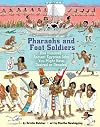
Pharaohs and Foot Soldiers: One Hundred Ancient Egyptian Jobs You Might Have Desired or Dreaded has been in my to-read stacks for some time now. However, I’ve had the hardest time finishing up the last few chapters necessary to wrap it up with. Each time I cracked the pages and began to read Kristin Butcher’s tongue-in-cheek job descriptions from ancient Egypt and soak in the comical, cartoon-like illustrations by Martha Newbigging, I felt a persistent tug on its pages. Soon the book show more would be slipped out from between my fingers and into the eager hands of a waiting child.
My three and six-year-old were each as likely as the other to abscond with this colourful title into a hidden nook or cranny of the living room. I found them curled up in the windowsill, sprawled out belly-down on the living room carpet, and curled in bed leafing through its pages. I finally succeeded in my mission by retreating to the bedroom during my toddler’s naptime and reading in the silent secrecy to be found there.
Ancient Egypt is without a doubt, one of the most fascinating historical time periods for children – the mummies, the pyramids, it’s all so mysterious. Author Kristin Butcher ensures that the quirky, and downright odd facts about living in ancient Egypt are expressed to children in ways that make an exploration of its culture unforgettable.
Covering 100 Egyptian ‘jobs’ in fifteen categories, children are invited to imagine themselves in each of the positions depicted. “It is your job to cut the huge stone blocks that will be used for monuments, statues, temples, and tombs.” Is the opening line of a job description for the position of quarryman. Each job category, such as “Nile Jobs,” “Assisting Pharaoh Jobs,” and “Noble Jobs” provide background information about the culture of Egypt and the importance and role of the category’s importance in Egyptian life. At times quite a depth of historical detail is included here.
Each individual job description is approximately two to three paragraphs in length and is accompanied by Newbigging’s trademark watercolour and ink illustrations that fill the pages of the other titles in Annick Press’ ‘historical jobs’ series of books.
Sidebars backed by a watermarked pyramid also accompany some job descriptions and provide additional archaeological information, historical detail, or relevance to modern society. A pictorial timeline, introductions to topics ranging from Egyptian government to belief in the afterlife, a fabulous list of additional recommended reading (think historical fiction chapter books), and an index round out the value-added educational components.
Whether read front-to-back, opened randomly, or browsed through while reading high-interest Egyptian job openings, children are sure to pick up a wealth of tidbits and Egyptian trivia while developing a passing familiarity with the lives of the ancient Egyptian people. Butcher is sure to include all manner of fascinating, personal details – which jobs will make you sweaty, which will make your back hurt, which will require you to marry your brother, and so on. My six-year-old has broken into unprompted narrations of certain enthralling jobs to her father such as our family favourite, “Sandal Bearer,” in which the lucky holder of this job gets to kiss Pharaoh’s big toe each time he helps him on with his shoes. A highly esteemed position in Egyptian society apparently. And of course, all of the fascinating details about removing the brain through the nose are included in the “Embalmer” job description in the “Temple Jobs” category.
For a picture book about Egypt, everyone is fairly well-covered, the men are all decked out in short linen skirts, the ladies wear long linen dresses for the most part. There is one gentleman – a reed cutter – who’s caught in full rearview nudity, a birthing mother is screened by her supportive attendants, and the dancing girls sport the equivalent of underwear with hair and hands that serve to conceal the upper torso. I’m thankful for Newbigging’s restraint in this area.
Some additional explanations may be required from parents as to the ‘godhood’ of Pharaoh. Butcher explains in her introductory background information that “Pharaoh was though to be the only living god left,” but then goes on to refer to him as a god throughout the text. While always subtly tongue-in-cheek with these mentions, younger children will no doubt miss the irony, leaving a need for some additional parental input on the topic.
The blithe disregard of my children for the official recommended age range of nine to twelve-years-old proves the book to work well across a broad range of ages when read aloud to a younger audience. Now that I’ve finally finished it, I can relinquish Pharaohs and Foot Soldiers to my daughters once again – I’m sure they’ve been missing it.
Reviewed at quiverfullfamily.com show less
My three and six-year-old were each as likely as the other to abscond with this colourful title into a hidden nook or cranny of the living room. I found them curled up in the windowsill, sprawled out belly-down on the living room carpet, and curled in bed leafing through its pages. I finally succeeded in my mission by retreating to the bedroom during my toddler’s naptime and reading in the silent secrecy to be found there.
Ancient Egypt is without a doubt, one of the most fascinating historical time periods for children – the mummies, the pyramids, it’s all so mysterious. Author Kristin Butcher ensures that the quirky, and downright odd facts about living in ancient Egypt are expressed to children in ways that make an exploration of its culture unforgettable.
Covering 100 Egyptian ‘jobs’ in fifteen categories, children are invited to imagine themselves in each of the positions depicted. “It is your job to cut the huge stone blocks that will be used for monuments, statues, temples, and tombs.” Is the opening line of a job description for the position of quarryman. Each job category, such as “Nile Jobs,” “Assisting Pharaoh Jobs,” and “Noble Jobs” provide background information about the culture of Egypt and the importance and role of the category’s importance in Egyptian life. At times quite a depth of historical detail is included here.
Each individual job description is approximately two to three paragraphs in length and is accompanied by Newbigging’s trademark watercolour and ink illustrations that fill the pages of the other titles in Annick Press’ ‘historical jobs’ series of books.
Sidebars backed by a watermarked pyramid also accompany some job descriptions and provide additional archaeological information, historical detail, or relevance to modern society. A pictorial timeline, introductions to topics ranging from Egyptian government to belief in the afterlife, a fabulous list of additional recommended reading (think historical fiction chapter books), and an index round out the value-added educational components.
Whether read front-to-back, opened randomly, or browsed through while reading high-interest Egyptian job openings, children are sure to pick up a wealth of tidbits and Egyptian trivia while developing a passing familiarity with the lives of the ancient Egyptian people. Butcher is sure to include all manner of fascinating, personal details – which jobs will make you sweaty, which will make your back hurt, which will require you to marry your brother, and so on. My six-year-old has broken into unprompted narrations of certain enthralling jobs to her father such as our family favourite, “Sandal Bearer,” in which the lucky holder of this job gets to kiss Pharaoh’s big toe each time he helps him on with his shoes. A highly esteemed position in Egyptian society apparently. And of course, all of the fascinating details about removing the brain through the nose are included in the “Embalmer” job description in the “Temple Jobs” category.
For a picture book about Egypt, everyone is fairly well-covered, the men are all decked out in short linen skirts, the ladies wear long linen dresses for the most part. There is one gentleman – a reed cutter – who’s caught in full rearview nudity, a birthing mother is screened by her supportive attendants, and the dancing girls sport the equivalent of underwear with hair and hands that serve to conceal the upper torso. I’m thankful for Newbigging’s restraint in this area.
Some additional explanations may be required from parents as to the ‘godhood’ of Pharaoh. Butcher explains in her introductory background information that “Pharaoh was though to be the only living god left,” but then goes on to refer to him as a god throughout the text. While always subtly tongue-in-cheek with these mentions, younger children will no doubt miss the irony, leaving a need for some additional parental input on the topic.
The blithe disregard of my children for the official recommended age range of nine to twelve-years-old proves the book to work well across a broad range of ages when read aloud to a younger audience. Now that I’ve finally finished it, I can relinquish Pharaohs and Foot Soldiers to my daughters once again – I’m sure they’ve been missing it.
Reviewed at quiverfullfamily.com show less
This middle-grade novel starts on a heavy note: a mother has just been buried. It’s 1921 and Lucy Barber and her family live in a small town in Saskatchewan, Canada. After her mother’s sudden death, Lucy takes over as much as she can, but she’s only 13 years old. Her older brother, Tom, and their little brother, Teddy, each deal with grief in their own way while Mr. Barber (a banker) agrees with Aunt Faye that a housekeeper is needed.
When Mrs. Jenkins arrives everyone is pleased, show more everyone but Lucy. She’s angry and feels like her family life is changing too much with the memories of her mother fading for everyone. She sabotages Mrs. Jenkins and the housekeeper leaves. Then Lucy finds out her brother Tom is getting involved with bootlegging, illegal in Canada and the United States at the time.
The book also has moments of joy, the siblings secretly riding in a Model T and Teddy getting a dog, with their lives settled happily by the end. This is a heartwarming story about life, loss and grief, friendship, love, and hope. show less
When Mrs. Jenkins arrives everyone is pleased, show more everyone but Lucy. She’s angry and feels like her family life is changing too much with the memories of her mother fading for everyone. She sabotages Mrs. Jenkins and the housekeeper leaves. Then Lucy finds out her brother Tom is getting involved with bootlegging, illegal in Canada and the United States at the time.
The book also has moments of joy, the siblings secretly riding in a Model T and Teddy getting a dog, with their lives settled happily by the end. This is a heartwarming story about life, loss and grief, friendship, love, and hope. show less
Cheat, by Kristin Butcher, is an Orca Currents novel, part of a Canadian publishing company that specializes in high-interest, low-level reading for teens. It centers on Laurel, a go-getter journalist for the school newspaper who, after landing one great story, wants to find her next one by investigating a massive cheating scandal that 90% of seniors are allegedly participating in. What she doesn’t know is that investigating the scam may reveal a lot of hidden sides of the people to whom show more she is close. Like her adored older brother, for instance.
Butcher does a great job of writing about a topic that is interesting to many students, and even making investigative journalism something reluctant readers might be interested in. The language is low vocabulary without being condescending, and the print is slightly larger than normal, but nothing so much that a high schooler might be embarrassed to be seen reading it.
Where she falters is in her character development and tying up her lose ends. Laurel never develops much personality, and the little she does have is rather unlikable. She goes after students she pretends to care about without stopping to think about how her articles might affect them. Like Inspector Javert, she fails to see the gray between the black and white of “well, cheating is wrong, so students who get caught deserve it.” This seems more like a plot point than character development, especially since she has a lengthy internal monologue at the end where she anvil-esquely realizes that exact point. (I’m not arguing that cheating is appropriate for students; I’m arguing that even books for reluctant readers deserve some subtlety.) Additionally, Laurel stumbles onto the story via an anonymous tip. The tipster plays a large part in the story, yet their identity is never revealed, in spite of the fact that there are a couple characters who might fit the bill and give the story a nice plot twist.
One other, minor, quibble: the Canadian slang might confuse some students who are the target audience for this book in the US. For example, grades are called “marks,” which might not register for kids and thus prove confusing. Not a huge thing, but teachers might want to point it out for students.
All in all, this book will hold kids attention, and then they’ll forget about it soon after finishing it. If you are looking to build your hi-lo collection, you could do worse than Cheat, but you could also do better. This novel is appropriate for reluctant readers ages 13 and up. show less
Butcher does a great job of writing about a topic that is interesting to many students, and even making investigative journalism something reluctant readers might be interested in. The language is low vocabulary without being condescending, and the print is slightly larger than normal, but nothing so much that a high schooler might be embarrassed to be seen reading it.
Where she falters is in her character development and tying up her lose ends. Laurel never develops much personality, and the little she does have is rather unlikable. She goes after students she pretends to care about without stopping to think about how her articles might affect them. Like Inspector Javert, she fails to see the gray between the black and white of “well, cheating is wrong, so students who get caught deserve it.” This seems more like a plot point than character development, especially since she has a lengthy internal monologue at the end where she anvil-esquely realizes that exact point. (I’m not arguing that cheating is appropriate for students; I’m arguing that even books for reluctant readers deserve some subtlety.) Additionally, Laurel stumbles onto the story via an anonymous tip. The tipster plays a large part in the story, yet their identity is never revealed, in spite of the fact that there are a couple characters who might fit the bill and give the story a nice plot twist.
One other, minor, quibble: the Canadian slang might confuse some students who are the target audience for this book in the US. For example, grades are called “marks,” which might not register for kids and thus prove confusing. Not a huge thing, but teachers might want to point it out for students.
All in all, this book will hold kids attention, and then they’ll forget about it soon after finishing it. If you are looking to build your hi-lo collection, you could do worse than Cheat, but you could also do better. This novel is appropriate for reluctant readers ages 13 and up. show less
In person, Linda is ordinarily quiet and shy. When her high school gets a school-only chat room, however, Linda is at once excited and scared. She wants to try it, but her friend Janine tells her repeatedly that only weirdos and crazy people use chat rooms. Linda decides to take a username and access the chat room to see what is written there, and one user, who seems like a nice guy, has the username Cyrano. Impulsively, Linda takes the username Roxane and becomes active in the chat room, show more but when she starts getting gifts and notes from a secret admirer named C., she wonders who Cyrano really is and whether he has feelings for her in real life. This story is fast-moving and easy to read, for teens who have difficulty reading; however, teenagers used to Facebook and Twitter may wonder why the heroine is so frightened of going into a chat room. The part of the plot dealing with the secret admirer makes this story a contemporary, believable take on the Cyrano de Bergerac mythos for teens. show less
Lists
Awards


You May Also Like


Associated Authors
Statistics
- Works
- 30
- Members
- 508
- Popularity
- #48,805
- Rating
- 3.2
- Reviews
- 20
- ISBNs
- 128
- Languages
- 4