
Carol Shields (1935–2003)
Author of The Stone Diaries
About the Author
Carol Shields is a writer and critic who was born on June 2, 1935 in Chicago and grew up in Illinois. Shields resided in Canada, where she was the Chancellor of the University of Winnipeg, and a professor at the University of Manitoba. Shields's first novel, Small Ceremonies, was published the week show more of her 40th birthday. Her other works of fiction include The Orange Fish, Larry's Party, Various Miracles, and The Stone Diaries, which received the Governor's General Award and the Pulitzer Prize for Fiction. Shields has also been awarded the Canadian Bookseller's Prize, the National Book Critics Circle Award, and the CBC Prize for Drama. She died on July 16, 2003. (Bowker Author Biography) show less
Series
Works by Carol Shields
Associated Works
The Story and Its Writer: An Introduction to Short Fiction (1976) — Contributor — 1,215 copies, 3 reviews
All I Did Was Ask: Conversations with Writers, Actors, Musicians, and Artists (2004) — Contributor — 603 copies, 13 reviews
Writers on Writing: Collected Essays from the New York Times (2001) — Contributor — 480 copies, 5 reviews
For the Love of Books: 115 Celebrated Writers on the Books They Love Most (1999) — Contributor — 479 copies, 4 reviews
Rose del Canada : Shields, Munro, Svendsen, Gallant, Birdsell, Laurence, Atwood (1994) — Contributor — 3 copies
Tagged
Common Knowledge
- Legal name
- Shields, Carol
- Birthdate
- 1935-06-02
- Date of death
- 2003-07-16
- Gender
- female
- Education
- Hanover College (BA/English)
University of Exeter
University of Ottawa - Occupations
- Chancellor of the University of Winnipeg
novelist - Awards and honors
- Order of Canada (Officer, 1998)
Order of Canada (Companion, 2002) - Relationships
- Giardini, Anne (daughter)
- Nationality
- Canada (naturalized)
- Birthplace
- Oak Park, Illinois, USA
- Places of residence
- Winnipeg, Manitoba, Canada
Vancouver, British Columbia, Canada
Victoria, British Columbia, Canada - Place of death
- Victoria, British Columbia, Canada
- Associated Place (for map)
- British Columbia, Canada
Members
Discussions
Carol Shields Month in Orange January/July (June 2012)
Larry's Party by Carol Shields in Orange January/July (January 2012)
Group Read - The Stone Diaries (March) - Spoiler Thread in The 11 in 11 Category Challenge (March 2011)
Reviews

This book! It’s just the story of a life, of several lives, of loneliness and internal desolation, of a life half lived or unlived, of too late awakenings, of “orphanhood” and the horrible effects of feeling unloved….of loss …and unresolved grief that lasted a life time. And yet, it’s so much more.
We are taken on several characters’ journeys in a biographical/autobiographical structure that normally would have confused me (all the switches from omniscient narrator to third show more person back to first, etc.), but seemed to have worked for this book. It begins and ends with the same character, Daisy.
Shields’ writing is good, but there were some metaphors left me utterly confused (forgot to write them down).
Another bothersome bit was the picture used for the fictional character, Mercy (the author incorporates family pictures in the middle like you may find in biographies/autobiographies, which thrilled me). So much (so much!) emphasis was made as to how obese Mercy was, how elephantine and enormous she was (the author’s descriptions not my own assumptions), and the picture used was of an average portly woman and nothing like the Mercy that was described.
But these two small gripes are nothing compared to the aspects I absolutely loved about this book:
💫
The main thing I got out of this book is that time passes and time is precious. We should make the best of this thing called life for as long as we can, and according to our own interpretation of what it means to be alive and present: ““It has never been easy for me to understand the obliteration of time, to accept, as others seem to do, the swelling and corresponding shrinkage of seasons or the conscious acceptance that one year has ended and another begun. There is something here that speaks of our essential helplessness and how the greater substance of our lives is bound up with waste and opacity. Even the sentence “twelve years have passed” is to deny the fact of biographical logic. How can so much time hold so little, how can it be taken from us? Months, weeks, days, hours misplaced – and the most precious time of life, too, when our bodies are at their greatest strength, and open, as they never will be again, to the onslaught of sensation.” Time *is* precious…say what you need to before it’s too late.
💫
This is such a simple story and yet so profound. The notion that we can, and often are, different people at different times of our lives is not usually acknowledged or accepted. This is exemplified in various characters but most notably with Cuyler Goodwill: quiet acquiescing child, besotted young husband who had an erotic awakening, despondent widower who leaned into faith, negligent father who reassumed his role with guilt and determination, self-made man who became extremely eloquent, and a man who later lost his flavor for words and started a new life with a new wife. So many different people in one life time!
As to the ending – it will haunt me for a minute. Initially it felt so drawn out and long. I was thinking “Where the heck is this leading? It’s the end of a life. I get it” – But then realized that, not only did the author do an amazing job of “ending” a life phase, but she set it up as a contrast between what “we” (the general societal “we”) see as opposed to what “we” (the personal) may be thinking or experiencing at the end of our lives:
“Daisy Goodwill Flett….died peacefully…after a long illness patiently borne…” VS “I am not at peace.” (final unspoken words by Daisy) – AHHHHHH!!!! I’m still shuddering. show less
We are taken on several characters’ journeys in a biographical/autobiographical structure that normally would have confused me (all the switches from omniscient narrator to third show more person back to first, etc.), but seemed to have worked for this book. It begins and ends with the same character, Daisy.
Shields’ writing is good, but there were some metaphors left me utterly confused (forgot to write them down).
Another bothersome bit was the picture used for the fictional character, Mercy (the author incorporates family pictures in the middle like you may find in biographies/autobiographies, which thrilled me). So much (so much!) emphasis was made as to how obese Mercy was, how elephantine and enormous she was (the author’s descriptions not my own assumptions), and the picture used was of an average portly woman and nothing like the Mercy that was described.
But these two small gripes are nothing compared to the aspects I absolutely loved about this book:
💫
The main thing I got out of this book is that time passes and time is precious. We should make the best of this thing called life for as long as we can, and according to our own interpretation of what it means to be alive and present: ““It has never been easy for me to understand the obliteration of time, to accept, as others seem to do, the swelling and corresponding shrinkage of seasons or the conscious acceptance that one year has ended and another begun. There is something here that speaks of our essential helplessness and how the greater substance of our lives is bound up with waste and opacity. Even the sentence “twelve years have passed” is to deny the fact of biographical logic. How can so much time hold so little, how can it be taken from us? Months, weeks, days, hours misplaced – and the most precious time of life, too, when our bodies are at their greatest strength, and open, as they never will be again, to the onslaught of sensation.” Time *is* precious…say what you need to before it’s too late.
💫
This is such a simple story and yet so profound. The notion that we can, and often are, different people at different times of our lives is not usually acknowledged or accepted. This is exemplified in various characters but most notably with Cuyler Goodwill: quiet acquiescing child, besotted young husband who had an erotic awakening, despondent widower who leaned into faith, negligent father who reassumed his role with guilt and determination, self-made man who became extremely eloquent, and a man who later lost his flavor for words and started a new life with a new wife. So many different people in one life time!
As to the ending – it will haunt me for a minute. Initially it felt so drawn out and long. I was thinking “Where the heck is this leading? It’s the end of a life. I get it” – But then realized that, not only did the author do an amazing job of “ending” a life phase, but she set it up as a contrast between what “we” (the general societal “we”) see as opposed to what “we” (the personal) may be thinking or experiencing at the end of our lives:
“Daisy Goodwill Flett….died peacefully…after a long illness patiently borne…” VS “I am not at peace.” (final unspoken words by Daisy) – AHHHHHH!!!! I’m still shuddering. show less
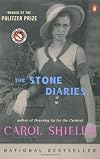
Meet Daisy Goodwill, the daughter of a woman who (arguably) died without knowing she was a mother. Daisy may as well have been carved from stone. She is, after all, the daughter of a stonecutter, and eventually she is the wife of two men (not at the same time) and mother of three children. After her singular birth, Daisy leads an outwardly unremarkable life.
I read the book years ago, but the only passage of this Pulitzer Prize winning novel I recognize upon re-reading is the statement that show more Canada is very hot in summer. I was taken aback when I found a series of photos halfway through the book, all with captions identifying them as Daisy’s family members. I don’t remember seeing them the first time around. Wait, I thought – is this a true story?
It’s not, and the photo pretense is one of the boldest literary devices I’ve seen in fiction. Consider that the narrator is Daisy herself and that she speaks in both first and third person, and consider that third-person Daisy narrates her own death (no spoilers there; you’ll know that as soon as you look at the chapter titles), and you will recognize that this is not your ordinary life story.
Most of the book takes place in Canada, starting around 1905. The “stone” motif is strong through about the first third of the book, is submerged in the story of Daisy’s work and home life, and then shows up again toward the end – a subtle, but pleasant surprise. Daisy has origins in stone, and in the end she returns to stone.
I’m glad I picked this book up to re-read. I’m still struggling to make sense of how first-person Daisy can impose herself into a third-person narrative – even using the two different voices in the same sentence at one point toward the end of the story. I’ll be thinking about this for a while.
This short novel is character-driven, which leads to some introspective passages that are a little tedious, so I rated my experience of The Stone Diaries at 4.5 stars. If you enjoyed reading or watching Thornton Wilder’s play Our Town, or Helen Hooven Santmyer’s novel And Ladies of the Club, you will appreciate this book. show less
I read the book years ago, but the only passage of this Pulitzer Prize winning novel I recognize upon re-reading is the statement that show more Canada is very hot in summer. I was taken aback when I found a series of photos halfway through the book, all with captions identifying them as Daisy’s family members. I don’t remember seeing them the first time around. Wait, I thought – is this a true story?
It’s not, and the photo pretense is one of the boldest literary devices I’ve seen in fiction. Consider that the narrator is Daisy herself and that she speaks in both first and third person, and consider that third-person Daisy narrates her own death (no spoilers there; you’ll know that as soon as you look at the chapter titles), and you will recognize that this is not your ordinary life story.
Most of the book takes place in Canada, starting around 1905. The “stone” motif is strong through about the first third of the book, is submerged in the story of Daisy’s work and home life, and then shows up again toward the end – a subtle, but pleasant surprise. Daisy has origins in stone, and in the end she returns to stone.
I’m glad I picked this book up to re-read. I’m still struggling to make sense of how first-person Daisy can impose herself into a third-person narrative – even using the two different voices in the same sentence at one point toward the end of the story. I’ll be thinking about this for a while.
This short novel is character-driven, which leads to some introspective passages that are a little tedious, so I rated my experience of The Stone Diaries at 4.5 stars. If you enjoyed reading or watching Thornton Wilder’s play Our Town, or Helen Hooven Santmyer’s novel And Ladies of the Club, you will appreciate this book. show less
The Publisher Says: The Stone Diaries is one ordinary woman's story of her journey through life. Born in 1905, Daisy Stone Goodwill drifts through the roles of child, wife, widow, and mother, and finally into her old age. Bewildered by her inability to understand her place in her own life, Daisy attempts to find a way to tell her story within a novel that is itself about the limitations of autobiography. Her life is vivid with incident, and yet she feels a sense of powerlessness. She show more listens, she observes, and through sheer force of imagination she becomes a witness of her own life: her birth, her death, and the troubling missed connections she discovers between. Daisy's struggle to find a place for herself in her own life is a paradigm of the unsettled decades of our era.
A witty and compassionate anatomist of the human heart, Carol Shields has made distinctively her own that place where the domestic collides with the elemental. With irony and humor she weaves the strands of The Stone Diaries together in this, her richest and most poignant novel to date.
My Review: Read thirty (!) years ago, still fresh in my heart if not my mind. This quote from my commonplace book sums up the appeal, and the limitations, of the work for me:
"Limitation" as used in reference to this book is simply recognition that it's very much a read for older folk and/or those whose lives have been marked by grief and loss on scales beyond the ordinary. Inside those limits, Daisy is a good companion and a deft storyteller with permaybehaps a bit less than universal appeal. Her acceptance of things can feel passive, as though she's willingly playing the victim in her own narrative. Ultimately, after three more decades of my own lfe have elapsed, I now see this as her strength, her water-like incompressibility, expressing itself.
A very good read indeed. Recommended most particularly to men who are married to women. show less
A witty and compassionate anatomist of the human heart, Carol Shields has made distinctively her own that place where the domestic collides with the elemental. With irony and humor she weaves the strands of The Stone Diaries together in this, her richest and most poignant novel to date.
My Review: Read thirty (!) years ago, still fresh in my heart if not my mind. This quote from my commonplace book sums up the appeal, and the limitations, of the work for me:
It has never been easy for me to understand the obliteration of time, to accept, as others seem to do, the swelling and corresponding shrinkage of seasons or the conscious acceptance that one year has ended and another begun. There is something here that speaks of our essential helplessness and how the greater substance of our lives is bound up with waste and opacity... How can so much time hold so little, how can it be taken from us? Months, weeks, days, hours misplaced—and the most precious time of life, too, when our bodies are at their greatest strength, and open, as they never will be again, to the onslaught of sensation.
"Limitation" as used in reference to this book is simply recognition that it's very much a read for older folk and/or those whose lives have been marked by grief and loss on scales beyond the ordinary. Inside those limits, Daisy is a good companion and a deft storyteller with permaybehaps a bit less than universal appeal. Her acceptance of things can feel passive, as though she's willingly playing the victim in her own narrative. Ultimately, after three more decades of my own lfe have elapsed, I now see this as her strength, her water-like incompressibility, expressing itself.
A very good read indeed. Recommended most particularly to men who are married to women. show less
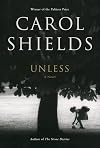
I have been a poor reader lately, finding it hard to finish anything, yet Carol Shields’ final novel, Unless, hooked me. It is the story of a woman in her forties, the writer of ‘light’ fiction and translations, Reta, whose daughter, Norah, suddenly leaves home and sits on the same street each day begging for money. The situation is breaking Reta’s heart even as life insists on going on and she attempts to write the sequel to her first novel.It is deceptively ‘domestic’, almost show more ‘light fiction’, with the trappings of a middle-aged woman with a circle of good friends trying to hold her family together, and a (sort of) conventional ending. Yet as a reader I sensed more and more that Shields was playing sophisticated games with me.It is a passionately yet somehow gently feminist novel (perhaps I say gently because of its subtlety). The chapters are interspersed with letters to various public figures or critics or writer who have ignored or silenced women in their articles or books. The whole novel seems to be a protest about the dismissal of domestic/ family concerns as ‘light’ women’s fiction. Tellingly, an editor is trying to rewrite Reta’s new novel, to turn it into a man’s quest for greatness, rather than a woman’s quest for goodness. Perhaps Shields’ response is to silence Reta’s husband, Tom, who is never more than a background character. I might be tempted to call his lack of involvement a weakness, if I wasn’t so suspicious it was a ploy of Shields’ that I was falling into.It is an uneasy novel. Every criticism I am tempted to make of it could be read as a deliberate protest against my assumptions. I felt that it moved too slowly, with too little happening and too long spent thinking about the situation; yet maybe I’m trying to ‘edit’ Shields’ novel just like the nasty editor is trying to edit Reta’s.I was hooked by its pearls of insight into life and its elegant enigmas. I was sad all the way through, knowing that Shields died of breast cancer soon after it was published. show less
Lists
Allie's Wishlist (1)
Best Biographies (1)
Big Jubilee List (1)
A Novel Cure (1)
Canada (1)
to get (1)
Female Author (2)
Favourite Books (2)
Five star books (2)
Booker Prize (2)
100 New Classics (1)
Gimmicks (1)
Awards


You May Also Like


Associated Authors
Statistics
- Works
- 35
- Also by
- 16
- Members
- 17,660
- Popularity
- #1,249
- Rating
- 3.8
- Reviews
- 375
- ISBNs
- 442
- Languages
- 17
- Favorited
- 76


