
Susan Fletcher (2) (1979–)
Author of Eve Green
For other authors named Susan Fletcher, see the disambiguation page.
About the Author
Susan Fletcher is a British novelist who was born in 1979 in Birmingham. She attended the University of York where she earned her BA in English. She later went to the University of East Anglia where she earned her MA in Creative Writing. In 2004 she published her first novel, Eve Green, which is a show more story about an eight year old girl who is sent to Wales to start a new life. It won the 2004 Whitbread First Novel Award, the Authors' Club Award and the Betty Trask Prize. Her novel Witch Light won the Saint Maur en Poche award 2013 in France. In 2018 she released her seventh novel, Hour of Glass. (Bowker Author Biography) show less
Works by Susan Fletcher
Tagged
Common Knowledge
- Birthdate
- 1979
- Gender
- female
- Education
- University of East Anglia (Creative Writing)
- Awards and honors
- Betty Trask Prize, Eve Green, 2005
Whitbread First Novel Award, Eve Green, 2004 - Short biography
- She studied Creative Writing at the University of East Anglia, and lives in Stratford-upon-Avon.
- Nationality
- England
UK - Birthplace
- Birmingham, England, UK
- Places of residence
- Stratford-upon-Avon, Warwickshire, England, UK
- Map Location
- England, UK
Members
Reviews

I've found myself more drawn to older protagonists and this novel doesn't disappoint in the character of Florrie. She thinks of herself as at the end of her story - and it is a story of never fully committing herself to someone else as a result of a terrible trauma in her youth. But in the course of figuring out the back story of a suspicious death at her retirement home, Florrie also comes face to face with her own fears and what they are keeping her from. I loved watching her cheerful show more acceptance of life with one leg somehow finally bleed over to finally allowing herself to love fully. And she figures out the "whoduit" which is awesome. show less
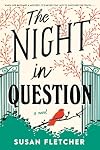
Florence ‘Florrie’ Butterfield, octogenarian, has lived a very unique and full life but now, confined to a wheelchair, she lives at Babbington Hall, an assisted living home. When the home’s manager, Renata Green, falls (or maybe pushed) out a window, and is left in a coma, rumours quickly spread that it was an attempted suicide but Florrie’s not so sure. She had recently talked to Renata and she seemed very happy with a new love and a planned trip to Paris. Florrie teams up with show more Stanhope Jones, another resident, to investigate and they find evidence that seems to back up what Florrie believed but they are left with only two options - it was an accident but the height of the window makes that unlikely so, really only one option, there’s a murderer living among them.
The Night in Question by Susan Fletcher provides a well-plotted and interesting mystery but it is so much more than that. This is really Florrie’s story, beautifully written, the tale of a strong, intelligent, empathetic woman. It is a story of love and loss, grief, of the importance of friendships, of dark secrets that can colour every part of life, the destructiveness of holding on to hate and the need for forgiveness, and, in the end, it is about hope, of finally letting go and embracing the chance at happiness and love, of living every day to the fullest even at the age of 87.
Thanks to Netgalley and Penguin Random House Canada for the opportunity to read this book in exchange for an honest review show less
The Night in Question by Susan Fletcher provides a well-plotted and interesting mystery but it is so much more than that. This is really Florrie’s story, beautifully written, the tale of a strong, intelligent, empathetic woman. It is a story of love and loss, grief, of the importance of friendships, of dark secrets that can colour every part of life, the destructiveness of holding on to hate and the need for forgiveness, and, in the end, it is about hope, of finally letting go and embracing the chance at happiness and love, of living every day to the fullest even at the age of 87.
Thanks to Netgalley and Penguin Random House Canada for the opportunity to read this book in exchange for an honest review show less

Scotland, late 1600s. Corrag’s mother, like her mother before her, has been accused of witchcraft and sentenced to die. Corrag flees into the wilderness, eventually arriving in Glencoe in the Scottish Highlands. Here, among the MacDonald Clan, she finds sanctuary. No pointing fingers, no accusations of ‘witch.’ Her talent for herbal healing is accepted and utilized; her unusually solitary lifestyle and love of nature does not cause suspicion.
Yet even as Corrag finds peace, Britain is show more erupting with political upheaval. William of Orange, a Dutchman, has usurped the throne, and King James has fled to France. Loyalties are fiercely divided - some accept the new ruler, others battle to see King James restored as leader.
The MacDonald Clan are Jacobites, supporters of King James. Eventually, though, they are forced to sign an oath swearing allegiance to William. They do so, but miss the signing deadline by six days. And for this, they are savagely murdered by William’s armies. Corrag is aware of the impending massacre, and tries to warn the Clan to flee. A few listen, most do not. And when the soldiers become aware of Corrag’s treasonous act, they accuse her of witchcraft and condemn her to burn.
Shackled in chains in a prison cell, Corrag tells her story to Charles Leslie, an Irish minister and Jacobite. Charles is investigating the Glencoe Massacre in hopes that the truth of the event will convince James to fight for his throne. At first, he sees Corrag as what she has been accused of - a witch. But as her story unfolds, Charles begins to see her as the MacDonald clan did - a woman who looks at the world through different eyes, who is self-sacrificing and brave, and who wants only to be accepted and loved. And as Charles’ heart is changed, so is Corrag’s destiny.
I LOVED THIS BOOK! With huge love! It’s such an amazing story, all based on historical events and people. The Independent described it as “a poetic intense narrative” and it is, to the nth degree. It’s just lovely, so rich and lyrical. And Corrag may well be one of my favorite protagonists, ever. She’s just amazing, and so well depicted in this book.
Also, I truly appreciated how the author portrayed the witch-hunts that took place in Europe during this time. These women were not witches, but were looked on with suspicion and hatred because they, in some way, did not conform to society. In the afterward, the author wrote, “The last execution of a so-called witch in Britain was in 1727. The Witchcraft Act of 1735 put an end to the generations of fear and persecution. Over the previous three hundred years it is estimated that over 100,000 women - mostly knowledgeable, independent, outspoken women - stood trial, accused of witchcraft.”
This is my favorite passage from Witch Light, which summarizes the essential theme of the story. Corrag: “I think how we live our lives is our own doing, and we cannot fully hope on dreams and stars. But dreams and stars can guide us, perhaps. And the heart’s voice is a strong one. Always is. Listen to it, is my advice. Your heart’s voice is your true voice. It is easy to ignore it, for sometimes it says things we’d rather it did not - and it is so hard to risk the things we have. But what life are we living, if we don’t live by our hearts? Not a true one. And the person living is not the true you.” show less
Yet even as Corrag finds peace, Britain is show more erupting with political upheaval. William of Orange, a Dutchman, has usurped the throne, and King James has fled to France. Loyalties are fiercely divided - some accept the new ruler, others battle to see King James restored as leader.
The MacDonald Clan are Jacobites, supporters of King James. Eventually, though, they are forced to sign an oath swearing allegiance to William. They do so, but miss the signing deadline by six days. And for this, they are savagely murdered by William’s armies. Corrag is aware of the impending massacre, and tries to warn the Clan to flee. A few listen, most do not. And when the soldiers become aware of Corrag’s treasonous act, they accuse her of witchcraft and condemn her to burn.
Shackled in chains in a prison cell, Corrag tells her story to Charles Leslie, an Irish minister and Jacobite. Charles is investigating the Glencoe Massacre in hopes that the truth of the event will convince James to fight for his throne. At first, he sees Corrag as what she has been accused of - a witch. But as her story unfolds, Charles begins to see her as the MacDonald clan did - a woman who looks at the world through different eyes, who is self-sacrificing and brave, and who wants only to be accepted and loved. And as Charles’ heart is changed, so is Corrag’s destiny.
I LOVED THIS BOOK! With huge love! It’s such an amazing story, all based on historical events and people. The Independent described it as “a poetic intense narrative” and it is, to the nth degree. It’s just lovely, so rich and lyrical. And Corrag may well be one of my favorite protagonists, ever. She’s just amazing, and so well depicted in this book.
Also, I truly appreciated how the author portrayed the witch-hunts that took place in Europe during this time. These women were not witches, but were looked on with suspicion and hatred because they, in some way, did not conform to society. In the afterward, the author wrote, “The last execution of a so-called witch in Britain was in 1727. The Witchcraft Act of 1735 put an end to the generations of fear and persecution. Over the previous three hundred years it is estimated that over 100,000 women - mostly knowledgeable, independent, outspoken women - stood trial, accused of witchcraft.”
This is my favorite passage from Witch Light, which summarizes the essential theme of the story. Corrag: “I think how we live our lives is our own doing, and we cannot fully hope on dreams and stars. But dreams and stars can guide us, perhaps. And the heart’s voice is a strong one. Always is. Listen to it, is my advice. Your heart’s voice is your true voice. It is easy to ignore it, for sometimes it says things we’d rather it did not - and it is so hard to risk the things we have. But what life are we living, if we don’t live by our hearts? Not a true one. And the person living is not the true you.” show less
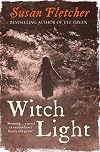
It was the winter of 1692 and a young girl is being held as a witch. She is scheduled to burn as soon as a thaw sets in, but was she really a witch or was she simply a person who had witnessed the massacre at Glen Coe and being silenced. Through the cold winter days she tells her story to an Irish rector, Charles Leslie, who is a firm supporter of the Stuart dynasty and was trying to prove that the English King, George, had a hand in this massacre.
Witch Light by Susan Fletcher is an show more incredibly beautiful yet sad tale. I have never read such rich descriptions of the Scottish Highlands, the author’s wording of how the light plays off the hills, the mists, the colors and scents built strong images in my mind. This was writing that spoke to all five of my senses. Yet, Corag’s life was a sad one, both a granddaughter and a daughter of women who had been killed as witches, she fled England and found herself in a remote valley of the Scottish Highlands. This was a place that she thought she could make her home, she got along with the people and even formed an attachment with one Alastair MacDonald. Little did she know that the MacDonald clan was doomed.
This book details an event in history that was fascinating to read of and also led me to investigate further. The Jacobite feeling was strong in the Highlands and led to much confrontation and cruelty. The English soldiers were taxed with establishing loyalty to both England and George I while the Clans supported the Stuart claim. There were many acts of violence and cruelty that eventually led to the uprising that was ended by the Battle of Culloden. Witch Light was an amazing read that shines a light on one of incidents that was used to try and break the hold the clans had on Scotland. show less
Witch Light by Susan Fletcher is an show more incredibly beautiful yet sad tale. I have never read such rich descriptions of the Scottish Highlands, the author’s wording of how the light plays off the hills, the mists, the colors and scents built strong images in my mind. This was writing that spoke to all five of my senses. Yet, Corag’s life was a sad one, both a granddaughter and a daughter of women who had been killed as witches, she fled England and found herself in a remote valley of the Scottish Highlands. This was a place that she thought she could make her home, she got along with the people and even formed an attachment with one Alastair MacDonald. Little did she know that the MacDonald clan was doomed.
This book details an event in history that was fascinating to read of and also led me to investigate further. The Jacobite feeling was strong in the Highlands and led to much confrontation and cruelty. The English soldiers were taxed with establishing loyalty to both England and George I while the Clans supported the Stuart claim. There were many acts of violence and cruelty that eventually led to the uprising that was ended by the Battle of Culloden. Witch Light was an amazing read that shines a light on one of incidents that was used to try and break the hold the clans had on Scotland. show less
Lists
Awards


You May Also Like


Statistics
- Works
- 8
- Members
- 1,948
- Popularity
- #13,209
- Rating
- 3.8
- Reviews
- 127
- ISBNs
- 250
- Languages
- 7
- Favorited
- 3
