
Pat Walsh (2) (1954–)
Author of The Crowfield Curse
For other authors named Pat Walsh, see the disambiguation page.
Series
Works by Pat Walsh
Tagged
Common Knowledge
- Birthdate
- 1954-10-16
- Gender
- female
- Occupations
- archaeologist
- Nationality
- UK
- Associated Place (for map)
- UK
Members
Reviews

Set in 1347, the author's detailed descriptions transport you to a monastery in England. You see the dark light of winter in the cold stone abbey, feel Will's and the monk's frost-cold fingers, hear the bells calling the monks to prayer, even taste the horrid pottage made by the irrascible cook and smell the privy. It is a hard life, especially in winter, but there is also beauty in Brother Snail's herb garden, in the wood's flora and fauna, in the warm friendship betwen the hunchbacked show more infirmarer (Brother Snail) and the orphan servant boy (14-year-old Will, who lost his family to a fire). Walsh's world is well-realized.
The tone is spooky with the Dark Fey King who is cruel to the Seelie (Light Fey), humans and animals. The plot is mysterious: one never quite knows who Will can trust (except for Brother Snail).
Then there is the hob, or hobgoblin, that Will rescues from a trap and brings to Brother Snail for healing. He is a cat-sized creature with brown fur and a long (prized) tail, intelligent in the ways of the wild and inherbs. He makes Will think about other creatures besides humans, that he share the world with animals and trees. Since he won't give them his name, they call him Brother Walter.
Will learns he has the Sight and is able to see the Fey as few others can. His honesty and purity also make him a target for strangers who come to the abbey on a mysterious errand. Will is thrust into a miasma of hate, long-guarded secrets, evil and curses. Master Bone and Shadlock (who is a Seelie Fey) use Will to obtain a secret, but it is Will's goodness that allows them to gain their deepest desires.
I was drawn deeply into this story, so that I wanted to explore the author's website at www.pat-walsh.com. She is an archaeologist and amateur historian living in Bedfordshire, England. Her blogspot in journal form by Brother Snail contains photos of the English countryside, and information on the beliefs and seasonal celebrations of the times.
A sequel, The Crowfield Demon, is due out in Spring. I look forward to seeing and hearing Will's learning of the flute, Brother Walter's new life with Brother Snail and the continued magic of the Fey.
As The Times of London said: captivating, evocative, charming and exciting. show less
The tone is spooky with the Dark Fey King who is cruel to the Seelie (Light Fey), humans and animals. The plot is mysterious: one never quite knows who Will can trust (except for Brother Snail).
Then there is the hob, or hobgoblin, that Will rescues from a trap and brings to Brother Snail for healing. He is a cat-sized creature with brown fur and a long (prized) tail, intelligent in the ways of the wild and inherbs. He makes Will think about other creatures besides humans, that he share the world with animals and trees. Since he won't give them his name, they call him Brother Walter.
Will learns he has the Sight and is able to see the Fey as few others can. His honesty and purity also make him a target for strangers who come to the abbey on a mysterious errand. Will is thrust into a miasma of hate, long-guarded secrets, evil and curses. Master Bone and Shadlock (who is a Seelie Fey) use Will to obtain a secret, but it is Will's goodness that allows them to gain their deepest desires.
I was drawn deeply into this story, so that I wanted to explore the author's website at www.pat-walsh.com. She is an archaeologist and amateur historian living in Bedfordshire, England. Her blogspot in journal form by Brother Snail contains photos of the English countryside, and information on the beliefs and seasonal celebrations of the times.
A sequel, The Crowfield Demon, is due out in Spring. I look forward to seeing and hearing Will's learning of the flute, Brother Walter's new life with Brother Snail and the continued magic of the Fey.
As The Times of London said: captivating, evocative, charming and exciting. show less
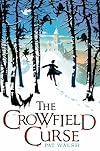
When his family died in a fire, William was taken in by the monks and has remained at the abbey, working for them. He finds himself rescuing an odd creature that speaks and calls itself a hob, he has had little reason to suspect that there is any more to life than what is seen by all. But after this rescue comes another unexpected event, visitors in the abbey and strange happenings all around. With little warning, the boy and his new friend the hob are thrust into a dangerous game involving show more a dark secret kept by the monks, and a dark fay king set on having his way.
As has happened before, I was taken in by this book's cover. I hope you can understand that, because, I mean, look at it--the cover is beautiful. Here, in this 2d representation on your computer screen, it isn't so evident, but the cover is embossed [dry embossed--pressure on the paper with a stylus in a template] and certain parts, like the watching creatures' eyes, of it are accented with a metallic glossy red for emphasis. Its simplicity and stark silhouettes attract the eye. The shiny eye and blood touches didn't hurt either.
I had little idea what exactly I was picking up when I began to read. I was anticipating, perhaps, something akin to 13 Treasures with full-on fantasy realms and little dealing with the real world. I had forgotten it's archaic setting [1300's, isolated and borderline desolate abbey] and was even more surprised to find myself reading a story set in our world, in a Christian abbey, that treated Christianity respectfully. True, many of the monks were hard and singleminded, but they were not an evil bunch, nor malignant. They were tired, cold and hungry men dedicated to living their faith in their way. Those fellows you saw shine beyond the stern monk framework were not rebels, but rather good-hearted and loving men more willing to participate in the reality about them. I am not saying that I anticipate all fantasy writers to be antagonistic about the church.
Well, I'm not saying it now. I've seen enough negativity that I suppose it's just easier to expect the worst and be delighted when something more pleasant is delivered, either from the Church in talking fantasy or in fantasy talking Church. I find myself almost enjoying this set up more than worlds that merely avoid talk of God, with Walsh building fay and faith as interlocking pieces and one Creator above them all. Having recently been delving into L'Engle's time-twisting series as well as being a long-time supporter of Narnia, I was struck by how the authors expand our "knowledge" of our world and God to include things that are fantasy. You see, when I was younger and had decided that, not only did I want to write, but I wanted to write fantasy, I was concerned that I could not legitimately combine these magestic realms of my mind. I don't recall anyone going out of their way to say "fantasy is evil," but it had not been deeply included in my upbringing and I worry over everything anyway. Then I learned a bit more about Narnia and its author, and I found myself more relieved and enthralled than ever before. True, many "Christian" fantasies are didactic and many "athieist" fantasies are antagonistic, but there is no reason that we cannot combine our dreams and our faiths in a simple story that is exactly that: a story.
I'm rambing at this point, but happily. I am eager to lend The Crowfield's Curse to my friends and hear their input as well. Most likely when I get it back, I'll read it again.* The book was well-written and had a couple of characters that I would love to meet, and I look forward to trying some more of Pat Walsh's writing. show less
As has happened before, I was taken in by this book's cover. I hope you can understand that, because, I mean, look at it--the cover is beautiful. Here, in this 2d representation on your computer screen, it isn't so evident, but the cover is embossed [dry embossed--pressure on the paper with a stylus in a template] and certain parts, like the watching creatures' eyes, of it are accented with a metallic glossy red for emphasis. Its simplicity and stark silhouettes attract the eye. The shiny eye and blood touches didn't hurt either.
I had little idea what exactly I was picking up when I began to read. I was anticipating, perhaps, something akin to 13 Treasures with full-on fantasy realms and little dealing with the real world. I had forgotten it's archaic setting [1300's, isolated and borderline desolate abbey] and was even more surprised to find myself reading a story set in our world, in a Christian abbey, that treated Christianity respectfully. True, many of the monks were hard and singleminded, but they were not an evil bunch, nor malignant. They were tired, cold and hungry men dedicated to living their faith in their way. Those fellows you saw shine beyond the stern monk framework were not rebels, but rather good-hearted and loving men more willing to participate in the reality about them. I am not saying that I anticipate all fantasy writers to be antagonistic about the church.
Well, I'm not saying it now. I've seen enough negativity that I suppose it's just easier to expect the worst and be delighted when something more pleasant is delivered, either from the Church in talking fantasy or in fantasy talking Church. I find myself almost enjoying this set up more than worlds that merely avoid talk of God, with Walsh building fay and faith as interlocking pieces and one Creator above them all. Having recently been delving into L'Engle's time-twisting series as well as being a long-time supporter of Narnia, I was struck by how the authors expand our "knowledge" of our world and God to include things that are fantasy. You see, when I was younger and had decided that, not only did I want to write, but I wanted to write fantasy, I was concerned that I could not legitimately combine these magestic realms of my mind. I don't recall anyone going out of their way to say "fantasy is evil," but it had not been deeply included in my upbringing and I worry over everything anyway. Then I learned a bit more about Narnia and its author, and I found myself more relieved and enthralled than ever before. True, many "Christian" fantasies are didactic and many "athieist" fantasies are antagonistic, but there is no reason that we cannot combine our dreams and our faiths in a simple story that is exactly that: a story.
I'm rambing at this point, but happily. I am eager to lend The Crowfield's Curse to my friends and hear their input as well. Most likely when I get it back, I'll read it again.* The book was well-written and had a couple of characters that I would love to meet, and I look forward to trying some more of Pat Walsh's writing. show less
This book is incredibly unique, with some great characterization. It's also dark(which, depending on your preferences or mood could be a positive--- I'm kinda in the need for lighthearted at the moment). It's a slow starter(which is part of its charm and tone) and it does sometimes show and tell simultaneously (which could be easily fixed). And there is one word I didn't appreciate. All things considered, this was not the right time for me to read it, it might be better in teen (instead of show more middle grade), and it was deliciously different... I just don't do dark at the moment.
One last thing, I loved Hob. He was so fun! show less
One last thing, I loved Hob. He was so fun! show less
Set in a medieval English abbey by an author who cares about setting, character, and period details, this novel still lands squarely in fantasy, as an occasional hob or fairy (some benevolent, some not) and even an angel share the wintery landscape with Will, an orphan who lives at the abbey in exchange for his work, the kind healer Brother Snail & the surly cook, Brother Martin, as well as the Prior & other characters who live there. In the nearby woods there is ancient magic and a mystery show more buried many years ago which Will must help unfurl.
Not only is this story terrific, it was a pleasure to read an author who enjoys precise language and who goes to lengths to create the feel of a 14th century monastery. There is a helpful glossary at the end which explains the cycles of the monks' days as well as terms no longer in common use.
Highly recommended. show less
Not only is this story terrific, it was a pleasure to read an author who enjoys precise language and who goes to lengths to create the feel of a 14th century monastery. There is a helpful glossary at the end which explains the cycles of the monks' days as well as terms no longer in common use.
Highly recommended. show less
Awards


You May Also Like


Statistics
- Works
- 3
- Members
- 630
- Popularity
- #39,983
- Rating
- 4.0
- Reviews
- 26
- ISBNs
- 48
- Languages
- 4