
David Jones (3) (1956–)
Author of North American Wildlife
For other authors named David Jones, see the disambiguation page.
About the Author
David Jones did not publish his first book of poetry until his forties. Although he was born in Kent, his Welsh father instilled in him a love for the culture of Wales that pervades his work. At first Jones intended to be an artist, and he left grammar school for Camberwell School of Art. With the show more outbreak of war, he enlisted in the Royal Welsh Fusiliers (Robert Graves served as an officer in the same regiment) and served in Flanders and France. After the war, he completed his education and began a successful artistic career, during which he became perhaps best known as an engraver and watercolorist. Immersed in legend, myth, and romance, he held that humans are fundamentally religious. His own religious beliefs led him to convert to Roman Catholicism in 1921. Although W. B. Yeats saluted his first book, Jones stood apart from the literary mainstream of his day, despite obvious debts to the methods of Ezra Pound, T. S. Eliot, and James Joyce. His first volume, In Parenthesis (1937), combines both poetry and prose in chronicling the wartime career of its major figure, John Ball. His even more ambitious second book, The Anathemata: Fragments of an Attempted Writing (1952), uses the structure of the Tridentine Mass to chronicle the history of Britain from early geological times through preindustrial London. Some of its techniques of presentation and counterparting of myths and factual materials resemble Pound's Cantos. W. H. Auden judged it the best modern long poem in English. The later works The Tribune's Visitation and The Sleeping Lord (1974) deal with the Roman Empire in the time of Jesus. Readers will appreciate Jones's inclusion of his own notes to his difficult, allusive verse. (Bowker Author Biography) show less
Works by David Jones
Tagged
Common Knowledge
- Legal name
- Jones, David Richard
- Birthdate
- 1956
- Gender
- male
- Education
- University of British Columbia
- Short biography
- David Jones studied biology at the University of British Columbia and has written for Photo Life and The Knowledge Network. He lives in Vancouver.
- Nationality
- Canada
- Places of residence
- Vancouver, British Columbia, Canada
- Associated Place (for map)
- British Columbia, Canada
Members
Reviews
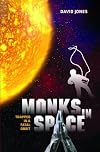
‘Copernicans on the starboard bow,’ was never a line from Star Trek but it actually wouldn’t be out of place in David Jones’s near-disaster adventure about a spaceship abbey!
Set your optical organs to graphics mode and glory in the cover image of a blazing flying saucer that sports stained glass windows, then flip to text mode to input chapter one’s ‘Sweat’. Aboard Prominence, a spaceship abbey filled with holy treasures is a 14-year old novice-monk. But Bart (short for show more Bartholomew and – one assumes – no relation of the more terrestrial Homer) is more interested in training as a space pilot. When the intergalactic monks cruise to the aid of an unidentified spacecraft, it is Bart who realises the danger. It is also Bart who spikes the guns of the ensuing pirate attack (magnificent setpiece zero-gravity fight) and it is Bart who saves this floating microcosm in the nick of time.
This is a fast-paced, clever action adventure from the extremely talented writer of ‘Baboon’. Boys especially (a novel about space-monks is pre-programmed to be gender-skewed) will find themselves drawn into a fascinating sci-fi world . What will keep them hooked is that the author clearly knows his science (his day job was to design interactive shows for NASA, after all) so that the reader learns on the way pretty much about how a rocket functions. Something to do with fuel being mixed with an oxidant under extremely high pressure and then ignited. And Bart uses real science when he stumbles on a brilliant rescue solution to the monks’ imminent immolation. The nifty clue to the solution is buried expertly in the first few pages of the book.
What lifts ‘Meltdown’ above the ruck of sci-fi novels is the way his characters occupy - and find their actions governed by - a moral as well as a physical world. The female pirate seriously disturbs Bart’s radar and it is this ‘piratess’ who is at least in part responsible for Bart’s life-changing decision in the novel’s final pages. When the community is faced with having to choose who shall live and die, the reader really understands how humans are subject to more gravities than the one discovered by Newton.
This is a novel which deserves an audience beyond sci-fi buffs. Film fans will recognise HAL’s (‘2001: A Space Odyssey’) sibling computer in ‘Meltdown’ and ‘Mortal Engines’ addicts will find a new lease of life on board the Prominence. David Jones is a children’s novelist who has the gift of exploring alien worlds (under a monkey’s pelt in ‘Baboon’ and inside a space-kid in ‘Meltdown’) and this reader for one cannot wait for the next time his imagination goes EVA (extra-vehicular activity, for goodness’ sake!). show less
Set your optical organs to graphics mode and glory in the cover image of a blazing flying saucer that sports stained glass windows, then flip to text mode to input chapter one’s ‘Sweat’. Aboard Prominence, a spaceship abbey filled with holy treasures is a 14-year old novice-monk. But Bart (short for show more Bartholomew and – one assumes – no relation of the more terrestrial Homer) is more interested in training as a space pilot. When the intergalactic monks cruise to the aid of an unidentified spacecraft, it is Bart who realises the danger. It is also Bart who spikes the guns of the ensuing pirate attack (magnificent setpiece zero-gravity fight) and it is Bart who saves this floating microcosm in the nick of time.
This is a fast-paced, clever action adventure from the extremely talented writer of ‘Baboon’. Boys especially (a novel about space-monks is pre-programmed to be gender-skewed) will find themselves drawn into a fascinating sci-fi world . What will keep them hooked is that the author clearly knows his science (his day job was to design interactive shows for NASA, after all) so that the reader learns on the way pretty much about how a rocket functions. Something to do with fuel being mixed with an oxidant under extremely high pressure and then ignited. And Bart uses real science when he stumbles on a brilliant rescue solution to the monks’ imminent immolation. The nifty clue to the solution is buried expertly in the first few pages of the book.
What lifts ‘Meltdown’ above the ruck of sci-fi novels is the way his characters occupy - and find their actions governed by - a moral as well as a physical world. The female pirate seriously disturbs Bart’s radar and it is this ‘piratess’ who is at least in part responsible for Bart’s life-changing decision in the novel’s final pages. When the community is faced with having to choose who shall live and die, the reader really understands how humans are subject to more gravities than the one discovered by Newton.
This is a novel which deserves an audience beyond sci-fi buffs. Film fans will recognise HAL’s (‘2001: A Space Odyssey’) sibling computer in ‘Meltdown’ and ‘Mortal Engines’ addicts will find a new lease of life on board the Prominence. David Jones is a children’s novelist who has the gift of exploring alien worlds (under a monkey’s pelt in ‘Baboon’ and inside a space-kid in ‘Meltdown’) and this reader for one cannot wait for the next time his imagination goes EVA (extra-vehicular activity, for goodness’ sake!). show less
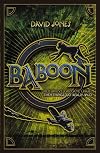
I read this book in one go and this is perhaps the best way – to devour it!
This novel tells the story of Gerry, a fourteen-year old boy, whose parents are professional naturalists studying a pack of baboons in the African savannah. Flying together in a thunderstorm, their plane struck by lightning, they crash-land. Gerry, separated from his parents in the impact, finds himself first in the company of baboons and then experiences the awful dawning realisation that he has become one: a show more baboon, that is.
If you can get over the clichés of the convenient blackout and the rather obvious discovery of his transformation – and believe me, you should – then you can enjoy the ensuing yarn. Writing with pace, clarity and understanding, Jones shows Gerry/baboon as he joins the pack that his parents have been studying. As the days become weeks and the weeks months, Gerry learns his place in the pack and discovers that the phrase “pecking order” means precisely what it says on the can!
This animal-point-of-view novel would have been good enough if its author had been content to write a “fly on the wall” documentary of baboon society. But then Gerry, drawing on his fast dwindling human knowledge, first takes a farmer’s rifle and then makes a crude cudgel from the dead pilot’s ankle bone with a stone head gaffer-taped on it. He uses this to slay Lothar, his chief tormentor in the baboon pack. This ‘crime’ – as Gerry’s human element sees it – elevates him up the pack’s pecking order and he begins to bulk up as a baboon.
This novel’s other twist is that Gerry’s parents, through observing him in the pack, become aware that they are watching a very unusual, tool-slinging primate. At one point Gerry tries to communicate with them in writing and botches the job.
Of course, you can see the denouement clear across the savannah, but Jones handles it well and rounds the whole thing off quickly and efficiently. The account is wholly convincing. Reluctant mid-teen readers who perhaps prefer non-fiction may well be drawn to this book for its wealth of well-researched information about life in a baboon pack. The book is well plotted with enough tricky situations and cliff-hangers to make it worth buying as a class reader for Year 8s. It also deals with death in an unsentimental manner; but it will make its young readers pause for thought before they move on. Perhaps the best compliment to pay the book is to say that its author pulls off the tricky feat of running a continuous film in the reader’s head: from page one - until the last lingering fade-out on the baboon pack that Gerry has to leave behind – we are gripped! show less
This novel tells the story of Gerry, a fourteen-year old boy, whose parents are professional naturalists studying a pack of baboons in the African savannah. Flying together in a thunderstorm, their plane struck by lightning, they crash-land. Gerry, separated from his parents in the impact, finds himself first in the company of baboons and then experiences the awful dawning realisation that he has become one: a show more baboon, that is.
If you can get over the clichés of the convenient blackout and the rather obvious discovery of his transformation – and believe me, you should – then you can enjoy the ensuing yarn. Writing with pace, clarity and understanding, Jones shows Gerry/baboon as he joins the pack that his parents have been studying. As the days become weeks and the weeks months, Gerry learns his place in the pack and discovers that the phrase “pecking order” means precisely what it says on the can!
This animal-point-of-view novel would have been good enough if its author had been content to write a “fly on the wall” documentary of baboon society. But then Gerry, drawing on his fast dwindling human knowledge, first takes a farmer’s rifle and then makes a crude cudgel from the dead pilot’s ankle bone with a stone head gaffer-taped on it. He uses this to slay Lothar, his chief tormentor in the baboon pack. This ‘crime’ – as Gerry’s human element sees it – elevates him up the pack’s pecking order and he begins to bulk up as a baboon.
This novel’s other twist is that Gerry’s parents, through observing him in the pack, become aware that they are watching a very unusual, tool-slinging primate. At one point Gerry tries to communicate with them in writing and botches the job.
Of course, you can see the denouement clear across the savannah, but Jones handles it well and rounds the whole thing off quickly and efficiently. The account is wholly convincing. Reluctant mid-teen readers who perhaps prefer non-fiction may well be drawn to this book for its wealth of well-researched information about life in a baboon pack. The book is well plotted with enough tricky situations and cliff-hangers to make it worth buying as a class reader for Year 8s. It also deals with death in an unsentimental manner; but it will make its young readers pause for thought before they move on. Perhaps the best compliment to pay the book is to say that its author pulls off the tricky feat of running a continuous film in the reader’s head: from page one - until the last lingering fade-out on the baboon pack that Gerry has to leave behind – we are gripped! show less
I picked up this book solely for the title (Monks in Space? Awesome! It needs a theme song). It is amusing to think of a monastery in space. But the amusement can only go so far. I found some of the physics to be doubtful (the monks throw liquid clay in zero gravity with no explanation as to how they can breathe with the air full of floating clay-gloop, not to mention the damage to a space ship’s electrical and ventilation systems), some of the details of the ship to be implausible (why show more would they have a drinking GLASS on a spaceship? Lit candles in an oxygen rich environment with the threat of zero gravity?), and why go through all the effort of making an authentic-appearing medieval monastery (on a SPACE SHIP) when real monks would be more concerned with practicality and thrift? A funny premise, but a STUPID book. show less
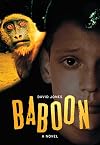
14 year old Gerry Copeland is traveling to the African savanna with his biologist parents to study baboons in the wilderness. Gerry would rather be at home playing video games. The plane gets hit by lightning, and crashes, When Gerry resumes consciousness, he realizes that he is now a baboon. Meanwhile, his body is actually in a coma, and will eventually end up in a hospital. This was a Red Maple nominee for the 2007-2008 season. David Jones does a great job of making the reader feel what it show more would be like to be in the body of a monkey. show less
Lists
Awards


You May Also Like


Associated Authors
Statistics
- Works
- 9
- Members
- 219
- Popularity
- #102,098
- Rating
- 3.8
- Reviews
- 6
- ISBNs
- 309
- Languages
- 6