
robinsonjames-7
Author of Whale Eyes: A Memoir About Seeing and Being Seen
robinsonjames-7 is James Robinson (7). For other authors named James Robinson, see the disambiguation page.
Works by robinsonjames-7
Tagged
Common Knowledge
There is no Common Knowledge data for this author yet. You can help.
Members
Reviews
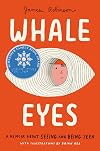
Strabismus may be a rarely heard word, but young author James Robinson is making sure more of us know it. Robinson has written an extraordinary book aimed at middle grade readers (though important for all ages) to provide understanding of the eye condition called strabismus and his personal diagnosis of extropia in which his eyes alternately turn outward depending on which one is receiving images. The term “lazy eye” has historically been used by lay people to refer to extropia, but this show more book explains away the pejorative expression. Realizing that whales see out of one eye at a time and that they are a loved animal, Robinson began to use the term “whale eyes” to name the condition with a warmer term.
Comprehension of Robinson’s disorder is achieved in the book by cleverly incorporating eye tests that allow the reader to compare what they see to what Robinson sees in the same example. Readers are thrust into the “disability” by deciphering a page of words that seems illegible, folding a page of the book to depict fusion, and staring at carefully chosen pictures—all to illustrate differences between healthy and strabismic eyes. The simple drawings and limited use of color are perfectly executed to create visuals that elucidate what happens when one’s brain doesn’t merge the images produced by a human’s two eyes.
The importance of this book, though, is not in the physiology of what is happening in the brain. It is in uncovering how those with strabismus (and any difference-making condition) are treated by those they encounter in their day-to-day lives. The pain of being constantly stared at (and knowing the starer doesn’t know which eye to look at) brings the author to ask the crucial question: “How is it possible to feel so looked at and yet so unseen?”
The virtues of hope, love, community, justice and courage are abundant in this book. There is unending hope for understanding of those with conditions that make them different; love from those in the author’s life who did not give up on him; justice for and acknowledgement of the efforts of the disability community; and the obvious courage it took for Robinson to bring his story to the public.
Numerous studies are cited and links provided to further resources, including Robinson’s brilliant New York Times Opinion Video Series, Adapt-Ability, to date a set of four 10 minute videos to help viewers deal with their unease with disability. show less
Comprehension of Robinson’s disorder is achieved in the book by cleverly incorporating eye tests that allow the reader to compare what they see to what Robinson sees in the same example. Readers are thrust into the “disability” by deciphering a page of words that seems illegible, folding a page of the book to depict fusion, and staring at carefully chosen pictures—all to illustrate differences between healthy and strabismic eyes. The simple drawings and limited use of color are perfectly executed to create visuals that elucidate what happens when one’s brain doesn’t merge the images produced by a human’s two eyes.
The importance of this book, though, is not in the physiology of what is happening in the brain. It is in uncovering how those with strabismus (and any difference-making condition) are treated by those they encounter in their day-to-day lives. The pain of being constantly stared at (and knowing the starer doesn’t know which eye to look at) brings the author to ask the crucial question: “How is it possible to feel so looked at and yet so unseen?”
The virtues of hope, love, community, justice and courage are abundant in this book. There is unending hope for understanding of those with conditions that make them different; love from those in the author’s life who did not give up on him; justice for and acknowledgement of the efforts of the disability community; and the obvious courage it took for Robinson to bring his story to the public.
Numerous studies are cited and links provided to further resources, including Robinson’s brilliant New York Times Opinion Video Series, Adapt-Ability, to date a set of four 10 minute videos to help viewers deal with their unease with disability. show less
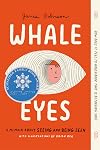
Spectacular. In storytelling, in the creation of empathy, in the extraordinary leap from the page to the brain to the documentary and back. Visually stunning and high in impact. I find it a little puzzling that my library has this shelved as a children's book. Perhaps because James is a child during much of it? Perhaps because we want children to build empathy? Perhaps because there are so many concrete poems and playful design imagery? This is a sophisticated narrative. I think kids will show more love it if they are in the mood for it, but I also think it's a great book for any age and certainly perfectly pitched for adult or teen readers as well. What I loved the most -- there's a lot -- the way James talks about disability as protection, the way he talks about narrative and inspiration and how to tell a story. The forgiveness inherent in so much of his work, and the way he invites us into his experience. That's vulnerable and brave and extremely powerful. show less
I loved this book; I read it in one day and I have SO MANY pages dog-eared (it's an ARC, so I felt no qualms about dog-earing) with great pieces of thought to share. I received an ARC from Follett, so the quotes and pages are based on an early copy and not the final copy.
This memoir about James Robinson's eyes offers the reader a guide to disability. His eyes are separate so that the brain doesn't have them fuse an image together. Imagine closing one eye and then the other, rapidly, while show more staring at a stationary object. Notice how it changes places. His brain shifts using each eye quickly so that he never really knows where something is. His eyes look different because one may face forward while the other drifts off center. No, it's not a lazy eye. Much of the memoir deals with his elementary years but does go through college. Being a kid, teen, young adult, James must find his path with his disability and how this eye condition appears to affect others. Repeatedly, people would ask what's wrong or they would stare. He talks a lot about staring. He admonishes but not harshly--we all stare, but what else? Should we speak? Should he? He writes, "You can hear the voice within their head, asking, What is wrong with you? And as you sit awkwardly in the discomfort of their stare, you resist the urge to ask them the same" (119). He questions how so many people can see you, yet you feel so unseen.
The memoir challenges the reader to be out-trigued. He gets to the suggestions through his journey to create documentaries. He speaks highly of several teachers and professors. His mother home schooled him because the public school never found the perfect way to help him. They did what they knew. His mom is able to spend time experimenting. As I teacher, I can say that she could focus on two kids; she didn't have 60 - 100. This number allowed her to be precise and try many experiments to teach her boys. She was amazing in the way she taught her children. He had a professor that he said "helped her students find their thesis. In the classroom. And in life" (155). These guides allowed him to explore and to think.
His path becomes the documentary where he can tell stories that show truths. On one page he tells where the documentary can be found online about him. I took a 12 minutes reading break to watch his documentary about himself. It was not what I was expecting. At all. The style was different, but it explained his eyes well. He interviews his brother and parents and you get to see his eyes. Reading the book makes you guess what his eyes look like; with the documentary, you get to see him. Literally and figuratively. He is not unseen anymore; he's seen. By seeing, we listen to his story and we respond with knowledge. He helps us know how to respond.
He finds an answer to his question that currently takes his life down a path of helping others: "How do you give someone a gift that they can actually carry with them?" He strives to help others by telling their stories to show people the truth. He claims the most valuable thing each of us has is our own story. He desires to be trusted with other stories and bring knowledge about these disabilities. He reframes disability.
Because whales have eyes that see different things at the same time, James decides to call his own eyes "whale eyes," which adds a bit of levity and brings the issue out in the open. I will be ordering this book for our school library; I think students and teachers will relate to it. They'll be curious about the title and then relate to him "pretend reading" and hating reading. So many kids will relate to him in different ways. Maybe they'll find a way to deal with their own lives that is as positive.
I loved the book. He hated to read (understandable--the text would jump everywhere), yet he writes this memoir. How awesome is that! His journey brings each of us nuggets of wisdom. I recommend this books to everyone, maybe especially teachers. Pick this book up and read it! You'll be so glad that you did! show less
This memoir about James Robinson's eyes offers the reader a guide to disability. His eyes are separate so that the brain doesn't have them fuse an image together. Imagine closing one eye and then the other, rapidly, while show more staring at a stationary object. Notice how it changes places. His brain shifts using each eye quickly so that he never really knows where something is. His eyes look different because one may face forward while the other drifts off center. No, it's not a lazy eye. Much of the memoir deals with his elementary years but does go through college. Being a kid, teen, young adult, James must find his path with his disability and how this eye condition appears to affect others. Repeatedly, people would ask what's wrong or they would stare. He talks a lot about staring. He admonishes but not harshly--we all stare, but what else? Should we speak? Should he? He writes, "You can hear the voice within their head, asking, What is wrong with you? And as you sit awkwardly in the discomfort of their stare, you resist the urge to ask them the same" (119). He questions how so many people can see you, yet you feel so unseen.
The memoir challenges the reader to be out-trigued. He gets to the suggestions through his journey to create documentaries. He speaks highly of several teachers and professors. His mother home schooled him because the public school never found the perfect way to help him. They did what they knew. His mom is able to spend time experimenting. As I teacher, I can say that she could focus on two kids; she didn't have 60 - 100. This number allowed her to be precise and try many experiments to teach her boys. She was amazing in the way she taught her children. He had a professor that he said "helped her students find their thesis. In the classroom. And in life" (155). These guides allowed him to explore and to think.
His path becomes the documentary where he can tell stories that show truths. On one page he tells where the documentary can be found online about him. I took a 12 minutes reading break to watch his documentary about himself. It was not what I was expecting. At all. The style was different, but it explained his eyes well. He interviews his brother and parents and you get to see his eyes. Reading the book makes you guess what his eyes look like; with the documentary, you get to see him. Literally and figuratively. He is not unseen anymore; he's seen. By seeing, we listen to his story and we respond with knowledge. He helps us know how to respond.
He finds an answer to his question that currently takes his life down a path of helping others: "How do you give someone a gift that they can actually carry with them?" He strives to help others by telling their stories to show people the truth. He claims the most valuable thing each of us has is our own story. He desires to be trusted with other stories and bring knowledge about these disabilities. He reframes disability.
Because whales have eyes that see different things at the same time, James decides to call his own eyes "whale eyes," which adds a bit of levity and brings the issue out in the open. I will be ordering this book for our school library; I think students and teachers will relate to it. They'll be curious about the title and then relate to him "pretend reading" and hating reading. So many kids will relate to him in different ways. Maybe they'll find a way to deal with their own lives that is as positive.
I loved the book. He hated to read (understandable--the text would jump everywhere), yet he writes this memoir. How awesome is that! His journey brings each of us nuggets of wisdom. I recommend this books to everyone, maybe especially teachers. Pick this book up and read it! You'll be so glad that you did! show less
In this memoir, an outgrowth of his documentary of the same title, Emmy-winning filmmaker Robinson recounts how he changed others’ perceptions of his disability.
Born with anomalous retinal correspondence, a form of strabismus that prevents his eyes from focusing simultaneously, Robinson found reading a time-consuming “obstacle course.” Worse than the shame of falling behind his classmates was when strangers stared at his outward-turned eyes, feelings captured in pointed notes and show more Rea’s cartoon illustrations. When Robinson reached middle school, his architecture professor mother took time off to home-school him and his dyslexic older brother. Under her tutelage, Robinson discovered helpful reading strategies—and a passion for documentary films, which ultimately led to his studying film at Duke University. In 2021, the New York Times published his autobiographical short film, Whale Eyes (titled after his own term for his condition), affirming visually disabled people and enabling nondisabled people to better understand Robinson—and themselves. Robinson (who presents white) candidly explores numerous topics, including disability tropes, privilege, and ways to turn “out-trigue”—the discomfort we feel with the unfamiliar—into empathetic connections. Myriad interactive visuals immerse readers in Robinson’s perspective. Backgrounds switch from white to black, sentences spiral, and words and letters scatter across the pages, which often need to be turned sideways or upside down. Unfortunately, these effects may overwhelm some neurodivergent or print-disabled readers, reducing the very connections Robinson strives to make.
Frank, unusual, and insightful. (note on surgery, resources) (Memoir. 11-18)
-Kirkus Review show less
Born with anomalous retinal correspondence, a form of strabismus that prevents his eyes from focusing simultaneously, Robinson found reading a time-consuming “obstacle course.” Worse than the shame of falling behind his classmates was when strangers stared at his outward-turned eyes, feelings captured in pointed notes and show more Rea’s cartoon illustrations. When Robinson reached middle school, his architecture professor mother took time off to home-school him and his dyslexic older brother. Under her tutelage, Robinson discovered helpful reading strategies—and a passion for documentary films, which ultimately led to his studying film at Duke University. In 2021, the New York Times published his autobiographical short film, Whale Eyes (titled after his own term for his condition), affirming visually disabled people and enabling nondisabled people to better understand Robinson—and themselves. Robinson (who presents white) candidly explores numerous topics, including disability tropes, privilege, and ways to turn “out-trigue”—the discomfort we feel with the unfamiliar—into empathetic connections. Myriad interactive visuals immerse readers in Robinson’s perspective. Backgrounds switch from white to black, sentences spiral, and words and letters scatter across the pages, which often need to be turned sideways or upside down. Unfortunately, these effects may overwhelm some neurodivergent or print-disabled readers, reducing the very connections Robinson strives to make.
Frank, unusual, and insightful. (note on surgery, resources) (Memoir. 11-18)
-Kirkus Review show less
Awards


Statistics
- Works
- 1
- Members
- 63
- Popularity
- #268,027
- Rating
- 4.5
- Reviews
- 7
- ISBNs
- 402
- Languages
- 9