
Paul Johnson (3) (1943–)
Author of Runic Inscriptions: In Great Britain (Wooden Books Gift Book)
For other authors named Paul Johnson, see the disambiguation page.
About the Author
Paul Johnson lives in London.
Works by Paul Johnson
Pop-Up Paper Engineering: Cross-Curricular Activities in Design Technology, English and Art (1992) 29 copies
Copy and Cut - Animals 1 copy
Copy and Cut - Festivals 1 copy
Back to a Remembered Time 1 copy
Tagged
Common Knowledge
- Birthdate
- 1943-03-14
- Gender
- male
- Education
- Norwich University of the Arts
Visva-Bharati University
University of York (PhD) - Occupations
- book artist
educator - Organizations
- Manchester Metropolitan University
- Places of residence
- Norwich, Norfolk, England, UK
Stockport, Cheshire, England, UK - Associated Place (for map)
- England, UK
Members
Reviews
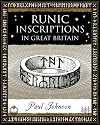
This small book, rich with illustrations, is a delightful overview of, as it says, runic inscription in Great Britain.It is generally arranged with text on the left page facing a drawn illustration on the right page. I expected this book to lightly touch on things I'd already read about runes. I was pleasantly surprised to learn some tidbits that were new to me.
The book first introduced therunic alphabet (Futhorc) in the several incarnations found in Great Britain and the isles: Garmanic, show more Anglo-Saxon, Danish, Manx-Jeran, and Orkney, with the letter shapes and values. I'd not realized that there were separate Manx-Jeran or Orkney variations. Cool. When the text discussed the Anglo-Saxon Runic Poem, the illustration was of the originally published text, in Anglo-Saxon. The text that follows that translates each verse. Then it touches on the literal meanings of some letters, with a summary table for all the Anglo-Saxon runes.
The central portion of the book gives an overview of 18 individual artifacts with runic inscriptions. The text notes where each was found, where the artifact is now (usually a museum), and what the inscription says, when it can be translated. There is even a bit of history or something else interesting about each artifact. This is where I found out about another way of writing runes - twig runes that rely on the writer (and reader) knowing the futhorc in order, grouped in aettir (sets of 8 letters).
The last few pages cover some of the more esoteric rune-lore based on nine lines, or twigs, as the model for writing the whole alphabet.
This book was a gift from a friend recently returned from visiting some of the places these artifacts were found or displayed. The book was likely intended for the tourists. It is a tiny volume, but mighty, shedding new light on an old alphabet. show less
The book first introduced therunic alphabet (Futhorc) in the several incarnations found in Great Britain and the isles: Garmanic, show more Anglo-Saxon, Danish, Manx-Jeran, and Orkney, with the letter shapes and values. I'd not realized that there were separate Manx-Jeran or Orkney variations. Cool. When the text discussed the Anglo-Saxon Runic Poem, the illustration was of the originally published text, in Anglo-Saxon. The text that follows that translates each verse. Then it touches on the literal meanings of some letters, with a summary table for all the Anglo-Saxon runes.
The central portion of the book gives an overview of 18 individual artifacts with runic inscriptions. The text notes where each was found, where the artifact is now (usually a museum), and what the inscription says, when it can be translated. There is even a bit of history or something else interesting about each artifact. This is where I found out about another way of writing runes - twig runes that rely on the writer (and reader) knowing the futhorc in order, grouped in aettir (sets of 8 letters).
The last few pages cover some of the more esoteric rune-lore based on nine lines, or twigs, as the model for writing the whole alphabet.
This book was a gift from a friend recently returned from visiting some of the places these artifacts were found or displayed. The book was likely intended for the tourists. It is a tiny volume, but mighty, shedding new light on an old alphabet. show less
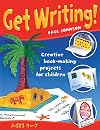
Paul Johnson's, Get Writing, books are worth having for parents and for those interested in creating simple books (adults as well), many books are from one sheet of paper. He is innovative in his use of paper and he then assists teachers (or parents) in selecting a suitable story, picture, cutout that a young person might do. His books provide a challenge for the young person and the finished result is rewarding. From experience quite young children enjoy creating a 'real book' and then show more using it for their own activities whether self selected or directed by a teacher. This book provides templates and down to earth instructions for creative book-making projects for children. show less
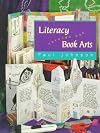
Paul Johnson is a font of inspiration. His ideas are wonderful! The projects are versatile and well tested for classroom use. You must adapt his British measurements to American ones.
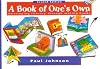
Paul Johnson is a font of inspiration. His ideas are wonderful! The projects are versatile and well tested for classroom use. You must adapt his British measurements to American ones.
You May Also Like


Statistics
- Works
- 20
- Members
- 248
- Popularity
- #92,013
- Rating
- 4.3
- Reviews
- 5
- ISBNs
- 736
- Languages
- 20


