

Linda Kelly (2) (1936–2019)
Author of Women of the French Revolution
For other authors named Linda Kelly, see the disambiguation page.
Works by Linda Kelly
Associated Works
Tagged
Common Knowledge
- Other names
- McNair Scott, Alison Linda (birth name)
- Birthdate
- 1936-10-01
- Date of death
- 2019-01-12
- Gender
- female
- Occupations
- historian
biographer - Relationships
- Pakenham, Valerie (sister)
Kelly, Laurence (husband) - Nationality
- UK
- Associated Place (for map)
- UK
Members
Reviews
The young romantics: Victor Hugo, Sainte-Beuve, Vigny, Dumas, Musset, and George Sand and their friendships, feuds, and loves in the French romantic revolution by Linda Kelly

An enjoyable insight into the peak of French romanticism in the dying days of the last Bourbon regime and the first years of the July Monarchy, this book is also a model of collective biography.
We have to remember just how young the young romantics were. Part of the charm of the book is showing personal trajectories from what amounts to adolescent enthusiasm and hysteria to twenty-something re-evaluations and relative maturity.
The central figure is Victor Hugo who is both beneficiary of the show more adulation of his slightly younger followers and the subject of natural disillusion and rivalry as the youngsters find their own feet.
The story could be confusing but Kelly does a fine job in telling the narrative through the relationships in chapters that cover events year by year.
The story starts with Hugo's Salon, the first seeds of revolt against the classicists and the importance of the arrival of Shakespeare's work in performance in Paris in 1827. If it peters out a bit in 1837, it is because romanticism is petering out.
There is a political back-cloth to the story well handled by Kelly and many amusing incidents and anecdotes that make the book an entertainment as much as a history. It is rare to find a book of literary history that makes one laugh out loud.
I had thought the Boublil-Schonberg musical of Les Miserables to be an hysterical overwrought depiction of the era but now I am not so sure. The Young Romantics were nothing if not young hysterical poseurs and appreciate now how true to the tone of the era the musical was.
But the main interest for many readers will be literary and personal - literary ambition and rivalry, the theatre, criticism and poetry intersect with the emotional and sexual rivalries of young men and women living in a creative bubble and making their way in the world.
The wives and mistresses, the salons and the world of temperamental actresses, declining marriages, unreciprocated love and passionate and hysterical relationships makes this as interesting as any novelisation of the period because it 'actually happened'.
By the end of the book, one is not averse to making personal judgments on these people as one would on one's own circle - Hugo, De Vigny, Sainte-Beuve, Musset and Dumas as well as George Sand who perhaps is least well drawn as the latecomer to the story.
Although attention is mostly directed at the key romantic writers themselves, the book gives an almost equal attention to their various partners with bit parts for other creative luminaries such as Nodier, Delacroix and Merimee.
To my taste, French romanticism remains emotionally hysterical and I much prefer the more measured and earlier English version. However, whatever the merits of 'heart on the sleeve' feelings and exposing one's affaires to public gaze in an almost tabloid manner, French romanticism is culturally important.
If it now often seems absurd and even neurotic and certainly narcissistic, it also liberated Western culture by permitting feelings alongside thoughts the space to be heard.
Perhaps the way that these feelings were expressed was no less formulaic than in the previous century but a door was opened that led to ever deeper and darker ideas to be expressible over time.
Possibly detrimentally, the formulaic aspects of romanticism reached their highest and final stage of development in the Hollywood movies of the 1930s, 1940s and 1950s. That romantic expression, now culturally burned out, helped make us what we are today.
And there is still a market for it - at its most extreme in the musical version of 'Les Miserables' perhaps - but also in degraded forms as women's magazines, some forms of chick lit and the romantic fantasy of vampire tales.
Romanticism as barely contained hysteria, as the means by which desires and wants are transmuted vicariously into theatre (and later film) and into novels and poems, met a need for a emotionally repressed community in the late 1820s and it still meets that need with similarly emotionally hungry people today.
Kelly maintains the discipline of ensuring that all poetic quotations are in French but provides a decent translation in an Appendix.
"Ma ame a son secret, ma vie a son mystere ..." show less
We have to remember just how young the young romantics were. Part of the charm of the book is showing personal trajectories from what amounts to adolescent enthusiasm and hysteria to twenty-something re-evaluations and relative maturity.
The central figure is Victor Hugo who is both beneficiary of the show more adulation of his slightly younger followers and the subject of natural disillusion and rivalry as the youngsters find their own feet.
The story could be confusing but Kelly does a fine job in telling the narrative through the relationships in chapters that cover events year by year.
The story starts with Hugo's Salon, the first seeds of revolt against the classicists and the importance of the arrival of Shakespeare's work in performance in Paris in 1827. If it peters out a bit in 1837, it is because romanticism is petering out.
There is a political back-cloth to the story well handled by Kelly and many amusing incidents and anecdotes that make the book an entertainment as much as a history. It is rare to find a book of literary history that makes one laugh out loud.
I had thought the Boublil-Schonberg musical of Les Miserables to be an hysterical overwrought depiction of the era but now I am not so sure. The Young Romantics were nothing if not young hysterical poseurs and appreciate now how true to the tone of the era the musical was.
But the main interest for many readers will be literary and personal - literary ambition and rivalry, the theatre, criticism and poetry intersect with the emotional and sexual rivalries of young men and women living in a creative bubble and making their way in the world.
The wives and mistresses, the salons and the world of temperamental actresses, declining marriages, unreciprocated love and passionate and hysterical relationships makes this as interesting as any novelisation of the period because it 'actually happened'.
By the end of the book, one is not averse to making personal judgments on these people as one would on one's own circle - Hugo, De Vigny, Sainte-Beuve, Musset and Dumas as well as George Sand who perhaps is least well drawn as the latecomer to the story.
Although attention is mostly directed at the key romantic writers themselves, the book gives an almost equal attention to their various partners with bit parts for other creative luminaries such as Nodier, Delacroix and Merimee.
To my taste, French romanticism remains emotionally hysterical and I much prefer the more measured and earlier English version. However, whatever the merits of 'heart on the sleeve' feelings and exposing one's affaires to public gaze in an almost tabloid manner, French romanticism is culturally important.
If it now often seems absurd and even neurotic and certainly narcissistic, it also liberated Western culture by permitting feelings alongside thoughts the space to be heard.
Perhaps the way that these feelings were expressed was no less formulaic than in the previous century but a door was opened that led to ever deeper and darker ideas to be expressible over time.
Possibly detrimentally, the formulaic aspects of romanticism reached their highest and final stage of development in the Hollywood movies of the 1930s, 1940s and 1950s. That romantic expression, now culturally burned out, helped make us what we are today.
And there is still a market for it - at its most extreme in the musical version of 'Les Miserables' perhaps - but also in degraded forms as women's magazines, some forms of chick lit and the romantic fantasy of vampire tales.
Romanticism as barely contained hysteria, as the means by which desires and wants are transmuted vicariously into theatre (and later film) and into novels and poems, met a need for a emotionally repressed community in the late 1820s and it still meets that need with similarly emotionally hungry people today.
Kelly maintains the discipline of ensuring that all poetic quotations are in French but provides a decent translation in an Appendix.
"Ma ame a son secret, ma vie a son mystere ..." show less
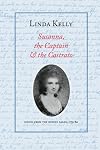
This small exquisite book is concerned with just one year from the Burney family circle, 1779-80. Its heroine is Susanna (Fanny’s sister) and its hero? Well, there was her brother Jem who was off adventuring with Captain Cook. ‘Poor Jem, God send him back safe, polished or rough.’ Then there was Molesworth Phillips who had been at sea with Jem and would eventually court Susanna. But it was the castrato Pacchierotti who captivated Susanna. His voice delighted her: ‘He did sing it like show more a very Angel – to You it will give little trouble to conceive the pleasure I felt at hearing his most Sweet Voice & that in such sweet music’. He was in many ways an archetypal hero; melancholy, sensitive – ‘Indeed all the Sisters are so sensible – so charming that everywhere it must be they are desired!’ - and brave. During the Gordon Riots he refused to remove his nameplate from his front door and even went to witness the madness on the streets of London. He confessed to Susanna ‘I ought not to come too often because it makes it harder for me to leave you – Indeed I know it.’ Susanna felt the same ‘& half said so – ‘Never mind it’ said poor Pacchierotti smiling – but his eye really glistened.’ It was a tender friendship teetering on romance but when he left for Europe Susanna fell passionately in love with Phillips and married him. show less
Oh what fun it must have been - Hugo, George Sand, de Musset, de Vigny, Sainte Beuvve, Balzac, Merimee, Gautier - better than a Monday night in Witney.
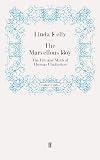
It is August 24, 1770. A seventeen-year-old boy lies lifeless in an attic in Brook Street, London. He took opium and arsenic and fell into an eternal sleep. Three days earlier he was walking in the cemetery of Saint Pancras with a friend and, absorbed in his own thoughts, he did not notice an open tomb and fell into it: the friend, playing down the incident, said he was happy to witness the resurrection of a genius. The boy's response was not in the same tone: "My dear friend, I've been show more fighting with the grave for some time now."
The genius in question is the very young and talented poet Thomas Chatterton, known in those decades that preceded the full rise of Romanticism. He was one of the clearest examples of how a strong interest in the ancient poetic style was gradually growing. He was in fact obsessed with the Middle Ages and the poetry of that time. He strove to write in an English that could resemble the language of the fifteenth century as closely as possible, composing verses that one could believe belonged to three centuries ago.
Born in Bristol in 1752, Chatterton always had a certain fascination with the ecclesiastical and ancient world. He grew up in the aisles of the church of Saint Mary Redcliffe, learning to read from an old musical folio. He was always disinterested in purely childish activities. His sister in fact narrated how, when asked what he wanted painted on a bowl, he replied: "An angel with wings and a trumpet, so that he can make my name resound on the world." He spent his childhood locked up in the archive of Saint Mary Redcliffe, imagining that he lived in the Middle Ages, at the time of Edward IV (mid-15th century).
His literary work revolved around the name of Thomas Rowley, a 15th-century monk he imagined: this was the pseudonym he adopted in composing his own poems. Not finding a patron in Bristol, he turned to Horace Walpole, the famous author of the gothic novel The Castle of Otranto, but when he discovered that the poet was sixteen, he chased him away.
In London he began to collaborate with some magazines, even if this activity did not allow him to live an economically serene condition. He wrote eclogues, lyrics, operas and satires, both in prose and in verse. In Holborn (London) he shared his room with a companion who was able to notice how he spent the night writing non-stop. He composed a novel that he pretended to have transcribed from a parchment, Excelente Balade of Charitie, which was rejected by the publishers.
He ended his days as already mentioned, between starvation and poverty, refusing the offers of food that were made to him by his neighbor. A couple of days after Chatterton's death, Dr. Thomas Fry was able to recompose (from some fragments found scattered on the floor of the room and collected by the owner in a box, with the hope that there might be a note written there before the suicide ) the piece from one of the poet's last lyric compositions: an alternative ending of Aella, A Tragical Enterlude, the tragedy that tells of Aella's battle against the Danes and the betrayal of her faithful knight Celmonda, who tries to abuse Birtha, wife of the protagonist. Aella, having returned to the castle wounded after the battle, and discovering that his wife has run away with a "stranger" (Celmonda had thus presented himself taking advantage of Aella's absence to kidnap Birtha), stabs himself, dying as soon as his wife - in meanwhile saved by the Danes - she crosses the threshold of the building. Birtha collapses on the body of her deceased husband.
This tragedy contains the song of a minstrel that seems to foretell the end of the couple. Here is a fragment:
"His hair is black like a winter night.
Her skin is white as snow in summer,
Vermilion like the morning light on her face,
Cold he lies down there in the grave:
My love is dead,
He went to his deathbed
Under the weeping willow "
Despite the sad end of the young poet, posterity has made his figure immortal: famous is the picture painted by the painter Henry Wallis, which portrays Chatterton in his deathbed. It was also an inspiration for romantic poets such as William Blake and John Keats, who was united to him by the untimely and tragic death of him and who dedicated Endymion to him in 1818.
"A thing of beauty is a joy forever": this is how Endymion opens, to celebrate the beauty that never dies out. show less
The genius in question is the very young and talented poet Thomas Chatterton, known in those decades that preceded the full rise of Romanticism. He was one of the clearest examples of how a strong interest in the ancient poetic style was gradually growing. He was in fact obsessed with the Middle Ages and the poetry of that time. He strove to write in an English that could resemble the language of the fifteenth century as closely as possible, composing verses that one could believe belonged to three centuries ago.
Born in Bristol in 1752, Chatterton always had a certain fascination with the ecclesiastical and ancient world. He grew up in the aisles of the church of Saint Mary Redcliffe, learning to read from an old musical folio. He was always disinterested in purely childish activities. His sister in fact narrated how, when asked what he wanted painted on a bowl, he replied: "An angel with wings and a trumpet, so that he can make my name resound on the world." He spent his childhood locked up in the archive of Saint Mary Redcliffe, imagining that he lived in the Middle Ages, at the time of Edward IV (mid-15th century).
His literary work revolved around the name of Thomas Rowley, a 15th-century monk he imagined: this was the pseudonym he adopted in composing his own poems. Not finding a patron in Bristol, he turned to Horace Walpole, the famous author of the gothic novel The Castle of Otranto, but when he discovered that the poet was sixteen, he chased him away.
In London he began to collaborate with some magazines, even if this activity did not allow him to live an economically serene condition. He wrote eclogues, lyrics, operas and satires, both in prose and in verse. In Holborn (London) he shared his room with a companion who was able to notice how he spent the night writing non-stop. He composed a novel that he pretended to have transcribed from a parchment, Excelente Balade of Charitie, which was rejected by the publishers.
He ended his days as already mentioned, between starvation and poverty, refusing the offers of food that were made to him by his neighbor. A couple of days after Chatterton's death, Dr. Thomas Fry was able to recompose (from some fragments found scattered on the floor of the room and collected by the owner in a box, with the hope that there might be a note written there before the suicide ) the piece from one of the poet's last lyric compositions: an alternative ending of Aella, A Tragical Enterlude, the tragedy that tells of Aella's battle against the Danes and the betrayal of her faithful knight Celmonda, who tries to abuse Birtha, wife of the protagonist. Aella, having returned to the castle wounded after the battle, and discovering that his wife has run away with a "stranger" (Celmonda had thus presented himself taking advantage of Aella's absence to kidnap Birtha), stabs himself, dying as soon as his wife - in meanwhile saved by the Danes - she crosses the threshold of the building. Birtha collapses on the body of her deceased husband.
This tragedy contains the song of a minstrel that seems to foretell the end of the couple. Here is a fragment:
"His hair is black like a winter night.
Her skin is white as snow in summer,
Vermilion like the morning light on her face,
Cold he lies down there in the grave:
My love is dead,
He went to his deathbed
Under the weeping willow "
Despite the sad end of the young poet, posterity has made his figure immortal: famous is the picture painted by the painter Henry Wallis, which portrays Chatterton in his deathbed. It was also an inspiration for romantic poets such as William Blake and John Keats, who was united to him by the untimely and tragic death of him and who dedicated Endymion to him in 1818.
"A thing of beauty is a joy forever": this is how Endymion opens, to celebrate the beauty that never dies out. show less
Aug 23, 2022Italian
Lists
Statistics
- Works
- 11
- Also by
- 1
- Members
- 139
- Popularity
- #147,350
- Rating
- 4.0
- Reviews
- 4
- ISBNs
- 34
- Languages
- 2