
Charles G. Finney (2) (1905–1984)
Author of The Circus of Dr. Lao
For other authors named Charles G. Finney, see the disambiguation page.
Works by Charles G. Finney
Associated Works
The Magazine of Fantasy and Science Fiction October 1961, Vol. 21, No. 4 (1961) — Contributor — 21 copies, 1 review
The Magazine of Fantasy and Science Fiction August 1958, Vol. 15, No. 2 (1958) — Contributor — 8 copies
Tagged
Common Knowledge
- Legal name
- Finney, Charles Grandison
- Birthdate
- 1905-12-01
- Date of death
- 1984-04-16
- Gender
- male
- Occupations
- reporter
fantasy writer - Awards and honors
- National Book Awards: the Most Original Book of 1935
- Relationships
- Finney, Charles Grandison (great-grandfather)
- Nationality
- USA
- Birthplace
- Sedalia, Missouri, USA
- Places of residence
- Tientsin, China
Tucson, Arizona, USA - Place of death
- Tucson, Arizona, USA
- Associated Place (for map)
- USA
Members
Reviews

Few know Charles G Finney except for The Circus of Dr Lao, and even there what most people remember is bowdlerized movie The Seven Faces of Dr Lao. This is a pity because he was a very distinctive voice, and his stories were imaginative, sometimes deliberately disturbing, poking at racist or sexist actions.
The Ghosts of Manacle is collection of 7 stories and a novella, all but one set in Arizona, often in or near the fictional town of Manacle. This Pyramid paperback appears to be the only show more publication of this collection of Finney's short stories. The cover by Jack Gaughan's cover in the style of Joe Mugnaini is apt, evoking echoes of Bradbury, but the author Finney is most akin to is R A Lafferty. The stories were published in 1958-1962. Most appeared in F&SF, two in Harper's, and one in Point West, an Arizona history magazine. The novella is original to the collection. The short stories are all strong, the novella less so.
The Iowan's Curse (Harper's) is an amusing tale where doing someone a favor in Manacle is almost immediately punished for it, but thanks to the curse, even worse luck shortly befalls the person originally granted the favor. Included in Best American Short Stories: 1959.
The Horsenaping of Hotspur (F&SF) is a fairy tale for adults with a Twainesque punch line. Animals - primarily snakes -- team up to foil a plot to kidnap the horse of a rancher in Manacle.
The Life and Death of a Western Gladiator (Harpers) is about snakes again, though with no touch of the fantastic. The life and death of a rattlesnake that begins primarily as a biology lesson and ends with as a tale about human encroachment.
The Gilashrikes (F&SF) is a short fable of the surprising results when a man cross-breeds a pet Gila monster with a pet shrike -- the bird that impales prey that inspired the monster in Simmons' Hyperion books.
The Black Retriever (F&SF) tells of a black retriever, though few see anything more than a black blur, that plagues a neighbor, killing birds and other small animals, and triggering odd dreams in the men who try to catch it. This is the first story to include a bit of the sexual undercurrent so common in Finney's novels.
The Captivity (F&SF), not set in Arizona, is very curious pri show less
The Ghosts of Manacle is collection of 7 stories and a novella, all but one set in Arizona, often in or near the fictional town of Manacle. This Pyramid paperback appears to be the only show more publication of this collection of Finney's short stories. The cover by Jack Gaughan's cover in the style of Joe Mugnaini is apt, evoking echoes of Bradbury, but the author Finney is most akin to is R A Lafferty. The stories were published in 1958-1962. Most appeared in F&SF, two in Harper's, and one in Point West, an Arizona history magazine. The novella is original to the collection. The short stories are all strong, the novella less so.
The Iowan's Curse (Harper's) is an amusing tale where doing someone a favor in Manacle is almost immediately punished for it, but thanks to the curse, even worse luck shortly befalls the person originally granted the favor. Included in Best American Short Stories: 1959.
The Horsenaping of Hotspur (F&SF) is a fairy tale for adults with a Twainesque punch line. Animals - primarily snakes -- team up to foil a plot to kidnap the horse of a rancher in Manacle.
The Life and Death of a Western Gladiator (Harpers) is about snakes again, though with no touch of the fantastic. The life and death of a rattlesnake that begins primarily as a biology lesson and ends with as a tale about human encroachment.
The Gilashrikes (F&SF) is a short fable of the surprising results when a man cross-breeds a pet Gila monster with a pet shrike -- the bird that impales prey that inspired the monster in Simmons' Hyperion books.
The Black Retriever (F&SF) tells of a black retriever, though few see anything more than a black blur, that plagues a neighbor, killing birds and other small animals, and triggering odd dreams in the men who try to catch it. This is the first story to include a bit of the sexual undercurrent so common in Finney's novels.
The Captivity (F&SF), not set in Arizona, is very curious pri show less

Much better than I expected but several warnings. First, while it doesn't ever use the N word (at least in my edition), part of the cast of the circus are Africans who put on a peepshow performance that plays on the worst racist stereotypes presumed to be held by it small western Arizona town audience. Second, that same audience frequently uses the C word when referring to Dr. Lao, which is not unexpected for the time and place. Dr. Lao himself occasionally suddenly lapses into the most show more caricatured Chinese-English, but only when he doesn't want to answer some question about the circus. In literally the next breath he returns to his narration of the wonders of the circus in fluent, highly-polished English. Third, sex makes a frequent appearance, clear but not in pornographic detail. Dr. Lao at one point spends some time on the importance of sex and procreation, in order to introduce the sex-less Hedge Hound, a "dog" created by plants in a burst as the ultimate expression of life.
So what makes this short novel of worth, given these potential issues? An incredible imaginative drive that begins with a newspaper ad promising one wonder after another to be seen, climaxing in one that surely must be false, and yet.... The drive falters a bit when the circus parade passes through town, because this is when most of the townspeople are introduced, and there are quite a few. But once we enter the circus, the unexpected never stops. It begins with Agnus Birdsong, high-school English teacher (as she is repeatedly described) visiting the aged dirty satyr in his tent -- wine lees in his beard, manure on his hooves -- and there is no false "oh my goodness" on her part. Dr. Lao's narration not only tells the history of the circus crew - mostly Greek myths who eventually had to leave civilized Europe for the Far East -- but eventually reveals some of Dr. Lao's motivations and dreams. How much control he has over the circus is often in doubt.
And when the story ends, the book does not. There is another 20 pages, call "The Catalogue", listing every character, animal, and god that appeared, however briefly, some with just a pjhrase, e.g., "a good party man", and some with a paragraph or two, a mix of hilarious and poignant.
If the issues listed at the front are now a show-stopper, then I highly recommend this, especially for fans of modern fantasists such as Kelly Link. This is one of the few books I've read where some idea or turn of phrase surprised every few pages from beginning to end. show less
So what makes this short novel of worth, given these potential issues? An incredible imaginative drive that begins with a newspaper ad promising one wonder after another to be seen, climaxing in one that surely must be false, and yet.... The drive falters a bit when the circus parade passes through town, because this is when most of the townspeople are introduced, and there are quite a few. But once we enter the circus, the unexpected never stops. It begins with Agnus Birdsong, high-school English teacher (as she is repeatedly described) visiting the aged dirty satyr in his tent -- wine lees in his beard, manure on his hooves -- and there is no false "oh my goodness" on her part. Dr. Lao's narration not only tells the history of the circus crew - mostly Greek myths who eventually had to leave civilized Europe for the Far East -- but eventually reveals some of Dr. Lao's motivations and dreams. How much control he has over the circus is often in doubt.
And when the story ends, the book does not. There is another 20 pages, call "The Catalogue", listing every character, animal, and god that appeared, however briefly, some with just a pjhrase, e.g., "a good party man", and some with a paragraph or two, a mix of hilarious and poignant.
If the issues listed at the front are now a show-stopper, then I highly recommend this, especially for fans of modern fantasists such as Kelly Link. This is one of the few books I've read where some idea or turn of phrase surprised every few pages from beginning to end. show less

A completely different book from the author of The Circus of Dr Lao. There's no fantasy, and just a hint of sex, albeit non-human. A low-key series of connected comical stories, about two brothers, Willie and Tom, always getting into trouble with the animals they find "past the end of the pavement" and bring home. Very much in the mold of Peck's Bad Boy and numerous stories and cartoon strips about mischievous kids. Each chapter is one story, each story is one summer, and one thing that show more raises this a bit above the rest is the gradual growth in Willie and Tom from year to year. They begin collecting water beetles, then frogs, then they buy a duck. These first three episodes all involve sex -- the beetles form a mating clump, though the boys don't know what is happening. Then they watch the entire life cycle of frogs from mating to polliwogs to frogs. Their fascination with frog reproduction concerns their mother who tries to distract them by having them buy some chickens. But because everyday animals bore them they buy a duck instead, who turns out to be incredibly sexually aggressive, attacking the neighbor's chickens and even a rabbit. The focus on sex trails off but the depth of engagement of the boys with nature -- including death -- increases. Much of the humor comes from the portrayals of the various adults whose lives are disrupted in some way by animals brought back to town by Willie and Tom. Also noteworthy is a scene near the end, when the boys show their mother two snakes. Very briefly she too sees the beauty in what normally would have frightened or repulsed her. My only criticism is a closing plot development that is far too convenient and conventional, and out of keeping with what has gone before.
Warning: one chapter includes a very stereotyped Black garbage collector, as was sadly common for the times.
Recommended, taking into account the above caveat. This is not the creative explosion of Circus, but it is a charming book. show less
Warning: one chapter includes a very stereotyped Black garbage collector, as was sadly common for the times.
Recommended, taking into account the above caveat. This is not the creative explosion of Circus, but it is a charming book. show less
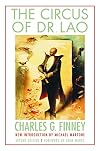
In 1981 I saw an unusual 1964 film, and in 2019, I sought out the 1935 novella from which it was adapted. It won, says Wikipedia, the 1935 National Book Award for Most Original Book, which seems appropriate, and Ray Bradbury acknowledged it as an inspiration to his own work.
The story concerns the mysterious arrival of a circus in an Arizona town--mysterious because no one sees it arrive either by wagon or by train. Instead of the usual panoply of animals and performers, it consists of only a show more dozen or so attractions, not excluding the enigmatic proprietor, Dr. Lao, who switches seemingly at random between the most eloquent ornamental English and the most cringeworthy broken English of stereotype. Other attractions include a sea serpent--caged, articulate of speech, and eighty feet long; a medusa; a sphinx; a chimera; the soothsayer Apollonius of Tyana; a creature that some unhesitatingly identify as a Russian man and others, just as unhesitatingly, identify as a bear; and a faun, complete with hooves and lyre.
The beginning of the book describes various denizens of the town reacting to the arrival of the circus. With the exception of one, Mr. Etaoin, a proofreader at the local newspaper, they are portrayed as various types of bumpkins and rubes, not excluding a couple of overeducated college boys passing through town on the way back from a drunken trip to Mexico. The misanthropy of this part of the book is wearying.
In the rest of the book, the townspeople encounter the members of the circus, sometimes with life-changing results, sometimes with no results at all. One insists on looking directly at the medusa, with predictable consequences. Another has her fortune told, brutally and dispassionately, and refuses to engage with it even enough to be offended by it. Mr. Etaoin has a private interview with the serpent, which is both personal and philosophical--although here, as with Dr. Lao, the monster switches, in telling a story, from a cultivated English to an almost comically exaggerated country dialect, and then back again. Occasionally scenes occur which don't really have to do with the townspeople at all, such as when a dead man from another town is resurrected (he immediately runs off, saying he has business to take care of), and when Dr. Lao gives an extended lecture on the medusa, starting with the species and diets of the various snakes on her head, and moving on to a meditation on the place of wonders, exempt from evolution and natural history, in the biological world. Parts of this book seem to have been written purely for the author's pleasure, which is part of its charm.
At the end of the book the circus packs up and leaves. That's it. There is an appendix that lists the persons mentioned in the book and tells a little bit more about them, but it shouldn't be mistaken for an epilogue, much less any kind of arch, revealing commentary.
When Mark Twain wrote that persons attempting to find a plot in "Huckleberry Finn" would be shot, he wasn't denying the existence of a plot; he was making the point that he preferred his book to be enjoyed instead of analyzed. Persons attempting to find a plot in "The Circus of Dr. Lao" will only be baffled. The unanswered mysteries only begin with the changes of dialect. On the other hand, the mysteries, together with its exuberance as a work of imagination, are doubtless what Ray Bradbury admired about the work. Although the story of the timeless Dr. Lao is firmly rooted in its own time and place, much of it is shockingly (and intriguingly) modern in attitude. Eighty years after the book's release, sixty years after Bradbury extolled it, it still holds up. show less
The story concerns the mysterious arrival of a circus in an Arizona town--mysterious because no one sees it arrive either by wagon or by train. Instead of the usual panoply of animals and performers, it consists of only a show more dozen or so attractions, not excluding the enigmatic proprietor, Dr. Lao, who switches seemingly at random between the most eloquent ornamental English and the most cringeworthy broken English of stereotype. Other attractions include a sea serpent--caged, articulate of speech, and eighty feet long; a medusa; a sphinx; a chimera; the soothsayer Apollonius of Tyana; a creature that some unhesitatingly identify as a Russian man and others, just as unhesitatingly, identify as a bear; and a faun, complete with hooves and lyre.
The beginning of the book describes various denizens of the town reacting to the arrival of the circus. With the exception of one, Mr. Etaoin, a proofreader at the local newspaper, they are portrayed as various types of bumpkins and rubes, not excluding a couple of overeducated college boys passing through town on the way back from a drunken trip to Mexico. The misanthropy of this part of the book is wearying.
In the rest of the book, the townspeople encounter the members of the circus, sometimes with life-changing results, sometimes with no results at all. One insists on looking directly at the medusa, with predictable consequences. Another has her fortune told, brutally and dispassionately, and refuses to engage with it even enough to be offended by it. Mr. Etaoin has a private interview with the serpent, which is both personal and philosophical--although here, as with Dr. Lao, the monster switches, in telling a story, from a cultivated English to an almost comically exaggerated country dialect, and then back again. Occasionally scenes occur which don't really have to do with the townspeople at all, such as when a dead man from another town is resurrected (he immediately runs off, saying he has business to take care of), and when Dr. Lao gives an extended lecture on the medusa, starting with the species and diets of the various snakes on her head, and moving on to a meditation on the place of wonders, exempt from evolution and natural history, in the biological world. Parts of this book seem to have been written purely for the author's pleasure, which is part of its charm.
At the end of the book the circus packs up and leaves. That's it. There is an appendix that lists the persons mentioned in the book and tells a little bit more about them, but it shouldn't be mistaken for an epilogue, much less any kind of arch, revealing commentary.
When Mark Twain wrote that persons attempting to find a plot in "Huckleberry Finn" would be shot, he wasn't denying the existence of a plot; he was making the point that he preferred his book to be enjoyed instead of analyzed. Persons attempting to find a plot in "The Circus of Dr. Lao" will only be baffled. The unanswered mysteries only begin with the changes of dialect. On the other hand, the mysteries, together with its exuberance as a work of imagination, are doubtless what Ray Bradbury admired about the work. Although the story of the timeless Dr. Lao is firmly rooted in its own time and place, much of it is shockingly (and intriguingly) modern in attitude. Eighty years after the book's release, sixty years after Bradbury extolled it, it still holds up. show less
Lists
1930s (1)
Page Turners (1)
Awards


You May Also Like


Associated Authors
Statistics
- Works
- 8
- Also by
- 6
- Members
- 1,086
- Popularity
- #23,653
- Rating
- 3.8
- Reviews
- 31
- ISBNs
- 167
- Languages
- 10
- Favorited
- 3