
David Owen (4) (1956–)
Author of Thylacine: The Tragic Tale of the Tasmanian Tiger
For other authors named David Owen, see the disambiguation page.
About the Author
David Owen is a Hobart-based writer of fiction and non-fiction for all mediums. He was born in 1956. His credits are 15 published books, which include literary novels and the acclaimed Pufferfish detective fiction series set in Tasmania. David edited Island magazine for five years and was the show more director of publishing for Quintus Publishing at the University of Tasmania. His popular series of non-fiction books include: Thylacine, the Tragic tale of the Tasmanian Tiger; Shark, in Peril in the Sea; and Tasmanian Devil, a Unique and Threatened Animal. In 1998, his love story novel Bitters End was adapted as a feature film. David was the story and script consultant for the project. David is the Official Secretary, Office of the Governor, Tasmania. His most recent publication was 13 Point Plan for a Perfect Murder, which was the seventh release in the Pufferfish series, and was published by Fullers Publishing in August 2016. show less
Series
Works by David Owen
Tagged
Common Knowledge
- Birthdate
- 1956
- Gender
- male
- Nationality
- Australia
- Places of residence
- Hobart, Tasmania, Australia
- Associated Place (for map)
- Tasmania, Australia
Members
Reviews
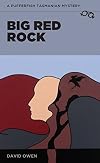
A new Pufferfish novel will always be a thing of joy - whiteboard lists or no whiteboard lists and BIG RED ROCK fits the bill perfectly. Of course you will need to have a love of self-deprecating wit that's so dry you'd swear it originated in Uluru rather than Hobart. You will need to like the bear-prodding style of investigation, that's actually covering up an acute ability to observe, retain and analyse the smallest drips of information. And in this outing, be prepared for some personal show more revelations - in that dry, understated, not bothered sort of style that Pufferfish is the appointed monarch of.
As always, BIG RED ROCK has all the personal machinations; the working relationships with what is now a well-established, well-oiled team of 3 investigators; the romancing of long term partners; the tension with the higher-ups; and the day to day struggles of your typical hard-bitten, worn-down, put upon cop type (Pufferfish in case you were wondering), intertwined with a murder and a mystery - all in the glorious setting of Tasmania, with a smidgen of Alice Springs, and mainland capital cities included for a change of scenery. In Tasmania Pufferfish and team (minus one) are confronted with the possible accident, could be suicide, ultimate murder of Hildvi - successful woman, wife who sent her husband Wayne out for pizza and fell to her death in their fancy house in the hills above Hobart.
Meanwhile the minus one is off in the wilds of Tasmania looking into the disappearance, presumed murder of one young country singer. Pufferfish has a watching brief on that one - for reasons which become clear and present well into the story.
Along the way there's also Wayne the highly specialist, long-distance Removalist; the mysterious and frankly odd Kurt Cowboy; cocaine importation; major investigation Operation Centipede; Uluru; Alice Springs; Pufferfish and a lot of connections. Connections, crossed paths, tripped over feet, stood on toes, odd goings on, people gone missing, people showing up, and the whole damn thing.
BIG RED ROCK is absolutely a good Pufferfish novel, in a series that's positively crowded with really good novels. They are comedic, dry as desert dust, pointed, observational and more than a bit unusual in their style and construction. If you've not read any of them, then there's now an opportunity to get on board with one of the best things (other than all those other lovely things that come out of Tasmania - cider / cheese / salmon / apples / food / pinot / oh the pinot. Did I mention pinot... Sorry, where was I...). Oh yes, earlier books in the series have now been re-released which is the perfect excuse for you to dive right in. Anywhere in the series will do nicely - there's some relationship building that expands throughout but you'll get the gist wherever you start.
https://www.austcrimefiction.org/review/big-red-rock-david-owen show less
As always, BIG RED ROCK has all the personal machinations; the working relationships with what is now a well-established, well-oiled team of 3 investigators; the romancing of long term partners; the tension with the higher-ups; and the day to day struggles of your typical hard-bitten, worn-down, put upon cop type (Pufferfish in case you were wondering), intertwined with a murder and a mystery - all in the glorious setting of Tasmania, with a smidgen of Alice Springs, and mainland capital cities included for a change of scenery. In Tasmania Pufferfish and team (minus one) are confronted with the possible accident, could be suicide, ultimate murder of Hildvi - successful woman, wife who sent her husband Wayne out for pizza and fell to her death in their fancy house in the hills above Hobart.
Meanwhile the minus one is off in the wilds of Tasmania looking into the disappearance, presumed murder of one young country singer. Pufferfish has a watching brief on that one - for reasons which become clear and present well into the story.
Along the way there's also Wayne the highly specialist, long-distance Removalist; the mysterious and frankly odd Kurt Cowboy; cocaine importation; major investigation Operation Centipede; Uluru; Alice Springs; Pufferfish and a lot of connections. Connections, crossed paths, tripped over feet, stood on toes, odd goings on, people gone missing, people showing up, and the whole damn thing.
BIG RED ROCK is absolutely a good Pufferfish novel, in a series that's positively crowded with really good novels. They are comedic, dry as desert dust, pointed, observational and more than a bit unusual in their style and construction. If you've not read any of them, then there's now an opportunity to get on board with one of the best things (other than all those other lovely things that come out of Tasmania - cider / cheese / salmon / apples / food / pinot / oh the pinot. Did I mention pinot... Sorry, where was I...). Oh yes, earlier books in the series have now been re-released which is the perfect excuse for you to dive right in. Anywhere in the series will do nicely - there's some relationship building that expands throughout but you'll get the gist wherever you start.
https://www.austcrimefiction.org/review/big-red-rock-david-owen show less
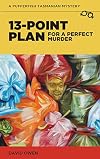
I don’t know if he had a 13-Point plan for it but David Owen’s latest novel to feature Tasmanian Detective Inspector Franz “Pufferfish” Heineken is just about the perfect murder mystery. From its deliciously out-of-the-ordinary cover (taken from a gorgeous art work by a Tasmanian artist) to its last linguistically playful sentence the book is a pure delight.
It is the seventh instalment of the series which spans 22 years and it sees the wily DI, known as almost universally as show more Pufferfish (due to his tendency for being generally prickly, occasionally toxic and sometimes exploding when severely provoked), confronted with a fascinating array of crimes. Aside from ensuring there is always something going on I found the mixture of matters requiring the attention of Owen and his team a good reminder that not all police work is about the hunt for crazed killers. Here, one of Pufferfish’s offsiders gets the team involved in the investigation of the theft of a school boy’s stamp album (the boy is a student of Faye’s old teacher and the alleged thief belongs to a family well known to police) and this unlikely thread provides a great deal of the book’s drama and humour. Two members of a different family that the police are also well-acquainted with claim that their husband/father has been the subject of an attempted murder (at the very least) and that they themselves are now under threat. Meanwhile, the case that grabs the whole island’s attention involves the grizzly murder of a well-connected visiting polo player. Owen has done a great job of pacing all three stories across the length of the novel and keeping the reader guessing about what inter-connections might be at play and when a story is really, truly over.
The book is told from the first-person perspective of Pufferfish himself. This is a narrative point-of-view I often find awkward but when done well, as it is here, it can provide a great perspective. We really see the world through Pufferfish’s occasionally jaded eyes, such as when the book opens and we find him on a course
In a room without a view, I’m one of 35 captives being tortured, a faceless cop…It’s agony. At the Police Training College we’re enduring a Professional Development course, the nasal drone of the lecturer soporific over a mid-distance lawnmower on this stuffy late summer afternoon.
As PD goes, this one is being delivered by a fellow with tortoiseshell specs on drop-down string is grindingly dull, except for encouraging that edgy sensation of trying not to nod off in a highly controlled environment.
Me and my miserably entrapped colleagues are here to learn about the constant need to improve the public image of policing.
Pufferfish is not always as downbeat as this might make him appear (not that anyone who’s ever sat through one of those Development courses would blame him for his despair) and is at heart a decent cop trying to get at the truth. That he’s not as enamoured with rules, senior management and wealthy types who attempt to wield power unduly as his bosses would like makes him all the more endearing to me.
The novel also offers a great sense of its place; bringing to life the isolation of island living, the ways that nature – with its beauty and its harshness – affect the state and incorporating real world elements very naturally. For example, the five-year old MONA, Australia’s largest (and just about only) privately funded museum, is the backdrop for a great scene and this is indicative of the kind of local colour the book is full of.
At some point I should stop being surprised that it is often people not born and raised here, like David Owen (who is from the Netherlands originally) and Peter Temple, who draw the best pictures of Australia in their writing. I like that Owen’s version of Australia is both light-hearted and serious when necessary, that his characters can laugh at themselves and stand up for the little guy when it matters and that beauty and ugliness co-exist if not harmoniously then inevitably. 13-POINT PLAN FOR A PERFECT MURDER is funny, fast and has a fiendishly good plot. You should read it immediately. show less
It is the seventh instalment of the series which spans 22 years and it sees the wily DI, known as almost universally as show more Pufferfish (due to his tendency for being generally prickly, occasionally toxic and sometimes exploding when severely provoked), confronted with a fascinating array of crimes. Aside from ensuring there is always something going on I found the mixture of matters requiring the attention of Owen and his team a good reminder that not all police work is about the hunt for crazed killers. Here, one of Pufferfish’s offsiders gets the team involved in the investigation of the theft of a school boy’s stamp album (the boy is a student of Faye’s old teacher and the alleged thief belongs to a family well known to police) and this unlikely thread provides a great deal of the book’s drama and humour. Two members of a different family that the police are also well-acquainted with claim that their husband/father has been the subject of an attempted murder (at the very least) and that they themselves are now under threat. Meanwhile, the case that grabs the whole island’s attention involves the grizzly murder of a well-connected visiting polo player. Owen has done a great job of pacing all three stories across the length of the novel and keeping the reader guessing about what inter-connections might be at play and when a story is really, truly over.
The book is told from the first-person perspective of Pufferfish himself. This is a narrative point-of-view I often find awkward but when done well, as it is here, it can provide a great perspective. We really see the world through Pufferfish’s occasionally jaded eyes, such as when the book opens and we find him on a course
In a room without a view, I’m one of 35 captives being tortured, a faceless cop…It’s agony. At the Police Training College we’re enduring a Professional Development course, the nasal drone of the lecturer soporific over a mid-distance lawnmower on this stuffy late summer afternoon.
As PD goes, this one is being delivered by a fellow with tortoiseshell specs on drop-down string is grindingly dull, except for encouraging that edgy sensation of trying not to nod off in a highly controlled environment.
Me and my miserably entrapped colleagues are here to learn about the constant need to improve the public image of policing.
Pufferfish is not always as downbeat as this might make him appear (not that anyone who’s ever sat through one of those Development courses would blame him for his despair) and is at heart a decent cop trying to get at the truth. That he’s not as enamoured with rules, senior management and wealthy types who attempt to wield power unduly as his bosses would like makes him all the more endearing to me.
The novel also offers a great sense of its place; bringing to life the isolation of island living, the ways that nature – with its beauty and its harshness – affect the state and incorporating real world elements very naturally. For example, the five-year old MONA, Australia’s largest (and just about only) privately funded museum, is the backdrop for a great scene and this is indicative of the kind of local colour the book is full of.
At some point I should stop being surprised that it is often people not born and raised here, like David Owen (who is from the Netherlands originally) and Peter Temple, who draw the best pictures of Australia in their writing. I like that Owen’s version of Australia is both light-hearted and serious when necessary, that his characters can laugh at themselves and stand up for the little guy when it matters and that beauty and ugliness co-exist if not harmoniously then inevitably. 13-POINT PLAN FOR A PERFECT MURDER is funny, fast and has a fiendishly good plot. You should read it immediately. show less

Storytelling is the social and cultural activity of sharing stories, often with improvisation, theatrics, or embellishment.
That’s the definition according to Wikipedia anyway. I went looking for it because as I read David Owen’s latest offering I thought that to call it a novel is a little misleading. It is one, of course, but it is also something else. An old fashioned yarn. An adventure tale. Something you can imagine being slowly doled out by a grizzled chap in a pub somewhere off the show more beaten track.
On the surface it is about the probable death of a sommelier (his body goes missing before death can be confirmed by anyone official), the growing-cold hunt for the killer of a teenage girl and the myriad ways bureaucracy is screwed. But this is not a story that goes from point A to point B in a nice, orderly fashion. Its embellishments, improvisations and theatrics include the mechanics of international drug smuggling, a lesson in trout fishing, a disguise, a brief history of Cathedral building and musings on the nature of light. I know it sounds like these things might be irrelevant but you’ll have to take my word that none of them are.
The storytelling element of ROMEO’S GUN is heightened by the fact it is told from the first-person point of view of a larger than life person. Franz “Pufferfish” Heineken is – in my mind at least – a little like a good Jack Thompson character. As he was in The Sum of Us for example. Prone to prickliness, bored by other people’s bullshit, easily perceived the wrong way by people too dense or self-involved to see his true qualities. The kind of bloke any sensible person would want on their side in a fight. I often find the first-person perspective unbelievable – or at least unrelatable – because the narrators seem to think with a coherence my own inner voice generally lacks. But Pufferfish’s voice – with some half-formed thoughts and idiosyncratic shorthand – rings very true.
True Blue too. Funny that two ‘foreigners’, Pufferfish (who is Dutch) and his creator (born in South Africa), consistently deliver such a thoroughly Australian sensibility. The evocative setting, the idiom-filled sentences, the way that various social scenes play out are all tied irrevocably to this country or, even more locally, to the often maligned island state we occasionally leave off the map. Though some of those experiences are shared by mainlanders. In my city we too are often visited by highly-paid, expensive suit-wearing ‘experts’ from Sydney over supplied with presentations and recommendations for how we should do things their way improve. In ROMEO’S GUN it is a mythical company called EmploySolution (which of course is referred to as FinalSolution by Puff and his chums) putting the Tasmanian Police Force in general and Pufferfish in particular under its microscope with a view to the eradication of unnecessary spending. It’s a different company in my real world but the same result: roles which perform actual work get cut while roles for managers and executives who do precious little of use quadruple.
I collected ROMEO’S GUN from my post box on the last working day before Christmas which did wonderful things for my seasonal spirit. My delighted anticipation quickly turned into genuine satisfaction as I started reading it almost immediately and found myself once again enveloped in the funny, clever, complicated and mildly cynical world of Franz Heineken. If you are not already a fan of this series you could easily start here. It works as a self-contained story even with its occasional references to earlier events. And then, as I did when I first discovered the series at book six, you can begin your own frustrating quest to track down the out-of-print earlier titles. show less
That’s the definition according to Wikipedia anyway. I went looking for it because as I read David Owen’s latest offering I thought that to call it a novel is a little misleading. It is one, of course, but it is also something else. An old fashioned yarn. An adventure tale. Something you can imagine being slowly doled out by a grizzled chap in a pub somewhere off the show more beaten track.
On the surface it is about the probable death of a sommelier (his body goes missing before death can be confirmed by anyone official), the growing-cold hunt for the killer of a teenage girl and the myriad ways bureaucracy is screwed. But this is not a story that goes from point A to point B in a nice, orderly fashion. Its embellishments, improvisations and theatrics include the mechanics of international drug smuggling, a lesson in trout fishing, a disguise, a brief history of Cathedral building and musings on the nature of light. I know it sounds like these things might be irrelevant but you’ll have to take my word that none of them are.
The storytelling element of ROMEO’S GUN is heightened by the fact it is told from the first-person point of view of a larger than life person. Franz “Pufferfish” Heineken is – in my mind at least – a little like a good Jack Thompson character. As he was in The Sum of Us for example. Prone to prickliness, bored by other people’s bullshit, easily perceived the wrong way by people too dense or self-involved to see his true qualities. The kind of bloke any sensible person would want on their side in a fight. I often find the first-person perspective unbelievable – or at least unrelatable – because the narrators seem to think with a coherence my own inner voice generally lacks. But Pufferfish’s voice – with some half-formed thoughts and idiosyncratic shorthand – rings very true.
True Blue too. Funny that two ‘foreigners’, Pufferfish (who is Dutch) and his creator (born in South Africa), consistently deliver such a thoroughly Australian sensibility. The evocative setting, the idiom-filled sentences, the way that various social scenes play out are all tied irrevocably to this country or, even more locally, to the often maligned island state we occasionally leave off the map. Though some of those experiences are shared by mainlanders. In my city we too are often visited by highly-paid, expensive suit-wearing ‘experts’ from Sydney over supplied with presentations and recommendations for how we should do things their way improve. In ROMEO’S GUN it is a mythical company called EmploySolution (which of course is referred to as FinalSolution by Puff and his chums) putting the Tasmanian Police Force in general and Pufferfish in particular under its microscope with a view to the eradication of unnecessary spending. It’s a different company in my real world but the same result: roles which perform actual work get cut while roles for managers and executives who do precious little of use quadruple.
I collected ROMEO’S GUN from my post box on the last working day before Christmas which did wonderful things for my seasonal spirit. My delighted anticipation quickly turned into genuine satisfaction as I started reading it almost immediately and found myself once again enveloped in the funny, clever, complicated and mildly cynical world of Franz Heineken. If you are not already a fan of this series you could easily start here. It works as a self-contained story even with its occasional references to earlier events. And then, as I did when I first discovered the series at book six, you can begin your own frustrating quest to track down the out-of-print earlier titles. show less

Detective Inspector Franz Heineken of the Tasmanian Police Force is nicknamed Pufferfish, described as A prickly, toxic bastard, ability to inflate and even explode when severely provoked. In this outing he is confronted by several high-profile cases including the theft of a valuable diamond necklace, the death of a well-known actor which is reported as suicide until the actor's girlfriend claims it was murder and the vicious beating of a young Indian woman. Heineken and his team, DC Faye show more Addison and DS Rafe Tredway, think they know which of the island's criminal fraternity is responsible for the necklace theft but they have a devil of a time proving it as their prime suspect has claimed police harassment before so they must tread very carefully indeed. The investigation into the actor's death meanwhile introduces the police to an entirely new suspect pool and the somewhat debauched behaviour one might associate with Hollywood.
The book makes excellent use of the first-person point of view by showing us not only what Pufferfish sees and hears but also what he thinks about what he is seeing and hearing via a dry, acerbic internal monologue. Seeing the public/professional face of the man as well as his more private thoughts provides both entertainment and a depth to the character that it would be hard to get across in any other way (especially as the novel is refreshingly short). Although his work does take up most of his time we do get some glimpses into Heineken's home life as we meet his slightly clandestine girlfriend and his adult daughter and learn about his idyllic-sounding beach shack.
Happily there is a first rate mystery in the book too. Often this aspect of a humourous crime novel can be a little lacking but here there are two very interesting main crimes and neither goes in the direction one imagines at the outset. Although the book maintains a fast pace, Owen has still managed to depict the complications and temporary stalling that such investigations must surely take which gives a very believable feeling to the whole thing. Another element of the book which helps the credibility factor is the very natural-sounding dialogue both between the team members and with the various suspects.
To wrap up this very entertaining package the book also offers a strong sense of its setting. The positives (outstanding scenery, still-present sense of history and a lively community spirit) and negatives (isolation from the rest of the world, not always welcoming to strangers) of Tasmania are incorporated seamlessly into the story and the writing and overall tone of the book is very, very Australian. There were a couple of sentences even I had to read twice to understand, though as they both contained sporting metaphors it's not terribly surprising.
Knowing absolutely nothing about a book or its author before cracking a book's spine is a pretty rare occurrence for me these days and I savour the complete lack of expectation that accompanies the experience. It took me only a few pages to become completely hooked by this clever, topical story and its deliciously off-beat characters. Highly recommended. show less
The book makes excellent use of the first-person point of view by showing us not only what Pufferfish sees and hears but also what he thinks about what he is seeing and hearing via a dry, acerbic internal monologue. Seeing the public/professional face of the man as well as his more private thoughts provides both entertainment and a depth to the character that it would be hard to get across in any other way (especially as the novel is refreshingly short). Although his work does take up most of his time we do get some glimpses into Heineken's home life as we meet his slightly clandestine girlfriend and his adult daughter and learn about his idyllic-sounding beach shack.
Happily there is a first rate mystery in the book too. Often this aspect of a humourous crime novel can be a little lacking but here there are two very interesting main crimes and neither goes in the direction one imagines at the outset. Although the book maintains a fast pace, Owen has still managed to depict the complications and temporary stalling that such investigations must surely take which gives a very believable feeling to the whole thing. Another element of the book which helps the credibility factor is the very natural-sounding dialogue both between the team members and with the various suspects.
To wrap up this very entertaining package the book also offers a strong sense of its setting. The positives (outstanding scenery, still-present sense of history and a lively community spirit) and negatives (isolation from the rest of the world, not always welcoming to strangers) of Tasmania are incorporated seamlessly into the story and the writing and overall tone of the book is very, very Australian. There were a couple of sentences even I had to read twice to understand, though as they both contained sporting metaphors it's not terribly surprising.
Knowing absolutely nothing about a book or its author before cracking a book's spine is a pretty rare occurrence for me these days and I savour the complete lack of expectation that accompanies the experience. It took me only a few pages to become completely hooked by this clever, topical story and its deliciously off-beat characters. Highly recommended. show less
Lists
Extinct Animals (1)
You May Also Like


Associated Authors
Statistics
- Works
- 20
- Members
- 310
- Popularity
- #76,068
- Rating
- 4.0
- Reviews
- 16
- ISBNs
- 413
- Languages
- 11