
Susan Shaw (2) (1951–)
Author of The Boy From the Basement
For other authors named Susan Shaw, see the disambiguation page.
About the Author
Image credit: Simon & Schuster
Works by Susan Shaw
Tagged
Common Knowledge
- Canonical name
- Shaw, Susan
- Birthdate
- 1951-08-09
- Gender
- female
- Education
- Temple University
- Occupations
- young adult writer
- Nationality
- USA
- Birthplace
- Philadelphia, Pennsylvania, USA
- Associated Place (for map)
- Pennsylvania, USA
Members
Reviews
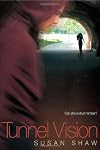
I don’t even know where to start with this book. Honestly, it was a trainwreck. If this hadn’t been my Random Reads book for the month I would have quite reading after the first chapter. Determined to finish, I gritted my teeth and forged on. I knew things weren’t going to get better as the story progressed because my issue was with the writing and the writing alone.
I usually don’t like to talk bad about an author’s writing in particular because I know that it takes A TON of work show more to write a book and I don’t want to seem like I’m criticizing the person and not the book. In this particular situation however, I really don’t know how to talk about why I didn’t like the book if I don’t talk about the writing.
One of the main lessons in writing is show don’t tell. All this book did was tell. There was no emotion, not once did I see what the character was seeing or feel what they were feeling. Things as simple as sounds were written out; bang, clink, slam. Even emotions were written out like, “Giggle, giggle giggle!” or “Sob, sob, sob!” And everything was always in sets of three like that, which got very irritating after the first dozen or so times.
The “big action” scenes were so anti-climactic, the tension stripped away by telling us to death. For example:
“My arms lashed out against the moving target. Kick, kick, kick! How long could I last? The knife, the knife, the knife! This way, that way, glinting in the sun. Close and closer. Closer- he’s going for my neck! ‘AAAAAAHH!’ I CAN‘T SEE IT! ‘AAAAAAAAAA-’ CUT!”
The main character, Liza, is supposed to be sixteen or seventeen yet she comes across as an immature, whiny, child. Her thought process was so naive and unbelievable for a teenager. Her dad even called her “little one” all the time.
Don’t even get me started on the witness protection program side of things and how utterly unbelievable it all was.
I could go on for awhile pointing out all the things that bothered me, but I think you get the picture of how much I disliked this book. show less
I usually don’t like to talk bad about an author’s writing in particular because I know that it takes A TON of work show more to write a book and I don’t want to seem like I’m criticizing the person and not the book. In this particular situation however, I really don’t know how to talk about why I didn’t like the book if I don’t talk about the writing.
One of the main lessons in writing is show don’t tell. All this book did was tell. There was no emotion, not once did I see what the character was seeing or feel what they were feeling. Things as simple as sounds were written out; bang, clink, slam. Even emotions were written out like, “Giggle, giggle giggle!” or “Sob, sob, sob!” And everything was always in sets of three like that, which got very irritating after the first dozen or so times.
The “big action” scenes were so anti-climactic, the tension stripped away by telling us to death. For example:
“My arms lashed out against the moving target. Kick, kick, kick! How long could I last? The knife, the knife, the knife! This way, that way, glinting in the sun. Close and closer. Closer- he’s going for my neck! ‘AAAAAAHH!’ I CAN‘T SEE IT! ‘AAAAAAAAAA-’ CUT!”
The main character, Liza, is supposed to be sixteen or seventeen yet she comes across as an immature, whiny, child. Her thought process was so naive and unbelievable for a teenager. Her dad even called her “little one” all the time.
Don’t even get me started on the witness protection program side of things and how utterly unbelievable it all was.
I could go on for awhile pointing out all the things that bothered me, but I think you get the picture of how much I disliked this book. show less
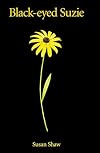
I wish more people knew about this book. It’s a quick read about a girl who’s struggling with mental illness and her journey through psychiatric in-patient care. I read it at a really dark time in my life and I cried a lot. By the end I felt like it helped me breathe a little. I’ve bought and given away several copies of this book. I always keep one on the shelf.
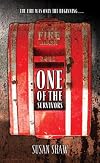
Susan Shaw's books are always on hard-hitting topics: a girl who has a nervous breakdown, a boy who survived horrific abuse and deprivation at his parents' hands, a girl who survived a kidnapping and brutal rape, and now a boy who with his best friend was the only survivor in his high school history class after a fire destroyed their school. Because only those two had the presence of mind to realize the shrieking alarms were NOT "just a test" but the real thing, a lot of people, angry and show more looking for someone to blame for the tragedy, believe this boy and his friend must have started the fire. So on top of his grief and survivor guilt, Joey must deal with the people who gather outside his house, throw garbage at him and chant "Murderer!"
But like Shaw's other books, this story is done subtly and tastefully; it may make you cry, but it's not graphic at all, and it's more about grief than horror. Her treatment of the topic makes the story suitable for younger teens and even some mature tweens, in spite of the serious issues involved. I would particularly recommend this for teens who have lost a parent, because a lot of the story is about Joey's grieving over his mother's death over a year before the fire at his school, and trying to find meaning in the way she died. show less
But like Shaw's other books, this story is done subtly and tastefully; it may make you cry, but it's not graphic at all, and it's more about grief than horror. Her treatment of the topic makes the story suitable for younger teens and even some mature tweens, in spite of the serious issues involved. I would particularly recommend this for teens who have lost a parent, because a lot of the story is about Joey's grieving over his mother's death over a year before the fire at his school, and trying to find meaning in the way she died. show less
Safe by Susan Shaw
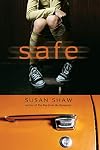
This was a low-key, even elegant treatment of what can be a very messy topic. Although the protagonist was clearly raped and brutally beaten, the attack itself is not described at all, so I think the book would be suitable for young teens and even some mature tweens in spite of its subject. It was easy to sympathize with Tracey and her trauma and slow psychological recovery from the event was realistic, as were the actions of the people around her.
This would be a good companion book to the show more oft-recommended Laurie Halse Anderson novel Speak. show less
This would be a good companion book to the show more oft-recommended Laurie Halse Anderson novel Speak. show less
Lists
Awards


You May Also Like


Statistics
- Works
- 6
- Members
- 521
- Popularity
- #47,686
- Rating
- 3.8
- Reviews
- 25
- ISBNs
- 43
- Languages
- 2