
Charles Barber (2) (1962–)
Author of Comfortably Numb: How Psychiatry Is Medicating a Nation
For other authors named Charles Barber, see the disambiguation page.
About the Author
Charles Barber is a lecturer in psychiatry at the Yale University School of Medicine.
Works by Charles Barber
Associated Works
Tagged
Common Knowledge
Members
Reviews

This book has an interesting premise, but I felt that it utterly failed in its execution. The idea behind Comfortably Numb is that the use of psychiatric medications (in the US, for the most part) is much higher than it should be, in general due to the influence of Big Pharma. I would say that has been pretty clear for a number of years and has been pointed out in many books, but given that Comfortably Numb was published in 2008, I'll give it a little bit of credit for being somewhat show more groundbreaking.
What I disliked (greatly) about Comfortably Numb was first and foremost the lack of good editing. The writing is, quite simply, all over the place. The narrative doesn't seem to be terribly cohesive and goes off on tangents time and time again. This made it difficult to follow.
I also disliked the general tone of the book and the superior attitude of the author. The author works with patients who suffer from severe mental illness, but he doesn't come across as having much of an understanding of how mental illness can impact those who suffer from it. In one extreme example (which made me want to throw the book across the room), he talks about a few women that he worked with who seemed to be very high-functioning, and that they were all on antidepressants, and how (in his opinion) they clearly didn't need to be on them, going to show that antidepressants are too heavily used and relied upon by the general public. Now, he wasn't their therapist, so other than engaging in some very superficial analysis, I'm not sure how he came to the conclusion that the usage of antidepressants was unnecessary. Personally, up to and including two days before I decided that I was going to kill myself, I was acting perfectly "normal" in public, laughing and carrying on conversations, working full time, etc. You simply can't tell what a person is going through after a brief conversation or engagement, or heck, even after working alongside somebody for months or years.
Maybe that was a minor part of the book, but considering the author's premise is to decrease the usage of psychiatric medication, it implies that somebody has to be the gatekeeper for the usage of meds. That raises the question of who becomes the gatekeeper? I certainly wouldn't want the author to dole out prescriptions based upon his initial assessments of people. But then again, he isn't a psychiatrist, and therefore doesn't get to make that decision in the first place.
Finally, the author complains a lot about how medication is overused in the US, but doesn't really talk about how to fix that. Who's at fault? The FDA, who receives a disgusting amount of funding from pharmaceutical companies? Big Pharma and their insidious drive for profits above all else? Insurance companies, who, even after parity laws and the ACA, limit the amount of therapy covered to an extent greater than that of medication? Primary care doctors, who don't necessarily receive the training to diagnose mental illness? Consumers, who may be misled by the relentless advertising of medications? How do we fix these problems? Obviously, change will be difficult and will have to rely on a mixture of changing all of the entities at fault, but the author doesn't discuss solutions. He promotes the wider use of therapy (especially CBT and DBT), but doesn't discuss how that change could be effected in our current system of medical care in the US. show less
What I disliked (greatly) about Comfortably Numb was first and foremost the lack of good editing. The writing is, quite simply, all over the place. The narrative doesn't seem to be terribly cohesive and goes off on tangents time and time again. This made it difficult to follow.
I also disliked the general tone of the book and the superior attitude of the author. The author works with patients who suffer from severe mental illness, but he doesn't come across as having much of an understanding of how mental illness can impact those who suffer from it. In one extreme example (which made me want to throw the book across the room), he talks about a few women that he worked with who seemed to be very high-functioning, and that they were all on antidepressants, and how (in his opinion) they clearly didn't need to be on them, going to show that antidepressants are too heavily used and relied upon by the general public. Now, he wasn't their therapist, so other than engaging in some very superficial analysis, I'm not sure how he came to the conclusion that the usage of antidepressants was unnecessary. Personally, up to and including two days before I decided that I was going to kill myself, I was acting perfectly "normal" in public, laughing and carrying on conversations, working full time, etc. You simply can't tell what a person is going through after a brief conversation or engagement, or heck, even after working alongside somebody for months or years.
Maybe that was a minor part of the book, but considering the author's premise is to decrease the usage of psychiatric medication, it implies that somebody has to be the gatekeeper for the usage of meds. That raises the question of who becomes the gatekeeper? I certainly wouldn't want the author to dole out prescriptions based upon his initial assessments of people. But then again, he isn't a psychiatrist, and therefore doesn't get to make that decision in the first place.
Finally, the author complains a lot about how medication is overused in the US, but doesn't really talk about how to fix that. Who's at fault? The FDA, who receives a disgusting amount of funding from pharmaceutical companies? Big Pharma and their insidious drive for profits above all else? Insurance companies, who, even after parity laws and the ACA, limit the amount of therapy covered to an extent greater than that of medication? Primary care doctors, who don't necessarily receive the training to diagnose mental illness? Consumers, who may be misled by the relentless advertising of medications? How do we fix these problems? Obviously, change will be difficult and will have to rely on a mixture of changing all of the entities at fault, but the author doesn't discuss solutions. He promotes the wider use of therapy (especially CBT and DBT), but doesn't discuss how that change could be effected in our current system of medical care in the US. show less

We have strange attitudes toward mental illness. Psychological disorders aren't so bad if they give us characters who entertain us on television (the obsessive compulsive title character in Monk), in movies (the multiple phobias and disorders in What About Bob?) or even in classic literary works (the depression of Winnie the Pooh's Eeyore and apparent anxiety disorder of Piglet). Yet many are so afraid of the stigma attached to mental illness that they hide its existence in relatives and show more certainly don't want to talk about it in public.
That's why the written works of those who have suffered mental disorders are important. Charles Barber's memoir, Songs from the Black Chair: A Memoir of Mental Interiors, is a highly laudable addition to the body of firsthand accounts. Not only does it provide us with Barber's story of his illness, it gives us a view of how mental illness affects others and the reluctance to recognize it. In addition, Barber writes in such a fashion that not only does the story grab us, we get a sense of his struggles and conflicts and even some of the demons that plague him.
[Balance of review at http://prairieprogressive.com/?p=995] show less
That's why the written works of those who have suffered mental disorders are important. Charles Barber's memoir, Songs from the Black Chair: A Memoir of Mental Interiors, is a highly laudable addition to the body of firsthand accounts. Not only does it provide us with Barber's story of his illness, it gives us a view of how mental illness affects others and the reluctance to recognize it. In addition, Barber writes in such a fashion that not only does the story grab us, we get a sense of his struggles and conflicts and even some of the demons that plague him.
[Balance of review at http://prairieprogressive.com/?p=995] show less
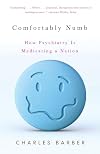
This book basically has two parts. The first explains how the US has become a nation that accounts for 66% of the anti-depressnat prescriptions. The drug companies have "invented' their market via advertising and are now working on the rest of the world. The other half talks about alternatives to medication including cognitive behavior therapy and how well that works.
Lists
Awards

You May Also Like
Associated Authors
Statistics
- Works
- 2
- Also by
- 1
- Members
- 144
- Popularity
- #143,280
- Rating
- 3.9
- Reviews
- 3
- ISBNs
- 57