
John Bell (6) (1940–)
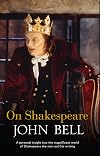
Author of On Shakespeare
For other authors named John Bell, see the disambiguation page.
About the Author
John Bell's passionate relationship with Shakespeare informs and deepens our understanding of the man and his works. On Shakespeare is vivid, accessible and fascinating-a book that confirms Shakespeare's enduring relevance to our lives.
Works by John Bell
Tagged
Common Knowledge
Members
Reviews
There's a lot to love in this book.
I'm on record as not being a big fan of John Bell's work as director or actor (admittedly only having seen his productions of the last decade, and not his lengthy career before that). "On Shakespeare" has made me adore the man.
Bell writes cannily about all of Shakespeare's plays, asking such questions as: why and how were they written and staged? What can we learn from them? What challenges face modern theatre companies in staging these works? And how can show more we as 21st-century readers and theatregoers make these plays work for us?
More importantly, he defends such seemingly simple notions as trusting the text (why does every production and work need to be "Relevant" or redundant? he asks!), treating Shakespeare and his audience with far more intelligence and respect than we often do (easily reducing them to "well, the Elizabethans weren't used to this...", etc.), and simply believing that any of these plays are still viable candidates for the theatre.
It's a wonderfully frank look at the plays, acknowledging the flaws and growth periods of the author, but with an eye on history. The fact of the matter is, most all Shakespeare plays (excepting the occasional "All's Well That Ends Well") have had periods of high acclaim, and we shouldn't simply accept the standard classics as all that the author has to offer.
Bell's look at character creation is also very interesting, and the highlights are his "trips" back to Elizabethan and Jacobean England, as he truly probes the complexities of the era, and the ways that theatre was made and preserved.
There are a few minor flaws, but they're easy to brush aside. Sometimes, Bell's knowledge of a play is so minimal that it warrants half a page -- could almost have been left out, really! And he spends perhaps a little too much time detailing some of the productions he worked on. The facts of staging and direction are fascinating, but we don't often need so many names or long lists of cities a show played in. However, since most authoritative texts on Shakespeare come from the UK or US, it's lovely to see performers and theatres from my part of the world get recognition in print, so I'll let it slide.
For the most part, I think this book is equally useful to newcomers and longtime Bardolaters. Bell effectively presents Shakespeare's canon as a living, breathing work, and - as a passionate theatre-maker and -goer myself - his greatest characteristic is his love of ALL kinds of theatre. There's something to be said for the stark minimalism of Peter Brook's "Dream", he argues, but that doesn't necessarily restrict classical productions. What works for the concept is what works.
(Occasionally, newcomers to Shakespeare may be put off by sections where Bell quotes the Bard extensively. Not being a literary scholar, Bell will sometimes let a soliloquy speak for itself, which is grand but may not entirely make sense to a neophyte.)
A joyful read. Well worth it. show less
I'm on record as not being a big fan of John Bell's work as director or actor (admittedly only having seen his productions of the last decade, and not his lengthy career before that). "On Shakespeare" has made me adore the man.
Bell writes cannily about all of Shakespeare's plays, asking such questions as: why and how were they written and staged? What can we learn from them? What challenges face modern theatre companies in staging these works? And how can show more we as 21st-century readers and theatregoers make these plays work for us?
More importantly, he defends such seemingly simple notions as trusting the text (why does every production and work need to be "Relevant" or redundant? he asks!), treating Shakespeare and his audience with far more intelligence and respect than we often do (easily reducing them to "well, the Elizabethans weren't used to this...", etc.), and simply believing that any of these plays are still viable candidates for the theatre.
It's a wonderfully frank look at the plays, acknowledging the flaws and growth periods of the author, but with an eye on history. The fact of the matter is, most all Shakespeare plays (excepting the occasional "All's Well That Ends Well") have had periods of high acclaim, and we shouldn't simply accept the standard classics as all that the author has to offer.
Bell's look at character creation is also very interesting, and the highlights are his "trips" back to Elizabethan and Jacobean England, as he truly probes the complexities of the era, and the ways that theatre was made and preserved.
There are a few minor flaws, but they're easy to brush aside. Sometimes, Bell's knowledge of a play is so minimal that it warrants half a page -- could almost have been left out, really! And he spends perhaps a little too much time detailing some of the productions he worked on. The facts of staging and direction are fascinating, but we don't often need so many names or long lists of cities a show played in. However, since most authoritative texts on Shakespeare come from the UK or US, it's lovely to see performers and theatres from my part of the world get recognition in print, so I'll let it slide.
For the most part, I think this book is equally useful to newcomers and longtime Bardolaters. Bell effectively presents Shakespeare's canon as a living, breathing work, and - as a passionate theatre-maker and -goer myself - his greatest characteristic is his love of ALL kinds of theatre. There's something to be said for the stark minimalism of Peter Brook's "Dream", he argues, but that doesn't necessarily restrict classical productions. What works for the concept is what works.
(Occasionally, newcomers to Shakespeare may be put off by sections where Bell quotes the Bard extensively. Not being a literary scholar, Bell will sometimes let a soliloquy speak for itself, which is grand but may not entirely make sense to a neophyte.)
A joyful read. Well worth it. show less
I have mixed feelings about this book - a result of Bell's decision to present background information about Shakespeare (and the Elizabethan theatre) as first person narrative and a series of mock interviews with Shakespeare's contemporaries. Bell states this stylistic choice is to "... put my research into dialogue form rather than attempt a scholarly essay" (Author's note, x). It did not have the intended effect - I didn't feel more engaged by reading the information presented in this way, show more and ended up skipping these sections. The most interesting parts of the book show how actors and directors have used their own interpretation of characters and plays in performance - and Bell's opinion of his past decisions as performer and director. show less
You May Also Like
Associated Authors
Statistics
- Works
- 3
- Members
- 52
- Popularity
- #307,429
- Rating
- 3.3
- Reviews
- 3
- ISBNs
- 144