
Michael Coffey (1) (1954–)
Author of The Irish in America
For other authors named Michael Coffey, see the disambiguation page.
About the Author
Image credit: from author's webpage
Works by Michael Coffey
Tagged
Common Knowledge
- Birthdate
- 1954
- Gender
- male
- Education
- University of Notre Dame (BA)
Leeds University (MA) - Occupations
- co-editorial director, Publishers Weekly
editor, Small Press magazine
author - Nationality
- USA
- Map Location
- USA
Members
Reviews
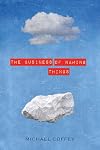
I must begin this review with an apology to Mr. Coffey. I received The Business of Naming things through Librarything's early reader program. I try to get these books read and quickly reviewed. I immediately read the first two stories. "Moon Over Quabbin" broke my heart. "The Business of Naming Things" confused me.
I knew I would have to give it a re-read. In the span of time it took to read those stories a migraine began to chisel at my brain. I put the book aside. As I lay in my darkened show more room a perfume seemed to come from somewhere. I don't know about you, but when I have a migraine, scents become overpowering. I could not conjure of its source. My poor brain turned to thoughts of glass coffined saints who were said to exude a sweet smelling oil. What I was smelling was exactly like that. Not that I have ever smelt a sweet smelling, oily saint. I just knew one would smell like that. Finally I realized the scent was coming from Mr. Coffey's book. It was overpowering. I could not sleep. I finally placed the book in a cut glass bowl in the hall, took some Tylenol and fell into a tortured sleep. This is why I didn't get right on with reading Coffey's stunning short story collection. The following night, I asked my husband to go to our library and bring me the first book he touched. I was going for serendipity here. It so rarely works. He brought me Barth's Sabbatical. I was horrified. In high school I was infatuated with Barth. By my mid-twenties, I had sent him and his metafiction pranks packing. He had to be, preciously spouted, the most onanistic writer alive. Mr. Coffey, my husband's bring Barth to me waylaid my reading of "The Business" further. I fell in love with Barth again. From time to time I did pick up "The Business" and give it a whiff to see if it was readable yet. As I was thinking of Barth and his literary jerking off I realized that he was an amateur compared to writers I had read since I had thrown Jack over. Of course the king of the literary jerk off was Brodkey. And here is were the review begins in earnest.
As I had so recently been thinking of Brodkey's royal status, I was shocked to find that the first story I read in Mr. Coffey's collection was about a writer (a seemingly veiled self-portrait of the story's author - Barthian!)
interviewing Brodkey. You will forgive me if I say I felt as if I had slipped into a Paul Auster novel. And, imagine that chill I had when a character in a later story uses just that line. Then later Mr. Coffey pulls in Ibsen's twins in love with the same man. Back to Sabbatical again. There are times when it seems everything is blithely running parallel while intersecting with great rattling thuds at the same time.
None of this says what I felt about the stories herein. Perhaps this prattle is just to defer doing so. I found each of these stories devastating. I read an article about J. F. Powers where Powers is likened to marriage of Chekov and Kellior. I think the same could be said of Coffey, though I would be more inclined to substitute Cheever for Kellior. Coffey has the pure American sensibilities of Cheever blended with Chekov's perfect evocation of the small tragedies The tragic denouement of "The Inn of Nations" comes as silently as the heartbreaking end of Chekov's "Sleepy." It freezes in the air, then melts to nothing. It's over. It's all over.
One can spend a lifetime reading and met only a few of those crystalline moments.
It is difficult for me to review a collection. I can treat the commonalities of each - fathers and sons, disenchantment, identify. These themes run through each. Yet doing so reduces each story to a formula. It does not serve the individual stories well any more than it serves people well to find familial links. They all have Grandma's eyes and Uncle El's nose, but only Clarence has Hector's thin lips. You see what I mean.
The stories are told with sad lyricism familiar to readers of Walker Percy or Peter Taylor. None of them are plot driven, and why should they be. It isn't as though life has a plot. Story is about identity At least the best stories are. What drives the minister to wear the black veil? Why do the people react as they do? What drives Father Paul? What confines, defines, ensnares him? How could Father Amaro do what he did? A Priest? Like Hawthorne, Eça and Chekhov, Coffey's stories are given over to the pulling back skin layer by skin layer to get the the heart of the characters. In some cases, the stories do not end. I have no idea where "I Thought You Were Dale" was going to go when it trickled to its end. But, that was never the point. Hell, I don't know where my own story is going tomorrow. Neither do you. It is this that gives Coffey's stories their beauty and makes them utterly devastating. I will be back.
Odd side note, Bellevue Press often send an additional book along with their ARCs. Despite being traveling companions, the book that came along with "The Business of Naming Things" smelt only of paper and ink. show less
I knew I would have to give it a re-read. In the span of time it took to read those stories a migraine began to chisel at my brain. I put the book aside. As I lay in my darkened show more room a perfume seemed to come from somewhere. I don't know about you, but when I have a migraine, scents become overpowering. I could not conjure of its source. My poor brain turned to thoughts of glass coffined saints who were said to exude a sweet smelling oil. What I was smelling was exactly like that. Not that I have ever smelt a sweet smelling, oily saint. I just knew one would smell like that. Finally I realized the scent was coming from Mr. Coffey's book. It was overpowering. I could not sleep. I finally placed the book in a cut glass bowl in the hall, took some Tylenol and fell into a tortured sleep. This is why I didn't get right on with reading Coffey's stunning short story collection. The following night, I asked my husband to go to our library and bring me the first book he touched. I was going for serendipity here. It so rarely works. He brought me Barth's Sabbatical. I was horrified. In high school I was infatuated with Barth. By my mid-twenties, I had sent him and his metafiction pranks packing. He had to be, preciously spouted, the most onanistic writer alive. Mr. Coffey, my husband's bring Barth to me waylaid my reading of "The Business" further. I fell in love with Barth again. From time to time I did pick up "The Business" and give it a whiff to see if it was readable yet. As I was thinking of Barth and his literary jerking off I realized that he was an amateur compared to writers I had read since I had thrown Jack over. Of course the king of the literary jerk off was Brodkey. And here is were the review begins in earnest.
As I had so recently been thinking of Brodkey's royal status, I was shocked to find that the first story I read in Mr. Coffey's collection was about a writer (a seemingly veiled self-portrait of the story's author - Barthian!)
interviewing Brodkey. You will forgive me if I say I felt as if I had slipped into a Paul Auster novel. And, imagine that chill I had when a character in a later story uses just that line. Then later Mr. Coffey pulls in Ibsen's twins in love with the same man. Back to Sabbatical again. There are times when it seems everything is blithely running parallel while intersecting with great rattling thuds at the same time.
None of this says what I felt about the stories herein. Perhaps this prattle is just to defer doing so. I found each of these stories devastating. I read an article about J. F. Powers where Powers is likened to marriage of Chekov and Kellior. I think the same could be said of Coffey, though I would be more inclined to substitute Cheever for Kellior. Coffey has the pure American sensibilities of Cheever blended with Chekov's perfect evocation of the small tragedies The tragic denouement of "The Inn of Nations" comes as silently as the heartbreaking end of Chekov's "Sleepy." It freezes in the air, then melts to nothing. It's over. It's all over.
One can spend a lifetime reading and met only a few of those crystalline moments.
It is difficult for me to review a collection. I can treat the commonalities of each - fathers and sons, disenchantment, identify. These themes run through each. Yet doing so reduces each story to a formula. It does not serve the individual stories well any more than it serves people well to find familial links. They all have Grandma's eyes and Uncle El's nose, but only Clarence has Hector's thin lips. You see what I mean.
The stories are told with sad lyricism familiar to readers of Walker Percy or Peter Taylor. None of them are plot driven, and why should they be. It isn't as though life has a plot. Story is about identity At least the best stories are. What drives the minister to wear the black veil? Why do the people react as they do? What drives Father Paul? What confines, defines, ensnares him? How could Father Amaro do what he did? A Priest? Like Hawthorne, Eça and Chekhov, Coffey's stories are given over to the pulling back skin layer by skin layer to get the the heart of the characters. In some cases, the stories do not end. I have no idea where "I Thought You Were Dale" was going to go when it trickled to its end. But, that was never the point. Hell, I don't know where my own story is going tomorrow. Neither do you. It is this that gives Coffey's stories their beauty and makes them utterly devastating. I will be back.
Odd side note, Bellevue Press often send an additional book along with their ARCs. Despite being traveling companions, the book that came along with "The Business of Naming Things" smelt only of paper and ink. show less
 This review was written for LibraryThing Early Reviewers.
Oh my. I must have picked up this book from a now-defunct swap bookcase in my apartment building, because it is an uncorrected proof from January 2015. In a series of short and not-so-short stories, Coffey presents a nuanced array of characters struggling with belonging, longing, loss, and family, with adoption, ethnicity and alcohol. In the title story, a man travels upstate to try to dissuade the board of a condominium community from changing the name he gave it to something they would show more prefer, and encounters his son, whom he also named. In another, a solitary boy meets new neighbors and befriends their sons before they disappear, coincidentally meeting the younger son decades later. A writer decides to drive from Brooklyn to a cabin in northern New York, drinking as he goes, thinking of himself as son and father. And in a very Irish story, 'Finishing Ulysses', Coffey writes a very Joycean tribute of sorts.
After the first few stories, I couldn't stop reading. show less
After the first few stories, I couldn't stop reading. show less
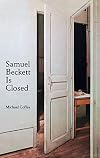
Samuel Beckett came of age when artists were moving fast and breaking things. In painting, sculpture, music and literature, it was fashionable to go abstract. And Beckett, working with Joyce, leapt to the forefront in his multifaceted use of French and then English. Samuel Beckett Is Closed tries hard to do in structure what Beckett did in language. The title refers to Beckett’s later writings, all interiors, dimness and darkness, inward looking and often grim. He was full of negations, show more contradictions and reversals. And everything he wrote could be both interpreted and spoken in different ways, for completely different effects. He employed the vagueness of language like Shakespeare manipulated emotions. Michael Coffey emphasizes Beckett’s message that we must go on, even when we can’t.
Samuel Beckett is Closed is a braid of several streams. They are distinguished by different fonts, weights and spacing on the same page. Following them all is not difficult, just puzzling, like much of Beckett. It’s all very stagey. You can easily picture three or four actors standing on an empty stage, reciting the words of their separate universes. They eventually morph into straight criticism and appreciation by Coffey, and then suddenly become a short play, showing Beckett’s influence. This is about as far from standard criticism as you can get. I think Beckett would approve.
As Coffey says early on: “When you read the whole of Beckett, even if you think you are caught going nowhere, you are going somewhere.”
David Wineberg show less
Samuel Beckett is Closed is a braid of several streams. They are distinguished by different fonts, weights and spacing on the same page. Following them all is not difficult, just puzzling, like much of Beckett. It’s all very stagey. You can easily picture three or four actors standing on an empty stage, reciting the words of their separate universes. They eventually morph into straight criticism and appreciation by Coffey, and then suddenly become a short play, showing Beckett’s influence. This is about as far from standard criticism as you can get. I think Beckett would approve.
As Coffey says early on: “When you read the whole of Beckett, even if you think you are caught going nowhere, you are going somewhere.”
David Wineberg show less
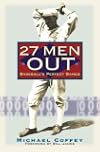
Spring training games started yesterday so it's time to start dreaming of spring, sunshine, and fresh-mowed grass. While I'm not one of those devotees that flock to Arizona or Florida for spring training every February and March, I am enough of a fan to enjoy a good baseball story, book or movie when one shows up. My latest find was a collection of perfect games by Michael Coffey called 27 Men Out.
Perfect games are rare in baseball. Far less common than even no-hitters. A pitcher can walk show more someone in a no-hitter. He can even lose. (Hey, it's happened!) But a perfect game is, by definition, a complete nine inning game in which a pitcher doesn't let a single runner on base. Twenty-seven batters up; twenty-seven down. Hence, the title. There have only been fifteen perfect games under modern rules (since 1901). That's about one every 10,000 games. That's rare.
Coffey recounts each game vividly. It almost feels like you're reading a sportswriter recap the contests in the morning paper. And he adds background to the players you don't know. I knew nothing about Addie Joss, who threw the second perfect game, but Coffey made me a fan. Sandy Koufax was before my time, too, but now I understand what the fuss was about a generation before me. The author also covers what baseball experienced between the perfect games. Each chapter starts that way. Sometimes its a bother; other times its a treat. Roberto Clemente was never involved in a perfect game, but he changed baseball and had an enormous impact on Latin America. I really enjoyed reading about Clemente in the lead-up to Dennis Martinez's perfect game.
Knowing the outcome of each contest is a bit of a drawback. You don't have the same suspense as someone who watched or listened to the game when it happened. If it's in the book, the pitcher won. No one reached base. Duh! But each game was different in some way. It might have been a great pitcher throwing all the right stuff or a lousy pitcher who kind of got lucky -- in a huge way. Coffey's descriptions keep it lively, and it's enjoyable to read how the players in each chapter go through the same cycle: 1) the enjoyment of a good outing, 2) the realization that it's a really good game, and finally 3) the awe of knowing that one specific person on one specific day achieved perfection.
One such realization came after Cy Young's perfecto -- the first of the era -- when his first baseman remarked to Young that "nobody came down to see me today." It reminded me of the scene in the Kevin Costner film For Love of the Game when Billy Chapel (Costner's character) stared at an eighth inning scoreboard full of zeroes and quietly asked his catcher: "Been anyone on base?"
As the chapters in the book rolled toward the modern era and each game played out, I found myself knowing more of the names and more of the stories from my childhood. Coffey even mentioned a memorable but non-perfect game that I watched from center field, first row (the best game ever: Game 5 of the 1995 division series in Seattle). He also mentioned poor Alfredo Griffin. Perfect games are extremely rare, but Griffin ended up in not one, not two, but THREE perfect games; on the losing team each time. :(
On May 18, 2004, while Coffey's book was going to press, 40-year-old Randy Johnson threw baseball's fifteenth perfect game for Arizona. His game wasn't included in my copy of the book, but a newer edition of the book includes him.
Find more of my reviews at Mostly NF show less
Perfect games are rare in baseball. Far less common than even no-hitters. A pitcher can walk show more someone in a no-hitter. He can even lose. (Hey, it's happened!) But a perfect game is, by definition, a complete nine inning game in which a pitcher doesn't let a single runner on base. Twenty-seven batters up; twenty-seven down. Hence, the title. There have only been fifteen perfect games under modern rules (since 1901). That's about one every 10,000 games. That's rare.
Coffey recounts each game vividly. It almost feels like you're reading a sportswriter recap the contests in the morning paper. And he adds background to the players you don't know. I knew nothing about Addie Joss, who threw the second perfect game, but Coffey made me a fan. Sandy Koufax was before my time, too, but now I understand what the fuss was about a generation before me. The author also covers what baseball experienced between the perfect games. Each chapter starts that way. Sometimes its a bother; other times its a treat. Roberto Clemente was never involved in a perfect game, but he changed baseball and had an enormous impact on Latin America. I really enjoyed reading about Clemente in the lead-up to Dennis Martinez's perfect game.
Knowing the outcome of each contest is a bit of a drawback. You don't have the same suspense as someone who watched or listened to the game when it happened. If it's in the book, the pitcher won. No one reached base. Duh! But each game was different in some way. It might have been a great pitcher throwing all the right stuff or a lousy pitcher who kind of got lucky -- in a huge way. Coffey's descriptions keep it lively, and it's enjoyable to read how the players in each chapter go through the same cycle: 1) the enjoyment of a good outing, 2) the realization that it's a really good game, and finally 3) the awe of knowing that one specific person on one specific day achieved perfection.
One such realization came after Cy Young's perfecto -- the first of the era -- when his first baseman remarked to Young that "nobody came down to see me today." It reminded me of the scene in the Kevin Costner film For Love of the Game when Billy Chapel (Costner's character) stared at an eighth inning scoreboard full of zeroes and quietly asked his catcher: "Been anyone on base?"
As the chapters in the book rolled toward the modern era and each game played out, I found myself knowing more of the names and more of the stories from my childhood. Coffey even mentioned a memorable but non-perfect game that I watched from center field, first row (the best game ever: Game 5 of the 1995 division series in Seattle). He also mentioned poor Alfredo Griffin. Perfect games are extremely rare, but Griffin ended up in not one, not two, but THREE perfect games; on the losing team each time. :(
On May 18, 2004, while Coffey's book was going to press, 40-year-old Randy Johnson threw baseball's fifteenth perfect game for Arizona. His game wasn't included in my copy of the book, but a newer edition of the book includes him.
Find more of my reviews at Mostly NF show less
Lists
You May Also Like


Associated Authors
Statistics
- Works
- 10
- Members
- 451
- Popularity
- #54,391
- Rating
- 3.2
- Reviews
- 22
- ISBNs
- 43
- Languages
- 2
