
Michael Dobbs (1) (1948–)
Author of House of Cards
For other authors named Michael Dobbs, see the disambiguation page.
About the Author
Born in 1948 Michael Dobb was Chief of Staff and later Deputy Chairman of the Conservative Party. He has a doctorate in nuclear defense studies. Dobbs has also been Deputy Chairman of Saatchi & Saatchi, he presented the BBC TV current affairs program Despatch Box and was a columnist for The Mail on show more Sunday. Dobbs recently penned the hugely acclaimed theatre play, 'The Turning Point'. He is also the author of the Harry Jones Thrillers, Churchill Novels, and the Parliamentary Novels Series. The immensely popular Netflix series House of Cards is based on book 1 of the Parliamentary Novels by the same name. Michael became Lord Dobbs of Wylye in December 2010 after a long career in and around politics. (Bowker Author Biography) show less
Series
Works by Michael Dobbs
Associated Works
Tagged
Common Knowledge
- Legal name
- Dobbs of Wylye, Michael John, Baron
- Birthdate
- 1948-11-14
- Gender
- male
- Education
- Tufts University (Fletcher School of Law and Diplomacy ∙ 1975 ∙ MA ∙ MALD ∙ PhD ∙ Nuclear Defence Studies)
University of Oxford (Christ Church ∙ 1971)
Hertford Grammar School - Occupations
- Deputy Chairman of the Conservative Party (1994-1995, John Major PM)
Chief of Staff at Conservative Party (1986-1987, Margaret Thatcher PM)
Saatchi & Saatchi (1983-1991)
Boston Globe (editorial assistant and political feature writer, 1971-1975)
Despatch Box (BBC TV current affairs programme)
The Mail on Sunday (columnist) - Organizations
- Saatchi & Saatchi
The Boston Globe - Awards and honors
- Life peerage (2010)
- Relationships
- Dobbs, Michael (MD-2 is distant cousin)
Dobbs, Eric (father)
Dobbs, Eileen (mother) - Short biography
- Michael Dobbs, Baron Dobbs (born 14 November 1948) is a British Conservative politician and best-selling author.
- Nationality
- UK
- Birthplace
- Cheshunt, Hertfordshire, England, UK
- Places of residence
- London, England, UK
Boston, Massachusetts, USA - Associated Place (for map)
- England, UK
Members
Reviews

Tom Goodfellowe emerges throughout this novel as that rare thing in the public perception, an MP who is driven by his conscience.
We first meet him cycling to The House where he has been summoned on a three line whip to support the Government in a series of parliamentary votes. The majority is slim, and members have been either cajoled or threatened to ensure they turn out. Goodfellowe is now a backbencher but not long before he had been a Minister, and had been tipped for a golden future. show more Following a combination of personal tragedy and crass misjudgement he had lost his way, his ministerial post and his driving licence.
For various reasons Goodfellowe finds himself missing several of the votes that evening, being summoned on a mission of mercy to help a young Chinese woman, one of his neighbours, who has been arrested as a consequence of a rather farcical series of events. The events following on from Goodfellowe's intervention will prove to be cataclysmic, and Goodfellowe will find his path crossing that of Frederick Corsa, press magnate and would-be power broker.
Dobbs knows his parliamentary turf very well, having been an adviser to both Margaret Thatcher and John Major, and he portrays the Machiavellian dealings of party whips with the same verve that he brought to his famous 'House of Cards' novels. Although this both was written almost twenty years ago, it has a searing topicality, dealing with issues of press intrusion in private life, MPs' expenses and outside interests and over-zealous lobbying.
Very entertaining! show less
We first meet him cycling to The House where he has been summoned on a three line whip to support the Government in a series of parliamentary votes. The majority is slim, and members have been either cajoled or threatened to ensure they turn out. Goodfellowe is now a backbencher but not long before he had been a Minister, and had been tipped for a golden future. show more Following a combination of personal tragedy and crass misjudgement he had lost his way, his ministerial post and his driving licence.
For various reasons Goodfellowe finds himself missing several of the votes that evening, being summoned on a mission of mercy to help a young Chinese woman, one of his neighbours, who has been arrested as a consequence of a rather farcical series of events. The events following on from Goodfellowe's intervention will prove to be cataclysmic, and Goodfellowe will find his path crossing that of Frederick Corsa, press magnate and would-be power broker.
Dobbs knows his parliamentary turf very well, having been an adviser to both Margaret Thatcher and John Major, and he portrays the Machiavellian dealings of party whips with the same verve that he brought to his famous 'House of Cards' novels. Although this both was written almost twenty years ago, it has a searing topicality, dealing with issues of press intrusion in private life, MPs' expenses and outside interests and over-zealous lobbying.
Very entertaining! show less
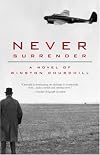
This is the second book of Michael Dobbs' tetralogy based on Winston Churchill and his leadership in the period beginning with the 1938 Munich agreement and culminating with the eventual Allied victory over Nazi Germany. Never Surrender focuses on the brief period of time from Chruchill's accession to the position of Prime Minister through the evacuation of British and French troops from Dunkirk in early June 1940. In addition to the historical figures, Dobbs, tells his story through the show more words and deeds of fictitious characters, in particular a German emigre named Ruth Mueller and a father and son, Henry Chichester, an Anglican vicar based in Dover who is estranged from his son Donald, and who is undergoing a crisis of faith. Don, in turn, is a conscientious objector serving in an ambulance corps shipped off to Belgium. We follow Don's "progress" from advancing with the British Expeditionary Force through its retreat back into France ending up on the beaches of Dunkirk.
Ruth Mueller plays an unlikely role as a sometime volunteer research assistant to Churchill who is caught up in a round-up of German emigres of all political stripes and interned on the Isle of Man. In between she is Churchill's conscience, coach, and critic who taunts Churchill with unflattering comparisons with Hitler yet bolsters his resolve in the many moments of despair when everything goes wrong and Churchill's resolve to continue the fight to the end regardless of consequences is severely tested.
Along the way we are treated to an ongoing dialogue between Churchill and his late father, Randolph, whom the son could never please, wherein Churchill asks time and again for advice from Randolph's portrait on what he should do. I thought the father/son conflict between the Churchills a little over the top, but it does provide a neat parallel with the conflict between the vicar and his C.O. son.
Among the more prominent usual suspects are Joseph Kennedy, the defeatist American ambassador, Edward Halifax, the Foreign Minister, who pushes hard for entering into a negotiated peace via the mediation of Mussolini; Rab Butler, Chips Channon, Jock Colville all acolytes of Neville Chamberlain, who believe that Churchill 's ego and romantic world view is going to lead the country to its total ruin, and who believe that the collapse of the Belgian and French armies combined with the disastrous evacuation of the BEF will lead to Churchill's replacement by Halifax and a negotiated peace that will preserve Britain's independence and some measure of empire in return for recognizing Hitler's hegemony over Europe.
Dobbs illustrates the moral corruption of the privileged classes by contrasting the hardships of the common people and the suffering of the troops with the sumptuous meals enjoyed by the elites at their exclusive clubs (and consumed by Churchill in his office and at his home) and the efforts by the elites to spend money on luxury goods based on the assumption that the British pound's value would collapse along with the collapse of Britain's military.
Dobbs' narrative benefits from giving the appeasers their own voice and their best arguments which Churchill has to counter and not always successfully. We have the advantage of hindsight, but who can say for sure that in that time and under those circumstances we would not have subscribed to the thesis of Halifax and supported a negotiated peace in the name of survival.
Dobbs is a terrific storyteller who has written a gripping page turner in Never Surrender that I highly recommend. show less
Ruth Mueller plays an unlikely role as a sometime volunteer research assistant to Churchill who is caught up in a round-up of German emigres of all political stripes and interned on the Isle of Man. In between she is Churchill's conscience, coach, and critic who taunts Churchill with unflattering comparisons with Hitler yet bolsters his resolve in the many moments of despair when everything goes wrong and Churchill's resolve to continue the fight to the end regardless of consequences is severely tested.
Along the way we are treated to an ongoing dialogue between Churchill and his late father, Randolph, whom the son could never please, wherein Churchill asks time and again for advice from Randolph's portrait on what he should do. I thought the father/son conflict between the Churchills a little over the top, but it does provide a neat parallel with the conflict between the vicar and his C.O. son.
Among the more prominent usual suspects are Joseph Kennedy, the defeatist American ambassador, Edward Halifax, the Foreign Minister, who pushes hard for entering into a negotiated peace via the mediation of Mussolini; Rab Butler, Chips Channon, Jock Colville all acolytes of Neville Chamberlain, who believe that Churchill 's ego and romantic world view is going to lead the country to its total ruin, and who believe that the collapse of the Belgian and French armies combined with the disastrous evacuation of the BEF will lead to Churchill's replacement by Halifax and a negotiated peace that will preserve Britain's independence and some measure of empire in return for recognizing Hitler's hegemony over Europe.
Dobbs illustrates the moral corruption of the privileged classes by contrasting the hardships of the common people and the suffering of the troops with the sumptuous meals enjoyed by the elites at their exclusive clubs (and consumed by Churchill in his office and at his home) and the efforts by the elites to spend money on luxury goods based on the assumption that the British pound's value would collapse along with the collapse of Britain's military.
Dobbs' narrative benefits from giving the appeasers their own voice and their best arguments which Churchill has to counter and not always successfully. We have the advantage of hindsight, but who can say for sure that in that time and under those circumstances we would not have subscribed to the thesis of Halifax and supported a negotiated peace in the name of survival.
Dobbs is a terrific storyteller who has written a gripping page turner in Never Surrender that I highly recommend. show less
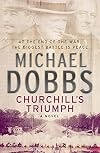
The fourth and final part of the Churchill series is also the best in my opinion. There are two story lines (as usual with Dobbs). One sees Churchill on a pleasure yacht in 1963 in the Aegean sea sometime at the end of his life, interacting with a disappointed Polish refugee, who acted as a plumber during the February 1945 Yalta conference. The latter forms the main storyline, where three old men, each faltering and failing in his own way, set out to draft a new post-war world order.
Stalin show more is most forceful as a negotiator, and not just because his Red Army is winning the war for the Allies. It is his rough character, forcefully demanding a piece of the pie, expanding his Empire. Roosevelt is ailing and wanting only one thing: a United Nations that will rule out war in future. But first he wants the Red Army to join the war against the Japanese. Calculating Stalin knows this and exacts a heavy price. Churchill is eager to contain the red menace and secure a fair deal for Poland, whose very fate triggered the war in the first place. He also wants a strong post-war Germany as a bulwark against Soviet expansion to the West.
So what comprises the triumph referred to in the title? Well, a bit artificial really – Churchill insists on free and fair elections for Poland, a thing he knows Stalin will never allow for. But because Stalin will botch this promise, Churchill hopes to open the eyes of the world and set the stage for the next main conflict that will inevitably emerge. So it is a moral victory he seeks, not an actual one. Poland will be sacrificed again, to create a popular will to correct this mistake. And that is where Dobbs uses his Polish victim – to probe Churchill again and again on the futileness of words and agreements. show less
Stalin show more is most forceful as a negotiator, and not just because his Red Army is winning the war for the Allies. It is his rough character, forcefully demanding a piece of the pie, expanding his Empire. Roosevelt is ailing and wanting only one thing: a United Nations that will rule out war in future. But first he wants the Red Army to join the war against the Japanese. Calculating Stalin knows this and exacts a heavy price. Churchill is eager to contain the red menace and secure a fair deal for Poland, whose very fate triggered the war in the first place. He also wants a strong post-war Germany as a bulwark against Soviet expansion to the West.
So what comprises the triumph referred to in the title? Well, a bit artificial really – Churchill insists on free and fair elections for Poland, a thing he knows Stalin will never allow for. But because Stalin will botch this promise, Churchill hopes to open the eyes of the world and set the stage for the next main conflict that will inevitably emerge. So it is a moral victory he seeks, not an actual one. Poland will be sacrificed again, to create a popular will to correct this mistake. And that is where Dobbs uses his Polish victim – to probe Churchill again and again on the futileness of words and agreements. show less
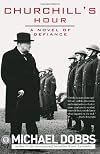
The third book in Michael Dobbs' series on Winston Churchill and World War II, "Churchill's Hour" spans the period from Christmas, 1940, six months after the evacuation from Dunkirk to the Japanese attack on Pearl Harbor a year later. In the interim Churchill has to hold his country together during the German blitz that destroyed significant sections of London and other major British cities causing thousands of civilian deaths. Knowing that Britain cannot survive on its own Churchill show more determines to do whatever he can to bring isolationist America into the war against Hitler. Franklin Roosevelt is naturally the object of Churchill's courtship, but Roosevelt is not inclined to enter the war given the overwhelming popular opposition to getting the U.S. entangled in another European quarrel. Moreover, Roosevelt has no particular enthusiasm for shedding American blood to preserve the British Empire and he disliked Churchill personally dating from an encounter two decades earlier.
In June 1941 Hitler invades Russia and Churchill has a de facto, albeit unlikely ally in Stalin. But Stalin wants Britain to provide planes, tanks and other armaments that the British are in no position to offer. In fact, Britain has just negotiated the Lend-Lease agreement designed to replenish Britain's war making inventory with weapons made in supposedly neutral America. But despite the moral argument that defeating Hitler is necessary for the preservation of democracy and civilization, despite the argument that should the British and the Russians be defeated Hitler will inevitably wage war against the United States, and despite the many provocations in the form of German sinking of American naval and merchant marine ships, Roosevelt will not go to Congress and request a declaration of war.
Finally, the Japanese attack on Pearl Harbor brings America into the war, but only against Japan. Britain declares war on Japan, but will America declare war on Germany. In Dobbs' story Churchill engages in some serious realpolitik that maneuvers America into the war first against Japan and then against Germany. Churchill gets wind of a huge Japanese task force that his intelligence and military advisers believe is headed south to Singapore, or Malaya or perhaps even Australia. But Churchill guesses that Pearl Harbor is the target, and he has to decide whether or not to pass a warning to the Americans. He believes that any warning from him will be discounted given his objective of getting the U.S. into the war. He also knows that if the Americans do heed his warning that they will raise hell with the Japanese with the result that the task force will be recalled once the advantage of surprise is lost. (That said, given the preparations Dobbs describes that the Japanese made to preserve the absolute secrecy of the mission, it's not clear how the task force could have been recalled.) So Churchill decides to hold his counsel. Churchill then crafts a disinformation plan to get the Americans into the war against Germany by provoking Hitler to preempt Roosevelt by declaring war against America.
As part of his campaign to get America into the fight, Churchill cultivates a close relationship with the new American ambassador, John Winant, and Averill Harriman, who has been assigned by Roosevelt to direct the entire Lend-Lease operation. It transpires that Winant and Churchill's married daughter Sarah enter into an affair and Harriman and Churchill's daughter-in-law Pamela also become romantically involved. Churchill eventually gets wise and as a measure of his desperation tries to leverage Pamela's relationship with Harriman to advance his own "seduction" of the Americans.
If I haven't given away too much of the plot, I recommend unreservedly Dobbs' account of the fateful year of 1941. He is a terrific storyteller and does not shrink from portraying his hero with all of his foibles, self-doubts and morally questionable actions based on raisons d'état.
As a postscript I should like to note that this review is being written on June 22, 2022, the 81st anniversary of Hitler's ill fated decision to launch Operation Barbarossa against his partner in crime Joe Stalin. show less
In June 1941 Hitler invades Russia and Churchill has a de facto, albeit unlikely ally in Stalin. But Stalin wants Britain to provide planes, tanks and other armaments that the British are in no position to offer. In fact, Britain has just negotiated the Lend-Lease agreement designed to replenish Britain's war making inventory with weapons made in supposedly neutral America. But despite the moral argument that defeating Hitler is necessary for the preservation of democracy and civilization, despite the argument that should the British and the Russians be defeated Hitler will inevitably wage war against the United States, and despite the many provocations in the form of German sinking of American naval and merchant marine ships, Roosevelt will not go to Congress and request a declaration of war.
Finally, the Japanese attack on Pearl Harbor brings America into the war, but only against Japan. Britain declares war on Japan, but will America declare war on Germany. In Dobbs' story Churchill engages in some serious realpolitik that maneuvers America into the war first against Japan and then against Germany. Churchill gets wind of a huge Japanese task force that his intelligence and military advisers believe is headed south to Singapore, or Malaya or perhaps even Australia. But Churchill guesses that Pearl Harbor is the target, and he has to decide whether or not to pass a warning to the Americans. He believes that any warning from him will be discounted given his objective of getting the U.S. into the war. He also knows that if the Americans do heed his warning that they will raise hell with the Japanese with the result that the task force will be recalled once the advantage of surprise is lost. (That said, given the preparations Dobbs describes that the Japanese made to preserve the absolute secrecy of the mission, it's not clear how the task force could have been recalled.) So Churchill decides to hold his counsel. Churchill then crafts a disinformation plan to get the Americans into the war against Germany by provoking Hitler to preempt Roosevelt by declaring war against America.
As part of his campaign to get America into the fight, Churchill cultivates a close relationship with the new American ambassador, John Winant, and Averill Harriman, who has been assigned by Roosevelt to direct the entire Lend-Lease operation. It transpires that Winant and Churchill's married daughter Sarah enter into an affair and Harriman and Churchill's daughter-in-law Pamela also become romantically involved. Churchill eventually gets wise and as a measure of his desperation tries to leverage Pamela's relationship with Harriman to advance his own "seduction" of the Americans.
If I haven't given away too much of the plot, I recommend unreservedly Dobbs' account of the fateful year of 1941. He is a terrific storyteller and does not shrink from portraying his hero with all of his foibles, self-doubts and morally questionable actions based on raisons d'état.
As a postscript I should like to note that this review is being written on June 22, 2022, the 81st anniversary of Hitler's ill fated decision to launch Operation Barbarossa against his partner in crime Joe Stalin. show less
Lists
Awards

You May Also Like


Associated Authors
Statistics
- Works
- 26
- Also by
- 4
- Members
- 3,627
- Popularity
- #6,980
- Rating
- 3.7
- Reviews
- 77
- ISBNs
- 351
- Languages
- 18
- Favorited
- 2