
Robert Harris (1) (1957–)
Author of Pompeii
For other authors named Robert Harris, see the disambiguation page.
About the Author
Author Robert Harris was born in Nottingham, England in 1957. He attended King Edward VII College and Selwyn College. He has worked as a BBC journalist, the Political Editor of the Observer, and a columnist for The Sunday Times and Daily Telegraph. He was named Columnist of the Year by the British show more Press in 2003. He has written both fiction and nonfiction books and currently lives in Berkshire, England. His works of fiction include; An Officer and a Spy, The Fear Index, Pompeii, Enigma, Fatherland, Dictator, and Conclave. (Bowker Author Biography) show less
Series
Works by Robert Harris
A Higher Form of Killing: The Secret History of Chemical and Biological Warfare (1982) 209 copies, 4 reviews
livro fantasma o amor e o dr devon a aguia dupla por amor a julie o robert harris alan tit (2008) 4 copies
Togaed People 3 copies
Pompeii | Archangel | Fatherland 2 copies
PMQ [short story] 1 copy
Reader's Digest 4 in 1 -Enigma etc. (Need Other Titles) — Author — 1 copy
Associated Works
Reader's Digest Select Editions: The Ghost • Sacrifice • The Man in the Picture • Power Play (2008) — Contributor — 15 copies, 1 review
Reader's Digest Condensed Books: Driving Force • The Venetian Mask • Fatherland • The Courtship of Peggy McCoy (1994) — Author — 3 copies
Reader's Digest Select Editions: Fatherland / Jenny's Mountain / Diamond Solitaire / To Fly a Kite — Contributor — 3 copies
Reader's Digest Auswahlbücher, Bestseller-Sonderband - Pompeji / Und morgen in das kühle Grab / Ein ganzes Leben lang (2006) 3 copies
Livros Condensados: O Advogado | O Falcão da Neve | Arcangel | O Tesouro de Stonewall Jackson (1999) — Author — 3 copies
Livros Condensados: Pompeia | Marley E Eu | Alameda Dos Namorados | Alta Segurança (2007) — Author — 2 copies
Het Beste Boek 232: Het Madagascar debacle / Tijdelijk toerekeningsvatbaar / Pompeiï / Zomerlicht — Author — 2 copies, 1 review
Reader's Digest Condensed Books: Exclusion Zone / The Loop / The Coffin Dancer / Archangel (1999) 2 copies
Reader's Digest Auswahlbücher 259 - Die Liste. Pompeji. Ein allzu schönes Mädchen. Eine Rose für die Ewigkeit (2005) 1 copy
Reader's Digest Select Editions: You Belong to Me • Archangel • Cloud Nine • “N” is for Noose (1999) 1 copy
Tagged
Common Knowledge
- Canonical name
- Harris, Robert
- Legal name
- Harris, Robert Dennis
- Other names
- 로버트 해리스
- Birthdate
- 1957-03-07
- Gender
- male
- Education
- Selwyn College, University of Cambridge (BA|1978)
Belvoir High School, Bottesford
King Edward VII School, Melton Mowbray - Occupations
- journalist
novelist
columnist - Organizations
- British Broadcasting Corporation
The Sunday Times
The Daily Telegraph - Awards and honors
- Walter Scott Prize (2014)
Lumières Awards (2011)
César Award (2011, 2020)
European Film Award (2010)
British Press Award (2003) - Relationships
- Hornby, Gill (wife)
Hornby, Nick (brother-in-law)
Blair, Tony (personal friend) - Nationality
- UK
- Birthplace
- Nottingham, Nottinghamshire, England, UK
- Places of residence
- Hungerford, Berkshire, England, UK
- Map Location
- England, UK
Members
Discussions
Ghost in Crime, Thriller & Mystery (July 2011)
Reviews

After Charles II became King of England in 1660, the government launched a manhunt to track down all of the regicides: the judges and other individuals responsible for 1649 trial and execution of King Charles I. Some were easier to find than others; the most elusive were Edward (Ned) Whalley and his son-in-law, William Goffe, who fled to New England. In Act of Oblivion, Robert Harris recreated the manhunt as a work of fiction. Richard Nayler, one of the only fictional characters in the show more novel, led the pursuit. As Harris writes in his Author’s Note, “I suspect there must have been such a person – you cannot sustain a manhunt without a man hunter – but whoever he was, his identity is lost to history.”
Nayler is not only doing the government’s bidding but is out to settle some scores, especially with Whalley and Goffe, and convinces the government to fund an expedition to America. The two fugitives settle in a Puritan community and are initially accepted by the locals. They hope to invite their families to join them at a later date. But when Parliament makes it illegal to interfere with the manhunt, Whalley and Goffe are forced to go underground, sometimes literally. They move from one settlement to another to stay one step ahead of their pursuers.
There were a few points that stretched credibility, such as Nayler’s expert navigation of the New England wilderness. And the ending, while satisfying, felt “made for TV”. But it was a rollicking good way to learn about historic events that were unfamiliar to me. show less
Nayler is not only doing the government’s bidding but is out to settle some scores, especially with Whalley and Goffe, and convinces the government to fund an expedition to America. The two fugitives settle in a Puritan community and are initially accepted by the locals. They hope to invite their families to join them at a later date. But when Parliament makes it illegal to interfere with the manhunt, Whalley and Goffe are forced to go underground, sometimes literally. They move from one settlement to another to stay one step ahead of their pursuers.
There were a few points that stretched credibility, such as Nayler’s expert navigation of the New England wilderness. And the ending, while satisfying, felt “made for TV”. But it was a rollicking good way to learn about historic events that were unfamiliar to me. show less
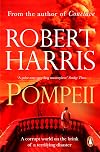
Great description and detail, a real immersion in the varied strata and characters of the gloriously purposeful Roman society. Harris recreates that advanced and connected world and the self-assured worldview of the Romans through interesting, believable portrayals. There’s tension throughout the story from the plot lines that connect those characters, but also the looming sense of what we the readers well know became of Pompeii. Regarding which, Harris draws a parallel (I only notice now, show more looking at the epigraphs) with our own world and its American pre-eminence as if this too is or was (when the book came out, 20 years ago) on the brink of collapse. show less
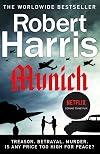
This is one of the best books I’ve read. The writing and story have to be stronger than usual when the result of a novel’s story is well known. Robert Harris exceeds in succeeding at that difficult task.
Munich is about the peace conference held in the southern German city in 1938. The price of what turned out to be a temporary peace was high. Germany, Britain and France carved up Czechoslovakia but Czechoslovakia wasn’t represented at the conference. Its delegates were locked in a show more nearby room.
Munich isn’t about the morality or otherwise of the agreement. It is the page-turning story of Hugh Legat, a low-level Foreign Office official who is a secretary of Prime Minister Neville Chamberlain, and Paul Hartmann, a Nazi official and former Oxford University friend of Legat’s. Hartmann is a member of an uncoordinated and not well organised group of resistors. Intense idealism drives Hartmann to bring an end of Hitler’s reign. His naivety ultimately endangers his life.
Harris has written a brilliant fly-on-the-wall account of the conference. The writing’s brilliance is such that I felt I was there, a few steps behind Legat and Hartmann. We get to know the men intimately. Along with the other characters, they are strong, believable and compelling.
Even if you’re not a history buff or interested in the period, this novel’s great writing, suspense and strong characters will have you turning the pages, not wanting it to end. I thought Harris’s Fatherland was a great novel; he surpasses it with Munich. show less
Munich is about the peace conference held in the southern German city in 1938. The price of what turned out to be a temporary peace was high. Germany, Britain and France carved up Czechoslovakia but Czechoslovakia wasn’t represented at the conference. Its delegates were locked in a show more nearby room.
Munich isn’t about the morality or otherwise of the agreement. It is the page-turning story of Hugh Legat, a low-level Foreign Office official who is a secretary of Prime Minister Neville Chamberlain, and Paul Hartmann, a Nazi official and former Oxford University friend of Legat’s. Hartmann is a member of an uncoordinated and not well organised group of resistors. Intense idealism drives Hartmann to bring an end of Hitler’s reign. His naivety ultimately endangers his life.
Harris has written a brilliant fly-on-the-wall account of the conference. The writing’s brilliance is such that I felt I was there, a few steps behind Legat and Hartmann. We get to know the men intimately. Along with the other characters, they are strong, believable and compelling.
Even if you’re not a history buff or interested in the period, this novel’s great writing, suspense and strong characters will have you turning the pages, not wanting it to end. I thought Harris’s Fatherland was a great novel; he surpasses it with Munich. show less
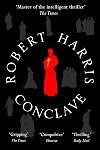
The Pope has died suddenly and as Dean of the Vatican it falls upon Cardinal Lomelli to organise the process of appointing his successor. One hundred and seventeen eligible cardinals are summoned to the Vatican to begin the secretive process of the Conclave which will appoint the new pope. Among the assembled cardinals are a number with high ambitions and dark secrets. As the Conclave is locked into the Sistine Chapel Lomelli must guide the process following the centuries old rituals and at show more the same time grapple with the modern challenges which impact on the process.
I have no idea why this book sunk it's hooks into me so deeply. I am an atheist and no great fan of any organised religion so a tale about Roman Catholic cardinals manouevring for position to become the next pope should not have any appeal. I loved Conclave though and raced through it in a matter of hours. Sometimes I find a book which grips me so much that I can't put it down and I find myself
rationing it and trying to make it last longer. This was one of them. The tale is a fairly simple story of power and aspirations to power and is littered with obscure Catholic stuff but the portrayal of the central character and his motivations was excellent. Technically a thriller, I thought I had figured out how things were going to end when I was about half way through but I was wrong. The ending was a delicious surprise that made me laugh out loud. show less
I have no idea why this book sunk it's hooks into me so deeply. I am an atheist and no great fan of any organised religion so a tale about Roman Catholic cardinals manouevring for position to become the next pope should not have any appeal. I loved Conclave though and raced through it in a matter of hours. Sometimes I find a book which grips me so much that I can't put it down and I find myself
rationing it and trying to make it last longer. This was one of them. The tale is a fairly simple story of power and aspirations to power and is littered with obscure Catholic stuff but the portrayal of the central character and his motivations was excellent. Technically a thriller, I thought I had figured out how things were going to end when I was about half way through but I was wrong. The ending was a delicious surprise that made me laugh out loud. show less
Lists
al.vick-series (1)
Films (1)
1960s (1)
Awards


You May Also Like


Associated Authors
Statistics
- Works
- 39
- Also by
- 30
- Members
- 38,045
- Popularity
- #474
- Rating
- 3.7
- Reviews
- 1,217
- ISBNs
- 1,199
- Languages
- 31
- Favorited
- 76
