
Martin Cruz Smith (1942–2025)
Author of Gorky Park
About the Author
Martin Cruz Smith is a writer of suspense novels. He was born in Reading, Pennsylvania, on November 3, 1942 but grew up in New Mexico and the Philadelphia area. Smith earned a B.A. from the University of Pennsylvania. Smith worked for local television stations, newspapers, and the Associated Press. show more His early work was published under the names Simon Quinn, Jake Logan, and Martin Smith. Smith is best known for a series of suspense/thrillers featuring Investigator Arkady Renko. The first of these books, Gorky Park, was published in 1981 and adapted as a film starring William Hurt and Lee Marvin two years later. An earlier film of his work, Nightwing, directed by Arthur Hiller, was released in 1979. Smith is a member of the Authors League of America and the Authors Guild. In 2013 his title Tatiana made The New York Times Best Seller List. The Girl from Venice also became a bestseller. (Bowker Author Biography) show less
Disambiguation Notice:
Martin Cruz Smith has written under the pseudonyms Simon Quinn, Martin Quinn, Jake Logan, and Martin Smith (his real name).
Image credit: Martin Cruz Smith in Bloomberg offices in New York, November 15, 2004
Series
Works by Martin Cruz Smith
Associated Works
Song of the Turtle: American Indian Literature 1974-1994 (1996) — Contributor — 69 copies, 2 reviews
Reader's Digest Condensed Books 1996 v05: The Zero Hour / The Judge / Rose / A Place for Kathy (1996) — Author — 33 copies
San Francisco Thrillers: True Crime and Dark Mysteries from the City by the Bay (1995) — Introduction — 33 copies
Reader's Digest Condensed Books: The Keys to the Street • Rose • White Viper • Anything Considered (1996) — Author — 6 copies
Hebbes7: 10 nieuwe smaakmakers voor het najaar — Contributor — 3 copies
Het Beste Boek 184: De fraudejagers / Het dagboek / Rose / Onderhuidse dreiging (1997) 2 copies, 1 review
Australian Reader's Digest Select Editions: The Zero Hour / Rose /A Place for Kathy / The Judge (1997) — Author — 1 copy
Tagged
Common Knowledge
- Legal name
- Smith, Martin William
- Other names
- Quinn, Simon
Logan, Jake
Smith, Martin
Carter, Nick - Birthdate
- 1942-11-03
- Date of death
- 2025-07-11
- Gender
- male
- Education
- University of Pennsylvania (BA | Creative Writing | 1964)
- Occupations
- novelist
screenwriter
journalist - Awards and honors
- Crime Writers' Association, Golden Dagger Award (1991)
International Association of Crime Writers, Hammett Prize (1999 ∙ 1996)
Piemonte Grinzane Noir Prize (2008) - Cause of death
- Parkinson's disease
- Nationality
- USA
- Birthplace
- Reading, Pennsylvania, USA
- Places of residence
- Reading, Pennsylvania, USA
San Rafael, California, USA - Place of death
- San Rafael, California, USA
- Map Location
- Pennsylvania, USA
- Disambiguation notice
- Martin Cruz Smith has written under the pseudonyms Simon Quinn, Martin Quinn, Jake Logan, and Martin Smith (his real name).
Members
Discussions
JULY READ - SPOILERS - Gorky Park in The Green Dragon (July 2013)
JULY READ - NO SPOILERS - Gorky Park in Book talk (July 2013)
Reviews

Nightwing is Martin Cruz Smith's love letter to his Pueblo ancestry wrapped up in a lean thriller. I think it's a stretch to really call this a horror novel, as the "horror" parts are relatively few. That said, the occasional bit of POV we get from the bats is exceptionally well-done and comprise some of my favorite passages in the novel.
I'm less keen on Youngman, the protagonist, just because he read quite flat. He's stuck between two lands and relatable in that sense, but until a show more near-death experience in the final act, he doesn't really develop all that much. It's a shame, as it leaves the ending feeling more contrived than it ought to. While satisfying to see everything click into place on the final pages, I couldn't help but feel that it didn't seem "earned." show less
I'm less keen on Youngman, the protagonist, just because he read quite flat. He's stuck between two lands and relatable in that sense, but until a show more near-death experience in the final act, he doesn't really develop all that much. It's a shame, as it leaves the ending feeling more contrived than it ought to. While satisfying to see everything click into place on the final pages, I couldn't help but feel that it didn't seem "earned." show less

Renko fascinates me on his own, but combine that with the esoteric world of international fishing, party politics, murder and smuggling and I’m helpless to put the book down. Even after reading this at least ½ dozen times, it still resonates and there are scenes I cannot get out of my head.
I really like Arkady’s process. He’s not a genius, but he is persistent, shrewd and diligent. Some things come to him like a revelation out of the ether and some only come after careful analysis, show more dogged legwork and piecing together of evidence. Sometimes he’s devious and plays people to get them to do what he wants. Other times he’s completely off base his inherent goodness blinding him to humanity’s ugliness. That’s what makes him so appealing to me; his humanity and vulnerability as well as his toughness and intelligence. No wonder women are drawn to him like iron filings to a magnet.
The mystery and plot are good and the danger high as usual. This one isn’t quite as good as Gorky Park, but it is excellent. show less
I really like Arkady’s process. He’s not a genius, but he is persistent, shrewd and diligent. Some things come to him like a revelation out of the ether and some only come after careful analysis, show more dogged legwork and piecing together of evidence. Sometimes he’s devious and plays people to get them to do what he wants. Other times he’s completely off base his inherent goodness blinding him to humanity’s ugliness. That’s what makes him so appealing to me; his humanity and vulnerability as well as his toughness and intelligence. No wonder women are drawn to him like iron filings to a magnet.
The mystery and plot are good and the danger high as usual. This one isn’t quite as good as Gorky Park, but it is excellent. show less
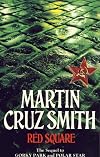
I grew up with my parents getting a succession of Cold War spy thrillers from the library every two weeks, where the evil agents of the Soviet Union enacted arcane and incomprehensible plots against The West that often resulted in a climactic and suspenseful climax involving the threat of global thermonuclear war. It tends to shape your perceptions a little, and I got into the habit of reading the last page of these books to see if the world survived, perhaps hoping to read auguries of our show more likely future, and mostly the spies and the soldiers of the West saved the day. Though not always.
Anyway, Gorky Park comes along, a police thriller set in Russia with Russian characters and a Russian hero and apparently nothing to do with global thermonuclear war and it felt like an anomaly. I never read it, just in case the world sneakily blew up halfway through, but I saw the film. Russian life from a Russian POV as portrayed by a western author. Weird.
So I recently rewatched the film on Netflix and that spurred me to order up Red Square from the library, since at some point in the intervening years I did read Polar Star. And... wow.
Though written near enough to contemporaneous with events, this has the feel of a historical thriller that engages in carefully and meticulous world-building to recreate a lost period - the sights, sounds, smells and lives of Russia after the fall of the Wall, with the people wretched and starving, queuing endlessly for food and vodka, gangs on rise and gangster hypercapitalism revving up to its various excesses.
Arkady Renko, back from exile in Siberia, now with his own team. When an informant is murdered horribly one night at a black market he finds himself pushing against all the usual sorts of official and unofficial resistance, even rediscovering the voice of his lost love. Renko follows the tangled bloody trail with dogged determination, all the way to a climax on the steps of the Moscow White House during the coup.
This is so astonishingly well-written, it's almost mesmerising. I'm definitely getting the rest of the books in the series, and might even loop back to the first two. Its possible the world will blow up before I get to the end, or perhaps that's just another silly childhood fear. show less
Anyway, Gorky Park comes along, a police thriller set in Russia with Russian characters and a Russian hero and apparently nothing to do with global thermonuclear war and it felt like an anomaly. I never read it, just in case the world sneakily blew up halfway through, but I saw the film. Russian life from a Russian POV as portrayed by a western author. Weird.
So I recently rewatched the film on Netflix and that spurred me to order up Red Square from the library, since at some point in the intervening years I did read Polar Star. And... wow.
Though written near enough to contemporaneous with events, this has the feel of a historical thriller that engages in carefully and meticulous world-building to recreate a lost period - the sights, sounds, smells and lives of Russia after the fall of the Wall, with the people wretched and starving, queuing endlessly for food and vodka, gangs on rise and gangster hypercapitalism revving up to its various excesses.
Arkady Renko, back from exile in Siberia, now with his own team. When an informant is murdered horribly one night at a black market he finds himself pushing against all the usual sorts of official and unofficial resistance, even rediscovering the voice of his lost love. Renko follows the tangled bloody trail with dogged determination, all the way to a climax on the steps of the Moscow White House during the coup.
This is so astonishingly well-written, it's almost mesmerising. I'm definitely getting the rest of the books in the series, and might even loop back to the first two. Its possible the world will blow up before I get to the end, or perhaps that's just another silly childhood fear. show less
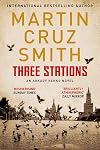
Let me begin by admitting my bias: I think that Martin Cruz Smith is one of the best novelists out there today. What has often been said of David Cornwell (a.k.a. John LeCarre)also goes for Martin Cruz Smith: he may write popular fiction but it's also great literature. If you want a sample of what I mean, just read the final page or even just the final line of "Three Stations." (Although it's best if you read the rest of it first.)
"Three Stations" is the latest chapter in the life and career show more of Arkady Renko, Smith's wise and somewhat world-weary Moscow detective who is forced to suffer fools, corruption, and social depravity in the course of his job. Renko is a complex and appealing man and just listening to his thinking is a treat in itself. However,the real treat is Smith's ability to bring you right onto the streets beside Detective Renko. Indeed, Smith has a way with his descriptions and dialog that's almost cinematic. (My 12th grade English teacher used to talk about a "language of vision" and that's something that Smith has really nailed.)
This story and its characters - particularly the children - will almost break your heart. Indeed, there are few writers of popular fiction who can portray children with no future in such an unflinching and yet compassionate manner. Fortunately, the book ends on a note of affirmation: there are still tattered pieces of hope for the legions of people who are the victims of modern Russia.
Even if you're not at all a fan of detective/mystery stories, the works of Martin Cruz Smith are still worth a look. Great literature always is. show less
"Three Stations" is the latest chapter in the life and career show more of Arkady Renko, Smith's wise and somewhat world-weary Moscow detective who is forced to suffer fools, corruption, and social depravity in the course of his job. Renko is a complex and appealing man and just listening to his thinking is a treat in itself. However,the real treat is Smith's ability to bring you right onto the streets beside Detective Renko. Indeed, Smith has a way with his descriptions and dialog that's almost cinematic. (My 12th grade English teacher used to talk about a "language of vision" and that's something that Smith has really nailed.)
This story and its characters - particularly the children - will almost break your heart. Indeed, there are few writers of popular fiction who can portray children with no future in such an unflinching and yet compassionate manner. Fortunately, the book ends on a note of affirmation: there are still tattered pieces of hope for the legions of people who are the victims of modern Russia.
Even if you're not at all a fan of detective/mystery stories, the works of Martin Cruz Smith are still worth a look. Great literature always is. show less
Lists
Facebook list (1)
1980s (1)
Winter Books (1)
Best Dystopias (1)
Global Mysteries (1)
Favourite Books (1)
1990s (1)
Page Turners (1)
To Read (1)
The "A" List (1)
Best Spy Fiction (1)
Murder Mysteries (1)
Awards


You May Also Like


Associated Authors
Statistics
- Works
- 37
- Also by
- 9
- Members
- 18,992
- Popularity
- #1,152
- Rating
- 3.7
- Reviews
- 462
- ISBNs
- 698
- Languages
- 21
- Favorited
- 67

