
Joseph Kanon
Author of The Good German
About the Author
Joseph Kanon began his career in publishing while an undergraduate at Harvard, reading manuscripts for The Atlantic Monthly. Kanon traveled to England for graduate school, then returned to the United States to work as a book review editor and writer for the Saturday Review. Rising through the ranks show more of the publishing world, he eventually became president and CEO of E.P. Dutton, and then executive vice president of Houghton Mifflin's Trade and Reference Division. Kanon is the author of Los Alamos (1997), an authentic fictional recreation of the waning days of World War II during which the murder of one of the Manhattan Project's security officers occurs. The Prodigal Spy was published in late 1998. His novel, Leaving Berlin, is a 2015 New York Times bestseller. (Bowker Author Biography) show less
Image credit: reading at the National Book Festival, Washington, D.C.
Works by Joseph Kanon
a última traição 1 copy
Associated Works
Oppenheimer And The Manhattan Project: Insights Into J Robert Oppenheimer, "Father Of The Atomic Bomb" (2005) — Contributor — 8 copies, 1 review
Tagged
Common Knowledge
- Birthdate
- 1946
- Gender
- male
- Education
- Harvard University
University of Cambridge (Trinity College) - Occupations
- publisher
writer - Nationality
- USA
- Birthplace
- Pennsylvania, USA
- Places of residence
- Pennsylvania, USA
New York, New York, USA - Associated Place (for map)
- USA
Members
Reviews
Hard to imagine any other setting for Kanon’s historical thriller, Istanbul Passage. Post World War II spy intrigues, war criminals seeking new friends, allegiances shifting yet again between America and Russia, battered Jews looking for refuge, illicit romance, the legacy of harems and the labyrinthine streets opening onto the wide waterway connecting two continents. Where better than Istanbul to depict the mire of ambiguous compromises, the sinuous balancing of countries against each show more other by those too crafty to reveal themselves, the naïve light of idealism shadowing into something dingy but workable? An ancient city that has known many masters and seen so much.
At one point a character in Kanon’s book points out that the Westerners view Istanbul as a bridge between Europe and Asia, but for the Turks, and for the Ottomans in their day, it is the center, not a place to pass through. That tension pervades the novel. The plot revolves around characters seeking passage through Istanbul to escape horrors behind them, either of their own or others’ making. Other characters strive to maintain Turkey’s tenuous hold on living in the center. The main character, Leon, may make a passage or he may join the centuries of tangled roots clinging to Istanbul. In the process he makes a rite of passage through moral compromises and idealistic choices, betrayals and loyalties, that is so subtle and sophisticated the reader never loses interest.
Leon, we hope along with him, is a good man—at least an ordinary man like us who can rise to the occasion when called upon. He’s easy to identify with, but what a tangled mess he gets into without there being an identifiable moment that tripped him up. We know we could have gotten there just as easily. He clings to the notion of doing right—but right for whom? His country? An adrenalin high? Displaced Jews? His wife? During the war, spying and death were easy to justify, but what now?
Then there’s Alexei. Not a good man, not ever, we fear. The classic bad guy, torturing Jews out of racial hatred, inherent badness, a man who kills without remorse. Why should Leon help such a man? Does he have information worth preserving? Does every man deserve to live? Does Leon find it impossible to be responsible for his death—no more reason than that fundamentally moral position? Leon’s most morally admirable friend tells him to turn Alexei over to his enemies who will kill him. Then glimmers of some other sort of man show through as Kanon develops Alexei. Do we feel sympathy for him? Was there a time when he was good but that is past, or do men, like cities, carry their layers forever existent simultaneously? It’s a cliché, but life is complicated. Kanon excels at making us feel that in our bones. Complicated, but also exciting.
Even the trees in Istanbul Passage tell the story—along the Bosphorus the Judas trees will bloom again, flowers hiding the betrayals. Is that enough to make life worth living? This suspenseful, full-bodied novel will hold you in a thoughtful embrace. show less
At one point a character in Kanon’s book points out that the Westerners view Istanbul as a bridge between Europe and Asia, but for the Turks, and for the Ottomans in their day, it is the center, not a place to pass through. That tension pervades the novel. The plot revolves around characters seeking passage through Istanbul to escape horrors behind them, either of their own or others’ making. Other characters strive to maintain Turkey’s tenuous hold on living in the center. The main character, Leon, may make a passage or he may join the centuries of tangled roots clinging to Istanbul. In the process he makes a rite of passage through moral compromises and idealistic choices, betrayals and loyalties, that is so subtle and sophisticated the reader never loses interest.
Leon, we hope along with him, is a good man—at least an ordinary man like us who can rise to the occasion when called upon. He’s easy to identify with, but what a tangled mess he gets into without there being an identifiable moment that tripped him up. We know we could have gotten there just as easily. He clings to the notion of doing right—but right for whom? His country? An adrenalin high? Displaced Jews? His wife? During the war, spying and death were easy to justify, but what now?
Then there’s Alexei. Not a good man, not ever, we fear. The classic bad guy, torturing Jews out of racial hatred, inherent badness, a man who kills without remorse. Why should Leon help such a man? Does he have information worth preserving? Does every man deserve to live? Does Leon find it impossible to be responsible for his death—no more reason than that fundamentally moral position? Leon’s most morally admirable friend tells him to turn Alexei over to his enemies who will kill him. Then glimmers of some other sort of man show through as Kanon develops Alexei. Do we feel sympathy for him? Was there a time when he was good but that is past, or do men, like cities, carry their layers forever existent simultaneously? It’s a cliché, but life is complicated. Kanon excels at making us feel that in our bones. Complicated, but also exciting.
Even the trees in Istanbul Passage tell the story—along the Bosphorus the Judas trees will bloom again, flowers hiding the betrayals. Is that enough to make life worth living? This suspenseful, full-bodied novel will hold you in a thoughtful embrace. show less
This novel begins in 1938 and a Jewish man boarding a boat harbored in Trieste. After his father's arrest and death in Sachenhausen, he went into hiding, but unlike many others, he has an uncle living in Shanghai, one of the last places to still allow Jewish people entry. In Shanghai, his uncle runs a few clubs and plans to open a new one, activities that have him working with the various criminal gangs in Shanghai. Shanghai is a powder keg. It's still Chinese, but the Japanese secret police show more are showing their power and the city is filling with refugees, both from Europe and the Soviet Union, but also from other parts of China. Daniel has to learn quickly and play an increasingly dangerous game of playing the different factions against each other.
Kanon has written several novels about the aftermath of the Second World War set in Berlin and I've enjoyed those books enormously. He knows how to keep a thriller moving, while also creating complex and frequently conflicted characters and a real sense of place. He does the same thing here, writing a story that was a huge amount of fun to read, with plenty of tension and an intriguing snapshot of Shanghai at a pivotal moment in its history. show less
Kanon has written several novels about the aftermath of the Second World War set in Berlin and I've enjoyed those books enormously. He knows how to keep a thriller moving, while also creating complex and frequently conflicted characters and a real sense of place. He does the same thing here, writing a story that was a huge amount of fun to read, with plenty of tension and an intriguing snapshot of Shanghai at a pivotal moment in its history. show less
If a novel can be written in crisp black and white images, with a disillusioned young hero (imagine here a sleepy-eyed young Robert Mitchum), and a cast of tragic, yet stock, characters, Joseph Kannon’s 'Stardust' hits its mark. Kannon’s homage to the film noir both rings with authenticity and provides a compelling read.
Ben Collier returns from post-war Germany to discover that his brother Danny has inexplicitly committed suicide, leaving behind a widow, the luscious and lethal Liesel. show more Why did Danny fall to his death? Did he jump? Was he pushed? Why does no one other than Ben seem to care?
'Stardust' is a character study, recounting the lives of those displaced by Hitler who will never feel secure again. Should they return to Germany? And to which Germany, East or West? It is a romance, as Danny and Liesel are strongly drawn to each other (I found it impossible not to see Mitchum and Hedy Lamar facing each other through hazy cigarette smoke). And it is a commentary on American history as the antics of Joseph McCarthy and his followers threaten the German refugees and Hollywood propaganda machine.
'Stardust' is a well-written novel; read the book, don’t wait for the movie. Mitchum and his sardonic voice are long gone. show less
Ben Collier returns from post-war Germany to discover that his brother Danny has inexplicitly committed suicide, leaving behind a widow, the luscious and lethal Liesel. show more Why did Danny fall to his death? Did he jump? Was he pushed? Why does no one other than Ben seem to care?
'Stardust' is a character study, recounting the lives of those displaced by Hitler who will never feel secure again. Should they return to Germany? And to which Germany, East or West? It is a romance, as Danny and Liesel are strongly drawn to each other (I found it impossible not to see Mitchum and Hedy Lamar facing each other through hazy cigarette smoke). And it is a commentary on American history as the antics of Joseph McCarthy and his followers threaten the German refugees and Hollywood propaganda machine.
'Stardust' is a well-written novel; read the book, don’t wait for the movie. Mitchum and his sardonic voice are long gone. show less
This is a very good mystery and a very, very good rendering of what life must have been like in Berlin during the weeks and months immediately following the surrender of Nazi Germany. Kanon investigates the nature of guilt, on both a national/cultural and a personal scale as both Allies and Germans alike begin to deal with the aftermath of the war and the pervasive horrors of the Holocaust. Again, the issues drawn are both large-scale and personal. Also crucial to the plot is the manner in show more which the Americans and Russians immediately launch into "the next war" as they jockey for position and power in divided Berlin. And then there is the divide among the Americans between those intent in bringing Nazis to trial and those who mostly want to pick up the pieces, move on, and get back to business. Not incidentally, this includes making use of German rocket scientists regardless of whatever their Nazi activity might have been. The protagonist is Jake Geismar. An American reporter stationed in Berlin before the war, Geismar has developed a deep regard for Germany and Berlin in particular. After spending the war years as a reporter with Patton, he returns to Berlin on assignment, and, more importantly for him, to try to find his pre-war lover. Having lived in Berlin right up to the beginning of hostilities, he has no illusions about who the Nazis had been, but still, as he begins to understand the true depth of the corruption of a German society and people he thought he had known, the question that comes most frequently to him is, "What happened to everybody?"
Kanon is very, very skillful at exploring these issues. Here are two passages that illuminate what I mean, much longer quotes than I normally feel comfortable including, I'm afraid. The first passage and the beginning of the second, be warned, are pretty unpleasant. The scene is a dinner early on at that includes a visiting U.S. Congressman (one of the "Let's not bother with the small fry; let's just get back to business" crowd) and a young officer, Bernie Teitel, Jewish, involved in investigating individual war crimes.
"'Small fry,' Bernie said again. 'Here's one.' He reached into the pile and pulled out a few buff-colored sheets. 'Otto Klopfer. Wants to drive for us. Experienced. Says he drove a truck during the war. He just didn't say what kind. One of the mobile units, it turns out. The exhaust pipe ran back into the van. They'd load about fifty, sixty people in there, and old Otto would just keep the motor running until they died. We found out because he wrote a letter to his CO.' He held up a sheet. 'The exhaust was taking too long. Recommended they seal the pipes so it would work faster. The people were panicking, trying to get out. He was afraid they'd damage the truck.' Another silence, this time so still that even the air around Bernie seemed to stop."
And then this as Geismer considers later . . .
"Jake lit a cigarette. Had Otto Klopfer smoked in the cab while he ran the motor, listening to the thumps behind him? There must have been screaming, a furious pounding on the van. And he'd sat there, foot on the pedal. How could they do it? All the questions came back to that. He'd seen it on the faces of the GIs, who'd hated France and then, confused, felt at home in Germany. The plumbing, the wide roads, the blond children grateful for candy, their mothers tirelessly sweeping up the mess. Clean. Hardworking. Just like us. Then they'd seen the camps, or at least the newsreels. How could they do it? The answer, the only one that made sense to them, was that they hadn't--somebody else had. But there wasn't anybody else. So they stopped asking. Unless, like Teitel, the hook had gone in too deep. . . . He realized suddenly that . . . what the city had really become was not a bomb site but a vast scene of the crime. Shaken, waiting for someone to bring the stretcher and erase the chalk marks and put the furniture back. Except this crime wouldn't go away, even then. There would always be a body in the middle of the floor. How could they do it? Sealing pipes, locking doors, ignoring the screams? It was the only question. But who could answer it? Not a reporter with four pieces in Collier's. The story was beyond that, a twisted parody of Goebbels' big lie--if you made the crime big enough, nobody did it. All the pieces he might do, full of local color and war stories and Truman's horse-trading, were not even notes for the police blotter."
And this is what I mean by skillful. In addition to the excellent writing itself, Kanon, by presenting us with the story of Otto Klopfer and his truck, personalizes the question, creating a small, manageable scale as a foundation for consideration of the universal horror.
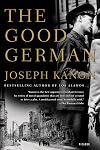
Or, you can just read The Good German as a very fine noir-ish murder mystery, set in and growing out of the very early days of the Cold War. The plot pacing is very good, the characters believable and the mystery itself engaging. Even the romance serves to move the story forward rather than stopping it in its tracks. One last aside: as you can see, the copy of this book I plucked off the shelves of my own bookstore has a movie tie-in cover. I haven't seen the movie, I don't know if I will, but the casting of George Clooney in the lead role I think was perfect. show less
Kanon is very, very skillful at exploring these issues. Here are two passages that illuminate what I mean, much longer quotes than I normally feel comfortable including, I'm afraid. The first passage and the beginning of the second, be warned, are pretty unpleasant. The scene is a dinner early on at that includes a visiting U.S. Congressman (one of the "Let's not bother with the small fry; let's just get back to business" crowd) and a young officer, Bernie Teitel, Jewish, involved in investigating individual war crimes.
"'Small fry,' Bernie said again. 'Here's one.' He reached into the pile and pulled out a few buff-colored sheets. 'Otto Klopfer. Wants to drive for us. Experienced. Says he drove a truck during the war. He just didn't say what kind. One of the mobile units, it turns out. The exhaust pipe ran back into the van. They'd load about fifty, sixty people in there, and old Otto would just keep the motor running until they died. We found out because he wrote a letter to his CO.' He held up a sheet. 'The exhaust was taking too long. Recommended they seal the pipes so it would work faster. The people were panicking, trying to get out. He was afraid they'd damage the truck.' Another silence, this time so still that even the air around Bernie seemed to stop."
And then this as Geismer considers later . . .
"Jake lit a cigarette. Had Otto Klopfer smoked in the cab while he ran the motor, listening to the thumps behind him? There must have been screaming, a furious pounding on the van. And he'd sat there, foot on the pedal. How could they do it? All the questions came back to that. He'd seen it on the faces of the GIs, who'd hated France and then, confused, felt at home in Germany. The plumbing, the wide roads, the blond children grateful for candy, their mothers tirelessly sweeping up the mess. Clean. Hardworking. Just like us. Then they'd seen the camps, or at least the newsreels. How could they do it? The answer, the only one that made sense to them, was that they hadn't--somebody else had. But there wasn't anybody else. So they stopped asking. Unless, like Teitel, the hook had gone in too deep. . . . He realized suddenly that . . . what the city had really become was not a bomb site but a vast scene of the crime. Shaken, waiting for someone to bring the stretcher and erase the chalk marks and put the furniture back. Except this crime wouldn't go away, even then. There would always be a body in the middle of the floor. How could they do it? Sealing pipes, locking doors, ignoring the screams? It was the only question. But who could answer it? Not a reporter with four pieces in Collier's. The story was beyond that, a twisted parody of Goebbels' big lie--if you made the crime big enough, nobody did it. All the pieces he might do, full of local color and war stories and Truman's horse-trading, were not even notes for the police blotter."
And this is what I mean by skillful. In addition to the excellent writing itself, Kanon, by presenting us with the story of Otto Klopfer and his truck, personalizes the question, creating a small, manageable scale as a foundation for consideration of the universal horror.
Or, you can just read The Good German as a very fine noir-ish murder mystery, set in and growing out of the very early days of the Cold War. The plot pacing is very good, the characters believable and the mystery itself engaging. Even the romance serves to move the story forward rather than stopping it in its tracks. One last aside: as you can see, the copy of this book I plucked off the shelves of my own bookstore has a movie tie-in cover. I haven't seen the movie, I don't know if I will, but the casting of George Clooney in the lead role I think was perfect. show less
Lists
Awards


You May Also Like


Associated Authors
Statistics
- Works
- 14
- Also by
- 2
- Members
- 6,758
- Popularity
- #3,622
- Rating
- 3.6
- Reviews
- 222
- ISBNs
- 250
- Languages
- 13
- Favorited
- 11

