
Charles Cumming
Author of The Trinity Six
About the Author
Image credit: Neil Cooper
Series
Works by Charles Cumming
Associated Works
Tagged
Common Knowledge
- Birthdate
- 1971-04-05
- Gender
- male
- Education
- Eton College, Eton, Berkshire, England, UK
University of Edinburgh (English Literature) (1994) - Organizations
- MI6 (did not join)
Jose Raul Capablanca Memorial Chess Society (founder) - Nationality
- UK
- Birthplace
- Ayr, Scotland, UK
- Places of residence
- Madrid, Spain
London, England, UK - Associated Place (for map)
- UK
Members
Reviews

Excellent slow-boiler of a spy novel. While not depending on constant action, this book still manages to be a real page-turner. Well-written and fleshed out characters leave you constantly guessing as to motives and whether or not a double or triple-cross is brewing.
Cummings also manages to paint various locales vividly so they feel like real and distinct places. Likewise, his description of the real tasks of spycraft, both exciting and mundane, add a level of sophistication to his work. The show more outcome never feels like a foregone conclusion and the fact that the characters aren’t infallible lends true suspense to the plot. The various plots are layered like an onion with the peeling back of each piece revealing something new. Even when everything is revealed, the outcome remains in doubt, almost to the last page.
A Foreign Country is a cut above other spy novels, and Charles Cumming is clearly at the forefront of the next generation of great spy novelists. Highly recommended. I was fortunate to receive an advance copy of this book. show less
Cummings also manages to paint various locales vividly so they feel like real and distinct places. Likewise, his description of the real tasks of spycraft, both exciting and mundane, add a level of sophistication to his work. The show more outcome never feels like a foregone conclusion and the fact that the characters aren’t infallible lends true suspense to the plot. The various plots are layered like an onion with the peeling back of each piece revealing something new. Even when everything is revealed, the outcome remains in doubt, almost to the last page.
A Foreign Country is a cut above other spy novels, and Charles Cumming is clearly at the forefront of the next generation of great spy novelists. Highly recommended. I was fortunate to receive an advance copy of this book. show less
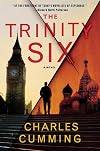
This plain vanilla spy story proves that sometimes the old-fashioned plot ideas make the best rattling good suspense novels. It certainly was enough to keep me up all night reading to get to the end.
In some ways, the plotline of Cumming's latest spy thriller owes a lot to Hitchcock -- an ordinary guy, a university lecturer in London specializing in Russian history, is under financial pressure from his ex-wife and the Inland Revenue, when an old friend suggests they collaborate on a show more bestseller about the possible identity of a "Sixth Man" -- another Soviet spy in the group that included Burgess, Maclean and Philby. Then the friend suddenly dies of a heart attack and Sam, picking up the threads of her investigation, realizes that others who have been on the trail of the mysterious Edward Crane have also been found dead.
There are plenty of great twists and turns in this story -- is the peril that Sam finds himself in really because of a decades-old spy or something altogether more modern-day than that? That is what makes up the suspense in this "thumping good read" -- what is it, exactly, that Sam has stumbled across? This isn't a flawless book -- there are some improbable coincidences and at heart it's really a very familiar kind of story -- but after reading plenty of far less accomplished efforts to produce just this kind of book as well as lots of other noirish, spare, bleak spy stories with far-too convoluted narratives and far too unsympathetic characters, it was a pleasant relief to be able to delve into Cummings's latest. No, Sam Gaddis is no Smiley, but I didn't care. I kept turning the pages and saying "just one more chapter" until suddenly it was 4 a.m. and I was finished.
Rated 4.3 stars, recommending it to anyone looking for a decent spy novel. I have most of the author's other books; with the exception of his most recent, Typhoon, he seems to be struggling to find his voice and focus. If you kind of liked this one, or liked it and are looking for something even better, check out Remembrance by Henry Porter, and then read the rest of that author's excellent thrillers. Both he and Cummings are authors who deserve to be better known. show less
In some ways, the plotline of Cumming's latest spy thriller owes a lot to Hitchcock -- an ordinary guy, a university lecturer in London specializing in Russian history, is under financial pressure from his ex-wife and the Inland Revenue, when an old friend suggests they collaborate on a show more bestseller about the possible identity of a "Sixth Man" -- another Soviet spy in the group that included Burgess, Maclean and Philby. Then the friend suddenly dies of a heart attack and Sam, picking up the threads of her investigation, realizes that others who have been on the trail of the mysterious Edward Crane have also been found dead.
There are plenty of great twists and turns in this story -- is the peril that Sam finds himself in really because of a decades-old spy or something altogether more modern-day than that? That is what makes up the suspense in this "thumping good read" -- what is it, exactly, that Sam has stumbled across? This isn't a flawless book -- there are some improbable coincidences and at heart it's really a very familiar kind of story -- but after reading plenty of far less accomplished efforts to produce just this kind of book as well as lots of other noirish, spare, bleak spy stories with far-too convoluted narratives and far too unsympathetic characters, it was a pleasant relief to be able to delve into Cummings's latest. No, Sam Gaddis is no Smiley, but I didn't care. I kept turning the pages and saying "just one more chapter" until suddenly it was 4 a.m. and I was finished.
Rated 4.3 stars, recommending it to anyone looking for a decent spy novel. I have most of the author's other books; with the exception of his most recent, Typhoon, he seems to be struggling to find his voice and focus. If you kind of liked this one, or liked it and are looking for something even better, check out Remembrance by Henry Porter, and then read the rest of that author's excellent thrillers. Both he and Cummings are authors who deserve to be better known. show less
 This review was written for LibraryThing Early Reviewers.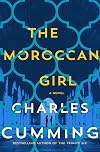
If you’re a liberal like me, you might be tempted to throw The Moroccan Girl across the room in anger when it begins with terrorist attacks by a left group against members of the alt-right. Think de-platforming from life. I supposed we were to think of AntiFa, though they are into confronting white nationalists at white nationalist rallies, not terrorism or kidnapping. This was infuriating because nearly all the people killed by homegrown terrorists in the US in 2018 were killed by show more right-wing terrorists.
But nothing I had read by Charles Cummings in the past led me to believe he would craft such a counter-factual story, so I kept reading, though feeling dubious. However, I soon was drawn into the story in spite of those doubts. Kit Carradine is a spy novelist approached to do a few small favors for his country while on a book tour in Morocco, drop off some money, meet with an agent, hand over a package–what could go wrong?
Quite a lot it seems when Kit realizes that he’s not the only one looking for that woman, a former member of the left-wing terrorist group who has left the group, but is still implicated in their crimes. Who is looking, why, and how to evade them are just a few of the problems he has to solve.
So, despite my initial anger and the doubts with which I began, this story succeeded for me. Like other novels by Cummings, the “spy factor” had that mix of tedium and tension that makes it seem more authentic than most thrillers. It’s not a breakneck frying pan to fire kind of book and those who want nonstop action will be disappointed. The story moves forward, but not with guns blazing on every page.
The resolution is satisfying and fair. Where there is some surprise, there is the look back in hindsight that ensures the surprise was not pulled out of a hat. There is an element of “ripped from the headlines” verisimilitude, not with Russian troll farms organizing protest and counter-protest like they did in Texas, but you know they are sticking their thumb in the pie.
I received an e-galley of The Moroccan Girl from the publisher through NetGalley
The Moroccan Girl at St. Martin’s Press | Macmillan
Charles Cummings author site
https://tonstantweaderreviews.wordpress.com/2019/03/05/9781250129956/ show less
But nothing I had read by Charles Cummings in the past led me to believe he would craft such a counter-factual story, so I kept reading, though feeling dubious. However, I soon was drawn into the story in spite of those doubts. Kit Carradine is a spy novelist approached to do a few small favors for his country while on a book tour in Morocco, drop off some money, meet with an agent, hand over a package–what could go wrong?
Quite a lot it seems when Kit realizes that he’s not the only one looking for that woman, a former member of the left-wing terrorist group who has left the group, but is still implicated in their crimes. Who is looking, why, and how to evade them are just a few of the problems he has to solve.
So, despite my initial anger and the doubts with which I began, this story succeeded for me. Like other novels by Cummings, the “spy factor” had that mix of tedium and tension that makes it seem more authentic than most thrillers. It’s not a breakneck frying pan to fire kind of book and those who want nonstop action will be disappointed. The story moves forward, but not with guns blazing on every page.
The resolution is satisfying and fair. Where there is some surprise, there is the look back in hindsight that ensures the surprise was not pulled out of a hat. There is an element of “ripped from the headlines” verisimilitude, not with Russian troll farms organizing protest and counter-protest like they did in Texas, but you know they are sticking their thumb in the pie.
I received an e-galley of The Moroccan Girl from the publisher through NetGalley
The Moroccan Girl at St. Martin’s Press | Macmillan
Charles Cummings author site
https://tonstantweaderreviews.wordpress.com/2019/03/05/9781250129956/ show less
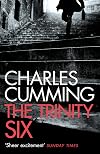
Anyone who is in any way interested in spies, spying and the world of espionage in general, has surely read at least one of John le Carré's genre defining classics. Not the later gardening and Panama nonsense, but the unforgettable Cold War, 'Smiley' intrigues.
Especially if you're English, that is.
And if you are lucky enough to be English and of a certain age, then you probably already have the whole '30's Cambridge spy ring, the old boy network running the country from their hushed, show more mahogany and teak Club in The City, the Cold War and the whole East vs West thing as a big game, already with you when you read a book like this. You don't need the spy world explained to you again from scratch. You know what a 'dead letter-box' is, you know what 'tradecraft', 'Moscow Centre' and 'C' are. The author can, with a nod and a wink and relatively few words, have you with him and get on with other things. You understand the world he is writing about and what I can well imagine would seem a rather unbelievable, class-ridden, privileged, strange world - makes perfect sense.
(However, that could be surely be why a non-middle-aged, non-English person would get nothing from, for example, the recent (poor) 'Tinker, Tailor, Soldier, Spy' re-adaption. My Danish wife, for example).
But one big problem the way I see it, is like this: How much is fact and how much is John le Carré fiction become fact in our collective recollection? I can imagine that it might also be a problem for any new authors wanting to write a novel set in this world: Do you write about actual institutions, actual events and run the risk that no one believes the world you're describing, or do you use some of le Carré's inventions, base your fiction on fiction and have your readers assume you're writing about the truth.
Basically what I mean is, that all novels written into this particular period of the spy genre, surely have to be compared in some way or another, with the world le Carré created. How they stand up to that comparison is, unfortunately, how we then rate them. "It's good, but it's not as good as le Carré." "It's better than le Carré." "It's unrealistic (doesn't use le Carre's world)" That kind of thing. Maybe.
Whatever your opinions or experience of le Carré and the spy genre, it's well worth giving Charles Cummings' 'Trinity Six' a go. it won't disappoint. It is set in the recent past, after the fall of the Berlin Wall, but is actually all about the present day repercussions from events that took place over the eighty years up until the fall of Communism. A middle-aged, recently separated from his wife academic, a lecturer in Russian affairs and part-time writer, gets dragged into present day intrigues and puts himself unknowingly in danger by getting himself caught up in other, old spy games. We travel around in Europe (surely a little less exciting since the fall of the Berlin Wall?) and we meet a variety of nice, not so nice and not so sure if they're nice, characters. There are young spies, middle-aged spies and un-reformed old Cambridge spies. It's very nearly bang up-to-date, technology-wise, but with enough links back to the good old spying glory days, to satisfy those still missing decent books about the Cold War - me, for instance. It's nicely paced and focussed, it doesn't dash unnecessarily about all over the place, it stays believable and has some decent twists, turns and revelations. Of course, the ordinary person caught up in an extraordinary world the don't understand, is nothing new, but the intrigue is genuine and there's some nice moments of suspense and uncertainty.
'Trinity Six' is a good, enjoyable read which often feels like an Alan Furst, (obviously set today rather than between the wars). That's absolutely ok with me. For those of us who have read le Carré's spy books, there's no avoiding the fact that it's not quite be up there with the Master's best. But if you haven't read le Carré, you may actually be the lucky ones and so 'Trinity Six' is an excellent entré to the mirror world of British old-school espionage. show less
Especially if you're English, that is.
And if you are lucky enough to be English and of a certain age, then you probably already have the whole '30's Cambridge spy ring, the old boy network running the country from their hushed, show more mahogany and teak Club in The City, the Cold War and the whole East vs West thing as a big game, already with you when you read a book like this. You don't need the spy world explained to you again from scratch. You know what a 'dead letter-box' is, you know what 'tradecraft', 'Moscow Centre' and 'C' are. The author can, with a nod and a wink and relatively few words, have you with him and get on with other things. You understand the world he is writing about and what I can well imagine would seem a rather unbelievable, class-ridden, privileged, strange world - makes perfect sense.
(However, that could be surely be why a non-middle-aged, non-English person would get nothing from, for example, the recent (poor) 'Tinker, Tailor, Soldier, Spy' re-adaption. My Danish wife, for example).
But one big problem the way I see it, is like this: How much is fact and how much is John le Carré fiction become fact in our collective recollection? I can imagine that it might also be a problem for any new authors wanting to write a novel set in this world: Do you write about actual institutions, actual events and run the risk that no one believes the world you're describing, or do you use some of le Carré's inventions, base your fiction on fiction and have your readers assume you're writing about the truth.
Basically what I mean is, that all novels written into this particular period of the spy genre, surely have to be compared in some way or another, with the world le Carré created. How they stand up to that comparison is, unfortunately, how we then rate them. "It's good, but it's not as good as le Carré." "It's better than le Carré." "It's unrealistic (doesn't use le Carre's world)" That kind of thing. Maybe.
Whatever your opinions or experience of le Carré and the spy genre, it's well worth giving Charles Cummings' 'Trinity Six' a go. it won't disappoint. It is set in the recent past, after the fall of the Berlin Wall, but is actually all about the present day repercussions from events that took place over the eighty years up until the fall of Communism. A middle-aged, recently separated from his wife academic, a lecturer in Russian affairs and part-time writer, gets dragged into present day intrigues and puts himself unknowingly in danger by getting himself caught up in other, old spy games. We travel around in Europe (surely a little less exciting since the fall of the Berlin Wall?) and we meet a variety of nice, not so nice and not so sure if they're nice, characters. There are young spies, middle-aged spies and un-reformed old Cambridge spies. It's very nearly bang up-to-date, technology-wise, but with enough links back to the good old spying glory days, to satisfy those still missing decent books about the Cold War - me, for instance. It's nicely paced and focussed, it doesn't dash unnecessarily about all over the place, it stays believable and has some decent twists, turns and revelations. Of course, the ordinary person caught up in an extraordinary world the don't understand, is nothing new, but the intrigue is genuine and there's some nice moments of suspense and uncertainty.
'Trinity Six' is a good, enjoyable read which often feels like an Alan Furst, (obviously set today rather than between the wars). That's absolutely ok with me. For those of us who have read le Carré's spy books, there's no avoiding the fact that it's not quite be up there with the Master's best. But if you haven't read le Carré, you may actually be the lucky ones and so 'Trinity Six' is an excellent entré to the mirror world of British old-school espionage. show less
Lists
Awards


You May Also Like


Associated Authors
Statistics
- Works
- 16
- Also by
- 1
- Members
- 4,126
- Popularity
- #6,099
- Rating
- 3.5
- Reviews
- 258
- ISBNs
- 215
- Languages
- 10
- Favorited
- 9
