
Charles McCarry (1930–2019)
Author of The Tears of Autumn
About the Author
Albert Charles McCarry Jr. was born in Pittsfield, Massachusetts on June 14, 1930. He enlisted in the Army, where he wrote for Stars and Stripes and edited a weekly Army newspaper in Bremerhaven, Germany. He was a dishwasher and newspaper reporter before becoming an assistant and speechwriter to show more Secretary of Labor James P. Mitchell. After two years, McCarry was recruited by the C.I.A. He worked for nine years as a deep cover operative in Europe, Asia and Africa. He became an author of both fiction and nonfiction. His fiction works included Ark and The Paul Christopher series. His nonfiction works included Citizen Nader and three memoirs - two written with Alexander Haig Jr. and one written with Donald T. Regan. McCarry died from complications of a cerebral hemorrhage caused by a fall on February 26, 2019 at the age of 88. (Bowker Author Biography) show less
Image credit:
www.vjbooks.com
Series
Works by Charles McCarry
The Hand of Carlos 2 copies
The Japan Alps 1 copy
Heart of the Bluegrass 1 copy
The Secret Lovers paperback 1 copy
Two Revolutions 1 copy
Associated Works
Paths of Resistance: The Art and Craft of the Political Novel (1989) — Contributor — 26 copies, 1 review
Tagged
Common Knowledge
- Other names
- McCarry, Albert Charles, Jr.
- Birthdate
- 1930-06-14
- Date of death
- 2019-02-26
- Gender
- male
- Occupations
- novelist
correspondent
spy - Organizations
- Central Intelligence Agency
United States Army - Nationality
- USA
- Birthplace
- Massachusetts, USA
- Places of residence
- Berkshire County, Massachussetts, USA
Manhattan, New York, New York, USA
Lisbon, Ohio, USA
Youngstown, Ohio, USA - Place of death
- Fairfax, Virginia, USA
- Associated Place (for map)
- USA
Members
Reviews
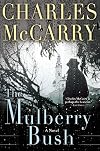
I can't believe I've been a fan of spy thrillers for decades and had never heard of Charles McCarry. I came across a review of one of his older novels a short time ago, sought it out, and picked a different one off the stack at the local library since my original target wasn't available. If the rest of his catalog is as well-done as 'The Mulberry Bush', I think I've discovered a writer that'll keep me busy for awhile.
As you might expect in a book written by an ex-CIA field operative, the show more spycraft in Mulberry Bush seems impeccable and the actions of the characters are realistic. The plot, which involves the intent of the son of a disgraced CIA agent to exact revenge on the agency, is complex, many-layered, sexy, and exciting. The dialogue is crisp and very realistic and the conclusion may or may not be what you expect. It's an interesting way to wrap things up, no matter what.
I've read many, many spy novels through the years, many of which were written by ex-practitioners, and am constantly struck by a few things: these guys and gals are really smart, everyone has an agenda, there are endless physical and mental challenges, and I could never handle the stress. There are certainly black and white areas in their type of work, but the largest acreage is gray and it takes special types of people to excel.
I can't even describe how excited I am to start exploring the rest of McCarry's work! show less
As you might expect in a book written by an ex-CIA field operative, the show more spycraft in Mulberry Bush seems impeccable and the actions of the characters are realistic. The plot, which involves the intent of the son of a disgraced CIA agent to exact revenge on the agency, is complex, many-layered, sexy, and exciting. The dialogue is crisp and very realistic and the conclusion may or may not be what you expect. It's an interesting way to wrap things up, no matter what.
I've read many, many spy novels through the years, many of which were written by ex-practitioners, and am constantly struck by a few things: these guys and gals are really smart, everyone has an agenda, there are endless physical and mental challenges, and I could never handle the stress. There are certainly black and white areas in their type of work, but the largest acreage is gray and it takes special types of people to excel.
I can't even describe how excited I am to start exploring the rest of McCarry's work! show less
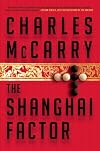
This Shanghai-U.S. East Coast-based spy thriller is reminiscent of the early works of John le Carré, where the question always is, Whom can you trust? And the answer: no one. At least that’s how the unnamed narrator, a new CIA recruit, chooses to operate. Paranoia 101. Throughout, it’s McCarry’s wry observations of characters and their situations that make the reading such a pleasure.
Undocumented CIA agents, like the narrator, ". . . never carry official ID. This absence of proof that show more they’re up to no good is their protection. Otherwise, they are warned, they’re on their own. If they get themselves into trouble, they’ll get no help. If they do well, they’ll get no thanks. That formula is, of course, catnip to romantics."
McCarry gives his protagonist a deceptive openness and surface sociability. A Chinese languages major in college, he’s been sent to Shanghai to improve his language skills and cultural acumen and to keep a lookout for potential Agency recruits.
Early in his stay, a beautiful young woman crashes her bike into his, he buys her an expensive replacement, and before long, they’re lovers. It’s a fun way to learn the language not generally endorsed by Berlitz. From the beginning, he assumes she’d been sent by the Guoanbu, the Chinese intelligence service. Other than her name, Mei, he never asks her any questions about her background—what would be the point?—except to learn she was an exchange student in Massachusetts, which accounts for her American English. Nor does she ask such questions of him—ditto. Plus, he figures she already knows.
Through Mei, he meets wealthy, upwardly mobile young Chinese, disdainful of their stodgy Communist parents. Through one of them, he meets a prominent Chinese CEO and receives an employment offer he suspects is a feeler from Guoanbu. Such a placement could be invaluable to the CIA, if highly risky to him.
McCarry creates a number of entertaining secondary characters, especially lusty Mei, the hot-and-cold Chinese spy Lin Ming, and his mother’s former crack-addict cook, Magdalena. Are any of them what and who they seem? Then there’s his handler, the eccentric CIA director of counter-intelligence Luther Burbank (to the surprise of horticulturalists everywhere), who advises him take the job. Burbank is the only man at the Agency who knows what he’s up to, and they talk only rarely. When they do, Burbank counsels that becoming a an effective espionage agent and undermining Guoanbu, will be a long game, vulnerable to exposure at every turn. They have to be content to wait for the payoff. He does take the job and, from there, life gets complicated.
McCarry’s writing is smooth and literary, and one of my favorite authors, Alan Furst, calls him “a master of intelligent, literate spy fiction.” If you like an old-fashioned spy story dependent more on agents’ wits than electronic wizardry and body count, you may enjoy this one too. show less
Undocumented CIA agents, like the narrator, ". . . never carry official ID. This absence of proof that show more they’re up to no good is their protection. Otherwise, they are warned, they’re on their own. If they get themselves into trouble, they’ll get no help. If they do well, they’ll get no thanks. That formula is, of course, catnip to romantics."
McCarry gives his protagonist a deceptive openness and surface sociability. A Chinese languages major in college, he’s been sent to Shanghai to improve his language skills and cultural acumen and to keep a lookout for potential Agency recruits.
Early in his stay, a beautiful young woman crashes her bike into his, he buys her an expensive replacement, and before long, they’re lovers. It’s a fun way to learn the language not generally endorsed by Berlitz. From the beginning, he assumes she’d been sent by the Guoanbu, the Chinese intelligence service. Other than her name, Mei, he never asks her any questions about her background—what would be the point?—except to learn she was an exchange student in Massachusetts, which accounts for her American English. Nor does she ask such questions of him—ditto. Plus, he figures she already knows.
Through Mei, he meets wealthy, upwardly mobile young Chinese, disdainful of their stodgy Communist parents. Through one of them, he meets a prominent Chinese CEO and receives an employment offer he suspects is a feeler from Guoanbu. Such a placement could be invaluable to the CIA, if highly risky to him.
McCarry creates a number of entertaining secondary characters, especially lusty Mei, the hot-and-cold Chinese spy Lin Ming, and his mother’s former crack-addict cook, Magdalena. Are any of them what and who they seem? Then there’s his handler, the eccentric CIA director of counter-intelligence Luther Burbank (to the surprise of horticulturalists everywhere), who advises him take the job. Burbank is the only man at the Agency who knows what he’s up to, and they talk only rarely. When they do, Burbank counsels that becoming a an effective espionage agent and undermining Guoanbu, will be a long game, vulnerable to exposure at every turn. They have to be content to wait for the payoff. He does take the job and, from there, life gets complicated.
McCarry’s writing is smooth and literary, and one of my favorite authors, Alan Furst, calls him “a master of intelligent, literate spy fiction.” If you like an old-fashioned spy story dependent more on agents’ wits than electronic wizardry and body count, you may enjoy this one too. show less
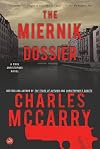
An epistolary spy novel told in dispatches and field reports from 1972 right at the heart of the Cold War. This was sophisticated and witty and charming and sexy. I forget that the Cold War was often fought by people who had experienced real war. In this crazy narrative American spies work alongside African princes and concentration camp survivors in a plot concerning Russian sponsorship of a Communist uprising in the Sudan. It never felt like it should work as a novel but it came together show more more satisfyingly than thought it might. show less
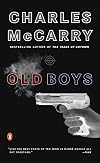
As a younger man, my idea of a great spy novel was Robert Littell's "The Amateur" (1981) or James Grady's "Six Days of the Condor" (1974), tales about young men, inexperienced in the ways of espionage agents, who get the best of veterans. Now, an "old boy" myself, I am nuts about "Old Boys" (2004), written by Charles McCarry when he was about the same age I am now. His novel is about veteran CIA agents who should be retired but instead team up to find an old friend (and his mother) and show more prevent a nuclear terrorist attack on U.S. cities.
So maybe my taste in espionage thrillers is a reflection of my stage of life, why I would rather watch movies starring Robert Redford, Tom Hanks, Morgan Freeman or Harrison Ford than ones starring any younger actor you might name. Or maybe all three are terrific novels. When I reread "Six Days of the Condor" recently, I enjoyed it just as much as I did back in the Seventies.
McCarry has been writing Paul Christopher novels since the Seventies (and I loved "The Tears of Autumn" and "The Secret Lovers," too). In Old Boys, Christopher is in his seventies when he learns that his mother, who disappeared during World War II, may still be alive. And so he disappears, too. When ashes purported to be his are sent back from China, his old friends don't believe it. Horace Hubbard, Christopher's cousin, takes the lead, and he and the other geezers travel back and forth across the globe tracking down the Christophers, while at the same time preventing an even older terrorist from getting his dying wish, the destruction of America.
The novel includes a reference to The Over the Hill Gang. This story is similar to that old movie, but without the laughs. These Old Boys manage to stay a step ahead of much younger men, who keep trying to discourage them and send them back to retirement homes. Of these younger agents, McCarry writes, "Little did they know that they had just been extricated from the mess they had gotten themselves into by a bunch of arthritic, pill-taking old men who last saw combat before these kids' fathers were born."
As an arthritic, pill-taking old man, I found that great fun. show less
So maybe my taste in espionage thrillers is a reflection of my stage of life, why I would rather watch movies starring Robert Redford, Tom Hanks, Morgan Freeman or Harrison Ford than ones starring any younger actor you might name. Or maybe all three are terrific novels. When I reread "Six Days of the Condor" recently, I enjoyed it just as much as I did back in the Seventies.
McCarry has been writing Paul Christopher novels since the Seventies (and I loved "The Tears of Autumn" and "The Secret Lovers," too). In Old Boys, Christopher is in his seventies when he learns that his mother, who disappeared during World War II, may still be alive. And so he disappears, too. When ashes purported to be his are sent back from China, his old friends don't believe it. Horace Hubbard, Christopher's cousin, takes the lead, and he and the other geezers travel back and forth across the globe tracking down the Christophers, while at the same time preventing an even older terrorist from getting his dying wish, the destruction of America.
The novel includes a reference to The Over the Hill Gang. This story is similar to that old movie, but without the laughs. These Old Boys manage to stay a step ahead of much younger men, who keep trying to discourage them and send them back to retirement homes. Of these younger agents, McCarry writes, "Little did they know that they had just been extricated from the mess they had gotten themselves into by a bunch of arthritic, pill-taking old men who last saw combat before these kids' fathers were born."
As an arthritic, pill-taking old man, I found that great fun. show less
Lists
Awards


You May Also Like


Associated Authors
Statistics
- Works
- 36
- Also by
- 9
- Members
- 3,442
- Popularity
- #7,386
- Rating
- 3.9
- Reviews
- 100
- ISBNs
- 278
- Languages
- 8
- Favorited
- 13