

David Downing (1) (1946–)
Author of Zoo Station
For other authors named David Downing, see the disambiguation page.
About the Author
David Downing is a noted historian of World War II. (Publisher Provided)
Series
Works by David Downing
Geography And Resources of the Middle East (World Almanac Library of the Middle East) (2006) 7 copies
Leading Lives: Arafat / Mohandas Ghandi / Lenin / Martin Luther King / Emmeline Pankhurst (2003) 1 copy
Tagged
Common Knowledge
- Canonical name
- Downing, David
- Other names
- Monnery, David
- Birthdate
- 1946-08-09
- Gender
- male
- Occupations
- historian
spy novelist - Short biography
- From Bloomsbury Publishing: David Downing is the author of several acclaimed works on twentieth-century history, biographies, and of fiction. The holder of a Master's degree in international relations, he has travelled extensively, particularly in Eastern Europe and the former Soviet Union. He currently divides his time between Britain and the US.
- Nationality
- UK
- Birthplace
- Harrow, Middlesex, England, UK
- Places of residence
- Guildford, England
- Map Location
- England, UK
Members
Reviews
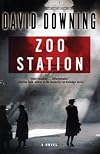
In Nazi controlled Germany one spent much of their time keeping their head down and trying not to draw any attention to themselves. In [Zoo Station] David Downing captures this claustrophobic feeling as he tells the story of Anglo-American journalist John Russell, living and working in Berlin, held there by emotional ties. He has a German girlfriend he doesn’t wish to leave and a half-German son who means the world to him. Being a divorced father means he gets to spend very little time show more with his son, but if he left or was expelled he would have to leave his son behind.
What then does he do when he stumbles on an enormous story, one that the rest of the world really should see to get a true picture of how far the Nazi regime is willing to go to keep their bloodlines pure. Another journalist has already been killed over this story, and the hunt is on for the letters and documents that would reveal their plans. At the same time John agrees to teach English to a couple of Jewish girls whose parents are trying desperately to get the family, or at least the children out of Germany. When the father is accused of a crime and the mother is refused a Visa, how can a man of conscience not get involved?
David Downing manages to tell a well paced, complex story that draws the reader along, quietly building the tension as the increasingly murderous nature of this regime is revealed. Hindsight is twenty-twenty and we know what is going to eventually happen, but this is a masterful look at a repressed and frightened people under the control of a government that ruled by terror, unfortunately these people looked the other way and did not want to become involved until it was suddenly too late. show less
What then does he do when he stumbles on an enormous story, one that the rest of the world really should see to get a true picture of how far the Nazi regime is willing to go to keep their bloodlines pure. Another journalist has already been killed over this story, and the hunt is on for the letters and documents that would reveal their plans. At the same time John agrees to teach English to a couple of Jewish girls whose parents are trying desperately to get the family, or at least the children out of Germany. When the father is accused of a crime and the mother is refused a Visa, how can a man of conscience not get involved?
David Downing manages to tell a well paced, complex story that draws the reader along, quietly building the tension as the increasingly murderous nature of this regime is revealed. Hindsight is twenty-twenty and we know what is going to eventually happen, but this is a masterful look at a repressed and frightened people under the control of a government that ruled by terror, unfortunately these people looked the other way and did not want to become involved until it was suddenly too late. show less
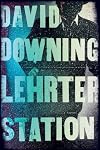
Unbeknownst to me when I began reading David Downing’s new novel, Lehrter Station is actually the fifth book in a series of World War II novels featuring spy-of-all-trades, and British journalist, John Russell. Much of what happened to Russell and those closest to him in previous books is unobtrusively recapped here, however, meaning that Lehrter Station works well as a standalone. Many readers new to the John Russell character, me among them, will want to go back and read the earlier show more books in the series even if they begin with this one.
Having successfully bought his way out of Berlin just a few months earlier, Russell now lives in London as 1945 draws to a close. He shares a cramped flat there with Paul, his grown son; Effi, his German girlfriend; Rosa, the little German war orphan they are caring for; Zarah, Effi’s sister; and Lothar, Zarah’s young son. Although John Russell hopes to begin a new life with his makeshift family, he knows the odds are stacked against him. He is a man with a cloudy past, and he owes his escape to London to a deal he made with the devil – and now the devil wants to be paid for his services.
Russell delivered German atomic research secrets (with promises of continuing cooperation after the war) to the Soviets in exchange for his family’s safe passage out of Berlin. Now, forced to return to Berlin by the NKVD, Russell and Effi find the occupied city to be every bit as dangerous for them as it had been during the war. Russell, who has convinced both the Russians and the Americans that he is spying on their behalf, will have to keep both sides happy if he and Effi are to survive. Then, when his snooping inadvertently threatens to expose a former German army officer’s new role, Russell’s life becomes even more complicated.
Lehrter Station, though, is much more than a “spy novel.” It is an interesting piece of historical fiction that vividly portrays life in post-war Berlin as its American, French, British, and Soviet occupiers began to settle in to the four zones into which they have carved Berlin. Thousands of displaced citizens are flooding the city only to learn that their former homes no longer exist or that other refugees have been placed in them. Their scramble for shelter is worsened by all the others who join the returning Berliners because their own homes are now outside the newly-drawn German borders. The streets are still filled with bomb rubble, public utilities are unpredictable, and the currency of choice seems to be the American cigarette. The country’s legitimate economy has been replaced by a cutthroat black market one already infiltrated by former German army officers – under new identities – and used by scores of occupying soldiers for personal profit.
In the midst of this chaos, John and Effi search for word of missing friends and relatives while John tries to negotiate the complications of simultaneously trying to please two very different spymasters. Dealing successfully with the devil is not easy.
Rated at: 4.0 show less
Having successfully bought his way out of Berlin just a few months earlier, Russell now lives in London as 1945 draws to a close. He shares a cramped flat there with Paul, his grown son; Effi, his German girlfriend; Rosa, the little German war orphan they are caring for; Zarah, Effi’s sister; and Lothar, Zarah’s young son. Although John Russell hopes to begin a new life with his makeshift family, he knows the odds are stacked against him. He is a man with a cloudy past, and he owes his escape to London to a deal he made with the devil – and now the devil wants to be paid for his services.
Russell delivered German atomic research secrets (with promises of continuing cooperation after the war) to the Soviets in exchange for his family’s safe passage out of Berlin. Now, forced to return to Berlin by the NKVD, Russell and Effi find the occupied city to be every bit as dangerous for them as it had been during the war. Russell, who has convinced both the Russians and the Americans that he is spying on their behalf, will have to keep both sides happy if he and Effi are to survive. Then, when his snooping inadvertently threatens to expose a former German army officer’s new role, Russell’s life becomes even more complicated.
Lehrter Station, though, is much more than a “spy novel.” It is an interesting piece of historical fiction that vividly portrays life in post-war Berlin as its American, French, British, and Soviet occupiers began to settle in to the four zones into which they have carved Berlin. Thousands of displaced citizens are flooding the city only to learn that their former homes no longer exist or that other refugees have been placed in them. Their scramble for shelter is worsened by all the others who join the returning Berliners because their own homes are now outside the newly-drawn German borders. The streets are still filled with bomb rubble, public utilities are unpredictable, and the currency of choice seems to be the American cigarette. The country’s legitimate economy has been replaced by a cutthroat black market one already infiltrated by former German army officers – under new identities – and used by scores of occupying soldiers for personal profit.
In the midst of this chaos, John and Effi search for word of missing friends and relatives while John tries to negotiate the complications of simultaneously trying to please two very different spymasters. Dealing successfully with the devil is not easy.
Rated at: 4.0 show less
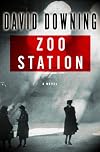
John Russell is a British expat in Germany in 1939. Although conditions are worsening for many in Hitler’s Germany and it seems like Europe is heading for another war, Russell is loath to leave Germany because of his young son, who lives with Russell’s ex-wife and her new husband. Russell also has a German lover he’d rather not leave behind. Russell is approached by a Soviet agent with a request to write a series of articles about life in Nazi Germany. Soon the British have requests show more for him, too. He walks a fine line trying to keep the Soviets and the British happy without getting into trouble with the Nazis.
The book has a strong sense of place. It explores the growing danger for German Jews in 1939, with Russell assisting a Jewish family to whom he’s been giving English lessons. It also explores the dangers faced by other groups targeted by the Nazis – homosexuals and persons with disabilities. Russell is a bit of an antihero. He’s not a moral crusader on a mission to rescue Jews and defeat the Nazis, but he does his part to help those who need it within his circle of friends and acquaintances. show less
The book has a strong sense of place. It explores the growing danger for German Jews in 1939, with Russell assisting a Jewish family to whom he’s been giving English lessons. It also explores the dangers faced by other groups targeted by the Nazis – homosexuals and persons with disabilities. Russell is a bit of an antihero. He’s not a moral crusader on a mission to rescue Jews and defeat the Nazis, but he does his part to help those who need it within his circle of friends and acquaintances. show less

This is the sixth and final novel in the John Russell/Effi Koenen series set around the second world war. This has been a superbly written series, full of a sense of time and place, and richly textured. Most of the novels have meandered a bit along the way, but in hindsight I now see this as part of their appeal, rather than a drawback. In this final novel the action moves forward three years to 1948 at a time when the cold war is hotting up: the former wartime allies are at loggerheads in show more Berlin; the Communists have taken over in Czechoslovakia; and in Yugoslavia Stalin's hegemony is being challenged by Tito's alternative approach to socialism. John Russell is as usual playing the sides off against each other and here must pull one final daring feat that will give him leverage to remove himself from both rival sides of his double agent role. One of the most interesting characters was the German communist Kurt Strohm, a loyal, hardworking and sincere believer in his cause, but whose disillusionment grows as the Soviet grip on East Berlin grows and he comes to realise he and his comrades will not be allowed to chart their own socialist path. I'm quite sorry this series has ended now. show less
Lists
British Mystery (1)
Best Spy Fiction (4)
Awards


You May Also Like


Associated Authors
Statistics
- Works
- 80
- Members
- 4,362
- Popularity
- #5,751
- Rating
- 3.8
- Reviews
- 146
- ISBNs
- 372
- Languages
- 8
- Favorited
- 3