
John Lawton
Author of Black Out
About the Author
Series
Works by John Lawton
Silk Scents & Spice: Tracing the World's Great Trade Routes: The Silk Road, the Spice Route, the Incense Trail (2004) 12 copies
Associated Works
Tagged
Common Knowledge
- Birthdate
- 1949
- Gender
- male
- Nationality
- UK
- Places of residence
- London, England, UK
Derbyshire, England, UK - Map Location
- England, UK
Members
Reviews
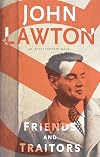
Friends and Traitors has more of the feel of a literary novel than thriller but to me, that is not a bad thing. It’s the latest in the series featuring Freddie Troy (and the first I’ve read) and follows his interactions with British diplomat and Soviet agent Guy Burgess through the mid-twentieth century.
Freddie is the son of a Russian émigré, a man who is wealthy and well connected, a newspaper proprietor and baronet. However his father, a widely read and intellectually curious man, is show more all too aware of his precarious status and that public opinion could turn at any moment against him and his family.
Freddie embraces the outsider identity by electing not to join the normal professions of the upper classes. Instead he has decided to be a police officer. The book begins with a dinner party at his father’s home, where he first meets Burgess, shortly before he is due to start at Hendon police college.
They have a number of chance encounters in the years before Burgess’ defection and the book briefly shifts into Burgess’ point of view to show us his defection to Moscow and the shape his life takes afterwards. But it is only about two-thirds of the way into the book, when Troy’s family holiday in Vienna is thrown into chaos by a meeting Burgess has engineered, that the thriller element of the story begins.
Freddie’s relationship with Burgess is a nuanced one. He is aware of the artifice of Burgess’s public persona, but still somehow intrigued by him, as if watching a great performer at work.
This is a fragmentary story but an atmospheric one. I enjoyed Troy’s wonderfully flamboyant family, his relationships with police colleagues, his opinions on a changing society and the interweaving of real historical figures and events. The depiction of the Blitz was particularly vivid.
Friends and Traitors gives a fascinating perspective on the Establishment of the time, what has changed – and what hasn’t. There are references to Troy’s past cases, to events in his life going on in the background, and to the way Troy, with his Russian language skills and unique connections, has previously been co-opted into espionage cases. I hope these aren’t spoilers for the earlier novels, as I’m now very keen to read more about Freddie Troy.
*
I received a copy of Friends and Traitors from the publisher via Netgalley.
Read more of my reviews at katevane.com show less
Freddie is the son of a Russian émigré, a man who is wealthy and well connected, a newspaper proprietor and baronet. However his father, a widely read and intellectually curious man, is show more all too aware of his precarious status and that public opinion could turn at any moment against him and his family.
Freddie embraces the outsider identity by electing not to join the normal professions of the upper classes. Instead he has decided to be a police officer. The book begins with a dinner party at his father’s home, where he first meets Burgess, shortly before he is due to start at Hendon police college.
They have a number of chance encounters in the years before Burgess’ defection and the book briefly shifts into Burgess’ point of view to show us his defection to Moscow and the shape his life takes afterwards. But it is only about two-thirds of the way into the book, when Troy’s family holiday in Vienna is thrown into chaos by a meeting Burgess has engineered, that the thriller element of the story begins.
Freddie’s relationship with Burgess is a nuanced one. He is aware of the artifice of Burgess’s public persona, but still somehow intrigued by him, as if watching a great performer at work.
This is a fragmentary story but an atmospheric one. I enjoyed Troy’s wonderfully flamboyant family, his relationships with police colleagues, his opinions on a changing society and the interweaving of real historical figures and events. The depiction of the Blitz was particularly vivid.
Friends and Traitors gives a fascinating perspective on the Establishment of the time, what has changed – and what hasn’t. There are references to Troy’s past cases, to events in his life going on in the background, and to the way Troy, with his Russian language skills and unique connections, has previously been co-opted into espionage cases. I hope these aren’t spoilers for the earlier novels, as I’m now very keen to read more about Freddie Troy.
*
I received a copy of Friends and Traitors from the publisher via Netgalley.
Read more of my reviews at katevane.com show less
Inspector Frederick Troy has never been one to follow advice, and when his family was warned to avoid Guy Burgess, Troy avoided the advice. Not that Troy was exactly fond of Burgess, thinking of him as more the bad penny always turning up than any sort of confidante. Though who would confide in anyone as indiscreet and reckless as Burgess was a puzzle.
Friends and Traitors presents Troy’s tepid friendship throughout the years from their meeting in 1935 to the day Burgess infamously defected show more to the Soviet Union with MacLean, one of the Eton spies whose betrayal encompassed a third man, a fourth, and possibly several more. You would think having defected and decamped to Russia, Burgess would finally stop impinging on Troy’s life, but no such luck.
Burgess misses England and wants to come home and the person he reaches to for help is Troy, embroiling him in a murder and bringing him under suspicion of being another in the cluster of traitors. Can Troy clear himself and find the real murderer?
Friends and Traitors is John Lawton’s eleventh novel and his eighth featuring Inspector Troy. As the series progresses, each book tosses away more and more of the conventions of genre fiction. If this book were a singleton – not part of a series – it would be classified as literary fiction examining the role of identity, family, patriotism, and honor in Cold War England. The fact of being a spy is central to Burgess’ identity and his role in the story, but the particulars of his espionage are immaterial. The murders come very late and are not the purpose of the story which is really about Troy figuring out more about himself and what he values.
Lawton has incorporated real historical figures in his books in the past, though never quite so completely as he has with Guy Burgess, the spy. He does it very well and Burgess’ charm and pitiable state come through along with his vulgarity, making it easy to understand how Troy could enjoy him and pity him while also slightly disliking him all at the same time.
I have loved this series since its inception. Troy is a complicated character, compromised by his affection for others, by love and loyalty that is personal rather than patriotic. He does not just sail close to the wind, he risks being blown off course. I enjoy this series and would love to see them in a Masterpiece Mystery series though it’s possible Troy with his empathy for friends and traitors like Guy Burgess is too complicated for television.
I received an advance e-galley of Friends and Traitors from Atlantic Grove through NetGalley
Friends and Traitors at Grove Atlantic
John Lawton author site
https://tonstantweaderreviews.wordpress.com/2017/10/06/9780802127068/ show less
Friends and Traitors presents Troy’s tepid friendship throughout the years from their meeting in 1935 to the day Burgess infamously defected show more to the Soviet Union with MacLean, one of the Eton spies whose betrayal encompassed a third man, a fourth, and possibly several more. You would think having defected and decamped to Russia, Burgess would finally stop impinging on Troy’s life, but no such luck.
Burgess misses England and wants to come home and the person he reaches to for help is Troy, embroiling him in a murder and bringing him under suspicion of being another in the cluster of traitors. Can Troy clear himself and find the real murderer?
Friends and Traitors is John Lawton’s eleventh novel and his eighth featuring Inspector Troy. As the series progresses, each book tosses away more and more of the conventions of genre fiction. If this book were a singleton – not part of a series – it would be classified as literary fiction examining the role of identity, family, patriotism, and honor in Cold War England. The fact of being a spy is central to Burgess’ identity and his role in the story, but the particulars of his espionage are immaterial. The murders come very late and are not the purpose of the story which is really about Troy figuring out more about himself and what he values.
Lawton has incorporated real historical figures in his books in the past, though never quite so completely as he has with Guy Burgess, the spy. He does it very well and Burgess’ charm and pitiable state come through along with his vulgarity, making it easy to understand how Troy could enjoy him and pity him while also slightly disliking him all at the same time.
I have loved this series since its inception. Troy is a complicated character, compromised by his affection for others, by love and loyalty that is personal rather than patriotic. He does not just sail close to the wind, he risks being blown off course. I enjoy this series and would love to see them in a Masterpiece Mystery series though it’s possible Troy with his empathy for friends and traitors like Guy Burgess is too complicated for television.
I received an advance e-galley of Friends and Traitors from Atlantic Grove through NetGalley
Friends and Traitors at Grove Atlantic
John Lawton author site
https://tonstantweaderreviews.wordpress.com/2017/10/06/9780802127068/ show less
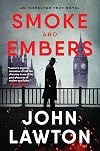
I've not read this series before, but that wasn't a big problem (after wondering what actually led to the murder mentioned early on). What did confuse me, and makes me think I should reread it, was that I had trouble keeping track of all of the switching identities. There was at least one too many Sams for me to keep them all straight in the end.
That said, I found it an engrossing and compelling read, though hardly comfortable given its subject matter. The picture of post-war Germany was show more vivid and informative, and I appreciated the way that, in the end, the lines between the good guys and the bad guys blurred, which seemed especially relevant to our present moment. I also enjoyed the languages included. My Russian is not at all adequate, but it was fun to recognize words here and there. There are scenes that will stay with me, including one that I wish wouldn't, but overall it was an impressive if at times confusing picture of a time we tend to gloss over when we think of the victorious end of World War II. show less
That said, I found it an engrossing and compelling read, though hardly comfortable given its subject matter. The picture of post-war Germany was show more vivid and informative, and I appreciated the way that, in the end, the lines between the good guys and the bad guys blurred, which seemed especially relevant to our present moment. I also enjoyed the languages included. My Russian is not at all adequate, but it was fun to recognize words here and there. There are scenes that will stay with me, including one that I wish wouldn't, but overall it was an impressive if at times confusing picture of a time we tend to gloss over when we think of the victorious end of World War II. show less
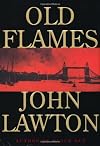
I actually contemplated calling in sick to stay home from work and finish this book. That is high praise indeed. Other reviewers have recounted the plot twists and turns. Why did I find this book so compelling? First, Lawton's evocation of place. I now live in a city where it rarely rains, but I remember summer downpours in England, when the rain bounces off the pavement soaking you from below as well as from above. Lawton brought that back to me. He also beautifully conveyed the strangeness show more and tranquility of "the vast Georgian pile that was Mimram House," Troy's country estate. Second, Frederick Troy is my favorite kind of protagonist: flawed and perfectly believeable. He is cynical, sexy, smart, gullible,and rebellious. He also has a wacky family as a supporting cast, including weird and creepy twin sisters. Lawton does a better job with male characters than with female characters. I actually detested Tosca and couldn't wait for something bad to happen to her (not that I'm saying it does...). Third, I was fascinated by the historical context -- post-War, Cold War Britain, which was so different from the United States. I always wondered how spies like Kim Philby were recruited and what motivated them. Now I know. I cannot wait to read the other books in Lawton's Frederick Troy series. I need to go back to "Black Out" and find out what happened to Diana Brack. show less
Lists
Awards


You May Also Like


Associated Authors
Statistics
- Works
- 31
- Also by
- 4
- Members
- 2,381
- Popularity
- #10,782
- Rating
- 3.7
- Reviews
- 110
- ISBNs
- 249
- Languages
- 7
- Favorited
- 10