
Dave Johnson (1) (1966–)
Author of Superman: Red Son
For other authors named Dave Johnson, see the disambiguation page.
Works by Dave Johnson
The Johnson Sketchbook, Vol. 1 2 copies
Associated Works
100 Bullets, Vol. 01: First Shot, Last Call (2011) — Cover artist, some editions — 1,181 copies, 32 reviews
d20 Modern Roleplaying Game: Core Rulebook (2002) — Cover artist, some editions — 325 copies, 1 review
9-11: The World's Finest Comic Book Writers & Artists Tell Stories to Remember (2002) — Illustrator — 256 copies, 1 review
John Constantine, Hellblazer Vol. 05: Dangerous Habits (2013) — Cover artist, some editions — 162 copies, 2 reviews
Thor: God of Thunder, Vol. 3: The Accursed (2014) — Illustrator, some editions — 139 copies, 4 reviews
Fantastic Four Vol. 1: New Departure, New Arrivals (2013) — Illustrator, some editions — 96 copies, 9 reviews
Detective Comics #761 — Cover artist — 5 copies
Detective Comics #760 — Cover artist — 4 copies
Penthouse Comix #27 | November/December 1997 — Cover artist — 2 copies
Unknown Soldier #06 — Cover artist — 2 copies
Unknown Soldier #05 — Cover artist — 2 copies
Penthouse Comix #32 | June 1998 — Cover artist — 2 copies
Coffin Hill #18 — Cover artist — 1 copy
Coffin Hill #16 — Cover artist — 1 copy
Coffin Hill #15 — Cover artist — 1 copy
Coffin Hill #17 — Cover artist — 1 copy
Future Quest #8 — Cover artist, some editions — 1 copy
Coffin Hill #19 — Cover artist — 1 copy
Coffin Hill #20 — Cover artist — 1 copy
Strange Sports Stories (2015) #2 — Cover artist — 1 copy
Unknown Soldier #07 — Cover artist — 1 copy
Unknown Soldier #08 — Cover artist — 1 copy
Unknown Soldier #02 — Cover artist — 1 copy
Unknown Soldier #03 — Cover artist — 1 copy
Unknown Soldier #04 — Cover artist — 1 copy
Tagged
Common Knowledge
- Legal name
- Johnson, David Lawrence
- Birthdate
- 1966-04-04
- Gender
- male
Members
Reviews

Imagine that when the rocket carrying a little baby Kal-El crash-landed on Earth, it hadn't landed in Kansas, but in Ukraine... at the height of the Cold War. That's the premise behind Red Son, which gives us a Superman raised not with good old American values, but Soviet communist ones. A Superman who is the right-hand man to Josef Stalin and champions the rights of the worker, battling the insidious forces of capitalism.
My friend James posits that what makes Superman Superman is Clark show more Kent, and cites Superman For All Seasons as proof, with this story as the inverse. What would Superman be like if he wasn't Clark Kent? The answer is somewhat chilling: upon Stalin's death, Superman takes over as leader of the U.S.S.R., doing his absolute best to eliminate crime, disease, war, famine, even bad weather. Superman rules the world. But it doesn't quite answer the question, because we never see Superman when he's not being Superman. That's probably the point-- he has no alter ego, but he should have had an ante ego. We're told he grew up on a collective farm, but we never see his adoptive parents or even learn his pre-Superman name. Who was he? Where did he come from? We see Ma Kent in a brief scene in Smallville at the beginning, but never his "real" mother. Does he even have a real mother? Or was he raised by the collective? Without that information, it's hard to fully buy him as a character. All we know is that there was a girl named Lana Lazarenko who he was sweet on, and who stays by his side into his adult life, but we rarely see her actually interacting with Superman.
Lana brings up my one big problem with the book: some of the alternate versions are just weird or contrived. Why should there be a Lana Lang equivalent, complete with red hair, in Ukraine? Why does a Russian boy who sees his parents gunned down adopt the moniker of "Batman"-- and why doesn't Bruce Wayne, who should still exist in this world? Oliver Queen is no Green Arrow in this world, but a reporter for the Daily Planet, which is pretty pointless as the characters have nothing in common except a name and facial hair. And I cannot envision any possible world where Jimmy Olsen can ascend to the top spot in the CIA.
But the biggest alternate figure here, aside from Superman of course, is Lex Luthor. Long-time readers of my reviews will know of my great affection for Lex Luthor. I don't think Millar gets Luthor quite right: though he's a bit of a jerkface, he doesn't become an outright villain until Superman shows up on the scene, and I think that misconceives the character somewhat. Though Superman seems to bring out Luthor's worst tendencies, we should still be better off for having Superman around; Luthor should be up to no good with no one to stop him without Superman. But that's quibble, because once Superman shows up, Luthor is spot-on. This is the scientist version of Luthor, but he's every bit as egotistical and intelligent as Lex Luthor should be. I enjoyed his constant games of chess-- and the fact that it was being beat by a clone of Superman at one of those games that really set him off.
Superman remarks of him: "What was the point of Lex Luthor? A human being who dared to challenge a god, he was surely the greatest of his kind. I often look back upon those days and wonder what he might have accomplished without me. The triumphs he might have achieved in the name of his species." But the great thing about Lex Luthor is that every triumph he achieves, he achieves for only one reason: to beat Superman. When the entire world has fallen under Soviet control, America is the only hold-out-- and in total chaos. Until Lex Luthor steps in, and in a year reengineers the entire economy and saves the country from perpetual civil war. Why? Just to prove he's better than Superman. And it's bigger than that-- Luthor triumphs in the end, and you realize that everything that's been going on is a very, very long chess game... and in the end, Superman was actually just another one of his pawns. A pawn in a scheme to dominate the world with "Luthorism". But without Superman, would Luthor have ever been spurred to the ultimate good? Probably not.
But even in a world where Luthor is "good"... he's still not. There are two twists to the ending. One, someone who's been paying attention to the narration will pick up on, and it shows that Luthor isn't as smart as he thinks. The other, is quite a shocker. I was initially undecided on it, but once I realized what kind of light it threw on Luthor's supposed utopia, I decided I really liked it.
Man, I've been talking about Luthor a lot. Part of that is probably because, as I've alluded to, he's somewhat better developed as a character here than Superman. But Superman is still worth talking about-- more than worth it! Because this Superman isn't all that far off from the Superman we know and love. Both Superman want to help the world, to change it for the better, to enable it to rise above its petty and terrible ways. But the difference between the Superman man we know and this one is that the "normal" Superman believes in people... this Superman does not. The people of this Earth even stop wearing their seatbelts, knowing Superman will save them if something goes wrong. Somewhere I once read that the greatest desire of Superman would be a world that doesn't need him anymore, but this Superman would be completely unable to even envision such a scenario. It's that simple little humanistic faith that makes Superman the hero who he is. It's the lack of it that turns everyone-- everyone-- in this story into a villain.
Though I dug Millar's story and characters over all, there were some points where things didn't quite work. He's got some awkward dialogue, for example:
LANA: It's okay, Superman. It's not your fault. It's just the way the system works, you know. You can't take care of everyone's problems.
SUPERMAN: Actually, I can. Lana, I could take care of everyone's problems if I ran this place and, to tell you the truth, there's no good reason why I shouldn't.
But that's immediately followed by a glorious panel of Superman ascending over the starving crowds declaring that he's there to rescue them, so I can forgive it.
I thought the side-plot with the Green Lantern Corps was mostly irrelevant, and I was pretty so-so on the depiction of Wonder Woman in this reality. But, on the other hand, Stalingrad as a city put in a bottle by Brainiac is sheer genius. I also really liked the moment where Superman encounters his bizarro counterpart, grown by Lex Luthor as an American superweapon.
The art is solid throughout, and often fantastic. I don't know which of the credited artists did what, but sometimes I could notice multiple styles. Overall, it fits together, though-- and the coloring is great.
The story's not quite as emotionally engaging as it always should be, but in the third chapter I was gripped and carried all the way through. This story isn't so much What if Superman landed in the Soviet Union? as What if there was no Clark Kent? and the answer is very dark indeed. Great stuff. show less
My friend James posits that what makes Superman Superman is Clark show more Kent, and cites Superman For All Seasons as proof, with this story as the inverse. What would Superman be like if he wasn't Clark Kent? The answer is somewhat chilling: upon Stalin's death, Superman takes over as leader of the U.S.S.R., doing his absolute best to eliminate crime, disease, war, famine, even bad weather. Superman rules the world. But it doesn't quite answer the question, because we never see Superman when he's not being Superman. That's probably the point-- he has no alter ego, but he should have had an ante ego. We're told he grew up on a collective farm, but we never see his adoptive parents or even learn his pre-Superman name. Who was he? Where did he come from? We see Ma Kent in a brief scene in Smallville at the beginning, but never his "real" mother. Does he even have a real mother? Or was he raised by the collective? Without that information, it's hard to fully buy him as a character. All we know is that there was a girl named Lana Lazarenko who he was sweet on, and who stays by his side into his adult life, but we rarely see her actually interacting with Superman.
Lana brings up my one big problem with the book: some of the alternate versions are just weird or contrived. Why should there be a Lana Lang equivalent, complete with red hair, in Ukraine? Why does a Russian boy who sees his parents gunned down adopt the moniker of "Batman"-- and why doesn't Bruce Wayne, who should still exist in this world? Oliver Queen is no Green Arrow in this world, but a reporter for the Daily Planet, which is pretty pointless as the characters have nothing in common except a name and facial hair. And I cannot envision any possible world where Jimmy Olsen can ascend to the top spot in the CIA.
But the biggest alternate figure here, aside from Superman of course, is Lex Luthor. Long-time readers of my reviews will know of my great affection for Lex Luthor. I don't think Millar gets Luthor quite right: though he's a bit of a jerkface, he doesn't become an outright villain until Superman shows up on the scene, and I think that misconceives the character somewhat. Though Superman seems to bring out Luthor's worst tendencies, we should still be better off for having Superman around; Luthor should be up to no good with no one to stop him without Superman. But that's quibble, because once Superman shows up, Luthor is spot-on. This is the scientist version of Luthor, but he's every bit as egotistical and intelligent as Lex Luthor should be. I enjoyed his constant games of chess-- and the fact that it was being beat by a clone of Superman at one of those games that really set him off.
Superman remarks of him: "What was the point of Lex Luthor? A human being who dared to challenge a god, he was surely the greatest of his kind. I often look back upon those days and wonder what he might have accomplished without me. The triumphs he might have achieved in the name of his species." But the great thing about Lex Luthor is that every triumph he achieves, he achieves for only one reason: to beat Superman. When the entire world has fallen under Soviet control, America is the only hold-out-- and in total chaos. Until Lex Luthor steps in, and in a year reengineers the entire economy and saves the country from perpetual civil war. Why? Just to prove he's better than Superman. And it's bigger than that-- Luthor triumphs in the end, and you realize that everything that's been going on is a very, very long chess game... and in the end, Superman was actually just another one of his pawns. A pawn in a scheme to dominate the world with "Luthorism". But without Superman, would Luthor have ever been spurred to the ultimate good? Probably not.
But even in a world where Luthor is "good"... he's still not. There are two twists to the ending. One, someone who's been paying attention to the narration will pick up on, and it shows that Luthor isn't as smart as he thinks. The other, is quite a shocker. I was initially undecided on it, but once I realized what kind of light it threw on Luthor's supposed utopia, I decided I really liked it.
Man, I've been talking about Luthor a lot. Part of that is probably because, as I've alluded to, he's somewhat better developed as a character here than Superman. But Superman is still worth talking about-- more than worth it! Because this Superman isn't all that far off from the Superman we know and love. Both Superman want to help the world, to change it for the better, to enable it to rise above its petty and terrible ways. But the difference between the Superman man we know and this one is that the "normal" Superman believes in people... this Superman does not. The people of this Earth even stop wearing their seatbelts, knowing Superman will save them if something goes wrong. Somewhere I once read that the greatest desire of Superman would be a world that doesn't need him anymore, but this Superman would be completely unable to even envision such a scenario. It's that simple little humanistic faith that makes Superman the hero who he is. It's the lack of it that turns everyone-- everyone-- in this story into a villain.
Though I dug Millar's story and characters over all, there were some points where things didn't quite work. He's got some awkward dialogue, for example:
LANA: It's okay, Superman. It's not your fault. It's just the way the system works, you know. You can't take care of everyone's problems.
SUPERMAN: Actually, I can. Lana, I could take care of everyone's problems if I ran this place and, to tell you the truth, there's no good reason why I shouldn't.
But that's immediately followed by a glorious panel of Superman ascending over the starving crowds declaring that he's there to rescue them, so I can forgive it.
I thought the side-plot with the Green Lantern Corps was mostly irrelevant, and I was pretty so-so on the depiction of Wonder Woman in this reality. But, on the other hand, Stalingrad as a city put in a bottle by Brainiac is sheer genius. I also really liked the moment where Superman encounters his bizarro counterpart, grown by Lex Luthor as an American superweapon.
The art is solid throughout, and often fantastic. I don't know which of the credited artists did what, but sometimes I could notice multiple styles. Overall, it fits together, though-- and the coloring is great.
The story's not quite as emotionally engaging as it always should be, but in the third chapter I was gripped and carried all the way through. This story isn't so much What if Superman landed in the Soviet Union? as What if there was no Clark Kent? and the answer is very dark indeed. Great stuff. show less
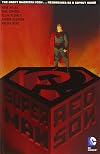
It had to happen and happen it did. The quintessential all American modern Hercules transposed as its Marxist antithesis. Superman, the Stalinist God.
His ship crashing into Russia, the young Kal-El matures worshipful of Communism and becomes his nation's premier guardian. But this not only brings him into direct conflict with the United States but also with what it truly means to be human while believing in a contradictory ideology beset by inhumanity.
His ship crashing into Russia, the young Kal-El matures worshipful of Communism and becomes his nation's premier guardian. But this not only brings him into direct conflict with the United States but also with what it truly means to be human while believing in a contradictory ideology beset by inhumanity.
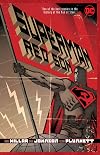
Botched the ending and should have ended the story about ten pages earlier, but still one of the best Superman stories, showing how his same basic moral principles of fairness and justice might give wildly different results when combined with a different cultural starting point. I still come back to this every few years.
Clever, very clever, from start to finish.
However, I took exception to two things. First, the unrealistic portrayal of Joseph Stalin as both a devotee to communism rather than an atheoretical demagogue and a human being rather than what the Novaya Gazeta called a "bloodthirsty cannibal." The rise, rule, and brutal fall of Nikolai Yezhov, chairman of the NKVD, at the whims of Stalin provide a more realistic and interesting portrait of the "Man of Steel" and those who surrounded him. Second, show more the impossibility that Lex Luthor or Hal Jordan could have replicated Green Lantern Power Rings or impart Green Lantern powers onto an entire brigade of Marines. The Guardians of the Universe, who are virtually omniscient, would not have been pleased at such an abuse of their powers and I'm pretty sure they would've shut Luthor's GL Corps down before they fought the Last Son of Krypton. *Sigh* show less
However, I took exception to two things. First, the unrealistic portrayal of Joseph Stalin as both a devotee to communism rather than an atheoretical demagogue and a human being rather than what the Novaya Gazeta called a "bloodthirsty cannibal." The rise, rule, and brutal fall of Nikolai Yezhov, chairman of the NKVD, at the whims of Stalin provide a more realistic and interesting portrait of the "Man of Steel" and those who surrounded him. Second, show more the impossibility that Lex Luthor or Hal Jordan could have replicated Green Lantern Power Rings or impart Green Lantern powers onto an entire brigade of Marines. The Guardians of the Universe, who are virtually omniscient, would not have been pleased at such an abuse of their powers and I'm pretty sure they would've shut Luthor's GL Corps down before they fought the Last Son of Krypton. *Sigh* show less
Lists
You May Also Like
Associated Authors
Statistics
- Works
- 18
- Also by
- 84
- Members
- 1,983
- Popularity
- #12,965
- Rating
- 3.9
- Reviews
- 62
- ISBNs
- 122
- Languages
- 10
- Favorited
- 1