
Chuck Collins (1) (1959–)
Author of Economic Apartheid in America: A Primer on Economic Inequality and Insecurity
For other authors named Chuck Collins, see the disambiguation page.
About the Author
Chuck Collins is the co-director of United for a Fair Economy. (Bowker Author Biography)
Works by Chuck Collins
Born on Third Base: A One Percenter Makes the Case for Tackling Inequality, Bringing Wealth Home, and Committing to the Common Good (2016) 78 copies, 3 reviews
Class Lives: Stories from across Our Economic Divide (A Class Action Book) (2014) — Editor; Contributor — 30 copies, 1 review
Economic Meltdown Funnies 1 copy
Associated Works
The Self-Made Myth: And the Truth about How Government Helps Individuals and Businesses Succeed (2012) — Foreword — 28 copies, 1 review
Tagged
Common Knowledge
- Legal name
- Collins, Charles E.
- Birthdate
- 1959-10-19
- Gender
- male
- Education
- Hampshire College
Southern New Hampshire University
Cranbrook School - Occupations
- author
- Organizations
- Institute for Community Economics
Institute for Policy Studies - Nationality
- USA
- Birthplace
- Madison, Wisconsin, USA
- Places of residence
- Detroit, Michigan, USA
Jamaica Plain, Massachusetts, USA - Associated Place (for map)
- USA
Members
Reviews
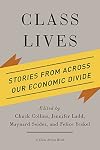
We are not all middle class
Class Lives Stories From Across Our Economic Divide (A Class Action Book), edited by Chuck Collins, Jennifer Ladd, Maynard Seider, and Felice Yeskel (ILR Press/Cornell University Press, $19.95).
We’d like to believe that we’re all middle class, but the reality is, we’re not. In fact, unless you own more property than the heavily-mortgaged house you’re living in and would be able to lose your job without fear of immediately falling into poverty, thanks to show more savings and investments, you’re probably not middle class. More likely, you’re working class: dependent upon wages for the vast majority of your income, with equity in your home but no income property.
But the illusion of the universal middle class is extremely persistent in the United States, and in Class Lives: Stories from Across Our Economic Divide, the editors use the personal narratives of people of varying backgrounds to illuminate how different life can be for those on the “down” side of America’s class divide. As we continue our national discussion about economic inequality, this book offers a new way to approach understanding what that inequality means: simply listen to the lives of people on the scarcity side of the divide. While we might argue about where the line between middle class and, well, everything else is (Is it home ownership? Reliance on wages? Access to consumer goods?), these stories offer more personal perspectives, as well as insight into the psychological and social consequences of even mild forms of poverty.
Reviewed on Lit/Rant: www.litrant.tumblr.com show less
Class Lives Stories From Across Our Economic Divide (A Class Action Book), edited by Chuck Collins, Jennifer Ladd, Maynard Seider, and Felice Yeskel (ILR Press/Cornell University Press, $19.95).
We’d like to believe that we’re all middle class, but the reality is, we’re not. In fact, unless you own more property than the heavily-mortgaged house you’re living in and would be able to lose your job without fear of immediately falling into poverty, thanks to show more savings and investments, you’re probably not middle class. More likely, you’re working class: dependent upon wages for the vast majority of your income, with equity in your home but no income property.
But the illusion of the universal middle class is extremely persistent in the United States, and in Class Lives: Stories from Across Our Economic Divide, the editors use the personal narratives of people of varying backgrounds to illuminate how different life can be for those on the “down” side of America’s class divide. As we continue our national discussion about economic inequality, this book offers a new way to approach understanding what that inequality means: simply listen to the lives of people on the scarcity side of the divide. While we might argue about where the line between middle class and, well, everything else is (Is it home ownership? Reliance on wages? Access to consumer goods?), these stories offer more personal perspectives, as well as insight into the psychological and social consequences of even mild forms of poverty.
Reviewed on Lit/Rant: www.litrant.tumblr.com show less
Born on Third Base: A One Percenter Makes the Case for Tackling Inequality, Bringing Wealth Home, and Committing to the Common Good by Chuck Collins
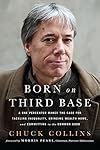
In his latest book, "Born on Third Base," Chuck Collins explains why inequality in its many forms impacts everyone. Privilege does not protect one from the negative consequences of systemic inequality. We are all interconnected. While severe in his criticisms of American political and economic practices, Collins is empathetic toward those in poverty and those with financial wealth alike. The bold solutions he offers require the participation and cooperation of all members of society. He show more argues for the need to rebuild true communities if we are to overcome the economic, social, and environmental challenges facing the world. Collins feels deeply about the many forms of inequality that divide America, but this book is not an angry rant. Collins thinks deeply about the issues and seeks to reach out with empathy to those on both sides of the divide. This is a book to be read by those who are serious about creating a united America. show less
Born on Third Base: A One Percenter Makes the Case for Tackling Inequality, Bringing Wealth Home, and Committing to the Common Good by Chuck Collins
Chuck Collins the author of Born on Third Base refers to himself as a I%er. He is a great grandson of Oscar Myer. The subtitle A One Percenter Makes the Case for Tackling Inequality, Bringing Wealth Home, and Committing to the Common Good makes a good introduction to the book. Collins refers to himself as a 1%er but he has actually given away most of his inheritance. The part of his inheritance he has not and cannot give up is the privilege that comes from education, connections and show more knowledge.
Collins has worked with Bill Gates Sr. on the inheritance tax issues. He and Gates Sr. agree that it is not unfair to tax large estates. He countered one opponent to the inheritance tax whose argument was that he worked very hard for his money and deserved to control all of it even in death. Collins answered that many thousands of low income people also work very hard, often long hours at several jobs and never become wealthy from their hard work. In fact their hard work has contributed to other people becoming wealthy or wealthier.
Nobody becomes wealthy by themselves. Many wealthy people have claimed to have done it all on their own. Even President George W. Bush made that claim. Of course it is totally dishonest, Bush was born wealthy and became wealthier with lots of help.
As Collins points out inequality is not good for the country as a whole and it is not good for the wealthy either. This book is worthwhile. I recommend it. show less
Collins has worked with Bill Gates Sr. on the inheritance tax issues. He and Gates Sr. agree that it is not unfair to tax large estates. He countered one opponent to the inheritance tax whose argument was that he worked very hard for his money and deserved to control all of it even in death. Collins answered that many thousands of low income people also work very hard, often long hours at several jobs and never become wealthy from their hard work. In fact their hard work has contributed to other people becoming wealthy or wealthier.
Nobody becomes wealthy by themselves. Many wealthy people have claimed to have done it all on their own. Even President George W. Bush made that claim. Of course it is totally dishonest, Bush was born wealthy and became wealthier with lots of help.
As Collins points out inequality is not good for the country as a whole and it is not good for the wealthy either. This book is worthwhile. I recommend it. show less
Born on Third Base: A One Percenter Makes the Case for Tackling Inequality, Bringing Wealth Home, and Committing to the Common Good by Chuck Collins
gives a small amount of interesting background on the changes to policy and the industry of wealth, but ultimately reads like a self help book that's not written for the non-wealthy.
You May Also Like


Associated Authors
Statistics
- Works
- 11
- Also by
- 3
- Members
- 498
- Popularity
- #49,659
- Rating
- 3.9
- Reviews
- 5
- ISBNs
- 41
- Languages
- 1