
John Gerard (1) (1545–1612)
Author of The Herbal or General History of Plants
For other authors named John Gerard, see the disambiguation page.
John Gerard (1) has been aliased into John Gerarde.
About the Author
Image credit: Source: Wikimedia Commons
Works by John Gerard
Works have been aliased into John Gerarde.
Gerard's Herbal Vol. 3 1 copy
Gerard's Herbal Vol. 2 1 copy
Tagged
Common Knowledge
Members
Reviews
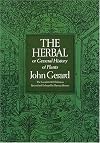
I was in high school and totally into gardening, especially herb gardening. (No particular reason, maybe I didn't like bland food? Maybe it was just something different to enjoy?) I decided I needed to have Gerard's herbal so I went to the library.
The librarian said, "So, you're going to the Renaissance Festival dressed up like an - herb??"
"No. . . ."
What's odd is I remember this conversation but couldn't tell you the names of most of the people in my class.
It was an interesting book to look show more at, though! show less
The librarian said, "So, you're going to the Renaissance Festival dressed up like an - herb??"
"No. . . ."
What's odd is I remember this conversation but couldn't tell you the names of most of the people in my class.
It was an interesting book to look show more at, though! show less

Excerpts from the immense and wonderful Elizabethan Herball or General Historie of Plantes published by John Gerard in 1597.
A lovely book for gardeners, if only for the woodcuts reproduced throughout the book. This paperback also offers a glimpse into Elizabethan medical practices and cures.
Out of print.
A lovely book for gardeners, if only for the woodcuts reproduced throughout the book. This paperback also offers a glimpse into Elizabethan medical practices and cures.
Out of print.

For entertainment value ONLY. Later editors have show that Gerard didn't know his butt from a hole in the ground.
That said, it IS entertaining, and the illustrations are pleasing.
That said, it IS entertaining, and the illustrations are pleasing.
Gerard's Herball: The Essence thereof distilled by Marcus Woodward, from the Edition of Th. Johnson, l636 by John Gerard
1964 edition of Marcus Woodward's 1927 distillation of Gerard's famous 1545 Herball.
Woodward begins with a eulogy and biography of John Gerard, born in Nantwich. Gerard was a ship's surgeon on board merchant vessels, and he traveled the coasts of Europe before settling in London in 1577. He superintended the gardens of Lord Burleigh in the Strand and at Theobalds in Hertfordshire. Gerard had a house in Holborn, where he practiced "barbarie and chirugerie", and his garden became famous. He show more exchanged plants with the keeper of the King's garden in Paris, Jean Robin. Men of every rank sent plants to him from all over the globe. Sir Walter Raleigh was a contemporary botanical collector. Gerard died in 1611 in Holborn, and it is noted that while little is known of his life, his wife had long assisted him professionally. [xiii] He died intestate, without wealth, and with the admiration of his peers.
Woodward notes that another herbalist, Miss Rhode, suggested that Shakespeare "may have seen Gerard's garden" and living nearby in the house of a Huguenot refugee almost opposite, they "could scarcely have failed to know one another".[xiv] Shakespeare's plays are full of the same herb-lore.
The Herball is written in Elizabethan prose and steeped in folklore. In 1597 the first edition of Gerard's "Historie of Plants" was published. It was a huge heavy folio of some 1630 pages, including 1800 wood block illustrations from Tabernaemontanus' "Eicones" and a few supplied by Gerard, such as the first published cut of the "Virginian" potato. [xv] For Thos. Johnson's 1636 edition, this opus was "distilled" to 236 pages. with many of the laborious arguments about plant names and forgotten plants removed. Johnson's Notes are included in this reprint.
Gerard dedicated his work, and his gardens, to his employer, the Treasurer of England. He argues that plants are important -- for food, clothing, medicine, provisions, the outward senses, and "in the mind" to take delight and be "enriched with the knowledge" [1-2]. In the customary mode of flattering the Lord, he points out that his fellow kings have long recognized the wisdom of studying plants -- citing Plutarch's note on Mithridates, Pliny's note on Euax, the "King of Arabia". He remarks the martyrdom of Dioclesian, then invokes Solomon who "was able to set out the nature of all plants from the highest Cedar to the lowest Mosse". Here is yet another reference which shows that the "Western world" was far from ignoring Middle East cultures, but was eager to emulate it.
Gerard concludes his Dedication, saying "But, my very good Lord" the study of plants "is now neglected". In the Lord's employment for 20 years, he has collected and grown plants from all over the world. "But because gardens are privat, and many times finding an ignorant or a negligent successor, come soone to ruine"...Gerard first wrote and then published this work "to make my labors common", and to free the work from that danger. The two "buts" are so significant in the prolixity of words. Gerard knew that private gardens were at risk. He was seeking to publish a "Historie" of plants that would make his garden subjects free of the danger of neglect, and he was submitting the gardens and the book "to the support of this State" under "our dread Sovereign".
Gerard also wrote a dedication "to the courteous and well willing Readers". More detailed, not as urgent, clearly intended for sale. show less
Woodward begins with a eulogy and biography of John Gerard, born in Nantwich. Gerard was a ship's surgeon on board merchant vessels, and he traveled the coasts of Europe before settling in London in 1577. He superintended the gardens of Lord Burleigh in the Strand and at Theobalds in Hertfordshire. Gerard had a house in Holborn, where he practiced "barbarie and chirugerie", and his garden became famous. He show more exchanged plants with the keeper of the King's garden in Paris, Jean Robin. Men of every rank sent plants to him from all over the globe. Sir Walter Raleigh was a contemporary botanical collector. Gerard died in 1611 in Holborn, and it is noted that while little is known of his life, his wife had long assisted him professionally. [xiii] He died intestate, without wealth, and with the admiration of his peers.
Woodward notes that another herbalist, Miss Rhode, suggested that Shakespeare "may have seen Gerard's garden" and living nearby in the house of a Huguenot refugee almost opposite, they "could scarcely have failed to know one another".[xiv] Shakespeare's plays are full of the same herb-lore.
The Herball is written in Elizabethan prose and steeped in folklore. In 1597 the first edition of Gerard's "Historie of Plants" was published. It was a huge heavy folio of some 1630 pages, including 1800 wood block illustrations from Tabernaemontanus' "Eicones" and a few supplied by Gerard, such as the first published cut of the "Virginian" potato. [xv] For Thos. Johnson's 1636 edition, this opus was "distilled" to 236 pages. with many of the laborious arguments about plant names and forgotten plants removed. Johnson's Notes are included in this reprint.
Gerard dedicated his work, and his gardens, to his employer, the Treasurer of England. He argues that plants are important -- for food, clothing, medicine, provisions, the outward senses, and "in the mind" to take delight and be "enriched with the knowledge" [1-2]. In the customary mode of flattering the Lord, he points out that his fellow kings have long recognized the wisdom of studying plants -- citing Plutarch's note on Mithridates, Pliny's note on Euax, the "King of Arabia". He remarks the martyrdom of Dioclesian, then invokes Solomon who "was able to set out the nature of all plants from the highest Cedar to the lowest Mosse". Here is yet another reference which shows that the "Western world" was far from ignoring Middle East cultures, but was eager to emulate it.
Gerard concludes his Dedication, saying "But, my very good Lord" the study of plants "is now neglected". In the Lord's employment for 20 years, he has collected and grown plants from all over the world. "But because gardens are privat, and many times finding an ignorant or a negligent successor, come soone to ruine"...Gerard first wrote and then published this work "to make my labors common", and to free the work from that danger. The two "buts" are so significant in the prolixity of words. Gerard knew that private gardens were at risk. He was seeking to publish a "Historie" of plants that would make his garden subjects free of the danger of neglect, and he was submitting the gardens and the book "to the support of this State" under "our dread Sovereign".
Gerard also wrote a dedication "to the courteous and well willing Readers". More detailed, not as urgent, clearly intended for sale. show less
You May Also Like
Associated Authors
Statistics
- Works
- 8
- Members
- 337
- Popularity
- #70,619
- Rating
- 4.1
- Reviews
- 10
- ISBNs
- 33
- Languages
- 2
- Favorited
- 1